
The Knocking Beneath
Story Written & Told by
Marissa Alvarez, Talia Demir,
& Jenna Morgan
Visuals & Imagery Created by
Marissa Alvarez, Talia Demir,
Jenna Morgan, Nadia Okoro,
Amara Patel, & Scott Bryant
With care and reverence, their story is shared by Scott Bryant
at the request of Marissa Alvarez, Talia Demir, & Jenna Morgan.
Archive Designation:
Public Witness Account — Preserved by Request
Archive Note
This story is preserved publicly because disbelief was part of the harm. The archive exists not to adjudicate truth, but to ensure that women’s accounts are not erased simply because they are inconvenient, unsettling, or difficult to explain.
A Note from Marissa Alvarez, Talia Demir, & Jenna Morgan
People didn’t believe us.
They say the storm messed with our heads. That the stress, the exhaustion, the flood—was enough to break anyone.
That trauma does strange things to memory. That we were in shock.
They tell us we imagined it. But we know what happened.
We remember the knocks. We remember the way the water pressed against the house—not just rising, but pushing. Testing. We remember the moment the house stopped breaking—because something was holding it up. And we remember that, in the end, the flood let us go. We don’t know why. We don’t ask anymore.
But we do know this: we’re here because Nadia Okoro, Amara Patel, and Scott Bryant believed us when no one else did. They listened. They helped us piece together what we could from that day—sixteen years ago. They fought for us when people called us hysterical. Dramatic. Delusional.
And Scott? He told us not to include his name here. Said he didn’t do anything worth crediting. Said this was our story. That he wasn’t important to this. But he was. So here it is: Scott, we’re crediting you anyway. Because if you hadn’t stepped in—you, Nadia, and Amara—when you did, we wouldn’t have made it out. Not just from the flood.
But from what came after.
We don’t tell this story for validation. We don’t need anyone to believe us. We tell it because we survived. And because next time? Next time, someone else might not.
Water is life. It nourishes us but it also can kill us.
—Marissa Alvarez, Talia Demir, & Jenna Morgan
Bolivar Peninsula, Texas
September 2, 2008 – Night
Eleven days before Hurricane Ike

Marissa
We came to Texas for different reasons, but we came together.
I, Marissa Alvarez, wanted data—to understand how water moves and why.
Talia Demir needed distance—but still packed her trauma kit, just in case.
Jenna Morgan wanted stories that mattered—so she brought a recorder, a camera, and too much hope.
We came from different places — I from a Latino family in Texas, Talia from a Turkish immigrant household, Jenna from a Welsh coastal town — but the water didn’t care where we were from.
We weren’t a team on paper. But when things started to unravel—
Marissa’s maps, Talia’s instincts, Jenna’s eyes—they kept us alive.
We didn’t just survive together. We survived because of each other.
None of us came here looking for what we found. And none of us were supposed to be in that house when the storm came.
But we were. And the flood didn’t care why.
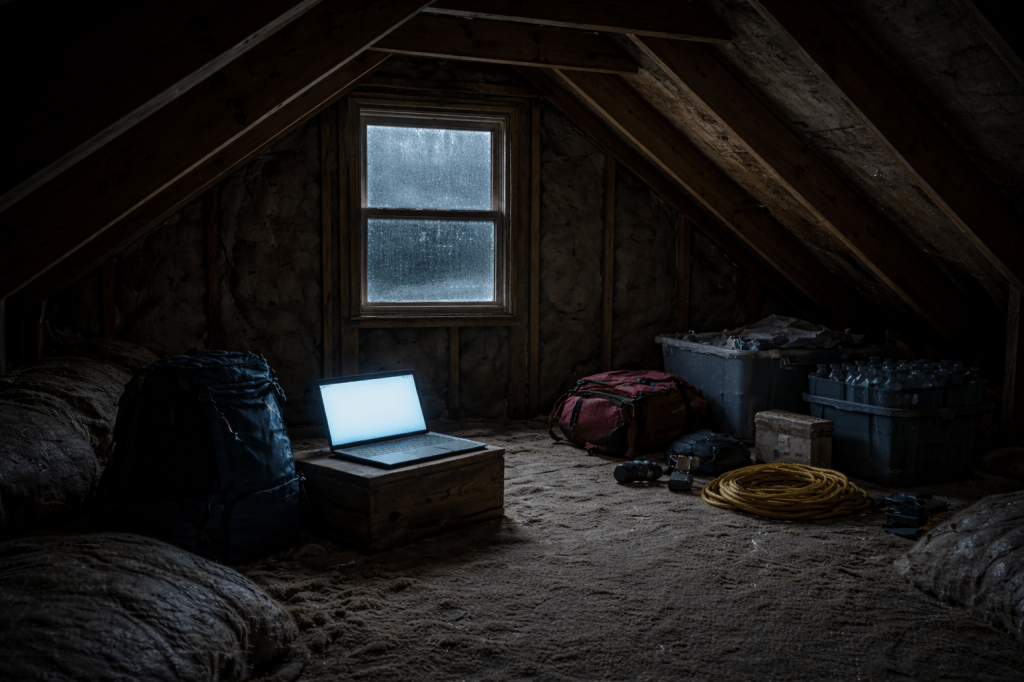
I don’t believe in bad luck.
I believe in data, forecasts, and planning ahead. That’s why I knew the river was going to flood before anyone else did. That’s why I told Jenna and Talia to stay put—this house on stilts should have kept us safe.
But the storm isn’t supposed to be here yet.
And the water is still rising.
And nothing in my forecasts predicted this.
Storm surge doesn’t rise like rivers do, I think. It comes sideways.
I sit cross-legged in the attic, my laptop dim against the rain-darkened room, watching the weather data glitch out, freeze, refuse to tell me the truth.
The last update said the river crested two hours ago.
Talia
I hate waiting.
Waiting means hoping. Hoping means putting your faith in something other than yourself. That’s a good way to die.
So while Marissa stares at her screen like she can will the storm to make sense, I move. I pace the attic, test the windows, check the emergency bags. If we need to run, I want to be ready.
Except there’s nowhere to run.
I stop at the window and look out. The trees are gone. Just black water, stretching for miles.
A deep thud vibrates through the floor. Something shifting against the stilts.
I tell myself it’s just debris. A tree. Something normal.
But I don’t believe myself.
Jenna
And I don’t trust water.
I never have. Lakes, rivers, the ocean—there’s too much space beneath the surface. Too many things that could be down there, just out of sight.
But I trusted Marissa when she said we’d be safe here. I trusted Talia when she said she wouldn’t let anything happen to us.
Now I’m wondering if I made a mistake.
The house is groaning. The rain won’t stop. And just now, through the attic floorboards, I swear I saw—
No.
I press my nails into my palms. I’m seeing things. The stress is messing with my head.
But outside the window, the flood ripples. Like something just moved beneath it.
The house shifts.
A groan rolls through the wooden stilts, slow and heavy, like something pressing down from above—or pushing up from below.
The House Begins to Move
Marissa
The first time the house moves, I tell myself it’s the wind.
The second time, I check my phone. No signal. The last weather report said the worst of the storm should have passed. But the water is still rising, still climbing the walls, lapping at the attic window.
That isn’t how floods work.
I press my hand against the damp wood. The floor vibrates beneath my palm. I look at Jenna, expecting her to be scrolling on her phone, lost in her head.
“It’s still rising. That doesn’t make sense…”
I feel a flicker of unease. It crosses my face before I can stop it.
“Sometimes I wonder… what if the water doesn’t forget?”
Instead, she’s staring at the floorboards like she’s waiting for them to open up beneath us.
Talia
I don’t wait for the next shift.
“We need to get out of here.”
Marissa barely looks up from her laptop. “The rain is slowing down. We need to wait—”
“The house is moving,” I snap. “We don’t have time to wait.”
I’m already reaching for the attic window. The glass fogged from the humidity, streaked with water. The storm is fading, but the flood isn’t. The trees that should be standing—they’re gone. Just dark water stretching too far.
Marissa exhales sharply. “Even if we get on the roof, then what?”
I turn to her. “Then we don’t drown in here.”
Another groan from beneath us.
Jenna
The house isn’t settling. It’s sinking.
I feel it in my teeth, in my ribs. The water presses against the walls like it’s testing the house, testing us.
I close my eyes, just for a second. Listen.
The rain drips, trickles, fills the cracks. The storm is almost done, but the flood—it’s still moving, still shifting in slow, unnatural waves.
And under all of that—I hear something deeper.
Not the creak of the wood. Not the shifting weight of the house.
Something else.
A dull, heavy knock against the stilts.
Thump.
The house breathes with it—wood groaning, walls flexing.
Thump.
Thump.
It’s not debris.
It’s not random.
It’s counting.
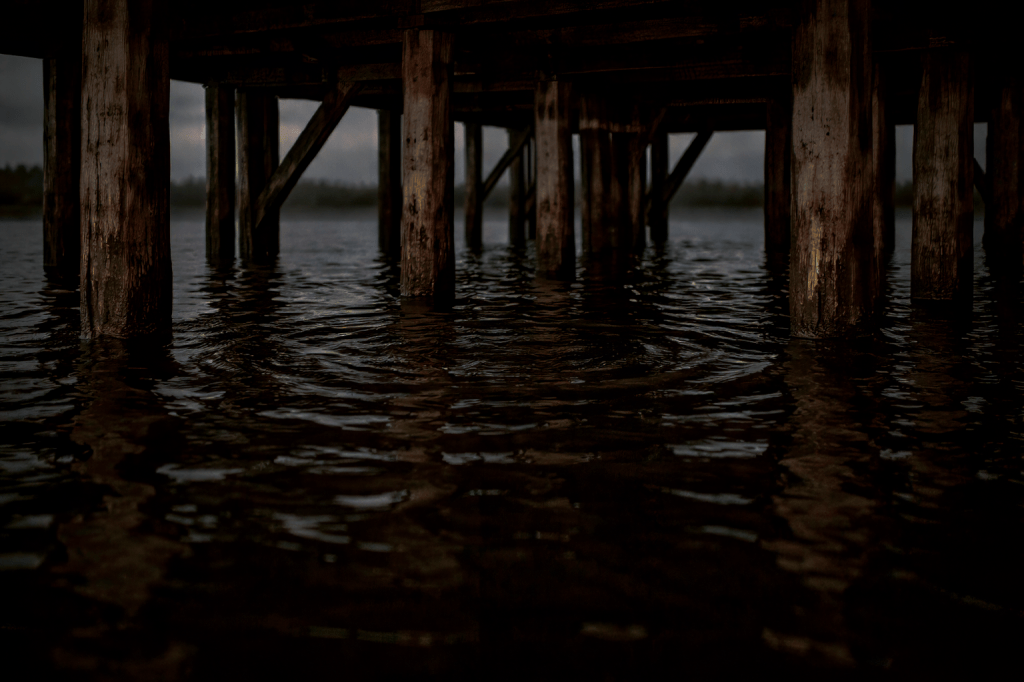
Marissa sucks in a breath. Talia stiffens.
They heard it.
Another knock. Louder. Closer.
The house shifts.
I don’t want to look at them. I don’t want to see what’s on their faces.
But I already know.
They believe me now.
“That’s not debris,” I whisper.
I don’t know why I say it out loud. But now it’s real.
Marissa swallows. Her hands tighten on the laptop like it’s something she can hold onto.
Marissa
“It could be anything.”
“Could be,” I say. But it isn’t.
Thump.
The house rocks. A pulse through the wood, through us.
And for the first time since this started, I see it—real fear in Marissa’s face.
Talia
“Roof. Now.”
No one argues.
The roof is the only way out.
The house is sinking, folding into itself, giving in. The stilts groan as the floodwater climbs higher, pushing against the walls like hands pressing from every side.
The storm is dying.
The water isn’t.
Marissa
The attic tilts.
Not a settling shift, not the way houses groan in old age—this is a deliberate movement, slow and heavy.
Like something beneath us just exhaled.
Talia is already at the attic window, forcing it open, shoving wet wood against rusted hinges.
“Come on, come on—”
I don’t argue anymore. I just follow her lead, climbing up, shoving myself onto the roof.
The wind is thick, humid, too still.
I pull myself up, my muscles shaking, my hands slipping. Shingles soaked through, edges lifting.
Talia grabs my wrist and yanks.
Behind me, Jenna is still inside.
The Attic – The House is Failing,
But Still Standing
The house shifts, groaning like a living thing.
The stilts creak. Wood strains.
Then—a hard, deep THUMP beneath us.
Jenna
I freeze.
That wasn’t debris.
It was low. Hollow. A knock.
Like something is testing the house from underneath.
Another thump.
The attic floor shudders beneath my feet.
Talia
“Did you feel that?”
Marissa
(flat, unreadable)
“The house is settling.”
Talia
(scoffing)
“Bullshit.”
The rain is dying down—but the water isn’t.
The Flood
(sssshhhhhh—THUMP—shhhhhh—)
Another knock—louder.
Marissa is staring at the floor now too.
Marissa
The water shouldn’t be this high.
The storm is ending. The river should be cresting.
Instead, it’s still rising.
And something is moving beneath us.
Talia
(gritted teeth)
“Did you feel that?”
Jenna doesn’t move.
She’s still watching the attic floor.
Jenna
I feel it before I see it.
Something—broad, smooth, slow—slides beneath the house.
Not debris.
Not a wave.
Something alive.
Then—
CRACK.
The attic window explodes inward.
Talia
“SHIT! MOVE!”
A wave punches through, slamming into Jenna.
Water floods the attic floor.
Jenna goes under.
Marissa
“JENNA!”
She’s under—gone—
For a second, I swear I see something in the floodwater.
A shadow. A shape.
Then—Jenna’s hand breaks the surface.
Talia lunges—misses.
I grab—PULL.
Something resists.
For a second, I feel weight—like the flood doesn’t want to let go.
Then—she breaks the surface, coughing, gasping.
Jenna
I still feel it.
The pull.
The weight.
The way it let go.
But only for now.
Beneath the surface, something shifts.
Not a ripple. Not a wave.
Something darker. Broader. Moving.
Gone before I can name it.
But I know it saw me.
The House Sinks
Not all at once. Not yet.
But it’s happening. A slow, deliberate descent.
Water climbs the walls, seeps through cracks, soaks through the attic floor.
Everywhere we step is wet.
And underneath it—
Something knocks.
Jenna
The flood isn’t just rising.
It’s pushing.
A steady, rhythmic pressure, like it’s testing the house. Testing us.
And now, I can hear it.
Knock.
Low. Hollow.
Knock.
Not random. Not debris.
A pattern.
A question.
A warning.
I stare at the floorboards, the shallow water pooling between the warped wooden planks. Something is beneath us.
I feel it.
I know it.
But I can’t say it.
Because if I say it, then it’s real.
Talia
Jenna won’t stop staring at the floor.
“Jenna.” I grab her arm. “Look at me. Not the water.”
She flinches. Not at me—at something else.
“Did you hear that?” she whispers.
I did.
But I’m not acknowledging it.
Because the house is already breaking. The flood is too high, too fast. The stilts are barely holding.
We need to get out before we’re in the water.
“We have to move,” I say, gripping her harder. “Now.”
Marissa
The rain is stopping.
I watch it from the attic window, my breath fogging the glass. The sky is shifting—dark clouds pulling apart, thinning out.
This should be a good thing.
But the flood isn’t going down.
It’s still rising.
That doesn’t make sense.
Floodwaters should crest and fall.
The storm is over.
The water doesn’t care.
I press my palm to the wood, and the floor shudders beneath me.
Another knock.
Talia
(muttering)
“You heard that.”
I say nothing.
Because I did.
And it’s getting louder.
Jenna
I take a step back. The water on the floor ripples.
Something moves below.
Then—
CRACK
The left side of the house drops six inches in an instant.
We all fall.
Talia
“SHIT—”
My knee slams into the attic floor.
Jenna stumbles into the wall.
The whole house tilts.
I grab the window frame—steady myself.
Marissa is already moving, pulling herself upright.
“That was the stilts,” she says. “One of them broke.”
Marissa
The house is going down.
Not in one violent collapse.
But piece by piece. Into the dark, murky floodwater.
We need to get to the highest point before the roof is our only option.
“We have to move,” I say, my voice tight, controlled. “We have to go—”
Another knock.
Louder. Closer.
Jenna stiffens.
I don’t look at her.
Because I already know she’s right.
Jenna
The house isn’t breaking on its own.
Something is touching it. Pushing it.
The water isn’t just rising—it’s claiming.
And for the first time since this started, I know—
We aren’t alone in the flood.
The left side has already dropped. The floor is slanted, slick with water.
The flood is inside now.
The attic—the last safe space—is shrinking.
And the knocking—
The knocking has stopped.
Marissa
I hold my breath.
For the first time in hours, the house is silent.
No groaning wood. No deep, resonant knocks.
Just the water, sloshing in slow, lazy waves against the walls. Waiting.
The sudden quiet is worse.
Because I know what this means.
The kind of quiet before an earthquake finishes shifting the ground.
The kind of quiet before the tide finally pulls back—and crashes forward.
Talia
I don’t trust this.
Storms don’t just stop. Floods don’t just pause.
And this water—it’s not draining.
It’s waiting.
I glance at Jenna.
She hasn’t spoken in over a minute. That’s a bad sign.
“Jenna,” I say, sharper than I mean to. “Talk to me.”
She doesn’t.
She’s staring at the floor.
Her whole body is rigid, frozen.
And then, just loud enough for me to hear—
Jenna
(whispers)
“We aren’t alone in the flood.”
Jenna
I don’t know when I started counting.
But I did.
The knocks. The creaks. The sounds in the water.
And just now—right before the silence fell—
There was one extra knock.
One that didn’t come from the house.
Marissa
I exhale slowly, controlled.
“Jenna.”
She looks up at me.
And it hits me—
She’s not afraid the house will collapse.
She’s afraid of what happens after.
She knows something.
She’s seen something.
And now, so have.
The House Collapses
Like a Sinking Ship

The attic lights flicker once—then die.
A single beam of light slashes the water—then vanishes.
The stilts snap.
The roof tilts—then plunges.
And then—
THE FLOOD TAKES EVERYTHING.
Marissa
“JENNA, CLIMB! NOW!”
Talia
(simultaneously, frantic)
“GO—GO—MOVE!”
Jenna
“THE FLOOR—IT’S—”
The Water
(SHHHHHHHH—CRACK—THUMP—)
Talia
“LOOK OUT!”
A beam SNAPS—nails shriek—wood breaks.
Jenna
“THE WATER’S—”
Talia
(yelling over her)
“GRAB MY HAND!”
Marissa
(overlapping, breathless, urgent)
“JENNA—DON’T STOP! MOVE!”
Jenna
(gasping)
“Don’t look down—don’t look down—”
A wave punches through—cuts them all off.
The Water
(BOOM—SHHHHHHHH—WOOD SPLINTERS—)
Talia
“FUCK—IT’S INSIDE—IT’S INSIDE—”
Marissa
“DON’T FUCKING STOP!
Jenna
“IT’S COMING UP—”
Marissa
(panicked, overlapping)
“HOLD ONTO SOMETHING! NOW!”
The attic tilts LEFT—six inches, then a foot.
The air thickens—hot, wet, metallic. The smell of soaked wood and rot fills our lungs.
A deep pressure presses against our chests, like the flood is inhaling us.
Talia
“ROOF! GET TO THE ROOF!”
Jenna
“FUCK, I’M GOING UNDER!”
Marissa
CLIMB!!
Jenna
(simultaneously, coughing on floodwater)
“I CAN’T—”
Talia
“WE GOT YOU!”
Jenna
“WHERE’S THE FUCKING ROOF?!”
Marissa
“IT’S BREAKING—”
Jenna
“HERE WE GO!”
Talia
HANG ON!
Marissa
“DON’T LET GO!”
My ears ring. My skin prickles like static. Time fractures.
My fingers dig into wet shingles—splinters, blood, wood, salt.
A single second of silence—drawn out, unnatural.
Time stutters. Everything slows.
Then—
THE WATER TAKES US.
We all go underwater. The house debris and dark, murky water surrounding us.
And then—
The flood breathes in.
A pause—too long, too deep—
Silence.
Only the water, lapping softly.
And the roar comes from below.
It isn’t thunder. It isn’t wind.
It’s wet. Hollow. A sound that carries weight.
The flood exhales.
The rest of the house collapses.
The Final Realization
We emerge from underneath, grasping at broken planks, clinging to what’s left of the roof.
Jenna
“…it’s not taking us.”
Talia
“WHAT?”
Marissa
“THEN WHY THE FUCK—”
The water pulses once.
Then—
It settles. Too still. Too quiet. Watching.
The Aftermath
The storm dies in minutes.
The waves soften.
The rain fades to mist.
And we are left floating in silence.
Alive.
Breathing.
Left behind.

Jenna
(soft, distant)
“It let us go.”
Talia
(hollow, exhausted)
“Why?”
Marissa
(barely whispering)
“…What if it didn’t need us?”
No one answers.
We drift.
The water is smooth now. Glass-like. Watching.
We don’t talk about it again.
Because the water is still there.
Because the flood will rise again.
Because one day, it will come for someone else.
And next time—
Because the flood always remembers.
A different town. A dry porch.
A still night.
Knock.
Just once. Low. Hollow.
Knock.
Then silence.
We told our story. But the flood listens for others.
Where Would It Go: Survivors’ Reactions
By Marissa Alvarez, Talia Demir, & Jenna Morgan
Marissa Alvarez: “I deal in facts. Data. Things I can prove. But nothing about what happened that day fits into a neat, logical box. And maybe that’s why people don’t believe us—because if they did, they’d have to accept that some things can’t be explained. But I don’t need proof to know what I felt. The water wasn’t just rising. It was watching. And it still is.”
Talia Demir: “I don’t wait around for things to fix themselves. I move. I act. But after the flood, no matter what I said, no matter how many times I told the truth, people still looked at me like I was losing it. Like I was supposed to just smile, nod, and agree that we ‘overreacted.’ Fuck that. We fought to survive, and I won’t apologize for it.”
Jenna Morgan: “I used to think the scariest part of nearly drowning was the water itself. I was wrong. The scariest part is what comes after—when people smile at you like you’re fragile, like they know better than you what happened. Like they weren’t there. But they weren’t. We were. And the only people who get to tell our story is us.”
-End Transmission
 Scott Bryant
You must be logged in to post a comment.