
Let Them Chase Ghosts
Story Written By
Abby Washington, Louisa Johnson, Naomi Davis, Miriam Brown,
& Thea Garrison
Told In The Voices of
Josephine “Jo” Parker, Eliza Tomlinson,
& Sarah “Sable” Weaver
Cinematic Vision By
Abby Washington, Louisa Johnson,
Naomi Davis, Miriam Brown,
Thea Garrison, & Scott Bryant
With care and reverence, their story is shared by
Scott Bryant at the request of Abby Washington,
Louisa Johnson, Naomi Davis, Miriam Brown, Thea Garrison
A Testament by Five Women— and the Three They Refused to Let Be Forgotten
By Abby Washington, Louisa Johnson, Naomi Davis, Miriam Brown, & Thea Garrison
We are five Black women, the keepers of this story. For too long, Black abolitionist women like Josephine Parker, Eliza Tomlinson, and Sarah ‘Sable’ Weaver have been systematically erased from history—their resistance ignored, their sacrifices forgotten, and their fight for freedom reduced to footnotes in narratives that were never meant to include them.
Through our shared dedication, along with the assistance of the esteemed Dr. Vernessa Rhodes, PhD, we uncovered their story in fragments—letters, maps, oral histories passed down, scattered traces of their existence.
What you are reading is the result of years of piecing it back together, ensuring their voices are finally heard through the lens of our own.
Scott Bryant, ever the unassuming ally, sought to stay in the background, believing his role did not deserve the spotlight. But history is not just about who lived it—it is also about who ensures it is remembered. His dedication to amplifying our voices—both in sharing this history and in his continued commitment to preserving the stories of Black women—has been transformative. Together, we stood firm, ensuring his name is placed alongside ours, where it belongs, as a testament to the power of collaboration and the importance of allyship in ensuring voices that history tried to silence are finally heard.
This story does not belong to the past. It belongs to all of us.
We remember. So you must remember, too.
– Abby Washington, Louisa Johnson, Naomi Davis, Miriam Brown, & Thea Garrison
Rappahannock River, Virginia
October 27, 1864
Late Night
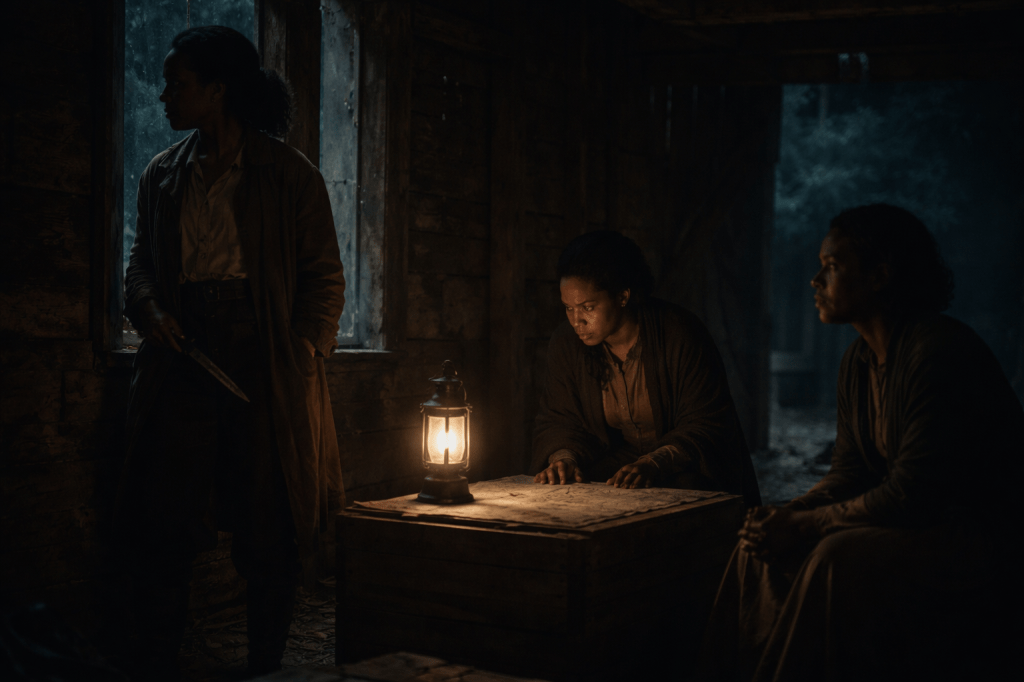
Josephine “Jo” Parker
The road is too quiet. I, Josephine “Jo” Parker, don’t trust quiet.
It’s what comes before a bullet. Before dogs. Before the men with torches.
Rain slides off the roof of the mill, dripping steady through the broken slats, puddling in the dirt at my feet. I adjust the knife at my hip and keep my eyes on the road. I can feel the other two watching me, but neither of them says what they’re thinking.
General Margaret Holloway is late. And the silence is saying more than she ever did.
Eliza Tomlinson
Jo acts like pacing will change something. It won’t.
She thinks the longer we wait, the worse this will be. She’s probably right. But I’m not about to tell her that.
I, Eliza Tomlinson, sit on an overturned crate, lantern low beside me, running my finger along the edges of the map. We need those supply routes. We need the coordinates. Margaret promised them. And if she promised them, she’ll bring them.
Won’t she?
Sarah hasn’t said a word since we arrived.
Sarah “Sable” Weaver
The Lord don’t speak to me the way He used to.
Or maybe I, Sarah “Sable” Weaver, stopped listening.
Either way, my gut tells me the same thing Jo’s does: we should have left an hour ago.
The rain is soft now, a whisper against the trees, but my heart pounds loud enough to make up for it. I close my hands together, warm them against my breath. I am not cold, but my fingers shake. Not from fear. Not yet.
Eliza exhales sharp.
“She’ll be here.”
Jo doesn’t answer. She just watches the road.
Josephine “Jo” Parker
She’s always talking about how she’s different. How she isn’t like the others. I’ve heard men say that. Women too. White folks who think just because they read the Bible a little different, or didn’t own enslaved people themselves, that it makes them clean.
But she was still raised with the taste of the Confederacy on her tongue.
That kind of thing don’t wash out easy.
Eliza Tomlinson
I hate that Jo makes me doubt. I don’t want to. I need this to be true.
If Margaret really means what she says—if she truly defected to the Union because she believes in something better—then maybe all of this has been worth it. Maybe we have more allies than we think.
But if she’s lying.
If she’s using us.
If Jo’s right.
I press my palm to the map, willing the truth into it. The coordinates, the supply routes, the intelligence that will save lives. That’s what matters. That’s why we came.
Sarah “Sable” Weaver
Horses.
I hear them before Jo does. Before Eliza does. Hooves on wet ground, slow and steady.
I whisper, “She’s coming.”
Jo doesn’t move. Doesn’t even blink.
“Not alone.”
Eliza jerks up from the map.
“What?”
I don’t count the hooves. I don’t need to.
There’s too many.
Too many for this to be a meeting. Too many for this to be a promise kept.
Too many for us to walk away.
Josephine “Jo” Parker
I don’t reach for my knife just yet. I wait.
Wait for the bend in the road to give up its ghosts. For the hoofbeats to turn to shapes in the dark.
First, the lantern. The glow of it swings with the movement of a horse—carried high, steady. Someone who ain’t afraid.
Then, the silhouette.
She’s in uniform tonight. The blue hangs heavy on her, cinched at the waist like a man’s, hat drawn low.
General Margaret Holloway.
Behind her, six Union soldiers. Blue-clad. Rifles at their sides.
The weight in my stomach drops lower.
She ain’t running to us.
She’s bringing an army.
Margaret shifts in the saddle. Leather creaks.
She adjusts one glove at the wrist, tugging it tight like she’s bracing for cold.
Then she looks at us.
Eliza Tomlinson
For a moment—just a moment—I tell myself there’s an explanation.
Maybe she was followed. Maybe she brought them to help. Maybe—
Then I see her face.
And I know.
Sarah “Sable” Weaver
Her lips move first. Words, careful and measured. I hear them, but I don’t listen.
I am watching her eyes.
She don’t look at me when she speaks. She looks past me. Like we ain’t here. Like she’s already decided what’s going to happen.
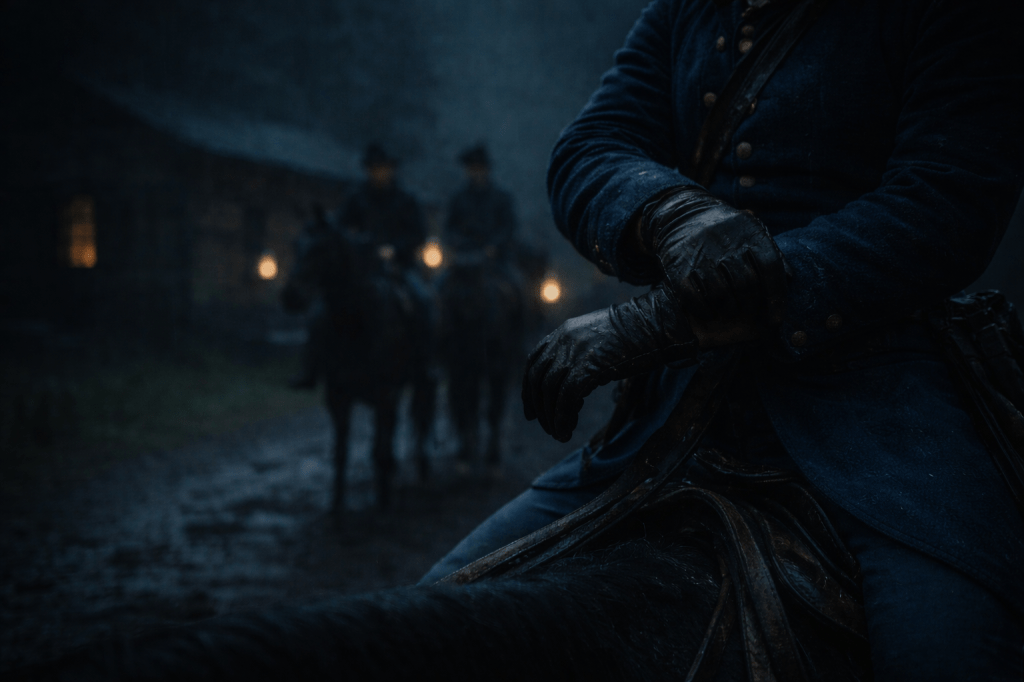
General Margaret Holloway
“You need to come with me.”
Josephine “Jo” Parker
I let the words sit. Heavy. Full of meaning she ain’t ready to speak out loud.
We. Need. To. Come. With. Her.
Not leave with her. Not ride with her.
Come.
Like prisoners. Like captured runaways.
Like property.
She didn’t bring freedom. She brought a leash.
Sarah “Sable” Weaver
I knew, somewhere deep, that this was coming.
That one day, we’d see her for who she truly was.
I should have felt something when the moment finally arrived.
Anger. Fear. Resentment.
Instead, I feel nothing.
I simply say: “You lied to us.”
General Margaret Holloway
“I did what I had to do.”
Her voice is low, forced steady. She still wants us to believe she’s on our side.
“I tried. I fought for you—for all of you. But this war is bigger than any of us. There are sacrifices. Choices that… they don’t look clean in the moment. You can’t expect—”
Josephine “Jo” Parker
“Sacrifices.” I spit the word back at her.
I step closer. Just enough to make her feel it.
She flinches.
Good.
“You didn’t sacrifice nothing, General,” I say. “You just threw us in the fire and stepped back. Just like the Confederates.”
Her mouth opens, then closes.
She knows I’m right. And for the first time, she’s the one being looked at.
Sarah “Sable” Weaver
Run.
Not away. Through.
I whisper, just loud enough for them to hear.
“Now.”
Josephine “Jo” Parker
I move first.
Knife unsheathed, not for slashing—for distraction.
Sarah goes low, into the trees.
Eliza stays high, cutting toward the creekbed.
We split like water, like shadow.
Let them chase ghosts.
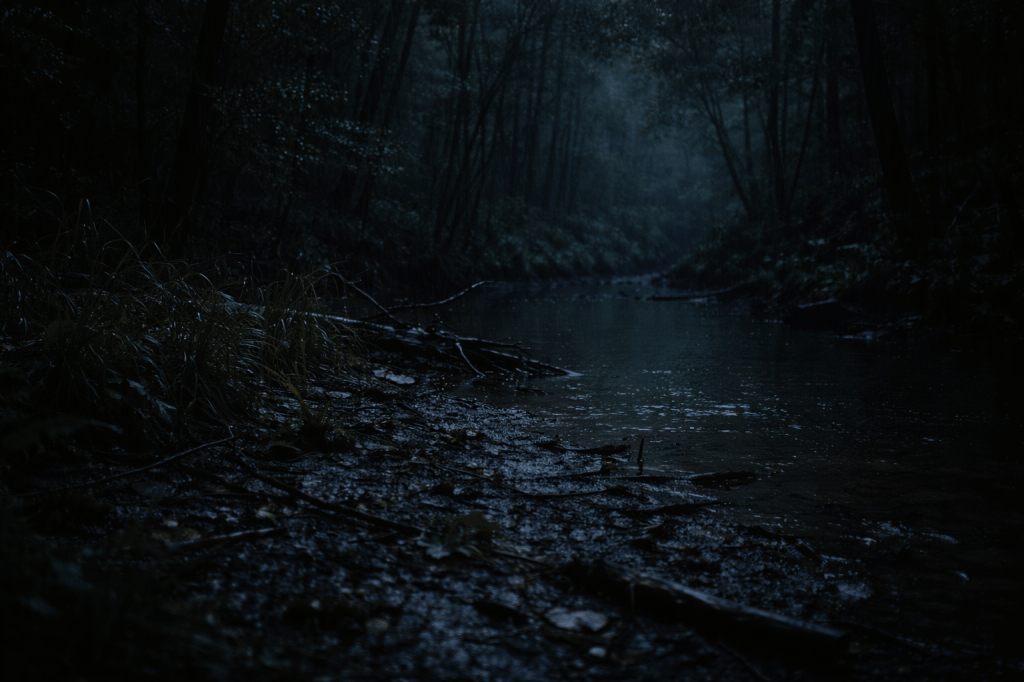
Eliza Tomlinson
The first shot goes wild.
They don’t expect us to scatter—they expected us to beg.
We ain’t begging.
Sarah “Sable” Weaver
Margaret doesn’t fire.
She watches.
And maybe, just maybe, for the first time in her life—she wonders if she was wrong.
But it’s too late for that now.
We are already gone.
Let Them Chase Ghosts:
In Our Own Words
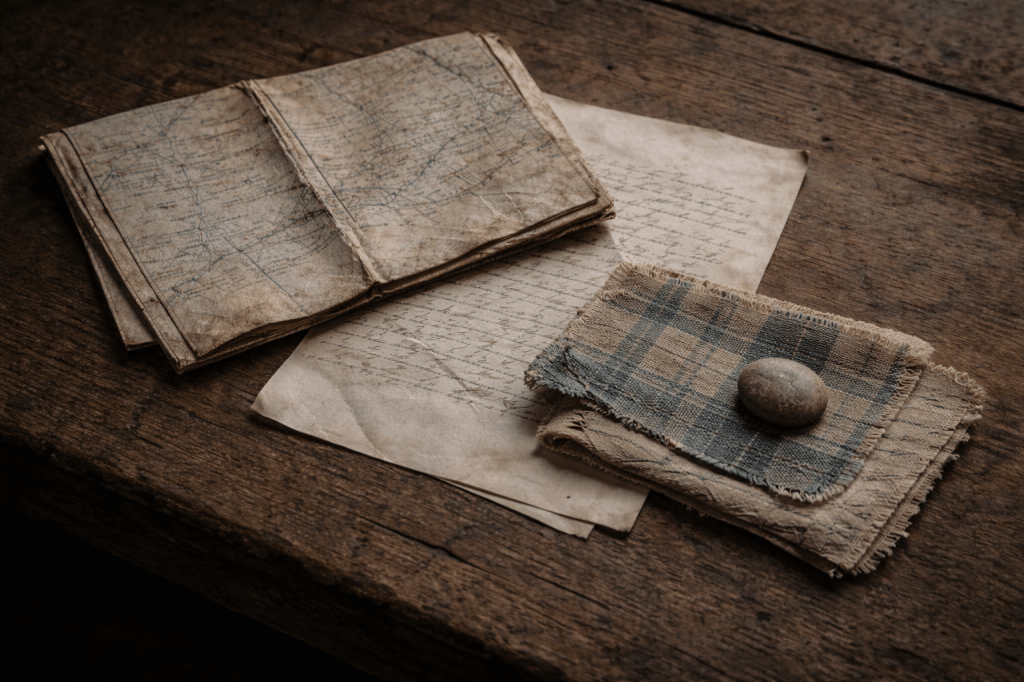
We write this because history will not.
They will write about the war.
About the generals, the battles, the victories and losses counted in white men’s names.
They will call some heroes, others traitors, and they will forget the rest of us.
They will say that justice was won in this war.
That the Union saved the enslaved, that the cause was righteous, that freedom came like a trumpet blast in the night.
They will not write about what was stolen. They will not write about who was sacrificed.
They will not write about us.
So we will.
Josephine “Jo” Parker
They will say we were lucky.
Lucky we weren’t caught. Lucky we escaped. Lucky to be alive.
But luck had nothing to do with it.
I spent my whole life running. First as a child, slipping through cane fields barefoot, trying to make it to the next day without being whipped or worse.
Then as a woman, slipping between camps, carrying secrets no one should have trusted me with, but they had no choice. I knew the land, the roads, the places men wouldn’t look.
Luck never got me anywhere. I did that.
I don’t tell this story so you’ll remember my name. I don’t care if you do. I tell this story because there were hundreds more like me. Thousands.
You didn’t know us. But we were there.
Eliza Tomlinson
Margaret Holloway would want you to believe she was a good woman.
Maybe, once, she was.
I don’t write this story to damn her.
She’s already damned herself.
I write this so no one will mistake her for what she was not.
She thought she was different. She thought because she wore blue instead of gray, because she used the right words, because she believed herself progressive, that she had done enough. That she was good.
But good women don’t betray the people who trusted them.
I spent years in parlors, in camps, in meeting halls, learning how to listen for the lie behind a man’s words. Learning how to smile when they thought I was stupid. Learning how to be invisible until it was time to strike.
I should have seen her for what she was sooner. I won’t make that mistake again.
Neither should you.
Sarah “Sable” Weaver
The Lord tells me what to remember.
I remember the nights when I hid enslaved women beneath floorboards, washed the blood from their shirts, pressed scripture into their palms before they ran again. I remember the women who took in the sick, who wrapped the wounds, who stitched the letters into quilt patterns that told runaways which way to go.
I remember what freedom cost.
And I remember who paid for it.
It was never the ones who wrote the speeches, or sat in congress, or wore gold buttons on their uniforms. It was us.
And it is still us.
They will not write about us.
But you will remember.
Our Final Words
They will tell you the war was won. That the righteous side prevailed. That this country moved forward, better and stronger than before.
We tell you now:
That war never ended.
It is still being fought. In back rooms and in courtrooms, in streets and in meetings, in the way they rewrite history to erase the ones who fought hardest for freedom.
So when they tell you to forget us, you must not.
When they tell you it’s over, you must not believe them.
And when they tell you this was never your fight, you must remind them—
We were here first.
Final Reflections: The Keepers
of This Story Speak
Abby Washington
“Let Them Chase Ghosts isn’t just a story. It’s a message. A reckoning. A refusal to let history erase the women who lived, fought, and resisted. We have always been here. We have always fought for ourselves. And we will always make sure our voices are heard.”
Louisa Johnson
“There was no hesitation in how we credited this work. Too often, Black women do the labor, only to have it co-opted, watered down, or erased altogether. We refused to let that happen here. The truth belongs to us. And we are keeping it.”
Naomi Davis
“Writing this was a form of justice. We took the fragments of these women’s lives and gave them back their agency. Even if we don’t know their real names, their courage still echoes. And now, the world will remember them—not just as footnotes, but as architects of history.”
Miriam Brown
“Some people will call Margaret Holloway’s betrayal shocking. Black women won’t. We’ve lived it. We’ve seen it. It was true then, and it’s still true now. Let Them Chase Ghosts isn’t just about history—it’s about today. And it’s about making sure we don’t let this happen again.”
Thea Garrison
“We have no interest in neat endings. The war never ended for us. The fight never stopped. But here’s what I know: Black women will always resist. We will always fight. And when they try to erase us, we will remind them—we were here first.”
In Their Names: The Real Women Behind the Ghosts
By Abby Washington, Louisa Johnson, Naomi Davis, Miriam Brown, & Thea Garrison
Though fictional, Let Them Chase Ghosts carries truths rooted in real lives and real resistance. Though Josephine “Jo” Parker, Eliza Tomlinson, and Sarah “Sable” Weaver are fictional, they are rooted in the lives of real Black women whose acts of resistance, intelligence work, and survival strategies during the Civil War era helped shape the course of American history.
While many history books focus on generals and presidents, in truth, freedom was often won in the shadows—by women who cooked in camp kitchens by day, passed messages by night, who memorized troop movements, stitched codes into quilts, or carried out spycraft under false names.
Among the real women whose courage echoes through this story are:
Harriet Jacobs – Enslaved since birth, she escaped and spent seven years hidden in an attic crawl space before ultimately gaining freedom. Her memoir, Incidents in the Life of a Slave Girl, remains one of the most powerful firsthand accounts of the intersections of gender, slavery, and resistance.
Mary Bowser: A formerly enslaved woman turned Union spy, Bowser infiltrated the Richmond residence of Confederate President Jefferson Davis—often referred to as the “Confederate White House”—by posing as a servant. Her intelligence work was so effective that Confederate leadership never suspected the scope of her access.
Frances Ellen Watkins Harper: A poet, lecturer, and abolitionist, Harper was one of the first Black women to be published in the United States. She used her voice to advocate for abolition, women’s rights, and racial justice with clarity and power.
Sojourner Truth: An abolitionist and former enslaved woman, Truth used public speaking as a weapon of resistance. Her “Ain’t I a Woman?” speech remains an iconic call for intersectional justice.
And countless unnamed women, whose names were never written And countless unnamed women, whose names were never written down, but whose acts of resistance—hidden in kitchens, fields, backroads, and basements—still echo. And to the women still fighting for justice today—your courage is the next verse in this story.
These women—and countless others whose names we will never know—carried the weight of a war they did not start, but whose outcomes they shaped with courage and conviction.
This story is not a re-creation of their lives, but a tribute to the spirit they embodied. It reminds us that the fight for freedom has always depended on the overlooked, the underestimated, and the deliberately forgotten.
Black women were not just witnesses to history. They were its architects. Let us remember them not only in sorrow or admiration—but in action.
This work is preserved as part of the Her Stories, Her World archive, a living collection dedicated to safeguarding women-centered narratives that history, culture, or power structures have attempted to erase.
 Scott Bryant
You must be logged in to post a comment.