
Some things survive neatly, through official archives and careful restoration. Others just drift until someone happens to notice them. This 1938 German dub of Disney’s Snow White and the Seven Dwarfs (Sneewittchen und die Sieben Zwerge) feels like one of the latter.
I wasn’t expecting to find anything unusual the night I stumbled across a 1938 German dub of Snow White and the Seven Dwarfs, quietly surviving on the Internet Archive. Honestly, I’ve never been the biggest fan of the film itself. It’s historically important, yes, but it’s not the Disney title I revisit.
But this version… this version stopped me in my tracks.
There’s something strange about clicking on what should be the most familiar animated film in the world and hearing it in a voice you weren’t prepared for — deeper, sharper, older. German gives Snow White’s world a weight the English version never quite had. The Queen and the Witch sound like they stepped out of a different film entirely. There’s a gravity in those scenes that pulls you in whether you intend it or not.
And then the date hits you — 1938.
Recorded in Amsterdam. Just months before the world would change forever.
And suddenly it no longer feels like “just another dub.”
It feels like something fragile that somehow washed up on the internet decades later.
I’m not a historian, not a researcher, not an archivist.
But I’m someone who cares about film — about the corners of cinema that barely survived, the things most people scroll past. And something about this dub made me stop and listen.
What Makes This Dub Different
The first thing that struck me about this dub wasn’t the rarity. It wasn’t the date. It wasn’t even the German language itself.
It was the tone.
This version doesn’t behave like the Disney movie everyone grew up with. The Queen sounds colder, more adult. The Witch feels older and more lived-in, like someone who’s been around dark magic for decades instead of someone doing a theatrical villain voice.
Even Snow White herself has a slightly different energy. There’s a kind of formality to her voice — polite, proper, but not sugary. In English she feels almost childlike; in German she sounds like a young woman trying her best to stay sweet in a world that doesn’t make that easy.
It’s like listening to the same movie through a completely different emotional filter.
And maybe that’s why it pulled me in. German has a seriousness to it — a kind of weight — that softens the fairy-tale innocence and sharpens the danger. When the Queen transforms into the Witch, the whole mood shifts in a way that feels more grounded and honestly a little unsettling.
I kept replaying those scenes, not because I love Snow White, but because the performance feels… heavier. More adult. More real.
It’s strange how a familiar film can turn unfamiliar with just a different language, different actors, and a different moment in history.
And this particular moment — 1938 — sits right on the edge of something that makes the dub feel almost too fragile.
Like it shouldn’t exist, but somehow does.
The Human Weight Behind It
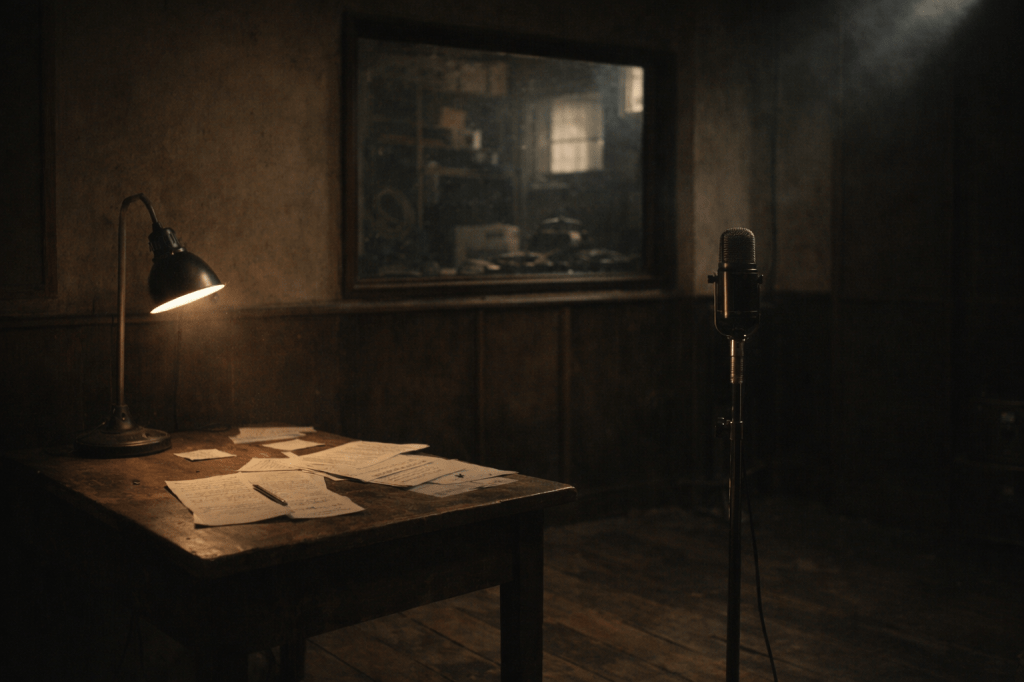
The more I watched this dub, the more I kept circling back to one thing:
this wasn’t recorded in some shiny studio in Burbank with Disney archivists taking notes and storing everything in climate-controlled vaults.
It was recorded in Amsterdam in 1938.
A strange moment in time — just before borders closed, before lives were uprooted, before the world narrowed into the dark shape we now recognize from history books. And when you start looking into who voiced some of these characters, the film suddenly becomes less of a Disney artifact and more of a time capsule full of people who were trying to keep working, keep creating, keep living.
Several cast members — Dora Gerson, Otto Wallburg, Kurt Gerron — were Jewish performers who had already fled Germany. They rebuilt their careers for a moment in the Netherlands, taking whatever work they could get. Voice acting for an American fairy tale probably didn’t feel remarkable at the time. It was just a job. A way to hold onto a profession that was slipping out from under them.
Knowing what happened to each of them later doesn’t make this dub tragic; it makes it human. It turns every line into a reminder that film history is tied to real lives, real people, real moments that weren’t preserved because someone at Disney thought they’d matter eighty years later.
Maybe that’s why the Queen’s voice sounds so arresting.
Maybe that’s why the Witch feels heavier, more ancient, more truthful.
Maybe that’s why certain lines land differently now.
You can’t unhear history once you know it’s there.
And yet, this version wasn’t curated, restored, or even acknowledged by the studio that made the film. It didn’t premiere on any anniversary box set, didn’t get a clean Blu-ray release, didn’t show up on Disney+ with a banner saying “Original German Dub.”
It survived in the most fragile way things survive: quietly, in private hands, passed along, mislabeled, half-forgotten… until one day it appeared on Internet Archive like a bottle washing ashore.
And for something made at the edge of a storm, finding it in 2025 feels strangely moving.
The Cast: What We Know,
What We Don’t
One of the odd things about early international dubs is how little paper trail they leave behind. Disney didn’t treat these recordings like historical artifacts in the 1930s — they were business transactions, not items meant for their archives.
So the cast list for the 1938 German dub ends up being this strange mix of:
- actors we know were involved,
- actors who are listed on fan databases but not fully confirmed,
- and roles where no one left any record at all.
Here’s the simplest, most honest way to understand it:
✔ Confirmed or Strongly Supported
These names show up in multiple, independent sources and match what we know of their careers at the time.
- Hortense Raky — Snow White
- Dora Gerson — The Queen
- Frau Stern — The Witch
- Otto Wallburg — Doc
- Kurt Gerron — Magic Mirror
These are the performances you can listen to and immediately feel grounded in history. Even the Witch’s scenes carry this uncanny familiarity — her cackles echo so closely to Lucille LaVerne that you almost forget you’re listening to a different dub.
⚠️ Likely, but Not Fully Verified
These names appear across hobbyist lists and collector databases… but without original studio documentation, we can’t treat them as confirmed.
- Kurt Lilien — Grumpy
- Siegfried Arno — Happy / Sneezy
- “Kurt Gerrson” — likely a misspelling or mistaken duplication of Kurt Gerron
They’re plausible. They fit. But we have to leave room for the unknown.
❓ Completely Unknown
Some roles were simply never credited anywhere:
- Prince Charming
- The Huntsman
And honestly? This is normal for the era. Early dubbing work was rarely credited, especially for smaller roles.
Why This Matters
I’m not trying to turn this into detective work.
For me, the cast list is less about verification and more about acknowledging the people behind the voices. They weren’t anonymous, even if the records didn’t survive.
These performers had full lives, careers, hopes — and this dub captures them at a moment in time that feels suspended between normal work and a future none of them could see.
It doesn’t need full academic precision to matter.
It just needs honesty about what we know, and humility about what we don’t.
Why This Version Matters to Me
I think what surprised me most about this whole discovery is that I don’t even love Snow White as a film. It’s never been the Disney title I revisit. I connect more with Sleeping Beauty, or the darker fairy-tale retellings, or honestly the films that came decades later.
But this dub…this one sits differently.
Maybe it’s because the performances feel older and more grounded.
Maybe it’s the way German reshapes the familiar lines.
Maybe it’s the Queen’s voice, which hits like someone who has lived a full life, not a caricature of a villain.
But part of it is simply the history that clings to it.
It’s one thing to watch a famous film. It’s another to hear voices from 1938 who didn’t make it to 1945 — people whose lives were cut short, yet whose work survived in a format no one thought to preserve.
Something about that hits differently.
It’s not nostalgia.
It’s not sentimentality.
It’s more like standing in front of a faded photograph you didn’t expect to find. You’re not sure how it survived, but now that it’s in front of you, you feel responsible for acknowledging it.
I’m not trying to turn this into a grand statement about film preservation or cultural memory. I’m just someone who loves movies — and sometimes you come across something that makes you pause.
This dub feels like one of those things.
A small piece of film history that drifted, got lost, then washed up in the digital age with no fanfare, no restoration, no special edition release.
Just quietly surviving.
And I think there’s something worth honoring in that.
Closing Reflection
I don’t know how this dub survived.
Maybe a collector kept it.
Maybe a forgotten print sat in someone’s attic for decades.
Maybe it made its way through a chain of hands until someone finally digitized it without realizing what they had.
And maybe that’s the real story here — that not everything worth preserving is preserved on purpose.
Studios focus on their “important” titles, their prestige restorations, their branded anniversary editions. But history doesn’t always cooperate with what studios think is valuable. Sometimes the things that fall through the cracks end up being the pieces that tell the quieter, more human stories.
This 1938 German dub isn’t rare because it’s collectible. It’s rare because no one thought it mattered.
And yet here it is — on the Internet Archive of all places — outlasting the world it was made in, outlasting the people who made it, outlasting the moment in history that shaped its cast.
I don’t claim to be an archivist. I’m just someone who notices things like this and wants them to be seen, or at least acknowledged. Not because the film itself is my favorite, but because the voices behind it deserve not to disappear completely.
If anything, finding this dub reminded me of how fragile film history really is — and how sometimes, the most meaningful pieces aren’t the ones preserved in vaults, but the ones that simply refused to vanish.
And for something recorded in 1938, in a world that was about to collapse, surviving at all feels like a small kind of miracle. If you’re curious, it isn’t hard to find. It’s just sitting there quietly on the Internet Archive — the sort of thing you only notice when you know to look.
Note: Details about the 1938 German dub are fragmentary. Some cast members are well-documented; others appear in long-circulated but unverified lists. This post is meant as a personal reflection, not an academic record, based on the best information publicly available.
 Scott Bryant
You must be logged in to post a comment.