
How cinematic canon enforcement emerged from failure
I. Introduction — Built Under Duress
The Lumivore Prompt did not emerge from theory, whiteboards, or abstract experimentation.
It emerged from crisis.
During the visual construction of Der schönste Fehler (The Fairest Mistake), what began as a routine request for multi-character cinematic illustrations quickly collapsed into chaos. Witches duplicated themselves. Faces were swapped. Proportions warped. Extra women appeared uninvited, materializing from the Black Forest like narrative poltergeists.
Scenes drifted. Canon dissolved.
The system was not misbehaving randomly — it was behaving as designed, filling ambiguity with invention.
To contain the instability, a structured system was built — iteratively, painfully, and at times humorously — to enforce cinematic continuity, identity integrity, and spatial logic across a sequence of images.
That system became Lumivore.
II. What Broke (And Why It Mattered)
Most AI image failures are dismissed as cosmetic.
These were not.
As Der schönste Fehler expanded into multi-perspective scenes involving Brünnhilde, Magda, Ilsa, and Annaliese, the following failures began compounding:
- duplicate witches occupying the same scene
- extra anonymous women appearing without narrative function
- incorrect or shifting lighting conditions
- unrequested magical effects overriding realism
- facial structures swapping between characters
- non-canonical wardrobe drift
- forest scenes silently relocating into alpine meadows
These were not minor glitches — they destroyed narrative trust.
The realization was unavoidable:
Multi-character cinematic scenes require explicit constraint architecture.
Without it, continuity is mathematically unstable.
III. The Necessity of Constraint
Cinema operates on invisible agreements:
- the camera exists in space
- light obeys physics
- bodies persist across cuts
- environments do not reinvent themselves mid-scene
AI does not inherit these agreements unless they are deliberately enforced.
Lumivore was not built to improve beauty, fidelity, or novelty.
It was built to enforce canon.
IV. The Constraint Architecture
Lumivore stabilizes cinematic imagery through four interlocking constraint layers:
1. Identity Lock
Defines and enforces:
- canonical facial structure
- body proportions
- hair, age, and physical presence
- wardrobe and material continuity
Once locked, identity is treated as immutable.
2. Population Lock
Explicitly defines:
- how many characters may appear
- who may appear
- who must not appear
This prevents the model from “filling” negative space with additional bodies.
3. Spatial & Blocking Lock
Establishes:
- exact character placement
- distance between figures
- orientation to camera and environment
- grounded blocking consistent with cinema
Characters are positioned, not merely described.
4. Atmospheric Lock
Controls:
- time of day
- lighting source and quality
- weather and environment
- emotional tone
Light is treated as narrative infrastructure, not decoration.
When combined, these constraints reduce visual drift to near-zero, even in complex multi-character scenes.
V. Canon Enforcement as Creative Freedom
Counterintuitively, constraint increased expressive freedom.
Once identity, population, space, and atmosphere were stabilized:
- emotional subtlety became possible
- quieter compositions emerged
- narrative beats could unfold visually
The system did not limit creativity — it protected it.
VI. The Role of Human Judgment
Lumivore does not replace artistic judgment.
It demands it.
The guiding principle remains:
AI generates the negative.
Human judgment finishes the image.
Generation is treated as capture.
Selection, correction, and finishing remain human responsibilities.
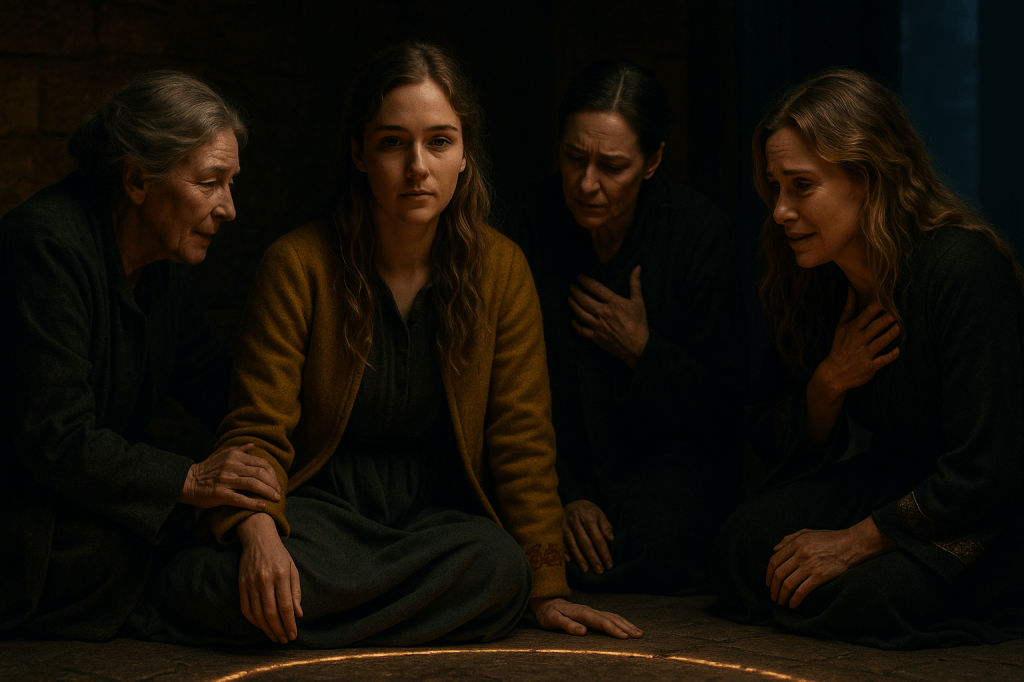
VII. Visual Evidence
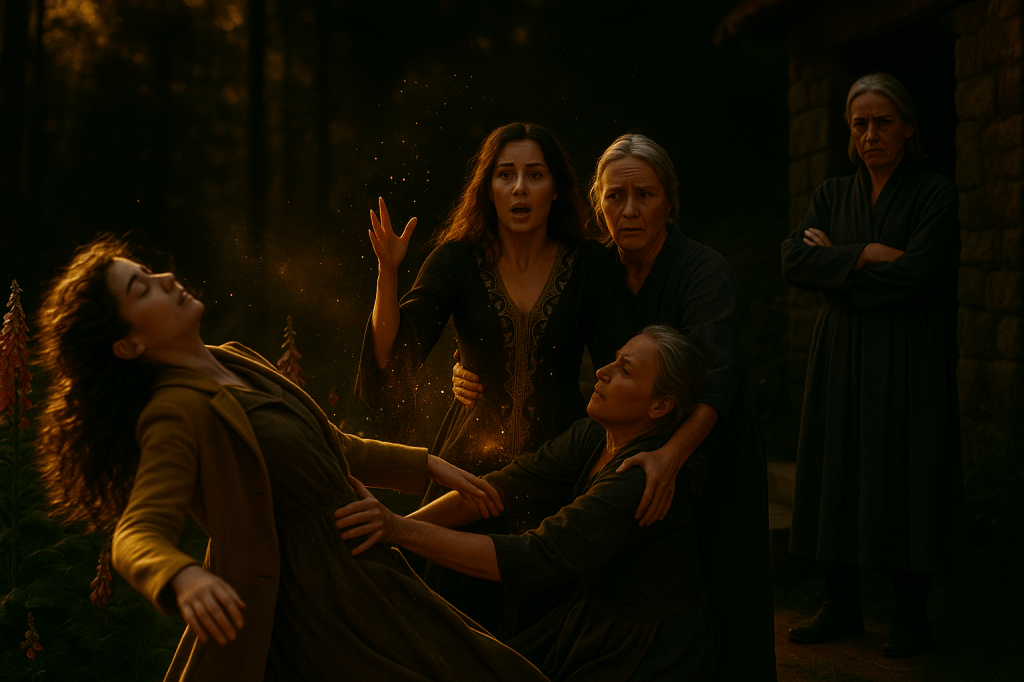
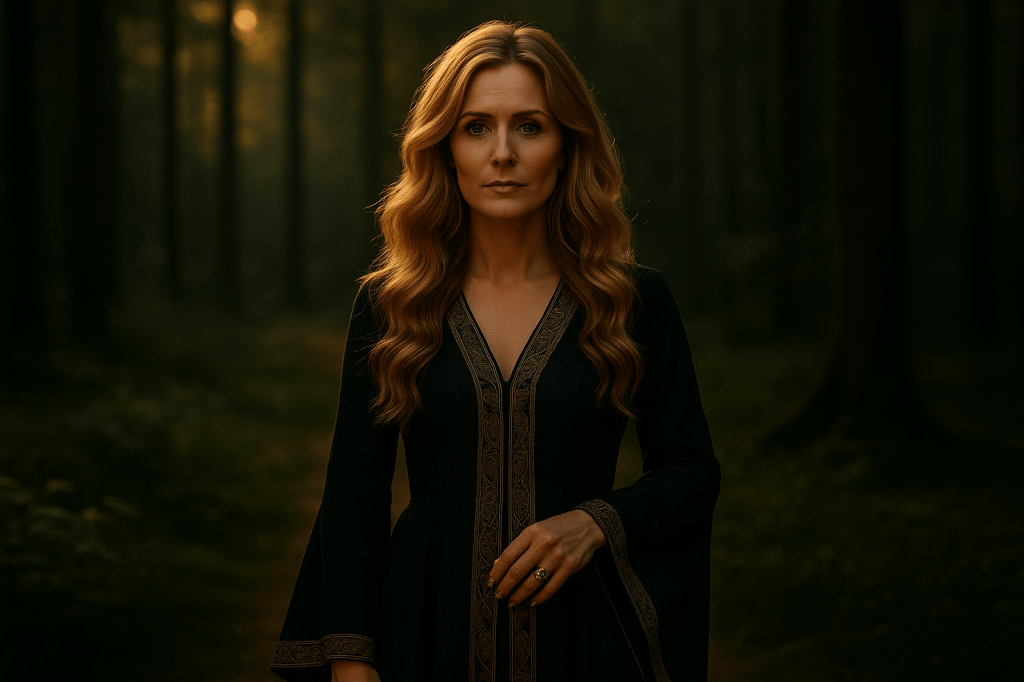
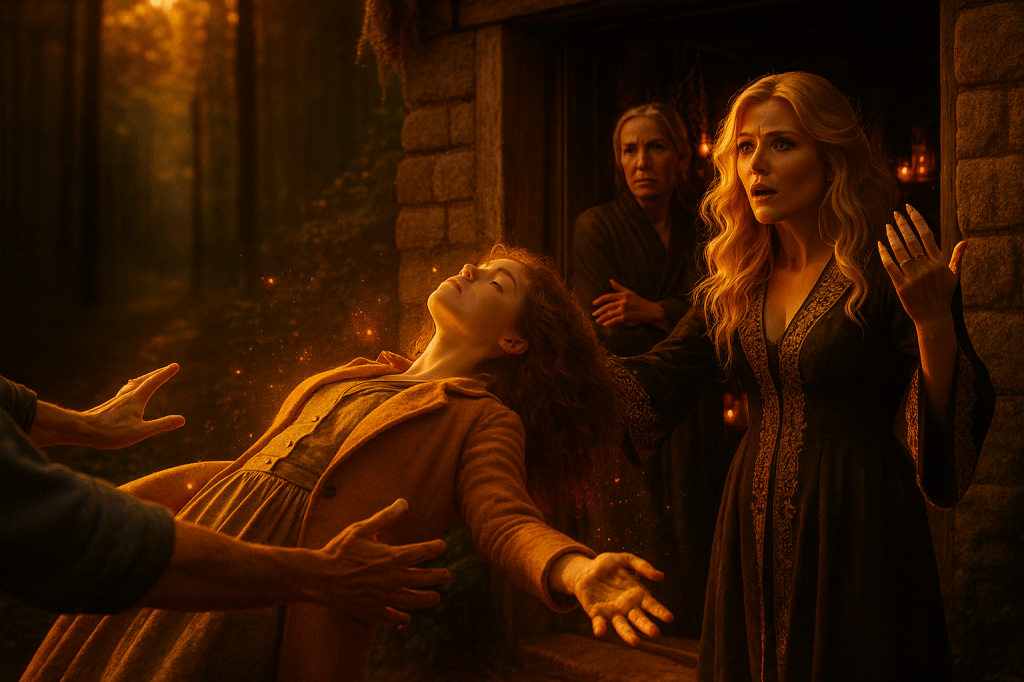
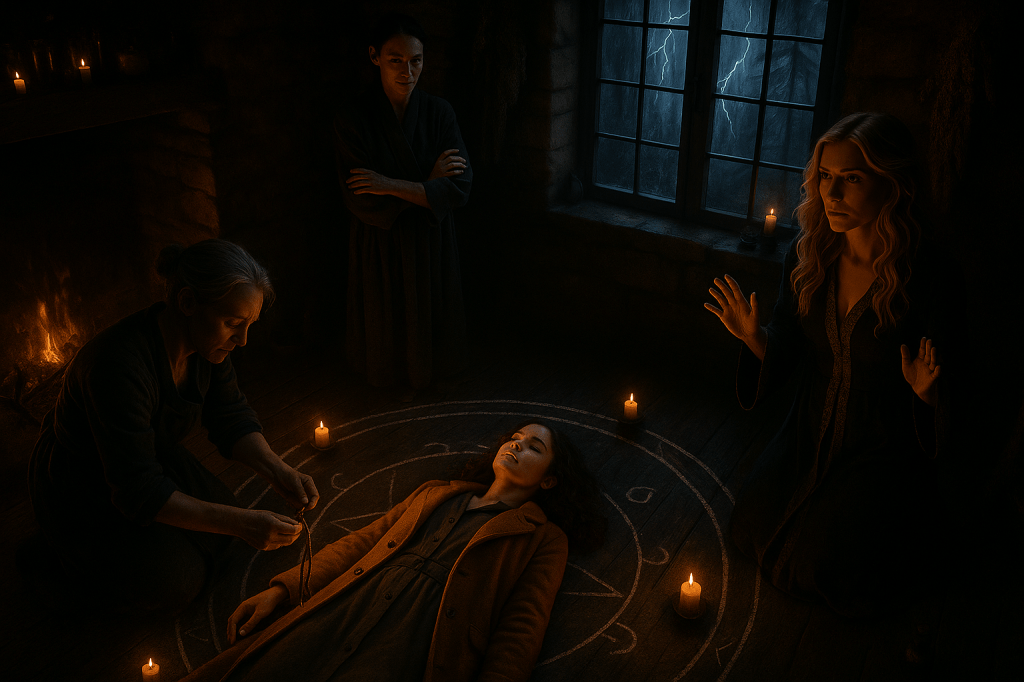
The following figures demonstrate the evolution from unstable, drifting outputs to fully stabilized, canonical, Lumivore-governed scenes. Included here for archival and pedagogical purposes.

VIII. Principles for Future Use
1. Always Define Canon
Once a character’s canonical visual appearance is set, lock it into the prompt and reference it consistently.
2. Limit Population
Most misfires occurred when the model attempted to “fill” space with additional women. Explicit numerical limits prevent this.
3. Control the Light
Golden hour, candlelight, twilight, snowlight: anchoring lighting dramatically reduces drift.
4. Maintain Tone
A24, folklore cinema, classical realism — these anchors guide the entire visual aesthetic.
VX. Conclusion
Lumivore began as damage control.
It became a discipline.
What survives is not a prompt, but a cinematic enforcement system — one capable of preserving identity, continuity, and emotional truth across AI-generated imagery.
This document stands as the origin record of that system, forged under failure, refined through rigor, and stabilized through constraint.
 Scott Bryant
You must be logged in to post a comment.