
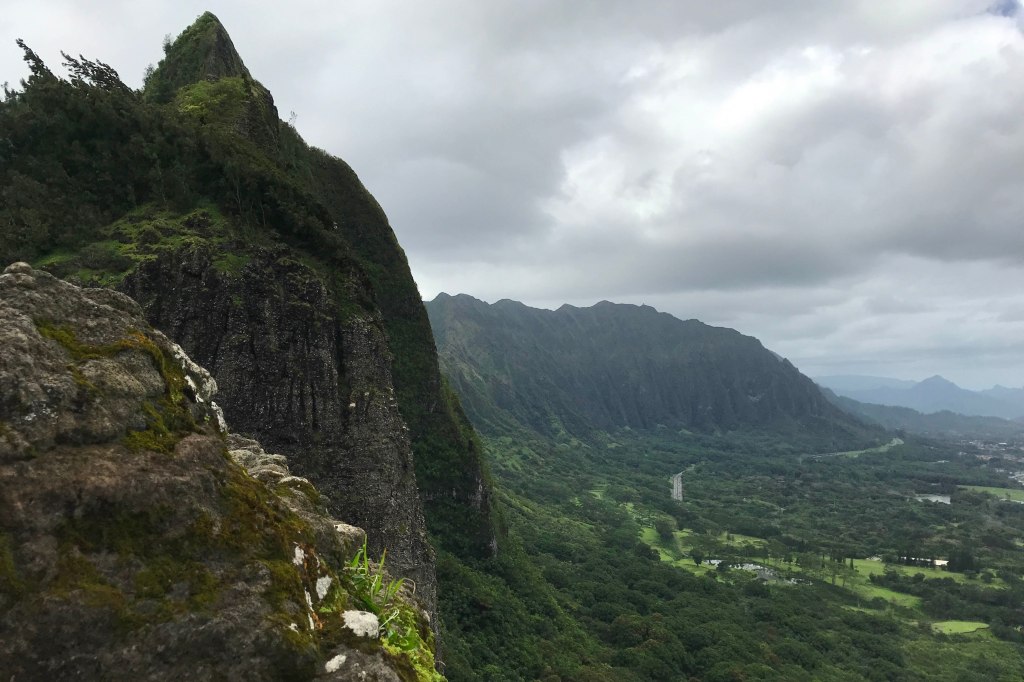
The wind hit harder than I expected.
Not a breeze, not something ornamental. It arrived with enough force to interrupt balance, to make the body react before the mind could decide how to respond. My first instinct was to brace, to lean into it, to correct myself against the pressure.
For a moment, it felt like being pushed.
Then I stopped answering it.
I loosened my stance instead of tightening it. The force didn’t lessen, but it stopped feeling personal. The wind wasn’t acting on me. It was simply continuing.
Standing there, I realized the place wasn’t responding at all.
It didn’t adjust.
It didn’t acknowledge my presence.
It moved the same way regardless.
Once I stopped resisting, it felt good—not comforting, not gentle, but steady. Honest. The relief wasn’t in being welcomed, but in no longer trying to manage what wasn’t meant to be managed.
Only later did the weight of the place surface fully—the cliff, the history, the understanding that this land had already absorbed events that didn’t need reenactment to be felt. Standing there, it was impossible not to imagine the wind as it must have been then—not symbolic, not cinematic, just relentless. The land did not change its behavior for history. It simply continued.
Years later, what stays with me isn’t the view. It’s the moment I learned how to stop bracing. How to stand without being centered. How to let something larger than me proceed without interference.
I didn’t take anything from that place.
I just learned how to be there.
 Scott Bryant
You must be logged in to post a comment.