
Mission: SPACE
EPCOT – Lake Buena Vista, Florida
May 2015
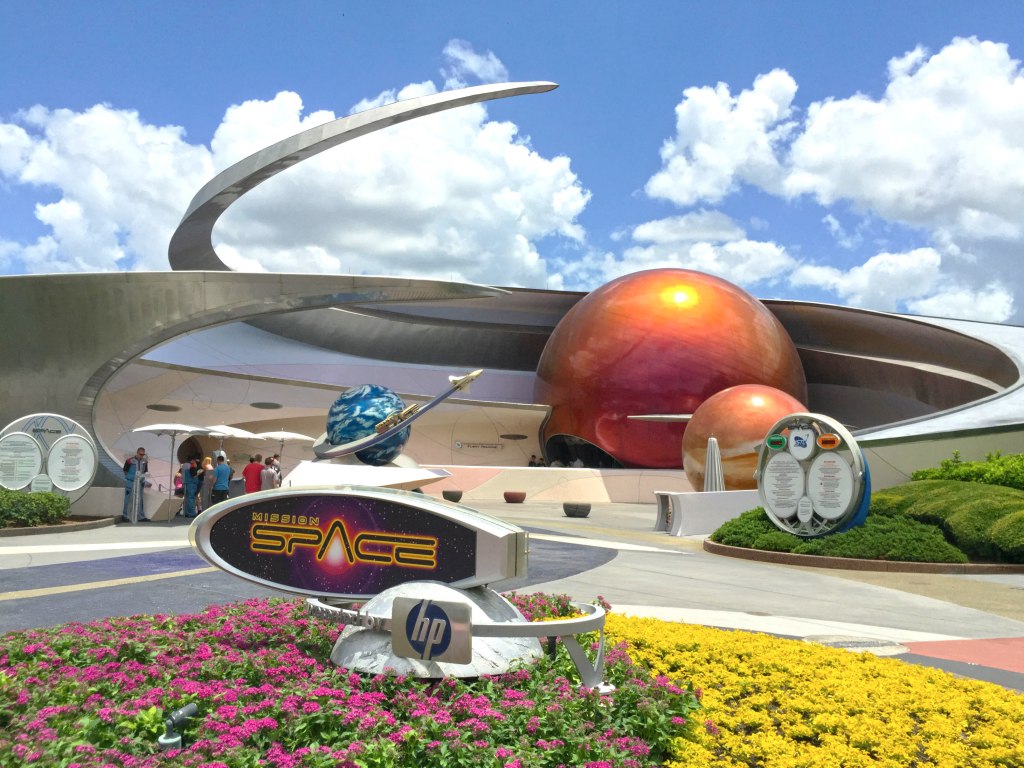
The curved structure of Mission: SPACE rises over the plaza suggesting a fragment of a spacecraft. Metallic arcs sweep overhead, while oversized planetary forms near the entrance establish a sense of scale tied to the solar system.
Inside, the queue is organized as a training facility rather than a conventional ride line.
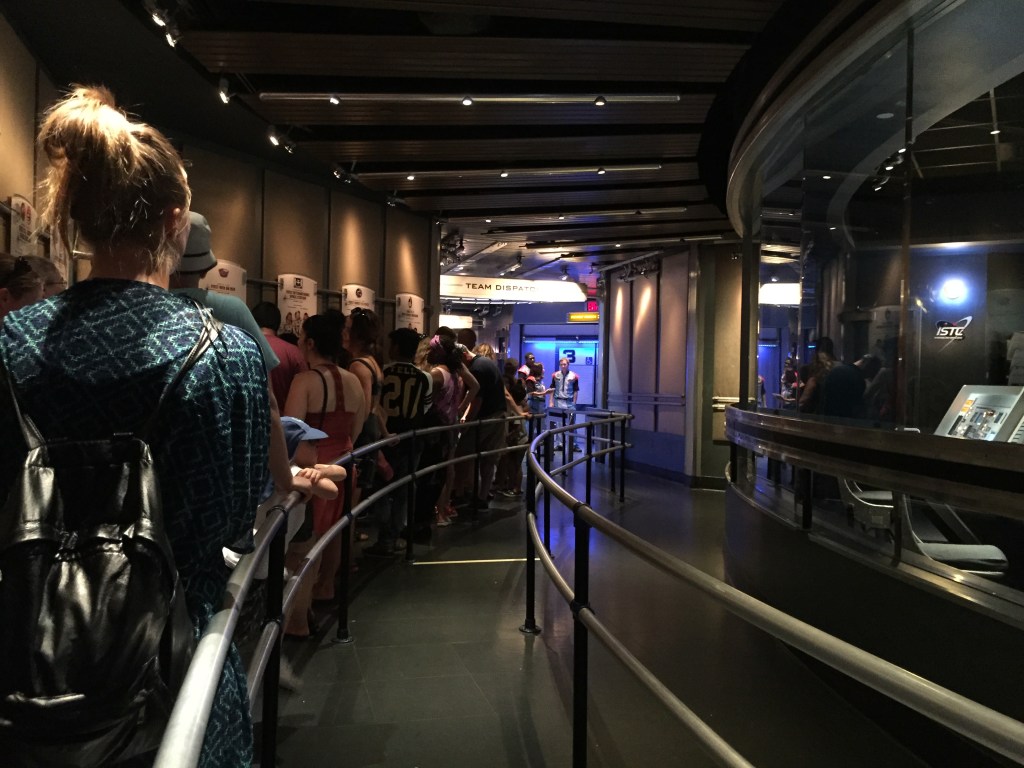
Visitors move through dimly lit corridors where mission control consoles glow behind glass.
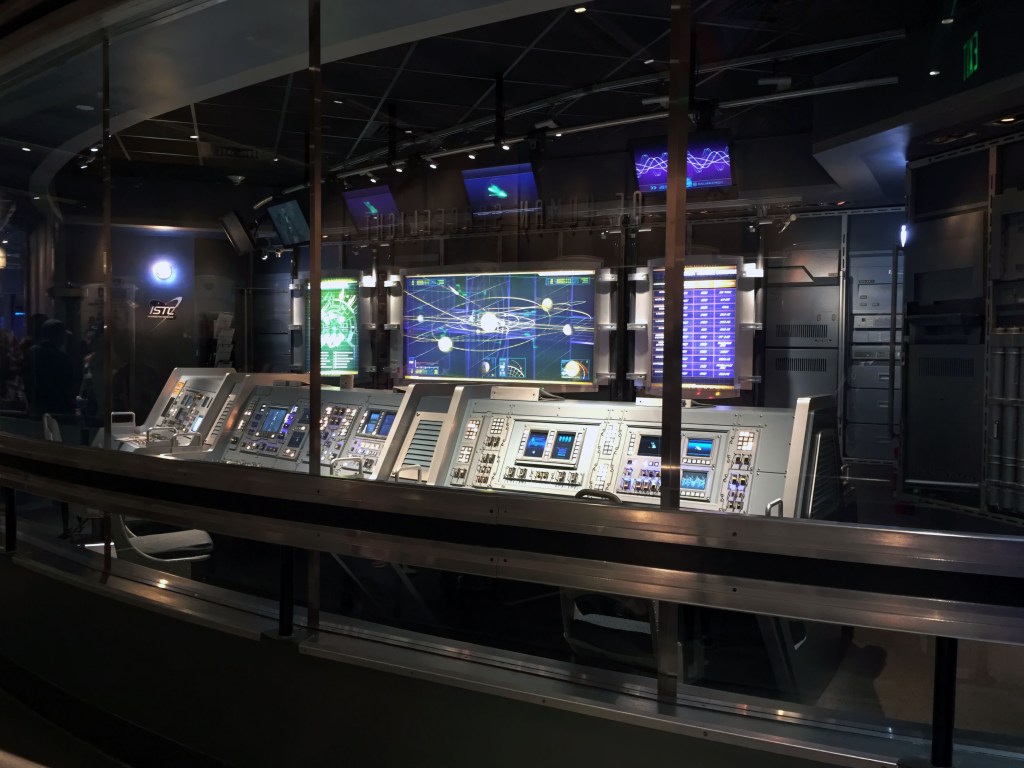
Displays reference key moments in the history of spaceflight, placing the environment between exhibition and simulation.
Among these references is a portrait marking a milestone: the first woman to travel into space.
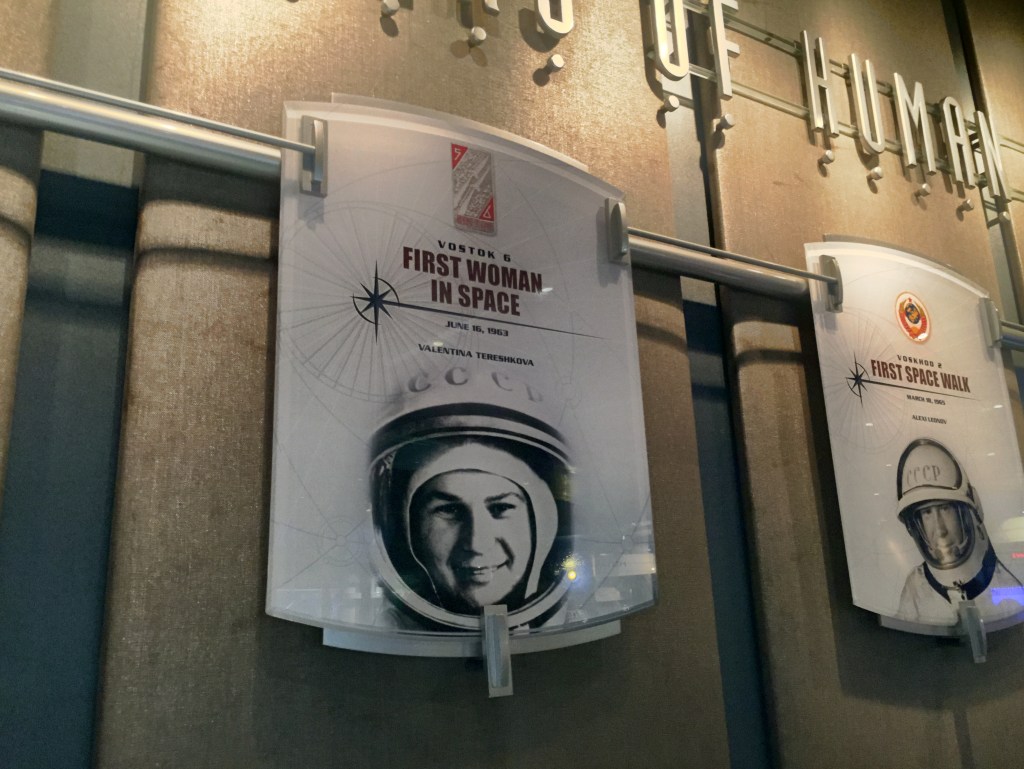
Valentina Tereshkova orbited Earth aboard Vostok 6 in 1963, completing forty-eight orbits over nearly three days. Her flight occurred during the early years of the space race between the Soviet space program and NASA, when each mission extended the perceived limits of human spaceflight.
Within the queue, that history functions as context rather than focus. It establishes a framework in which the experience that follows can be understood.
☉
The attraction translates that framework into a structured simulation.
Guests are assigned roles—pilot, navigator, engineer, or commander—and seated within a centrifuge-based system designed to replicate the physical conditions of launch and flight.
The Orange Mission intensifies this effect through sustained rotation and tilt, while the Green Mission reduces the forces while maintaining the same sequence of events.
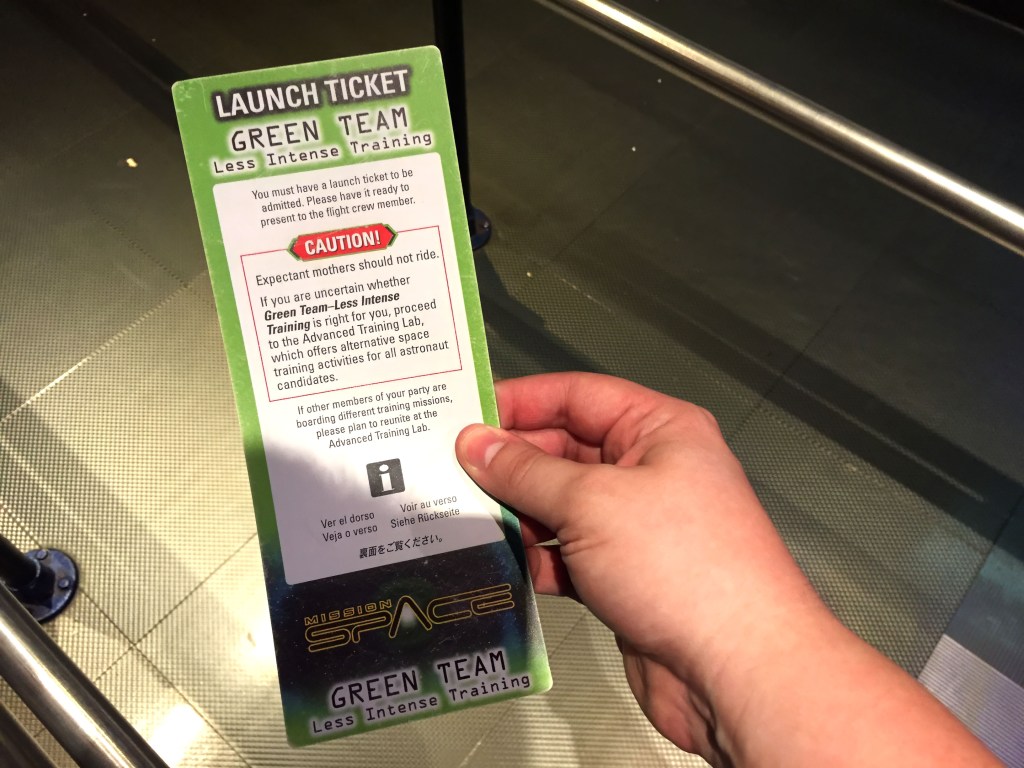
Inside the cabin, screens and control panels coordinate the experience. Visuals of Earth receding from view are synchronized with physical motion, while instructions from mission control guide each phase of the simulation. The system does not reproduce spaceflight directly. It reproduces the conditions under which spaceflight is understood: acceleration, orientation, and procedural response.
The queue, the historical references, and the simulation operate as a continuous sequence.
Each stage prepares the next. The environment moves from representation to participation, shifting visitors from observers of space exploration to participants within a controlled version of it.
The result is not a recreation of space, but a constructed experience of launch—organizing history, technology, and perception into a single system.
☉
 Scott Bryant
You must be logged in to post a comment.