
❖
Morocco Pavilion, EPCOT
Lake Buena Vista, Florida
2015
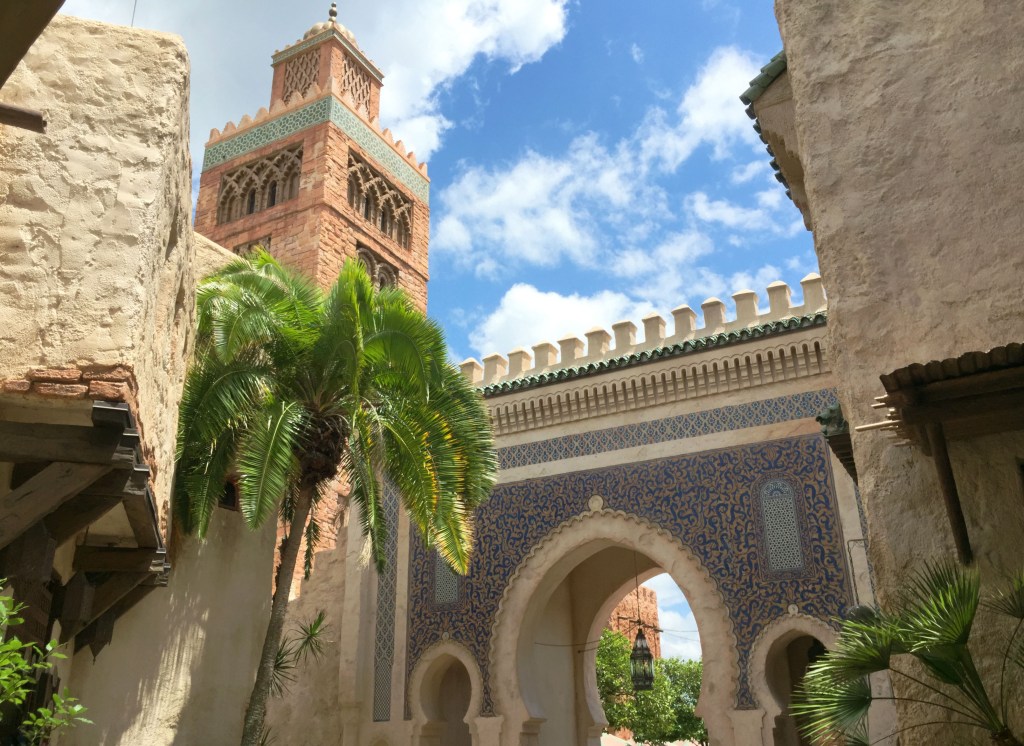
Cultural Notes — Moroccan Architecture in World Showcase
In World Showcase at EPCOT, the Morocco pavilion unfolds as a network of courtyards, passageways, and towers.
Visitors pass beneath tiled gateways and through narrow streets where stucco walls rise around shaded walkways. Wooden beams project from the buildings above, and lanterns hang from arches that open into quiet interior spaces.
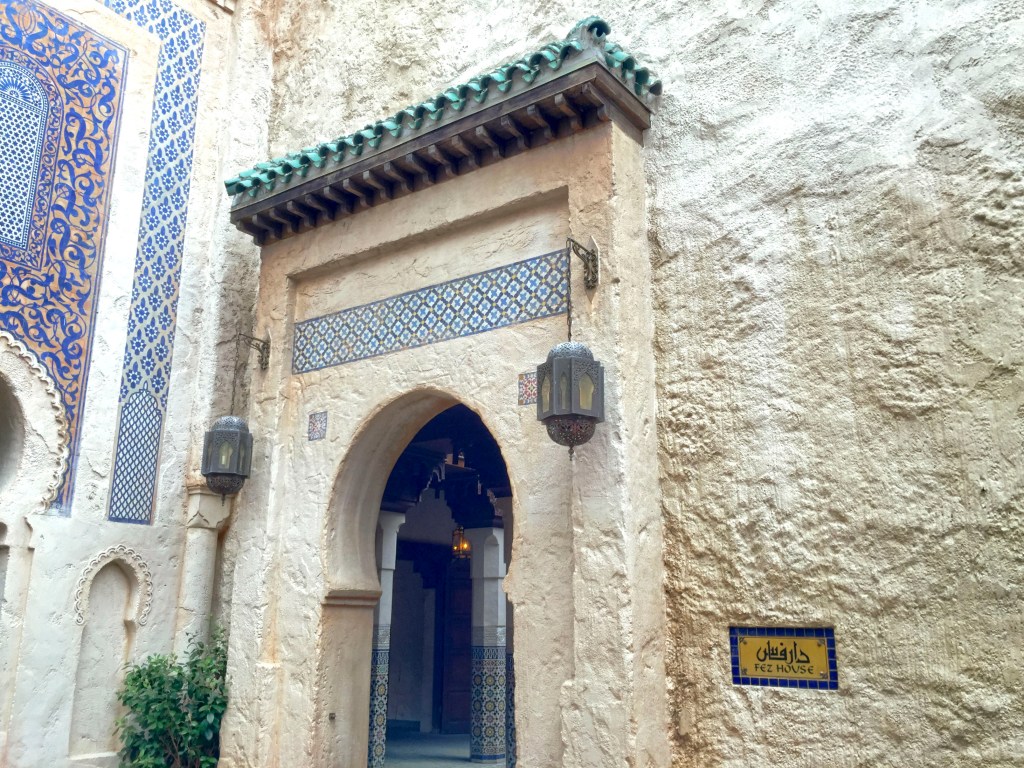
The pavilion opened in 1984 with the participation of the government of Morocco during the reign of Hassan II. Moroccan artisans contributed to many of the decorative details throughout the area, including tile mosaics and carved plaster.
Within one courtyard, a space known as the Fez House reflects the form of a traditional Moroccan home built around an open interior court. Columns lined with patterned tile surround a small fountain, while wooden balconies overlook the space from above.
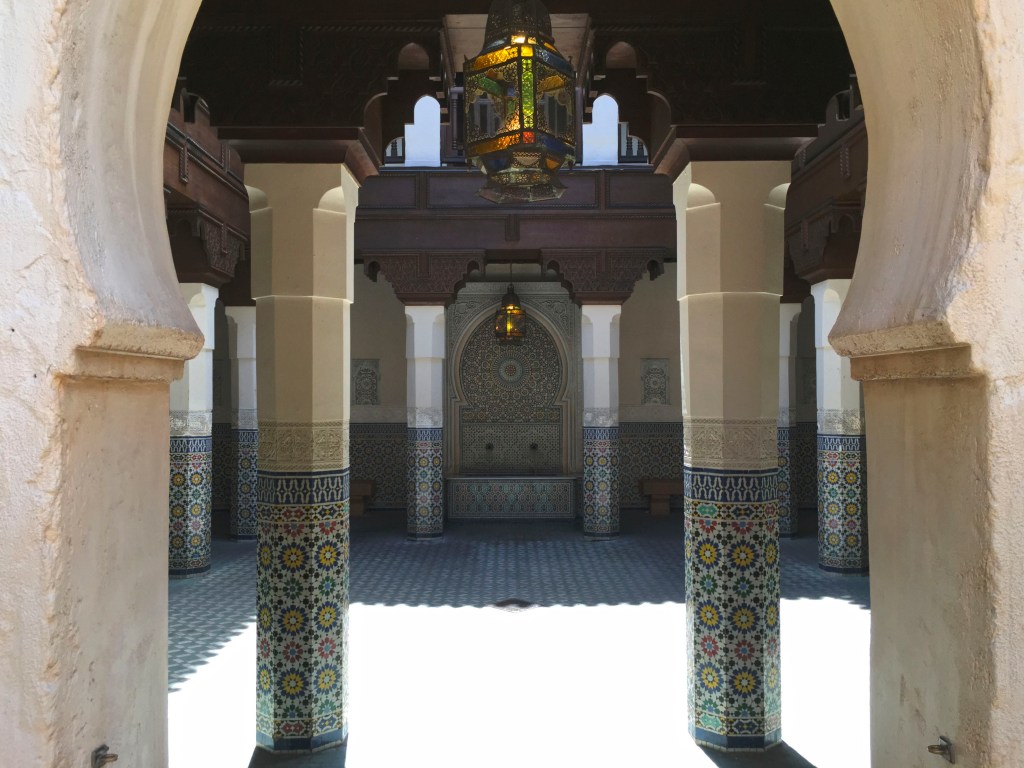
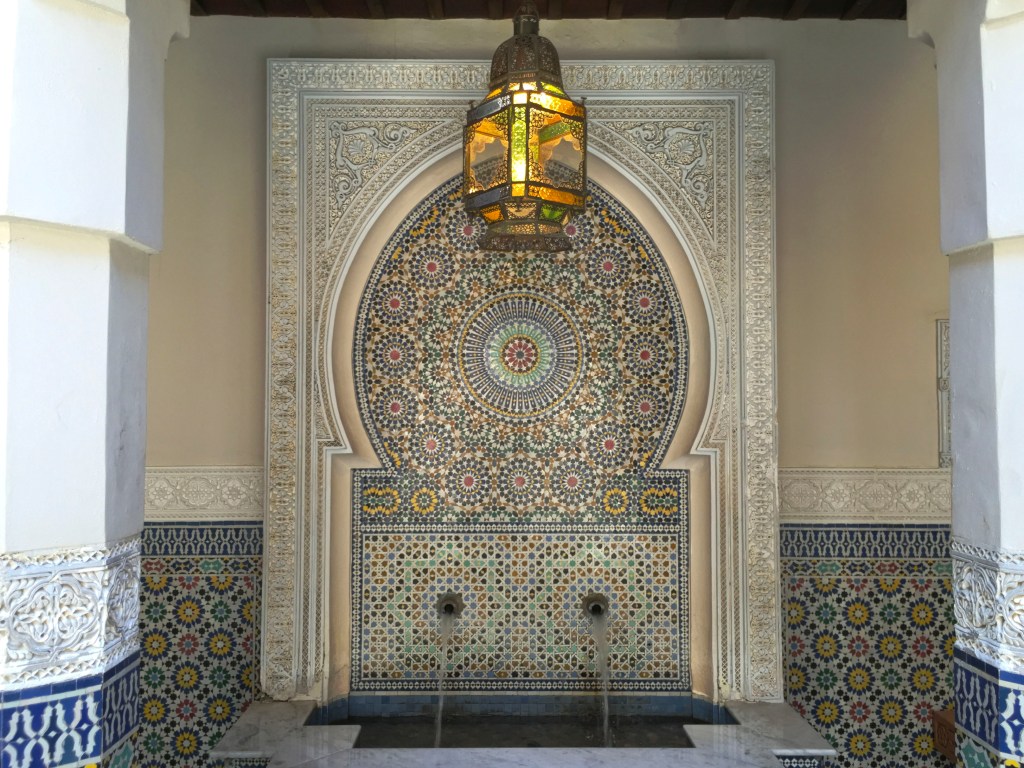
Tilework appears along gateways, fountains, and columns, arranged in repeating geometric patterns. This style reflects a long tradition in Islamic art, where decoration often centers on intricate geometry and vegetal designs rather than depictions of people.
Elsewhere, fortress-like walls and towers rise beyond the courtyards. A tall square tower visible above the rooftops is inspired by the minaret of the Koutoubia Mosque in Marrakesh.
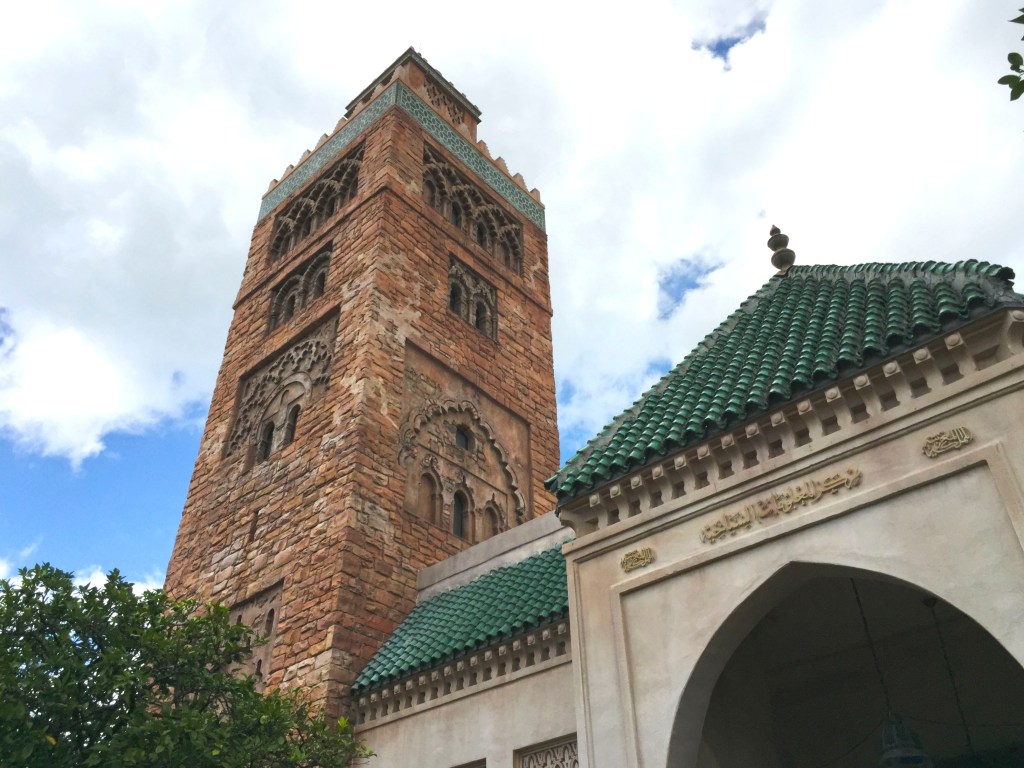
Although the pavilion does not represent a single city, its architecture draws from recognizable Moroccan forms — courtyards, market streets, tiled fountains, and fortified towers — arranged together within World Showcase.
❖
Moving through the passageways, the space gradually reveals itself one courtyard at a time.
 Scott Bryant
You must be logged in to post a comment.