
❖
Morocco Pavilion, World Showcase
EPCOT – Lake Buena Vista, Florida
May 2015
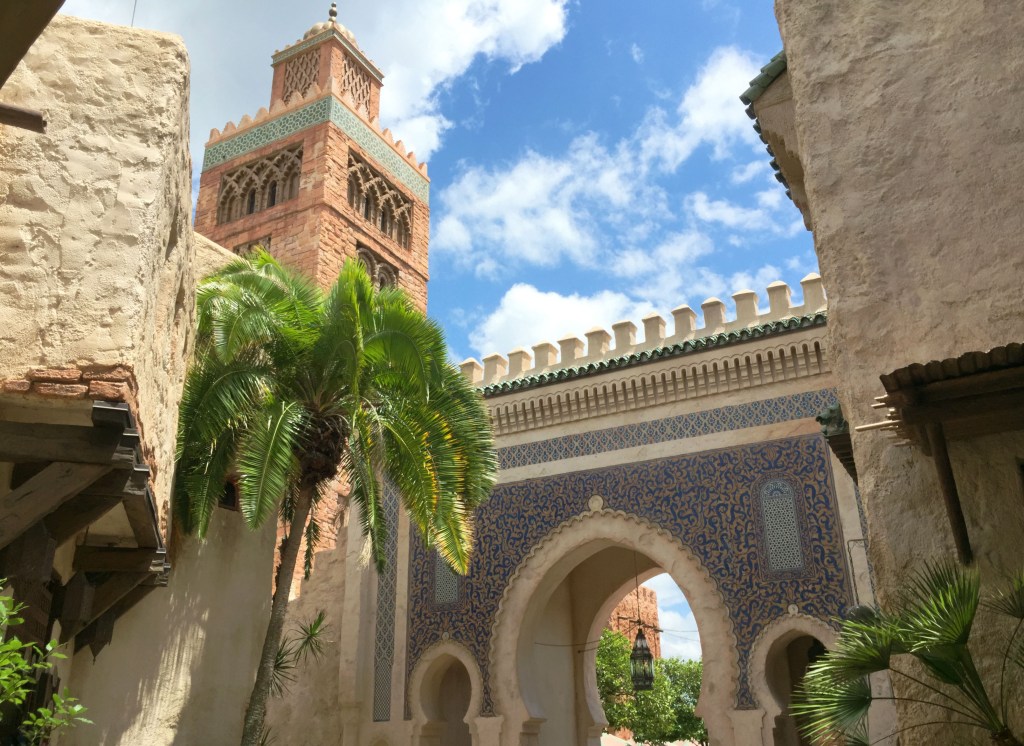
In World Showcase at EPCOT, the Morocco pavilion is organized as a network of courtyards, passageways, and towers.
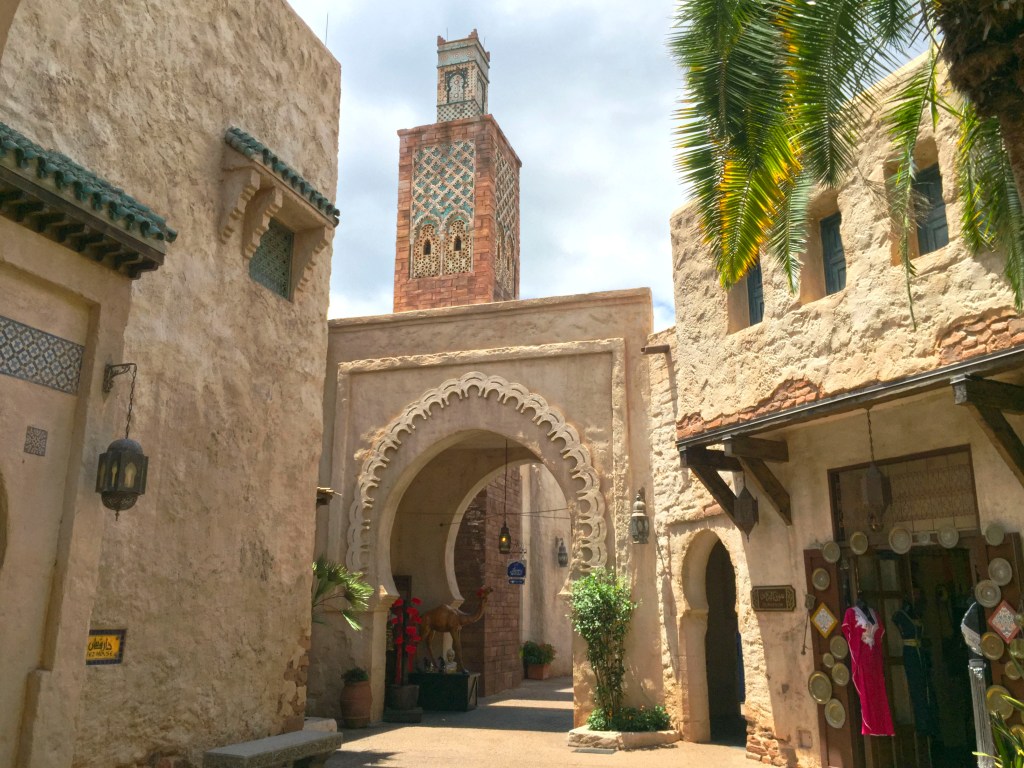
Visitors pass beneath tiled gateways into narrow streets where stucco walls rise along shaded walkways. Wooden beams extend overhead, and lanterns hang from arches that open into quieter interior spaces. Movement is guided through turns and thresholds rather than direct paths, with each space revealing itself gradually.
The pavilion opened in 1984 with the participation of the Moroccan government during the reign of Hassan II. It remains the only World Showcase pavilion developed with direct involvement from its national government, establishing a different level of cultural authorship than the surrounding environments.
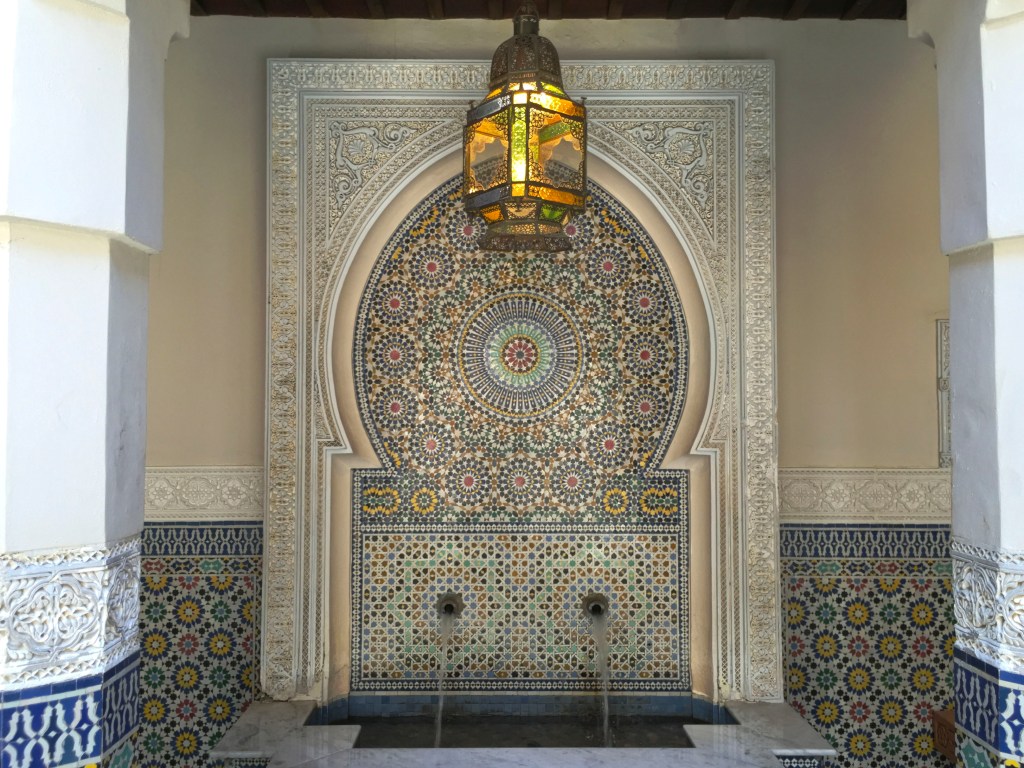
Moroccan artisans contributed directly to the construction. Tile mosaics, carved plaster, and woodwork were executed using traditional methods rather than applied as surface decoration. This gives the space a material consistency that extends beyond visual reference.
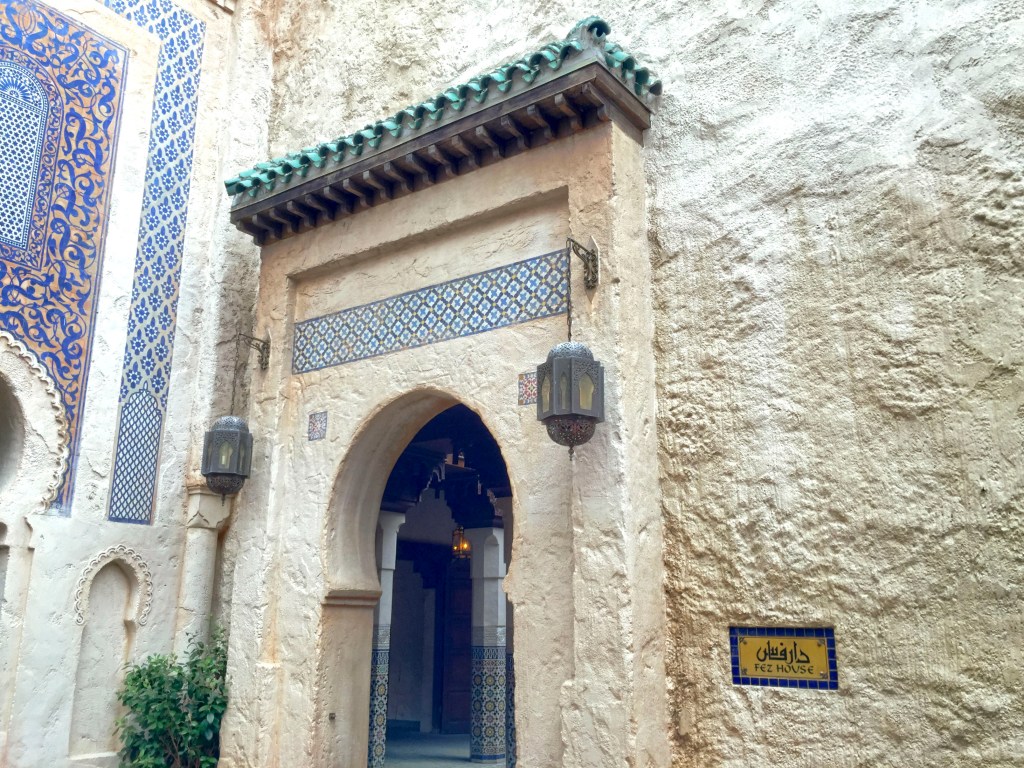
Within one courtyard, the Fez House reflects the structure of a traditional Moroccan home organized around an open interior court. Columns lined with patterned tile surround a central fountain, while wooden balconies overlook the space from above. The courtyard is defined by repetition and enclosure, with the fountain acting as both visual and spatial anchor.
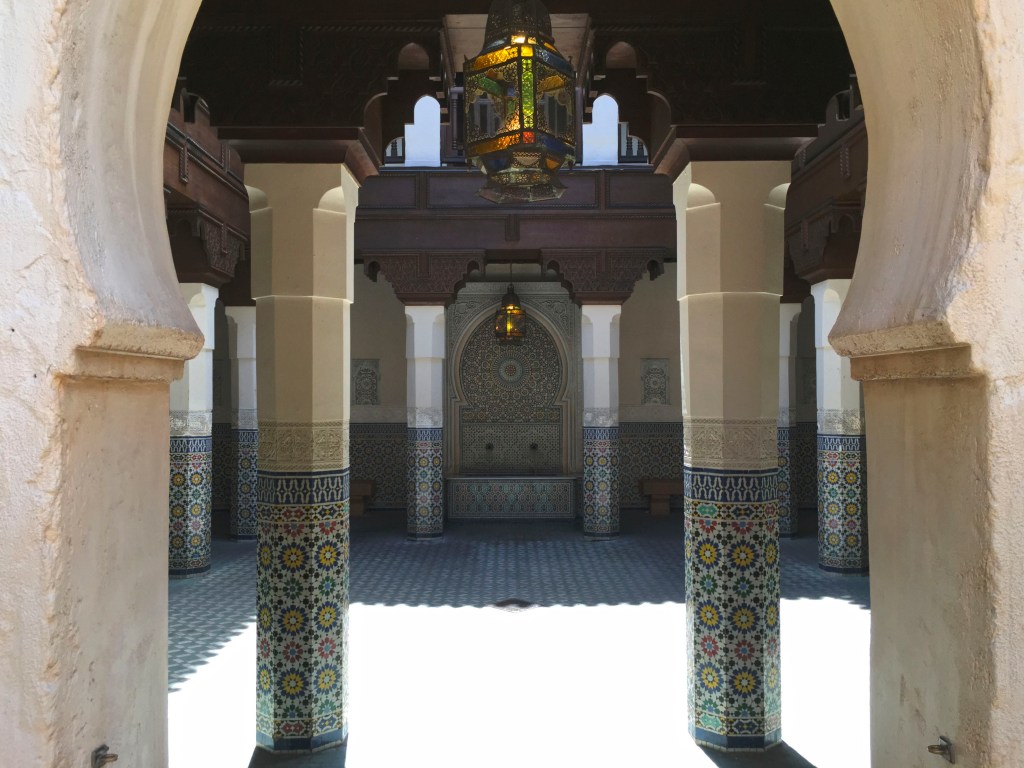
Tilework appears throughout—along gateways, fountains, and columns—arranged in repeating geometric patterns. The emphasis on geometry, rhythm, and surface pattern reflects architectural traditions shaped in part by Islamic design principles, where visual expression centers on abstraction rather than figurative imagery.
❖
Beyond the courtyards, fortress-like walls and towers rise above the pathways. A square tower visible from multiple vantage points draws from the minaret of the Koutoubia Mosque, translated here into a formal architectural reference rather than a functioning structure.
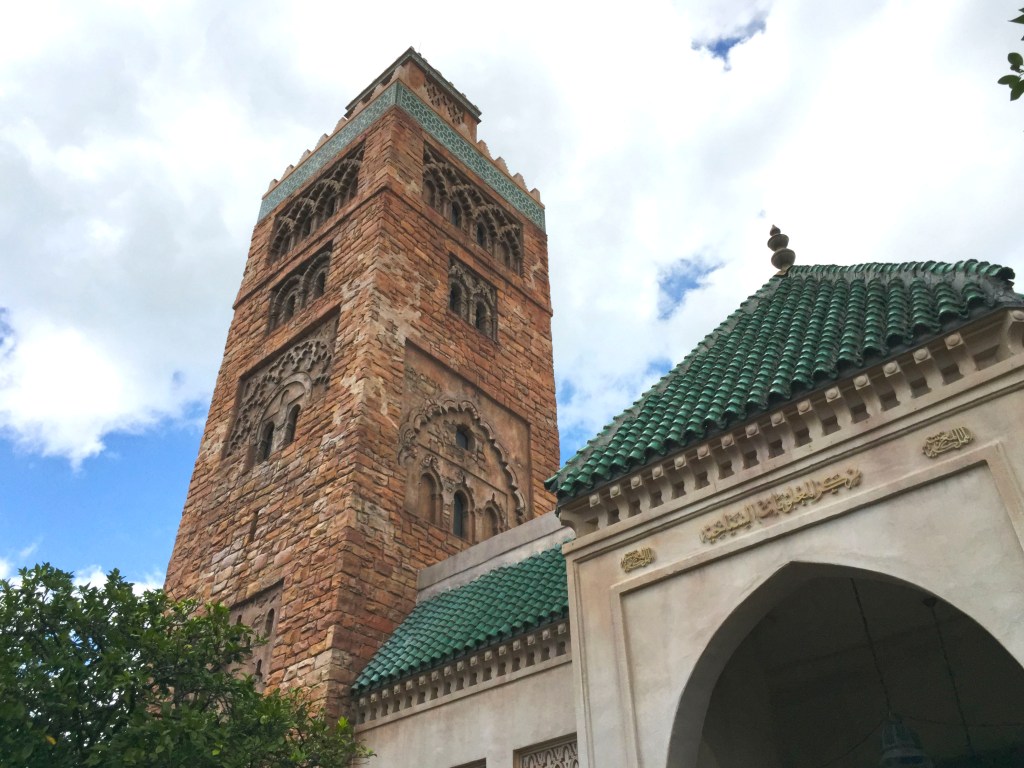
The environment is assembled rather than reproduced. The pavilion does not replicate a single Moroccan city but instead brings together architectural elements—courtyards, market streets, tiled surfaces, and defensive forms—into a unified setting within World Showcase.
Compared to other pavilions, the space presents itself with less overt framing. Its pathways are more enclosed, its sightlines more limited, and its layout less immediately legible from a distance. Movement becomes necessary to understand the structure of the environment.
As part of a larger system of cultural representation, the pavilion operates between authenticity and construction. Its materials and techniques are grounded in real traditions, yet its spaces are arranged for navigation rather than habitation. What might function as lived architecture elsewhere becomes here a sequence of passages, organized for movement and observation.
❖
No single vantage point offers a complete view. The pavilion is understood through movement, with its structure emerging gradually rather than presenting itself all at once.
 Scott Bryant
You must be logged in to post a comment.