
Cultural Notes — Built Environment / Entertainment History
Treasure Island — Las Vegas, Nevada
May 2017
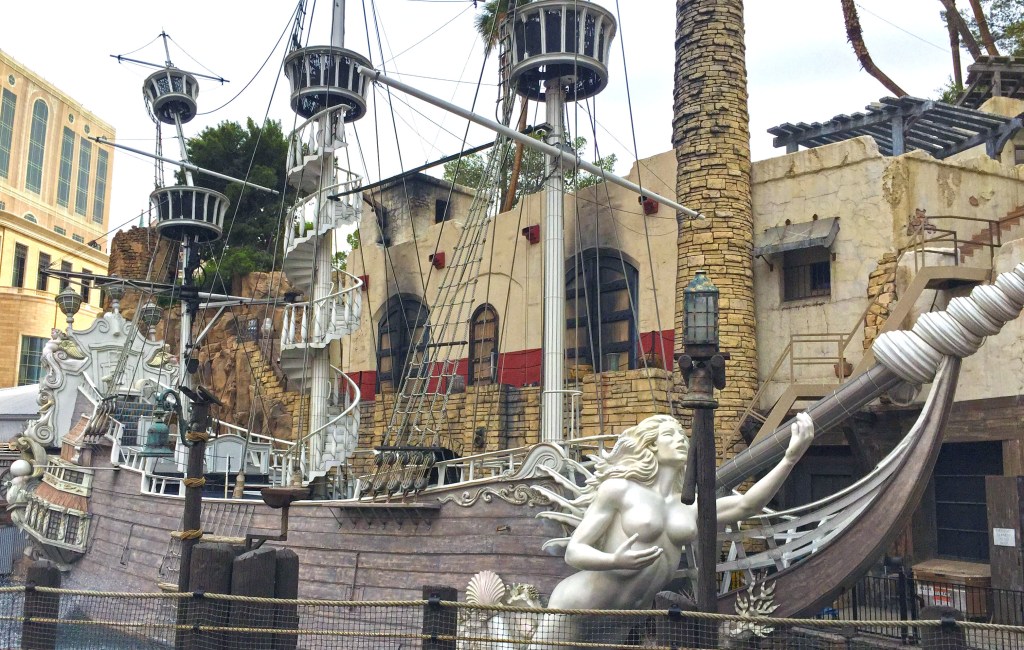
The pirate ship at Treasure Island remains in place, but the show it was built for ended in 2013.
For a decade, this structure functioned as the primary stage for Sirens of TI, a free outdoor performance staged along the Las Vegas Strip. Two ships occupied the space—one naval, one pirate—but the narrative centered on a crew of women whose presence was defined through choreography, music, and spectacle. The environment was designed for movement, sound, and controlled illusion.
The title and framing draw on the long association of “sirens” with allure and danger, while the staging positioned the women as the primary occupants of the space.
By 2017, the performance has ended.
What remains is the physical framework: rigging, masts, staircases, and deck levels arranged for visibility and staging. Without performers, the structure reads differently. The sightlines remain intact, but their purpose has shifted. The space no longer directs attention; it holds it.
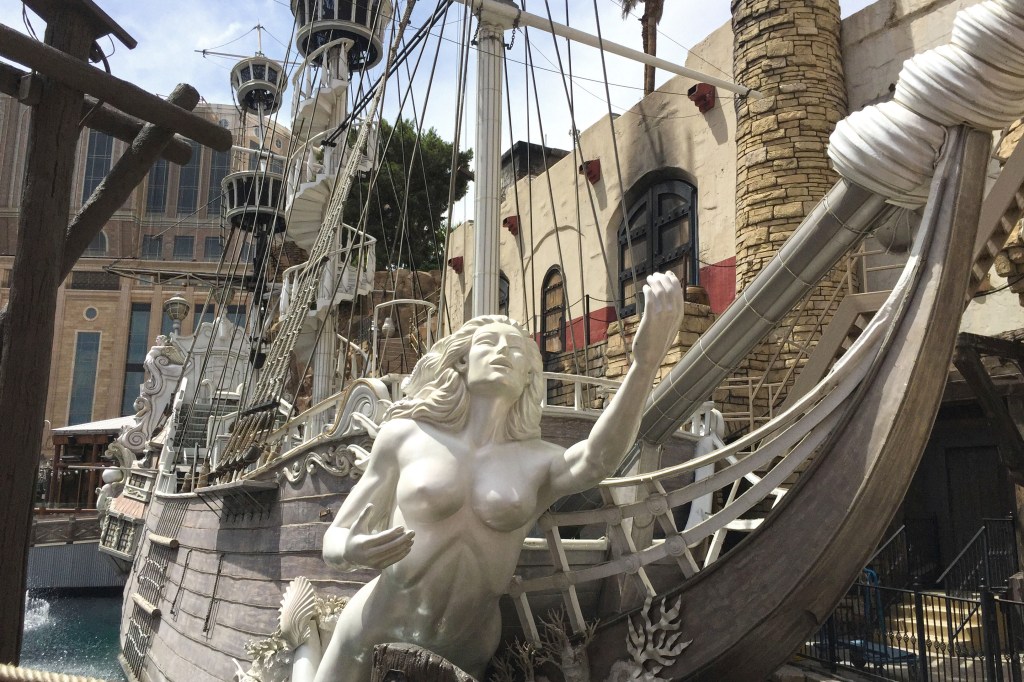
In daylight, the theatrical elements become more apparent. Surfaces that would have been masked by lighting and motion are exposed. The ship appears less as a vessel and more as a constructed set, built to support a specific sequence of actions that no longer occurs.
The surrounding environment continues to operate—hotel, walkways, pedestrian flow—but the stage itself is inactive. There is no indication of when or how it was used, only that it remains.
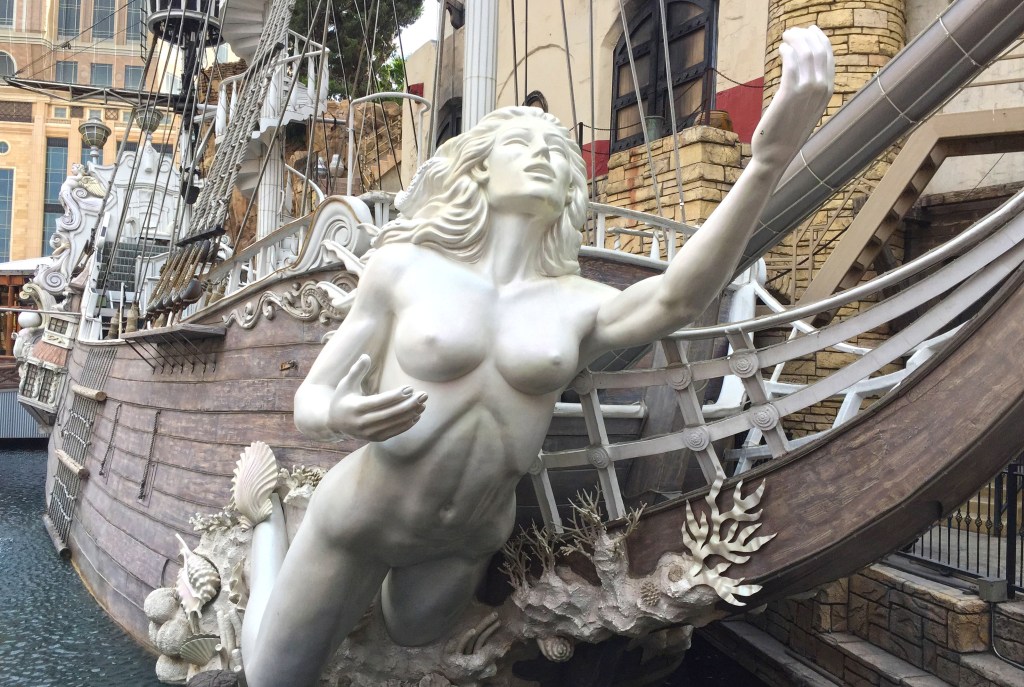
At the front of the ship, a sculpted figure remains positioned at the bow. In performance, this figure would have been part of a larger composition of movement and sound. Here, it functions independently, contained within a single gesture.
The expression, posture, and placement suggest action, but no action follows. The figure does not change, and the space around it does not respond.
The structure remains; its original function does not.
 Scott Bryant
You must be logged in to post a comment.