
Disney’s California Adventure
Anaheim, California
October 2018
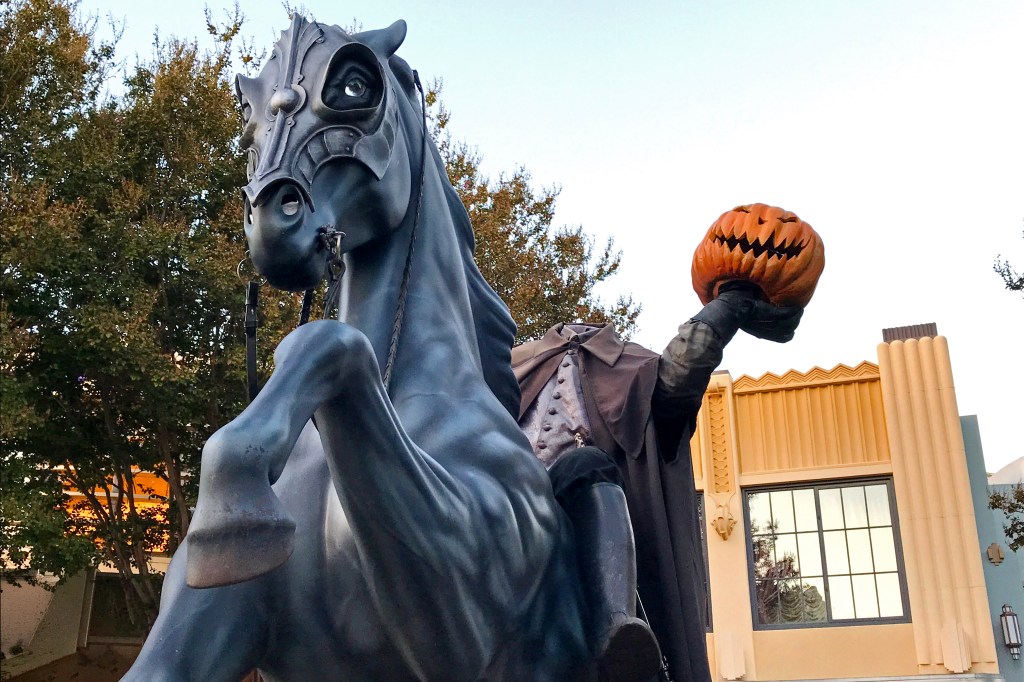
Cultural Notes — Folklore in Public Spaces
Each October, a rider appears in the plaza at Disney California Adventure Park.
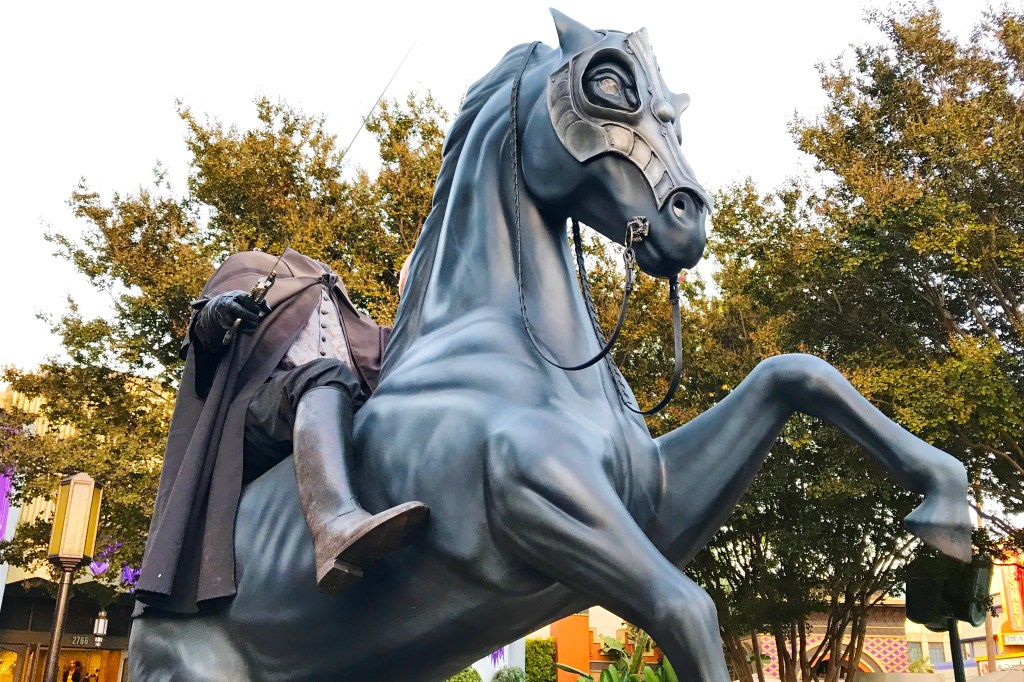
The horse rears high above the pavement, muscles frozen in motion. A sword lifts into the air while a jack-o’-lantern burns where a head should be. Even in the bright California sunlight, the figure carries something of the dark woods and autumn roads from which the story comes.
The character is drawn from Washington Irving’s tale The Legend of Sleepy Hollow, first published in 1820. In Irving’s story, the Headless Horseman is a figure whispered about in the Hudson Valley — a rider said to haunt the roads near the village of Sleepy Hollow.
For many viewers, however, the image of the Horseman comes just as strongly from Disney’s animated adaptation in The Adventures of Ichabod and Mr. Toad (1949). In that film’s famous chase sequence, the rider emerges from the darkness, sword raised and pumpkin blazing, pursuing the unlucky Ichabod Crane across a lonely bridge.
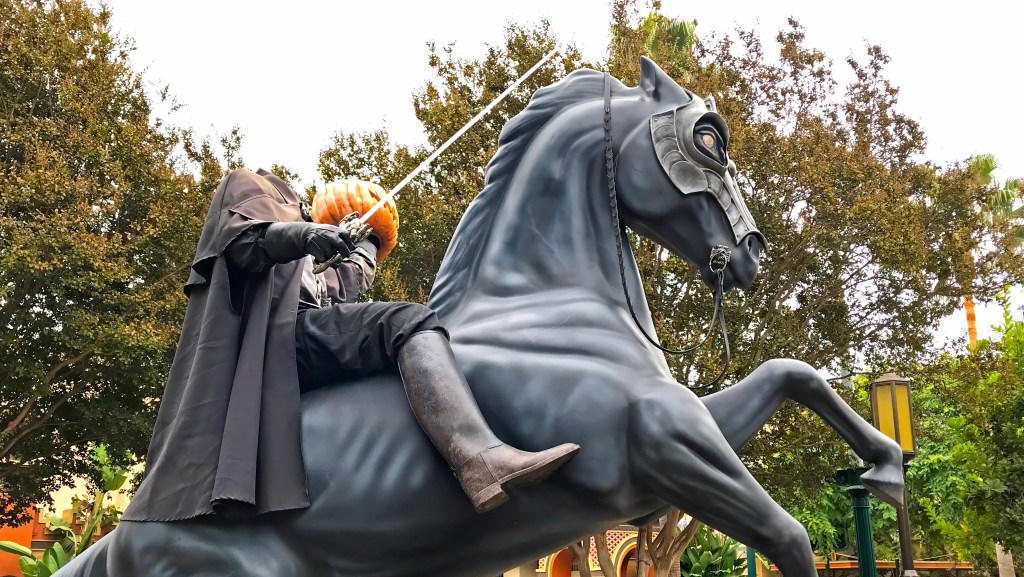
The statue in the plaza captures that same moment of motion. The horse seems to surge forward, as if the chase has simply been paused for a breath.
Figures like the Headless Horseman rarely appear in everyday spaces. Most often they live in books, illustrations, or film. Encountering the rider suddenly in the open plaza — surrounded by palm trees and California sunlight — creates a strange contrast between folklore and landscape.
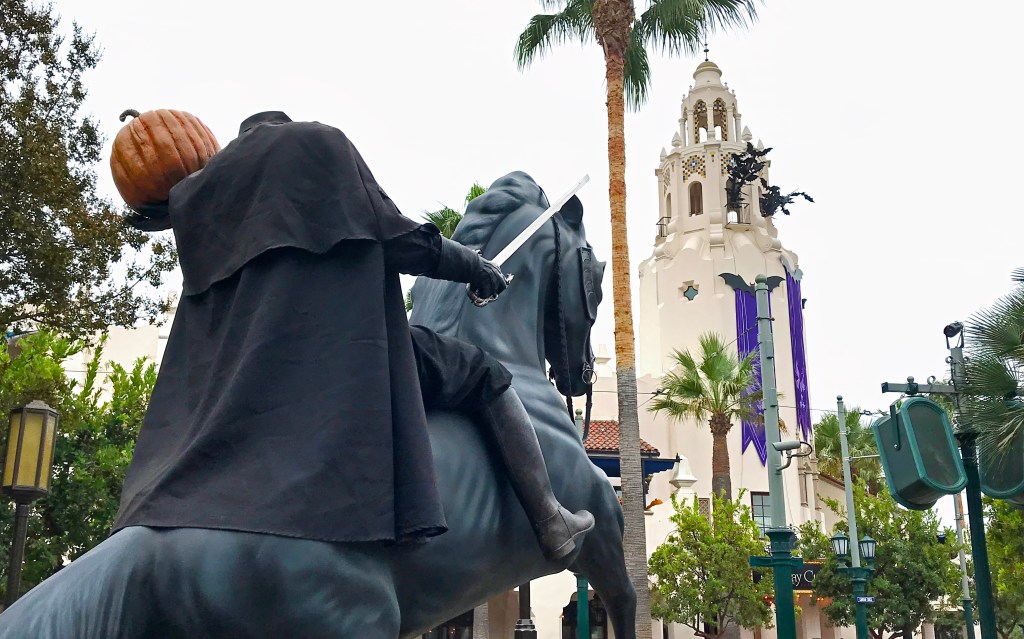
Yet here he waits in the plaza each autumn, sword raised, forever riding through a moment of suspended motion.
Visitors pass beneath him on their way to rides, food stands, and shows. But for a moment, if you stop and look up, the old story is still there — a rider without a head, a pumpkin in place of it, and the faint suggestion that Sleepy Hollow has never entirely disappeared.
 Scott Bryant
You must be logged in to post a comment.