
Cultural Notes — Animation & Exhibition History
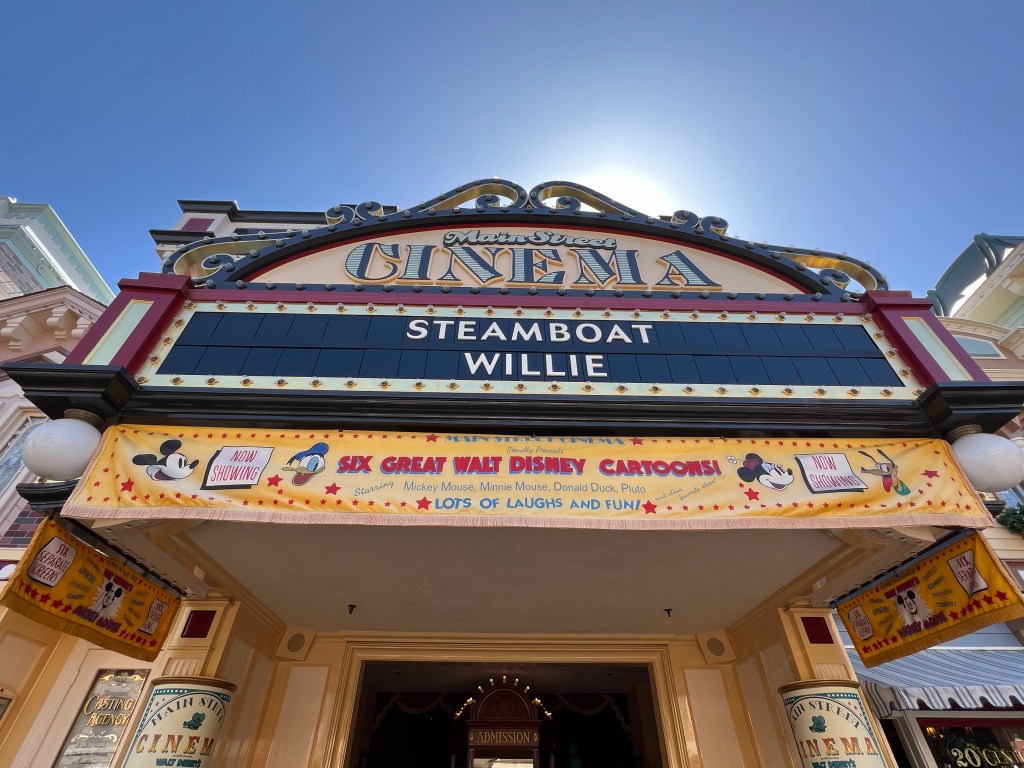
Tucked along Main Street U.S.A. at Disneyland is a small theater that many visitors walk past without noticing. The Main Street Cinema does not advertise a ride, a showtime, or a queue. Instead, it quietly offers something older: a window into the earliest days of animation and moviegoing.
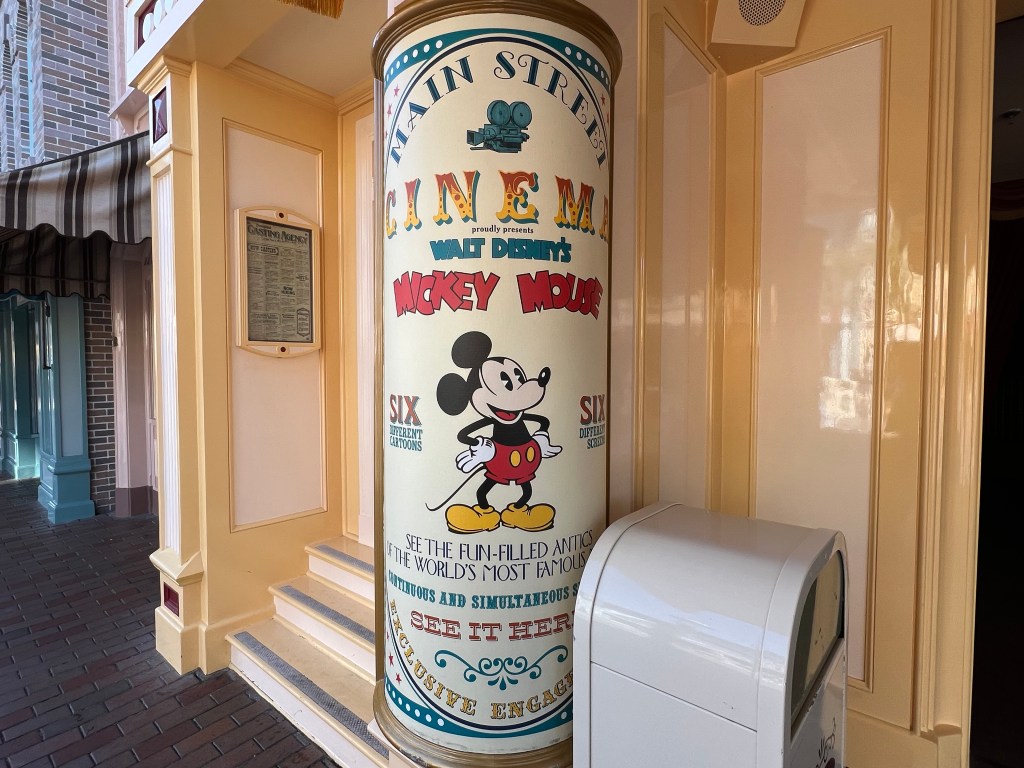
The theater’s bright marquee announces Steamboat Willie, the 1928 cartoon that introduced audiences to Mickey Mouse and helped define the future of synchronized sound animation. Posters and banners promise “Six Great Walt Disney Cartoons,” echoing the playful language once used to advertise silent-era films. It is a small detail, but one that reinforces the illusion that Main Street is a living town rather than a theme park.
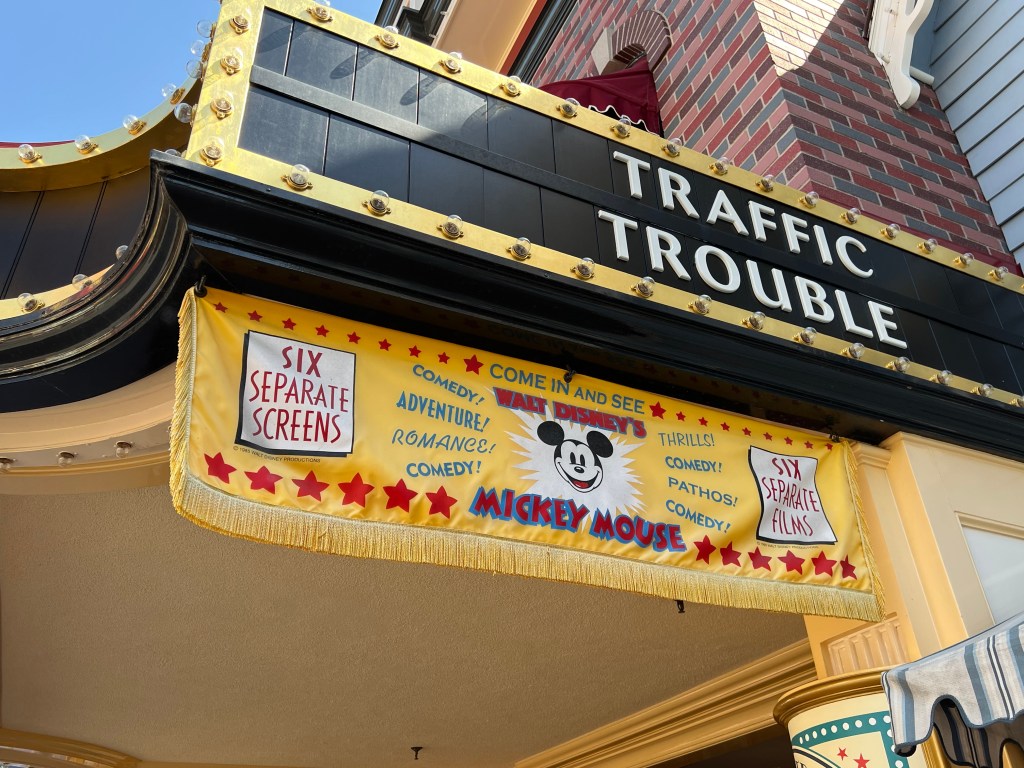
Inside, the space is arranged very differently from modern movie theaters. Rather than a single screen and rows of seats, the Main Street Cinema features six separate screens arranged around a circular viewing area. Short Disney cartoons loop continuously, allowing visitors to wander freely from one screen to another.
The arrangement recalls the experience of early nickelodeon theaters, when audiences stepped into small storefront cinemas to watch short films that played repeatedly throughout the day. Rather than scheduled screenings, films ran continuously, allowing visitors to enter at any point and stay as long as they wished.
When Disneyland opened in 1955, the Main Street Cinema followed a similar spirit, originally screening silent films from the early twentieth century before later transitioning to classic Disney animation shorts.
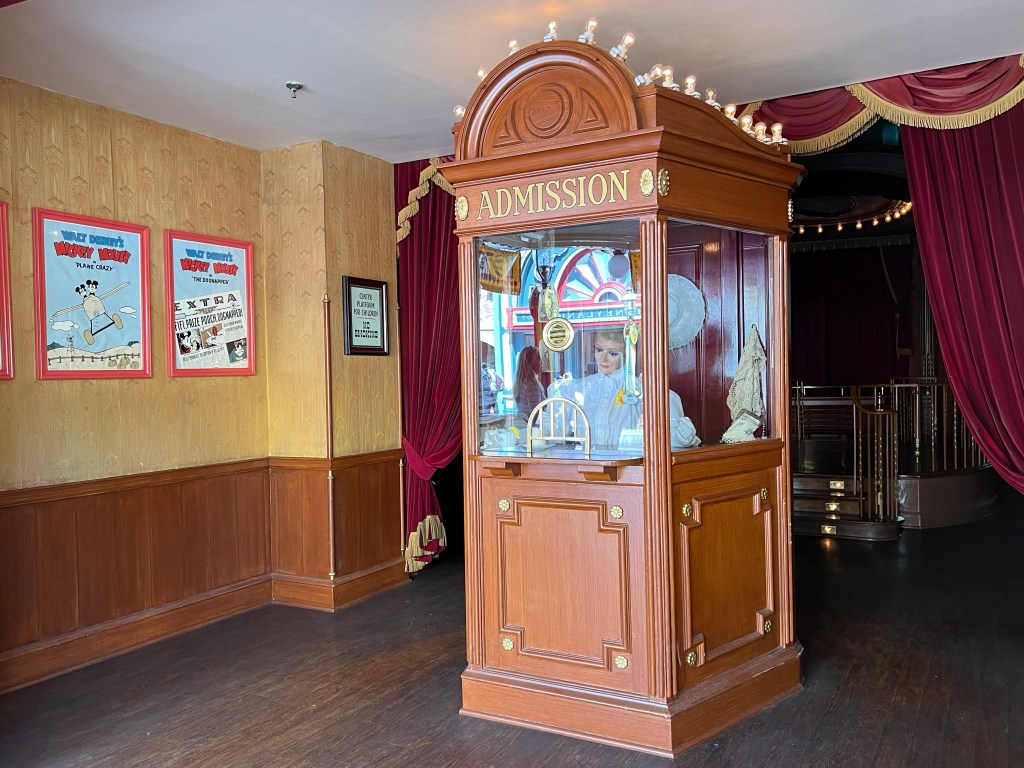
The atmosphere inside the cinema is deliberately simple. Soft stage curtains frame each screen, and a vintage-style ticket booth stands near the entrance, attended by a mannequin ticket seller named “Tilly.”
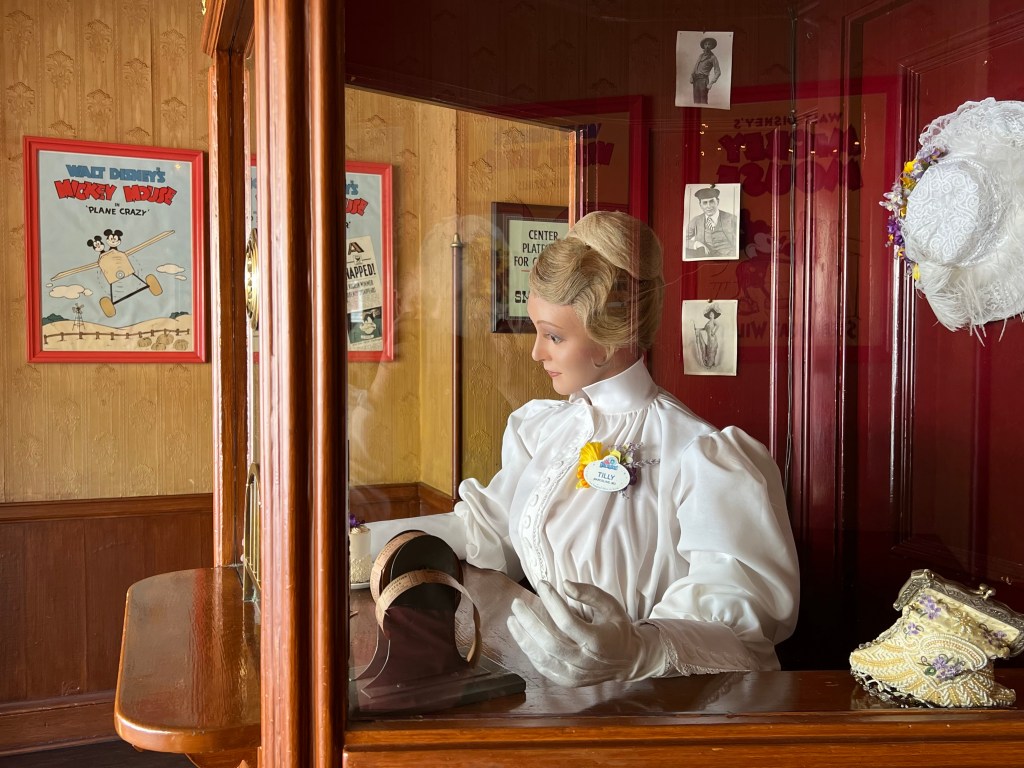
Around the room, screens show early Mickey Mouse cartoons and other classic shorts from Disney’s early animation history. Laughter, slapstick, and musical chaos unfold in black and white, just as they did nearly a century ago.
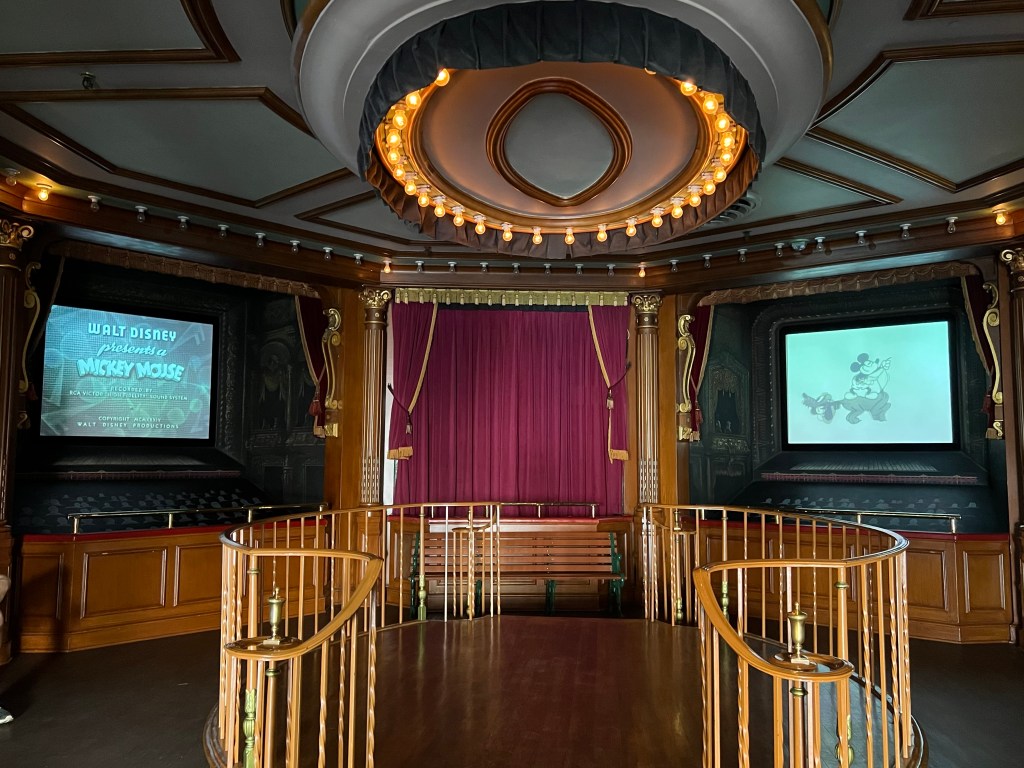
What makes the Main Street Cinema unique is how easily it blends exhibition with storytelling. While Disneyland is widely known for its rides and attractions, this small theater functions almost like a miniature museum. It preserves the look and feel of early film exhibition while celebrating the character that would become one of the most recognizable figures in global popular culture.
Standing inside the cinema for a few minutes, the space begins to feel less like an attraction and more like a small tribute to the earliest days of animated film. In a park built on spectacle, the Main Street Cinema remains one of Disneyland’s quietest tributes to the origins of animation.
 Scott Bryant
You must be logged in to post a comment.