Sor Juana Inés de la Cruz — Encountered Through Record

Format: Horizontal, cinematic, photorealistic
Aspect Ratio: 16:9
Tone: Quiet, restrained, observational
Purpose: Archival context, not illustration

Prompt

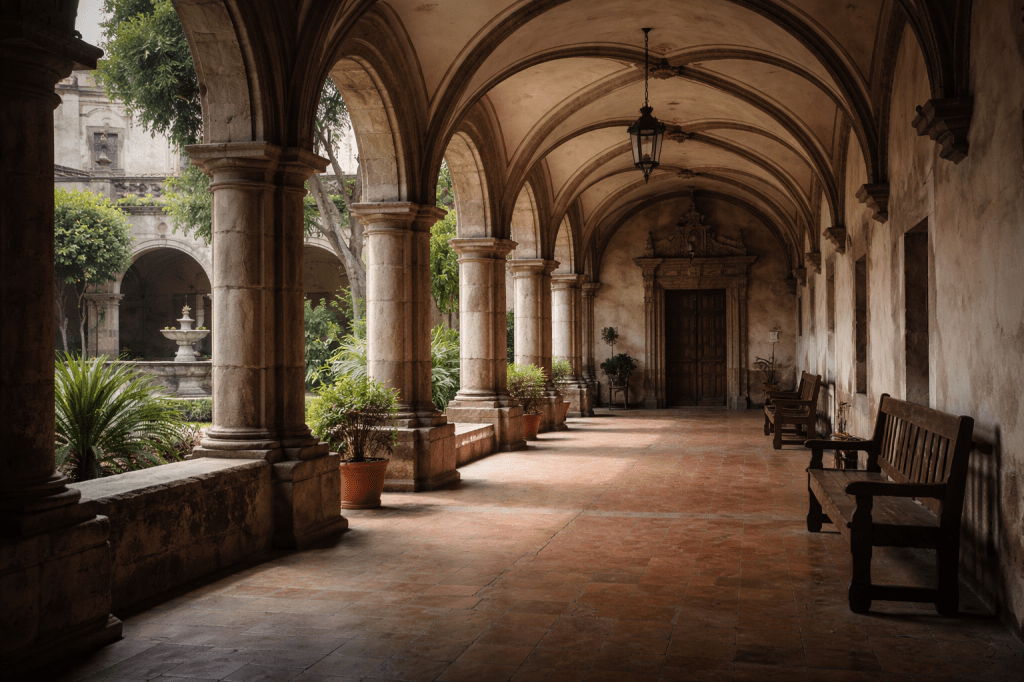
A photorealistic, restrained interior scene inspired by a 17th-century convent cloister in colonial Mexico. The space is empty of people.

A long stone corridor with repeating rounded arches supported by thick, weathered columns. The architecture is simple, functional, and monastic — pale stone walls with visible age, softened edges, and subtle discoloration from centuries of use. The floor is laid with worn terracotta tiles, uneven and matte, showing gentle patina rather than damage.

Natural daylight enters indirectly from an open courtyard on one side, filtered through arches and foliage. The light is soft and diffused, creating gentle shadows that emphasize depth and rhythm rather than drama. No harsh contrast. The atmosphere feels calm, enclosed, and contemplative.

Along the corridor are a few plain wooden benches, darkened with age, placed sparingly against the wall. Potted plants sit quietly near columns, their presence subtle and unornamented. At the far end of the corridor, a carved wooden door stands closed, centered but not emphasized.

The camera is positioned at human eye level, slightly offset rather than perfectly centered, maintaining an observational, documentary feel. The composition emphasizes repetition, stillness, and space rather than focal spectacle.

Color palette is muted and earthy: warm stone neutrals, soft browns, desaturated greens. No modern elements, no religious symbols, no figures, no text. The image should feel timeless, restrained, and unromanticized — a place that held thought, labor, and silence.

Lighting, texture, and realism are prioritized over aesthetic flourish.

Negative Prompt (Important)

No people
No nuns
No dramatic lighting
No golden glow
No candles
No religious iconography
No crosses or statues
No cinematic exaggeration
No painterly or illustrative style
No modern objects
No tourism photography feel

I did not encounter Sor Juana Inés de la Cruz through a syllabus, an anthology, or formal study.

I encountered her through a short animated lecture — a contemporary retelling of a life that refused to remain quiet.

Sor Juana was a 17th-century Mexican nun, poet, playwright, and scholar whose intellectual range rivaled that of her most celebrated male contemporaries. She wrote poetry, philosophical essays, and full theatrical works while living in a convent, using the limited autonomy available to her to pursue learning, authorship, and inquiry.

Her writing challenged hypocrisy, exposed double standards placed on women, and defended the right to education with clarity and precision. For this, she was eventually pressured into silence.

Centuries later, her words endure.

This entry exists to mark the moment her voice entered this archive — not through reinterpretation, but through record. The video below is presented as the point of encounter, preserved as it was received.

The video opens with a line attributed to Sor Juana:

“I don’t study to know more, but to ignore less.”

Sor Juana does not need translation here.
She does not need reinvention.

Her authorship already survived.

This page exists only to acknowledge her place — and to ensure her voice remains present among the many women whose stories shape this world.


Record continues:
Poetry Foundation — Sor Juana Inés de la Cruz