
Though purely fictional, this account imagines the wonder and excitement of witnessing The Skeleton Dance in 1929 through the eyes of a captivated viewer.
During the clearing out of the iconic Roxy Theatre in New York City in 1960, workers uncovered a small, leather-bound diary tucked behind one of the velvet-covered seats. Its origins are shrouded in mystery, but its pages tell the story of one magical evening in 1929, when sisters Ruth and Helen Hedlowe attended the premiere of Walt Disney’s The Skeleton Dance. Written in neat cursive, the entries vividly capture the wonder and excitement of an audience witnessing something truly groundbreaking.
But first, step into Ruth’s world by watching Disney’s The Skeleton Dance below:
UPDATE: As of January 2025, The Skeleton Dance is now in the public domain.
August 29, 1929
Roxy Theatre, New York City
Tonight, I witnessed something I can’t stop thinking about—a cartoon unlike anything I’ve ever seen. The marquee called it The Skeleton Dance, part of Walt Disney’s “Silly Symphonies.” I had heard of Mr. Disney before—his Steamboat Willie cartoon caused quite a stir last year—but I couldn’t imagine how a cartoon could rival the talkies everyone’s been raving about. Well, now I know better.
The Roxy was alive with energy, as it always is on a Thursday evening. My sister Helen and I arrived early, the scent of fresh popcorn mingling with the faint perfume of ladies in elegant hats. We handed our tickets to a cheerful young usher in a crisp uniform, who greeted us with a smile before showing us to our seats.
Inside, the theater was breathtaking. The soaring ceiling, painted with constellations, glittered under the soft glow of chandeliers. Heavy, red velvet curtains framed the grand stage, and the Wurlitzer organ echoed through the space, playing a lively rendition of “Tiptoe Through the Tulips.” The crowd buzzed with excitement, their whispers and laughter bouncing off the marble floors and gilded columns.
The program began with the usual newsreels—Wall Street chatter about another market high and that massive German Zeppelin circling the globe. Helen nudged me when Babe Ruth’s name came up; she’s more of a baseball fan than I’ll ever be. The headlines seemed distant, like whispers from another world. Then the cartoon began, and suddenly, the whole room came to life.
After a newsreel and a comedy short, the lights dimmed, and the screen lit up with the words “Disney Cartoons Present A Silly Symphony: The Skeleton Dance.” The crowd quieted, and then the first notes of the music began.
The scene opened with a bolt of lightning flashing across the screen, followed by two large, piercing eyes of an owl staring directly at us. Its bizarre, almost otherworldly hoot echoed through the theater, sending a shiver down my spine. Then, the graveyard appeared under a full moon, bathed in silvery light. The haunting toll of a church bell sounded, and bats flitted across the screen, their wings casting eerie shadows.
It was eerie but beautiful, like a painting come to life. And then, to my astonishment, skeletons began to rise from their graves. They didn’t creep or lurch like in the ghost stories my mother used to tell. No, these skeletons danced.
Their bony limbs moved in perfect time with the music, which was unlike anything I’d heard before—haunting and playful all at once. One skeleton tossed its skull at an owl perched in the tree, causing the poor bird to lose its feathers in a comical puff. The whole theater erupted in laughter when one skeleton used another as a xylophone, the cheerful notes echoing through the room. And the moment when a skeleton leaned back, then moved forward as if coming right up to the screen? Pure delight! It felt like they were stepping out of the graveyard and into our world, pulling us into theirs with a playful wink.
I glanced at Helen, and she was smiling as wide as I’d ever seen her. Even the gruff man behind us, who’d spent the newsreel muttering about the economy, was chuckling. For those few minutes, it felt like the whole audience was under the cartoon’s spell.
When it ended, the applause was thunderous, echoing through the grand theater like a standing ovation for the future of entertainment. I don’t think I’ve ever heard people clap for a cartoon before, but The Skeleton Dance was no ordinary short. It was magic—pure, spooky, wonderful magic.
– Ruth Hedlowe
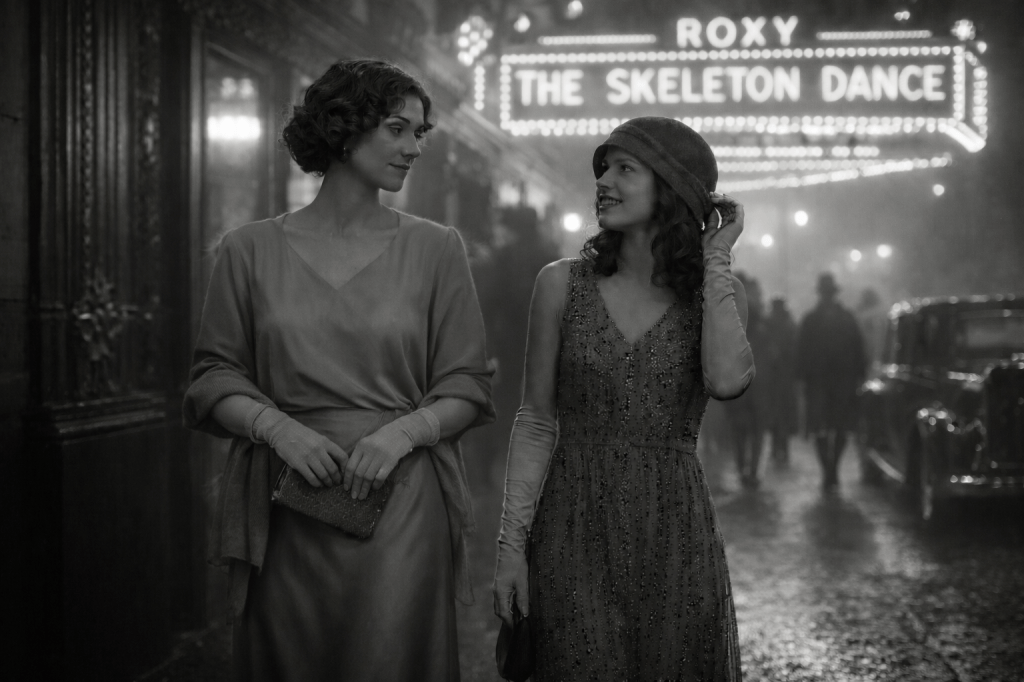
Reflections on a Forgotten Treasure
Ruth’s account paints a vivid picture of a pivotal moment in animation history, one that feels just as enchanting today as it must have then. This diary entry reminds us of the power of The Skeleton Dance to enchant audiences—whether in 1929 or today. Its groundbreaking animation, synchronized score, and playful humor turned something macabre into pure joy.
This rediscovery not only illuminates a magical night in 1929 but reminds us of how far animation has come while preserving the wonder that started it all. Nearly a century later, The Skeleton Dance still resonates, a testament to the timeless magic of early Disney animation.
Note: This story is a fictionalized account inspired by the cultural impact of Disney’s The Skeleton Dance. It aims to bring to life the experience of 1929 audiences while celebrating this groundbreaking cartoon.
 Scott Bryant
You must be logged in to post a comment.