
The age of social media is an age of whispers — rumors amplified, truths distorted, voices drowned by noise. It feels familiar, almost timeless. Shakespeare’s Othello knew this danger centuries ago: how a single lie, skillfully staged, could unravel lives.
But in Othello, amid manipulation and destruction, two women speak truths the world refuses to hear.
The Willow Scene:
Women’s Voices in the Storm
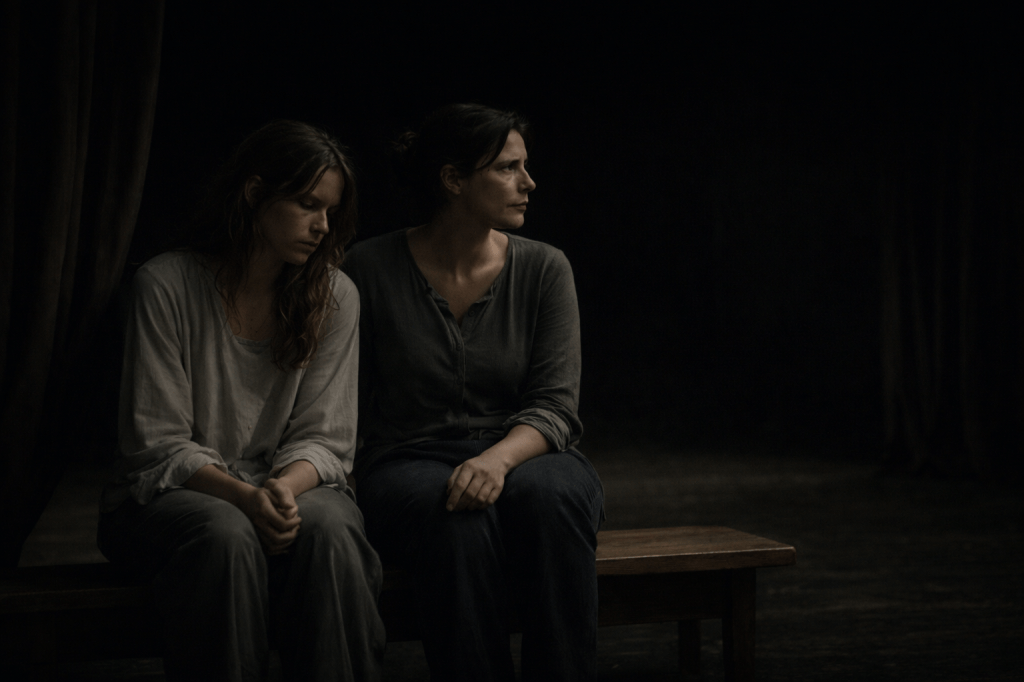
In Act IV, Scene 3, Desdemona prepares for bed, haunted by unease, and Emilia — pragmatic, unflinching — speaks candidly of women’s experience.
Fidelity, power, and injustice are laid bare in their quiet exchange. It is not spectacle, but intimacy: a conversation that should matter more than the noise of men’s accusations.
So it is with us today.
Online, rumor becomes revelation, accusation becomes fact, and entire reputations can be destroyed before truth even enters the stage—or before the audience pauses to question the performance. The pattern is not new — only the scale is.
Social media has become Iago’s handkerchief: a small token, twisted into proof, weaponized against its owner.
A performance from Shakespeare’s Globe captures this moment with striking clarity: Emilia comforting Desdemona in Act IV, Scene 3 — a mirror to our digital age, where women speak truth and resilience in the face of distortion, yet are too often unheard until the damage is done.
The Power of Distortion
Othello falls not because of proof, but because of suggestion. What he sees is shaped by what Iago tells him to see.
In the same way, online narratives thrive on half-truths and insinuations. Images are cropped, words are stripped of context, and voices are manipulated until doubt becomes conviction.
Desdemona’s tragedy is not her silence, but that her voice is ignored. Emilia, too, names the injustice clearly — yet the world hears her too late.
What We Refuse to Hear
Disinformation, like Iago’s lies, thrives when the audience is willing to believe it. Shakespeare reminds us that deception requires not just a deceiver, but a society ready to accept the performance.
Today, the cost of this readiness falls hardest on women, who are disproportionately targeted by harassment, distortion, and rumor online. Their truths are often whispered into the void while the noise of accusation fills the stage.
Closing Reflection
In Othello, truth comes — but too late to save. The women’s warnings are real, but unheard until destruction is complete.
Our task now is not only to recognize the Iagos of our age, but to listen to the Emilias and Desdemonas among us before the curtain falls.
The tragedy is not only the lie itself, but what we refuse to hear.
 Scott Bryant
You must be logged in to post a comment.