
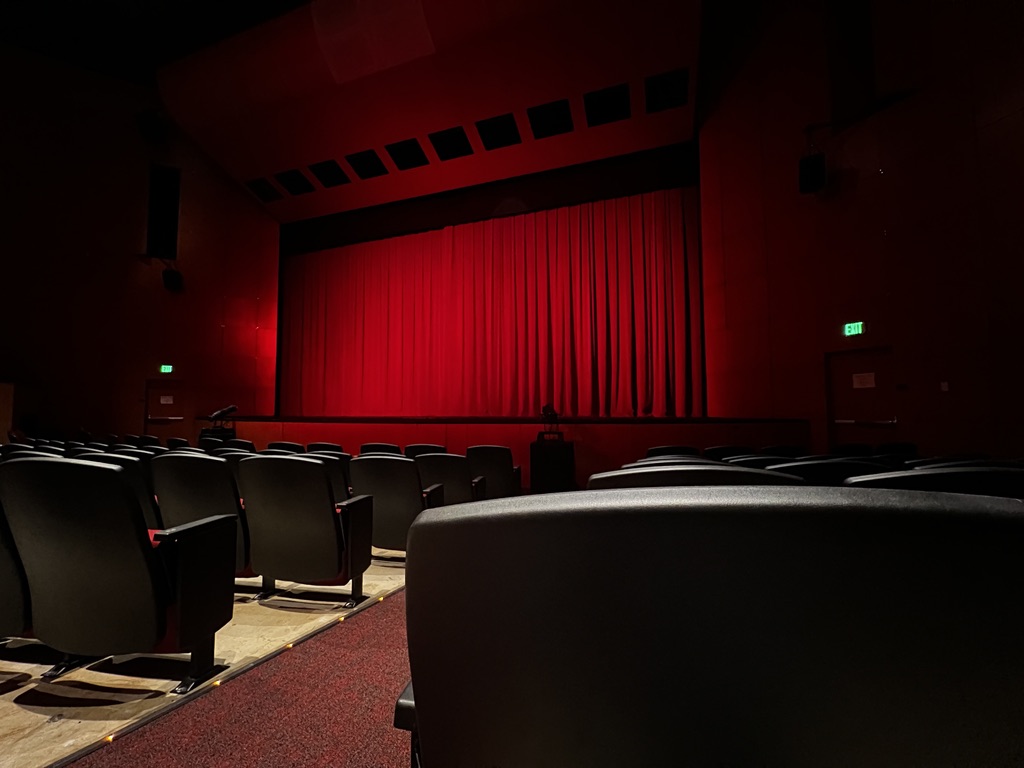
Peter and the Wolf
Northwest Dance Theatre
April 12, 2025 — 2pm Matinee
Portland Community College Sylvania, Portland, Oregon
❦
Music by Sergi Prokofiev
Choreography by June Taylor-Dixon
Choreography for Meadow by Kim Schroeder
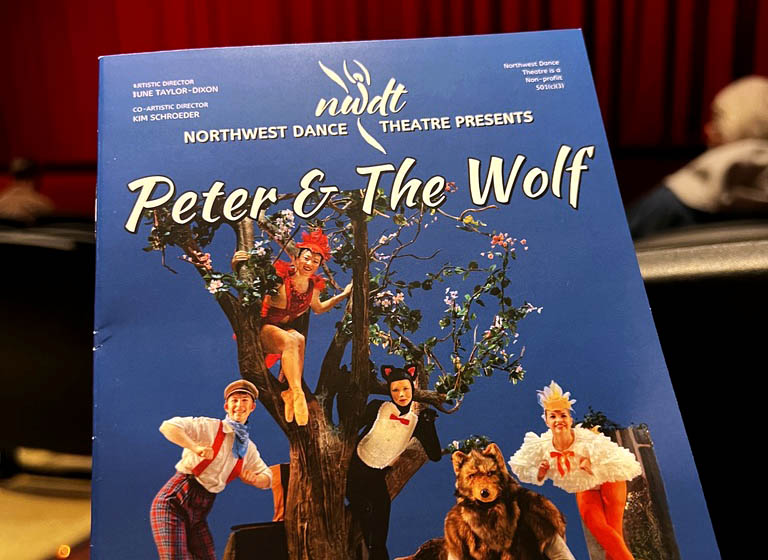
The red curtain at PCC Sylvania held the room in a steady wash of light. The theatre was not grand, and it did not attempt to be. Rows of black seats. A low stage. The quiet acoustics of a college performing arts center built for recitals, lectures, and community productions.
It felt functional. Familiar. Built for use.
Last Saturday (April 12, 2025), Northwest Dance Theatre — a youth ballet company for dancers ages 13–18, founded in 1988 and rooted in pre-professional training across the region — presented Peter & The Wolf, Sergei Prokofiev’s 1936 symphonic tale, in a staging that matched the room: modest, direct, sincere.
The score and narration were prerecorded, carried through the theatre speakers with calm clarity. Without a live orchestra commanding attention, the dancers became the primary instrument. Each familiar motif — strings for Peter, woodwinds for the bird, low brass for the wolf — translated into physical vocabulary. Gesture replaced instrumentation. Posture replaced timbre.
The choreography for Peter & The Wolf was shaped by June Taylor-Dixon, a longtime artistic presence in regional dance. The companion piece, Meadow, was choreographed by Kim Schroeder. The cast was composed primarily of girls, reflecting the training ground from which the company grows. The story remained intact; the bodies telling it were grounded, focused, and clear.
The music itself was not new to me. I grew up listening to the recording conducted by Eugene Ormandy with The Philadelphia Orchestra, narrated by Cyril Ritchard — a version that lived quietly in the background of the 1990s, its phrases so familiar I can anticipate their turns. That recording shaped how I hear the story: the bright insistence of the bird, the comic pacing of the duck, the low brass shadow of the wolf.
Hearing the score again in this smaller theatre did not feel nostalgic so much as continuous. The orchestral grandeur of that childhood recording gave way to playback through speakers and local dancers in motion — yet the structure held. The wolf still crossed the boundary. The tension still resolved. The music still carried its architecture intact.
No one was attempting reinvention. The story unfolded as it has for generations: a boy, a warning, an animal that slips beyond the fence, a moment of confrontation, a resolution. The simplicity worked in its favor.
The wolf, here, occupied its familiar fairy-tale space — theatrical rather than menacing. A contained danger. A necessary presence. In children’s stories, the wolf is rarely just an animal; it is appetite, risk, the pull toward what lies beyond what is considered safe. This portrayal leaned toward stylization rather than fear. The threat existed, but it remained part of the story’s design.
The afternoon did not rely on scale. There were no elaborate projections or technical flourishes competing for attention. Instead, there was craft. Care. The kind of disciplined clarity that comes from artists who have taught and choreographed for decades, shaping generations of dancers within a community rather than chasing spectacle.
That steadiness gave the production its tone.
In a season where I also sat inside larger venues — orchestras tuning, curtains rising in expansive halls — this performance existed on a different register. Smaller space. Recorded score. Local dancers. And yet the integrity of the work remained intact.
Peter & The Wolf endures because it is adaptable. It can live in concert halls, school gyms, opera houses, or modest college theatres. Its structure allows it to travel. Its characters are instantly legible. The music carries memory with it.
That afternoon at PCC Sylvania felt like part of that continuum. Not a landmark performance. Not a grand artistic statement. Simply another careful telling.
The red curtain eventually parted. The story was embodied. Applause filled the room — warm, proportionate, unpretentious.
Some productions announce themselves.
Others simply continue the work.
This was the latter.
Not spectacular. Not revolutionary.
But sincere — and part of the quiet chain that keeps stories alive.
 Scott Bryant
You must be logged in to post a comment.