
In 2018, during an after-hours Halloween party at Disneyland, I took a photograph with Redd, the reimagined pirate from Pirates of the Caribbean. I was thirty-four at the time — old enough to remember earlier versions of the attraction, young enough to still wander through a themed night with curiosity.
It felt like a small moment. A character meet-and-greet. A brief exchange. A photograph saved alongside many others from trips over the years.
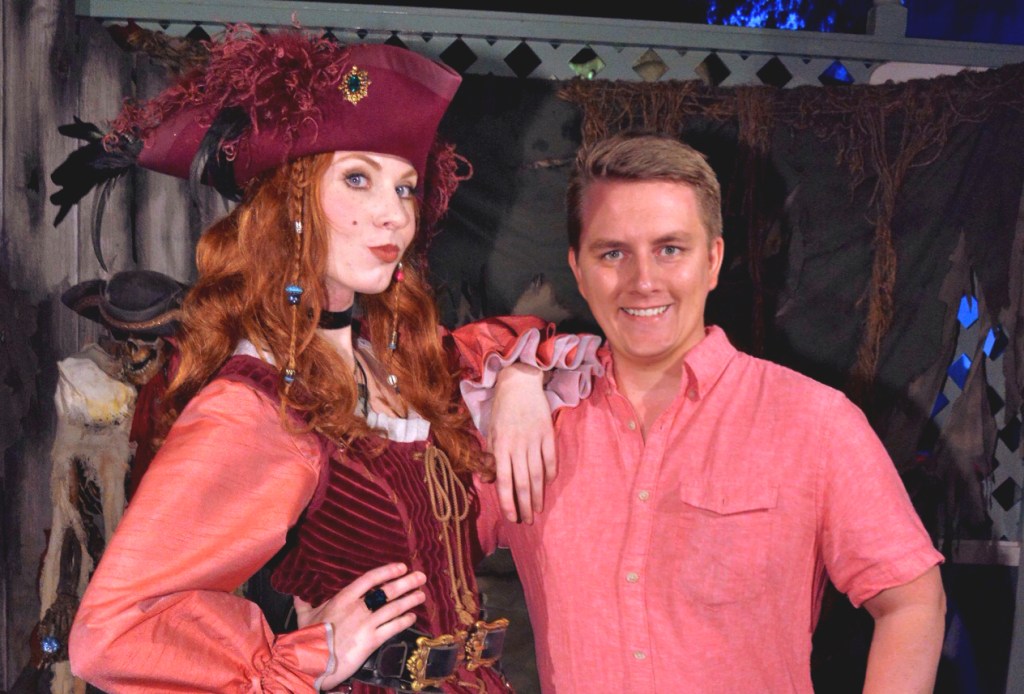
Later, when the National Museum of American History invited the public to submit images for an exhibition examining Disney parks and American storytelling, I sent the photo without expectation.
What followed was unexpectedly formal: a licensing agreement, a request for a high-resolution file, and documentation granting permission for the image’s use. The image was being considered for inclusion.
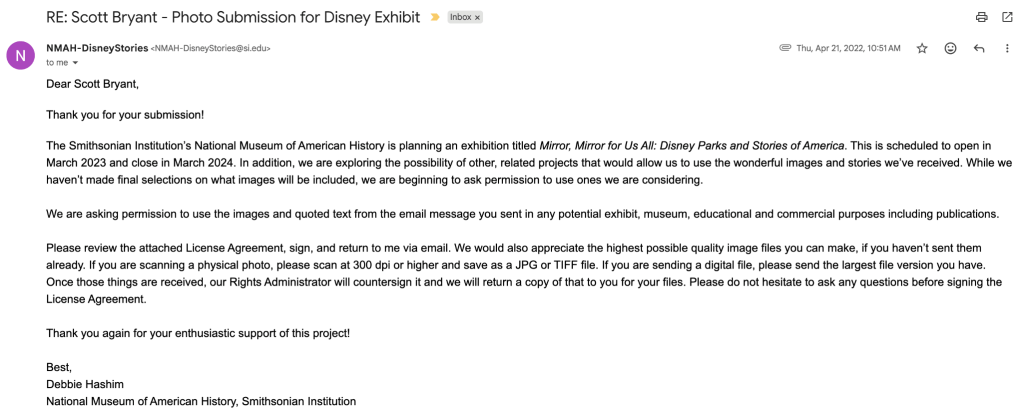
Eventually, it appeared in Mirror, Mirror for Us All: Disney Parks and Stories of America, an exhibition at the Smithsonian’s National Museum of American History.
The exhibition explored how Disney theme parks function as locations of public memory — spaces where corporate storytelling and public response exist in conversation. As the museum described it, the parks both represent and shape larger conversations about the American experience.
In “Pirates of the Caribbean: Navigating Social Change,” the museum examined how the attraction evolved over time. The original 1967 ride included scenes in which women were depicted as spoils. Beginning in the 1990s and most recently in 2018, those scenes were revised, reframing women as active participants in the story.
My photograph appeared beneath a simple caption:
Disneyland, 2018
Redd now has her own action figure and costumed character.
Courtesy of Scott Bryant
That phrasing is what shifted the meaning for me.
The image was not preserved because it was personal. It was preserved because it illustrated a narrative recalibration. It documented the post-change era — a visible marker that the reframing had moved from concept into lived experience. Redd was no longer an object within the ride’s auction scene. She was a character guests could meet. A pirate with agency.
The exhibition positioned Disney and the public as participants in shaping national narrative. In that sense, my photograph functions as evidence of that exchange in motion: a guest encountering a revised myth in real time.
There is something quietly grounding about seeing a personal moment placed inside institutional framing. The Smithsonian Institution does not archive casually. Inclusion does not imply grandeur, but it does imply relevance within a larger interpretive structure.
As the United States marks its 250th year, the idea resonates differently. American history is often imagined in terms of founding documents and political milestones. But it is also written in cultural revision — in the ways stories adapt to shifting values, in the recalibration of public myths.
Pirates of the Caribbean is not a founding document. It is a theme park attraction. But theme parks are among the most widely visited storytelling environments in the country. They reflect and shape public memory. They negotiate nostalgia and change. They revise narratives when audiences demand reconsideration.
In 2018, I met Redd in that revised space.
Years later, that encounter became part of an exhibition examining how such revisions occur — and how the public participates in them.
At the time, it was simply another photograph saved from a trip. Only later would I begin building the kind of archive that gives such moments context. I believe in recording moments and placing them within a broader frame. In this case, that framing arrived from outside.
A photograph I took at thirty-four was licensed, cataloged, and preserved by the National Museum of American History as part of a curated examination of American storytelling.
It is a small thread within a vast tapestry. But it is a thread.
A moment was documented.
An institution found value in it.
It was archived.
And in that archiving, it became part of the American story.
Courtesy of Scott Bryant.
 Scott Bryant
You must be logged in to post a comment.