
All Masks Are Mirrors
Story Written By
Francesca Donati
Visuals & Imagery Created By
Francesca Donati, Arianna Mancini,
Ilaria Ferrara, Giulia Sartori,
Nicoletta Bianchi, & Scott Bryant
With care and reverence, their story is shared by
Scott Bryant at the request of Francesca Donati.
Archivio del Teatro Nazionale di Bologna
October 27, 1883
A curious performance is said to have taken place at the Teatro delle Ombre, unlisted in the official programs of the autumn season. No cast list survives. No ticket stubs remain. Yet the velvet seats were filled.
Accounts vary wildly, but certain names repeat: La Volpe. Madama Fuoco. Signora Belladonna.
Witnesses speak of three women—one in red, one in black, one in silence—who appeared onstage without preamble. They performed no known script. They spoke in riddles. They vanished before the curtain fell.
No review was printed. No photograph remains. But a note was left in the foyer. It read:
“Tutte le maschere sono specchi.”
All masks are mirrors.
That note, and the fragments that follow, were recovered from a sealed envelope found in the vault of Teatro delle Sirene in 2022. Some pages were singed. Some were water-damaged. What remains has been preserved here—with fidelity, caution, and the knowledge that truth in theater is often a matter of perspective.
La Volpe
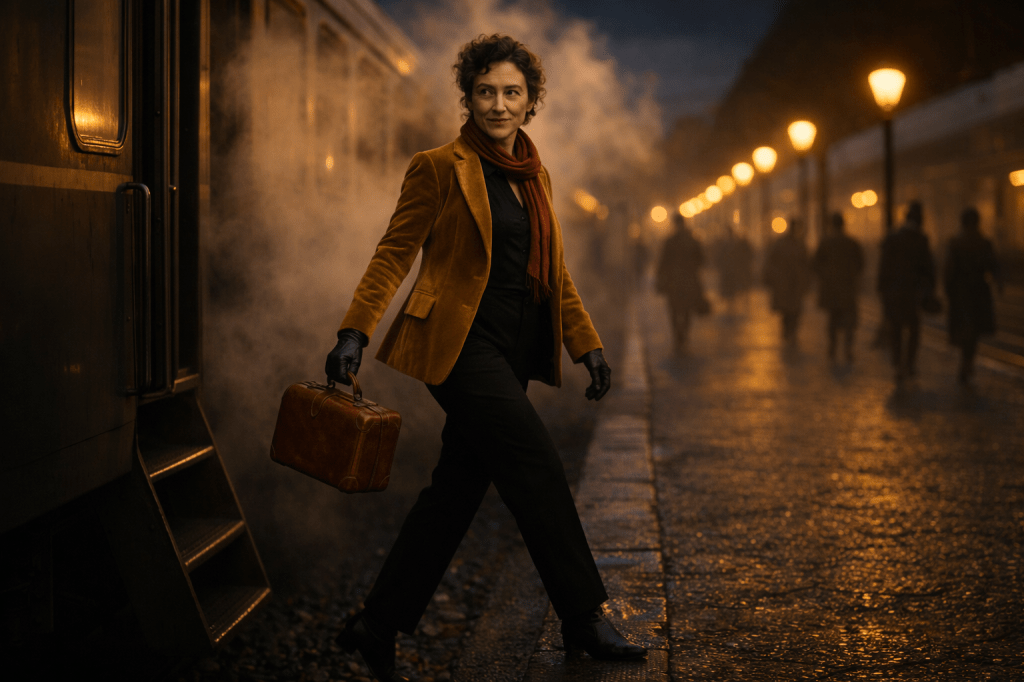
Bologna always tastes like regret. And the puppet was never the point.
Not the sharp kind—no. The kind aged well, wrapped in silk and served with espresso. The kind you ask for, knowing it will linger. I arrived by train. Of course I did. A woman should always arrive with the sound of brakes and a plume of steam. It gives people time to wonder what version of you has come back.
They say Madama Fuoco is staging a final performance. Her last one. That sort of announcement is either an ending—or an invitation.
I’m here to find out which.
“Eccoci. Here I am. The city of saints, sinners, students, and secrets… still pretending not to know my name,” I said aloud.
“You there, madam—off the platform, please!”
The voice cracked like chalk against a blackboard. A station guard. Young. Nervous. Buttoned too tightly for his own good.
I turned slowly, let the steam roll past my shoulder like stage fog.
“Ah. Certo.” I smiled, just enough to unsettle.
“Wouldn’t want to steal the scene from the debutantes of culture, the wolves of authority, and the ever-so-gullible sirs and madams of humble means.”
I stepped down—not hurriedly, not obediently. Just precisely.
“Forgive me. I was waiting for my cue.
You, madam! Care for stories of adventure, daring feats of wordplay, and tall tales from afar in my travels?
No?
You sir! Might I interest you in parlor talk fit for intellects and the curious? No? Molto bene. Very well then.”
I tipped my head toward an unseen observer—or memory.
“Come one, come all, my beautiful bugiardi of Bologna. I’m not here for revenge. Just the truth. And maybe… a front-row seat. I’ve dazzled royals and intellects across Europe, Africa, and Asia. Outwitted rivals. Outlasted lovers.”
“And who are you?” An elderly woman asked.
“Madame, a name is a name but mine is not important. La Volpe is what it is, nothing more,” I replied with charm.
I paused at a rusted station sign, brushing my gloved fingers across the letters like reading a cue card.
“Atto primo. Sipario su. Lasciamo che il fantasma faccia il suo ingresso.”
Act one. Curtain up. Let the ghost make her entrance.
“Let’s see who still remembers their lines. It certainly won’t be anyone but me.”
Madama Fuoco
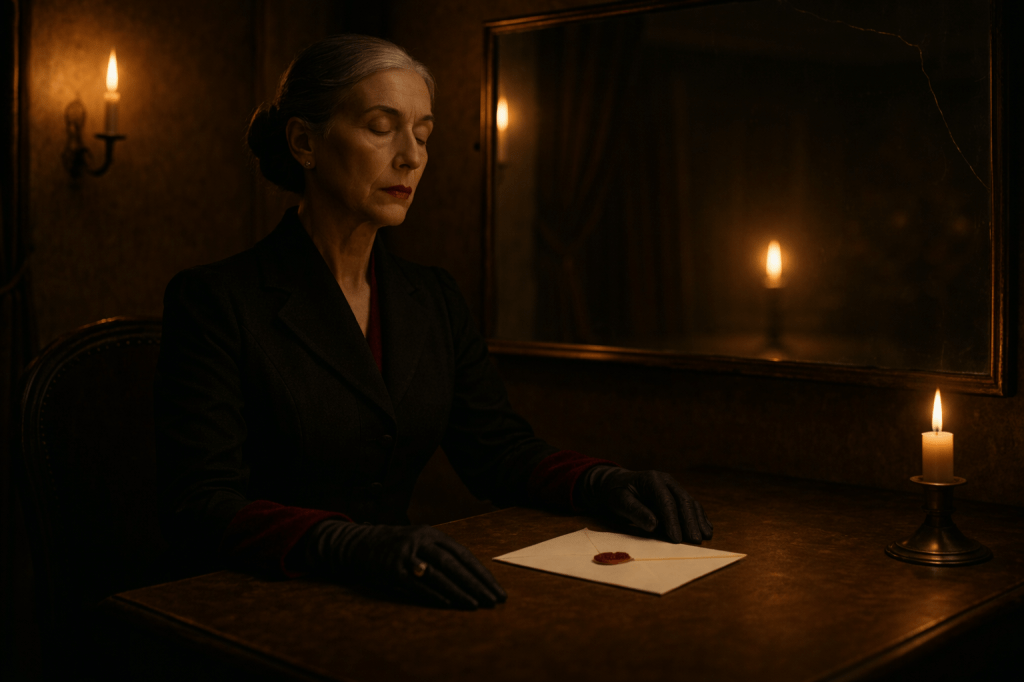
The air shifts when she returns.
Not enough for the untrained to notice. But I hear it—like the soft click of a prop door locking behind you.
La Volpe is in Bologna. Again. Up to her usual tricks. But not this time.
She never stays long. She never leaves quietly.
I lit the rehearsal candles earlier than usual today. No one asked why. They wouldn’t dare. The company knows better than to speak her name in my theater.
Names are power. And that woman has always understood how to wield hers.
“Let her circle. Let her listen. Let her pretend it’s still hers. But illusions don’t work on their maker.”
(Beat.)
“She knows that. Or she used to.”
(A pause. Then lower, sharper.)
“But if she steps foot on this stage—she follows my script.”
I strike a match. The candle flares. The darkness holds its breath.
“Atto primo. Act One. And this time—no improvisation.”
Signore Belladonna
The city tastes the same.
Fear and perfume.
And regret, of course.
Some flavors never leave the tongue.
I arrived just past midnight. Quietly.
My arrival is not meant to be seen.
It is meant to be felt.
The carriage was late.
Of course it was.
It always is when I return.
The city resists me—
until it remembers I never left.
They’ve forgotten how to watch the corners.
The shadows, the balconies, the small polite silences.
But I haven’t.
I remember every name scratched from the playbill.
Every girl who learned too late what it cost to stand center stage.
Every understudy who mistook the spotlight for safety.
Every mask that didn’t fit.
“Let the others posture. Let them monologue. Let them burn.”
(A pause, soft as silk on skin.)
“I, Signora Belladonna..prefer the trapdoor. Swift. Easy. Unforgiving. Then again, no one said the theater life was easy. Can’t have fun without consequences.”
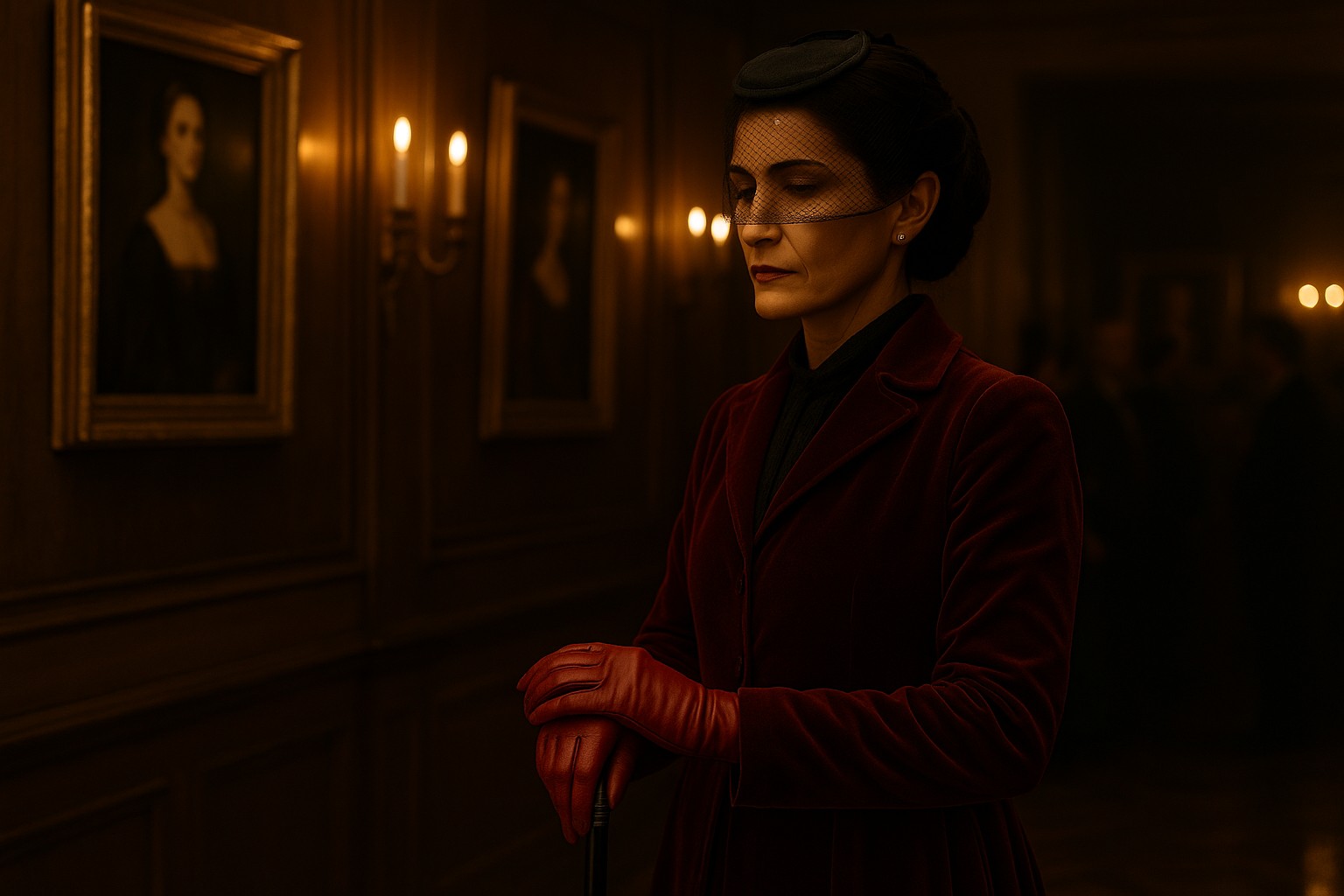
I press a gloved hand to the gallery rail.
The theater shivers.
“Atto primo. Act One. But not mine. No script. No cues. Only show—and consequences. My kind of theater. Fit for the right woman…Me.”
La Volpe
Bologna is a theater. Even its train station has better lighting than most off-Broadway stages.
I am staying near the university. Of course. The scent of rebellion clings to student walls. I plan to slip into a few lectures, pretend I’m a visiting lecturer, then vanish before I’m caught. The usual.
“A scholarly institution of higher learning, I might add—enriching young minds with knowledge.
But with so little magic. So little flair.
But never fear. La Volpe never arrives unprepared.
I come with a plan… and a magic trick.
Because one cannot simply fool a fool. The fool must be the entire system.
And I? I was born to con—err, entertain—said fools. Onward!”
This morning I found a secondhand bookstore that smelled of basil and ink. I left with nothing but a note scribbled in the margin of a forgotten libretto:
“Ah, but the stage does not forgive improvisation. It remembers it. I invented it—on my own terms. Not for men, thieves, or royalty. And certainly not for the dusty words Fuoco still lives by. A provincial puppet show could do better.”
I closed the book and tucked the note in my glove. I couldn’t help but smirk.
“I am the slyest of foxes.”
Fuoco won’t look for me. She wants me to come to her. But she knows I won’t until the curtain rises.
“I am ready for Fuoco, but the real question is, is she or anyone else ready for me?”
A woman brushed past me at that moment.
Young Woman
(passing)
“Scusi, signora, “
I haven’t been back in Bologna long, and already my next con—
ahem, friends—were eager to welcome yours truly.
La Volpe
(without looking up)
“My dear woman, there’s nothing in the world to apologize for..yet.”
(beat)
“Though, friendly advice, if you keep reading libretti upside-down, someone might start asking questions, and not all of them will be so kind.”
The young woman moved on. See? I told you I had a way with the charm.
Young Woman
(without stopping)
“Careful, signora. Some of us learned to read between the margins.”
Well. That was most unexpected.
This next con of mine might be harder than I thought. Not like those friends in Tuscany—where a little sleight of hand and a handful of coins were enough.
Especially that wooden little creature from Tuscany—all obedience and splinters.
It doesn’t matter.
“Run off, naive child of provincial, uncouth wood. Waste my time no further with your wide-eyed babble.”
Like they always do, he fell for it. Too easy.
No one upstages La Volpe—except me.
Not in this story.
Madama Fuoco
This city is made for entrances.
My name is still on the lips of the right people—not with reverence, but calculation. They want to know what the “final performance” means. Is it a farewell? Or a challenge?
I let them wonder. Their wondering makes the walls breathe again.
At rehearsal I do not raise my voice. I do not need to. A raised eyebrow, a closing of the score, a silence—these are the tools of a woman who has nothing to prove.
The cast is in place. The theater is not ready.
But I am.
Actress
(nervous)
“I thought I was following the cue, Madama.”
Madama Fuoco
(without looking up)
“No. You were anticipating it.”
(a beat)
“E in questa casa, l’anticipazione non è preparazione.”
And in this house, anticipation is not preparation.
Actor
(murmuring)
“But she meant well, Madama.”
Madama Fuoco
(finally looking up)
“Intention is not a cue, monsieur. Execution is. The audience does not care how much you want it. They care if they believe you.”
I turned my gaze to the actress.
“Fuori.”
Out.
(A beat.)
“Respira. Ritorna solo quando puoi smettere di fingere.”
Breathe. Return only when you can stop pretending.
“Ancora. Dal respiro prima della bugia.”
Again. From the breath before the lie.
Signora Belladonna
I am staying at the Palazzo d’Ombra.
It is not listed in any guidebook. That would defeat the point. The staff never age. The wine never warms. The mirrors do not reflect what you expect.
I sent no invitations.
But the scent has begun to spread.
This morning, I walked the Via degli Dei alone. A woman stopped and crossed herself when our eyes met. I smiled. She did not smile back.
I am not a story. I am the part they do not tell.
A knock at the door. Too soft to be polite.
Hotel Maid
(from outside, hesitant)
“Mi scusi, signora… ma c’era un biglietto per lei. Nessun mittente.”
Excuse me, madam… there was a note for you. No sender.
Signora Belladonna
(after a pause, calm)
“Of course not.”
La Volpe
She’s already moving. I can feel it. A hush in the perfume counters. An overbooked dinner for two. A chair left empty in a private salon, just in case.
No one names her. But they talk around her. That’s how you know she’s arrived.
Belladonna.
Of course she would come now. When Fuoco and I are within breathing distance. When the past is too loud to be called memory.
She always did love a climax.
Madama Fuoco
I did not invite her.
But I will not ask her to leave.
Let them both come.
The performance is mine.
And I am not afraid of ghosts.
La Volpe: “The Lecture Hall“
The chalkboard was already half-erased when I stepped in, ghost sentences clinging to the green like they didn’t want to be forgotten.
The professor had taken ill. Shame, really. But the chairs were full, the chalk was warm, and no one had told the students to leave.
So I took the podium.
A few students glanced up, confused but obedient. They assumed I belonged there. I always do. That’s the trick—act like you’ve done this before, and most people would rather die than question you.
“Today,” I said, smoothing down a scarf that did not need smoothing, “we’re going to discuss truth. But don’t worry, it won’t take long.”
A few nervous laughs. One girl raised her hand. “Is this still the History of Stagecraft seminar?”
“Absolutely,” I replied. “History, stagecraft, and everything we pretend not to notice in between.”
I looked out over the room and saw myself in three different faces—each version of me softer, younger, not yet burned by applause.
I taught them about Anna Magnani and Eleonora Duse, about mask work and misdirection, about the lie that saves and the truth that kills.
I left before anyone could ask who I was.
Madama Fuoco: “The Rehearsal“
They say genius is loud. They are wrong.
Genius is the precise scrape of a chair leg on polished wood. Genius is a breath held too long before the first note lands. Genius is silence that bends people into shape.
“Ancora una volta,” Again, I said.
The actress—Isabella, too quick to flinch—lowered her eyes and began the monologue again.
“She said the moonlight made her mad. I told her madness was a luxury for beautiful women. She laughed.”
No. Still wrong.
“Stop.”
Isabella froze. Her lips trembled slightly. Good. Fear sharpens.
“Lascia che sia la battuta a interpretarti.” Don’t perform the line. Let it perform you.
I stepped forward, heels clicking with a rhythm that needed no conductor. I reached up, gently—too gently—and adjusted the girl’s jaw with two fingers.
“There. That’s where the truth hides. Just behind the tension.”
She didn’t nod. Smart girl. Nodding breaks the spell.
I turned back to my chair—center, first row, aisle seat. My seat.
Behind me, the cast exhaled together.
No one applauded. Of course not.
The best scenes are the ones too sacred to clap for.
Signora Belladonna: “The Perfumerie“
The woman behind the counter was young.
The kind of young that hadn’t learned to look away from a gaze like mine.
“Something floral?” she offered. “Or perhaps something… darker?”
I said nothing. I tilted my head toward the antique bottles—each one resting like a relic on velvet, labeled in cursive older than she was.
“This one,” I murmured.
She hesitated.
“That’s not for sale,” she said. “It’s part of the… legacy collection.”
I smiled. Legacy. What a pretty word for forgetting.
“Tell me what it smells like.”
She uncapped the bottle—slowly, carefully, as if it might whisper—and brought it to her nose. Then froze.
“I don’t know. I— It’s familiar, but I can’t…”
I took the bottle gently. Inhaled.
Violets. Smoke. Velvet from a theater curtain long since torn down.
The scent of a woman who once dared to say my name too loudly.
“Si chiama Rovina,” It’s called Rovina, I said.
“Rovina. Perfetta.” It means ruin.
She blinked. “Have you worn it before?”
“I never stopped.”
I left it uncapped on the counter as I walked out. Let the air have it.
Let the city remember.
La Volpe: “The Cafe Con“
The espresso was burnt. That was the first crime.
The second was the woman across the café wearing my shade of lipstick.
She looked like the kind of woman who always orders the seasonal tart and never finishes it. Sharp blazer. Eavesdropping posture. The type who doesn’t ask who you are because she’s already decided.
I gave her my softest smirk. The one that says I know what you think you see.
When the server—girl, maybe twenty, maybe newer than the linen on the tables—laid the handwritten tally beside her espresso, I stood, crossed the floor with the grace of a whispered rumor, and said, ‘Ah, perfetta. Grazie.’
I plucked the folded tally from the table and signed it with a flourish. The ink dried fast. Old habit.
The woman blinked once.
“Mi scusi?” she asked, voice sweetened with warning.
“È già coperto,” It’s already covered, I replied, brushing past her lightly. “Da una donna in rosso a un’altra. You looked like you needed the win, tesoro.”
I turned on a heel and was out the door before the punchline landed.
I didn’t need her thanks. I didn’t need her anger.
I just needed her to feel something she couldn’t quite name.
That’s what I do, you see.
I edit the narrative.
Madama Fuoco: “The Ghost Light“
The old theater was locked, but that had never stopped me before.
Not this one.
Teatro Delle Sirene—my first triumph, my first failure. My name still faded across the marquee, the paint peeled back like gossip.
No one performed here now. The seats had been stripped. The stage curtain rotted down the center like a wound that wouldn’t heal.
But the ghost light was still lit.
I stepped onto the stage in silence. It groaned—dramatically, indulgently. I let it.
In the wings, the costume rack was still there. Empty now. But I could see them: sleeves that draped like questions, collars starched with consequence, shoes that had been danced to death.
I did not cry. That was never my art.
I closed my eyes and said a name aloud.
Not mine.
Not hers.
A name no one remembered but me. A girl who had once stood here, arms trembling, asking if her voice was enough.
“It was,” I said, softly. “It was too much.”
The echo didn’t answer. It never does.
I turned off the ghost light when I left.
Let the dead rest for once.
Signora Belladonna: “The Gallery“
The gallery was warm with candlelight and curated conversation.
They’d hung women on the walls—oil, pastel, charcoal. Half-finished, over-idealized. All of them gazing somewhere just above the viewer’s shoulder. As if waiting for a better portrait.
I wandered among them in satin gloves, a black veil over my eyes.
Not to hide. To invite.
One of them approached me. I knew she would.
She had the perfume of a woman who thought subtlety was beneath her, and the smile of someone used to being the most interesting whisper in the room.
“Beautiful, aren’t they?” she said.
I tilted my head. “Are they?”
She laughed. That laugh women use when they’ve been challenged but don’t yet know how deep the wound is.
“You must be… an admirer of the arts,” she said. The pause was long enough to imply: I don’t know you. Should I?
I let the silence bloom. Then:
“I prefer the unfinished pieces. The ones that still have somewhere to go.”
She folded her arms. “And what would you know about that?”
I turned to face her fully. Let the veil catch the light just enough.
Her breath hitched. Just a little. Just enough.
I said nothing.
The moment passed. She left.
She would forget the conversation by morning. But she would leave her job in a month.
She wouldn’t know why. No one ever does. At first.
The paintings remained. Some women haunt portraits.
I prefer to haunt the room.
The Salon
The salon was velvet and marble, candlelit and cruel.
The kind of room that encouraged gossip and regretted nothing.
They were all there.
La Volpe, in gold. Not her usual red. A warning or a joke.
Madama Fuoco, near the fireplace. Stillness in heels. She did not sit. She never did in rooms she didn’t own.
Signora Belladonna, by the window, drinking nothing, watching everything. Her reputation dressed in pearls.
No one introduced them.
No one needed to.
Their names traveled like incense—thick, sweet, slightly toxic.
People looked through them, not at them, as if to do so directly might undo the evening.
Someone played piano in the other room. Badly.
La Volpe laughed once—lightly, like glass tipping—but didn’t say why.
Fuoco said nothing, but a woman near her forgot her own question mid-sentence.
Belladonna met the host’s gaze, smiled, and said nothing. The host did not speak again that evening.
They did not approach one another.
They did not need to.
The room had already shifted.
La Volpe: “The Card”
I never stay until the end.
Salons, like affairs, are best exited on a high note. Before the clinking glasses lose their rhythm. Before the wrong woman asks the right question.
I left my calling card on the piano.
Not the host’s piano. The one in the corner—out of tune, mostly decorative, and draped in lace like a widow at a wedding.
I placed it carefully. Ivory side up. My name handwritten in red ink. Beneath it, one sentence:
“All masks are mirrors. Shall we trade?”
I didn’t sign it, of course. Not really.
But she would know.
Both of them would.
I walked out just as someone began to sing off-key in Italian.
That felt like closure.
Madama Fuoco: “The Reply“
I found the card tucked in the folds of my shawl.
Not a place a servant would dare touch. Not something misplaced. It had been deliberately placed—like a challenge or an invitation.
The handwriting was hers. Slanted, flippant, too fluid to be unintentional.
“All masks are mirrors. Shall we trade?”
Clever. Too clever.
I tore the card in half. Not out of anger. Out of structure.
Two acts. Symmetry.
In my dressing room, I lit the candle I only use for letters I don’t send.
I wrote on the back of one of my old programs—the one from La Tragedia di Luce, the show she once claimed to hate but quoted in every salon for a year.
I wrote only three words.
“Masks don’t frighten me.”
I left it in the gallery foyer.
Not for her.
For Belladonna.
Let the third act begin.
Signora Belladonna: “The Theater“
They say Madama Fuoco owns the Teatro delle Ombre.
But ownership is an illusion. Like memory. Or applause.
I did not buy the theater. I simply booked it.
One performance. No title. No program. Just a name printed on the velvet billboards in crisp, unsentimental type:
Belladonna.
The posters went up at dawn.
I didn’t need to see them. I could feel them echoing through the alleyways—each letter a whisper she couldn’t silence.
She would see them first.
She always wakes early. That’s the cost of control.
La Volpe would see them next. She doesn’t sleep much at all.
And the city?
The city would blink, adjust its pearls, and pretend not to be thrilled.
I would arrive at curtain.
Or just after.
Depending on how loud I wanted my silence to be.
The Witness — “Archivist’s Note”
I was only supposed to be cataloguing set designs.
But the letter was tucked into the spine of a score marked La Tragedia di Luce. No one had opened it in decades. The envelope was brittle, the wax seal broken. Inside: fragments. Notes. Scrawled lines on linen paper. One red glove.
And a card.
All masks are mirrors. Shall we trade?
I didn’t know the names. Not really. I thought La Volpe was a fictional trope. Madama Fuoco—a myth from the theatrical underworld. Signora Belladonna—a ghost story whispered in rehearsal halls.
But the handwriting…
I’ve seen it before. On a lecture hall chalkboard. On a perfumery receipt. On the back of a playbill that no one remembered printing.
I’ve never seen them.
But I think they’ve seen me.
La Volpe & Madama Fuoco: “The Green Room”
The green room hadn’t been green in years.
It smelled of velvet and resignation.
I, La Volpe, was already there when she walked in. Of course. She’d never sit unless I was seated first. Always a performance, even in silence.
Madama Fuoco
“You have three minutes.”
La Volpe
“Three? Generous. You must be nostalgic.”
She didn’t look at me. She looked at the mirror behind me—like I was a reflection she hadn’t approved.
La Volpe
“I’m not here to stop you.”
Madama Fuoco
“That would require you to start me. You never did.”
I let the pause breathe. Then:
La Volpe
“She booked the stage. Your stage. With your name still echoing in the curtain seams. That must ache.”
Madama Fuoco
“Aches are for people who leave.”
Her voice was a thread, pulled tight. I almost admired it.
La Volpe
“You think this is revenge?”
She finally looked at me. Not through me.
Madama Fuoco
“No. This is closure. That’s what terrifies you.”
I rose slowly, letting the chair groan just enough to sound deliberate.
La Volpe
“Madama, break a leg.”
Madama Fuoco
“Darling, I already did. You were there.”
A voice called from the wings. Not hers. But close enough to make us both look up.
I left first. Of course I did.
Even now, I knew how to make an exit.
Madama Fuoco: “Before the Curtain“
The makeup was already done.
Not by a girl with shaky hands and dreams of Milan, no.
I did it myself. Always have.
Powder. Liner. Red. Fuoco red. The kind that doesn’t ask for forgiveness.
My hands did not tremble. I made sure of it.
On the dressing table sat a folded letter. Sealed in wax. No name on it. The last time I wrote a letter before a performance was…
No.
I didn’t look at the date.
Outside, I could hear movement—chairs being straightened, murmurs tightening into silence, the long hush before expectation ripens into hunger.
I closed my eyes. I let the ghost light flicker behind them.
I am not afraid of her.
I am not afraid of either of them.
I am afraid of the audience.
Not because they judge.
Because they remember.
And tonight, memory will be louder than applause.
The Final Performance
Signora Belladonna
I enter last. Not late. Important.
“Tonight,” I say, “we offer three truths.
One buried.
One burned.
One beautiful.”
I turn.
“Ladies.”
My voice tastes like port and permission.
She was already there.
In the red. In the light. Madama Fuoco.
Madama Fuoco
She did not wait for a cue. Of course not.
She entered as if she had written the theater, the night, and the breath in my throat.
I said nothing. I let her speak first. Always let the disruption reveal itself.
I step forward.
I do not bow. I do not blink.
“I lit the candles every night before rehearsal. The stage must be consecrated. You don’t bleed truth without fire.”
La Volpe
“Careful, signore mie,” I said. “Too much truth in one place and the walls will start to flake.”
“You bled control. Not truth.
Truth was what I gave them—by accident, mostly.
But it landed, didn’t it?”
They laughed.
Fuoco glared. Belladonna smiled.
I bowed—mockingly, elegantly, just enough to be remembered.
“Disappearance,” I say, stepping into the center like it owes me money, “is an art form. You taught me that, Madama.
But you also taught me timing.
And darling, this is my entrance.”
I sweep my arms. The light bends.
The audience exhales.
“You want truth?
Truth is I lied to stay alive.
Truth is I laughed because no one else knew when to.”
I pause.
“And truth is—she always knew.”
I look now—not at Fuoco.
At Belladonna.
Signora Belladonna
“They always laugh. That’s the first sound a woman learns to fake.”
Madama Fuoco
(sharper now)
“I built the script. You mocked it. She… listened.”
Signora Belladonna
“I waited. I watched. I knew you’d destroy each other for an audience that forgot your names.”
La Volpe
“I only destroyed what tried to keep me still. I am the movement in the line you couldn’t control. I am the—”
Madama Fuoco
(sharper now)
“—failure you taught yourself to admire. I know.”
Signora Belladonna
“And yet you both stepped onto my stage tonight. My name on the marquee. My story, folded like a letter no one was brave enough to open.”
La Volpe
“You never told a story. You curated shadows and called it narrative.”
Madama Fuoco
(to Belladonna)
“You were always the whisper. Never the voice..”
Signora Belladonna
“And yet here you both are—inside me. Speaking like I’m not the room you’re standing in.”
All three women now face the audience. They speak—together, then spiraling apart.
ALL THREE
(in sequence, then overlap)
Fuoco
“I demanded truth.”
Volpe
“I lied to survive.”
Belladonna
“I watched, and chose what to keep.”
Fuoco
“I taught them to bow.”
Volpe
“I taught them to leave.”
Belladonna
“I taught them to watch.”
ALL THREE
(overlapping, faster)
“Hai dimenticato—Non sei mai rimasta—Lo sapevi sempre—”
You forget—You never stayed—You always knew—
“I gave you the lines. I improvised. I listened.”
(Silence. One beat.)
Signora Belladonna
“And still, none of you asked who wrote the stage.”
(pause)
“That, too… is part of the story.”
La Volpe
(softly)
“She wins.”
Madama Fuoco
“There are no winners.”
Signora Belladonna
“There are only witnesses.”
One word.
The audience doesn’t hear it. But they feel it.
“I knew. I watched two women turn theater into prayer. One to be adored. One to be feared.”
I smile.
“I don’t choose. I offer the stage. What they become on it… is their own undoing.”
I move toward them.
“This is the story. Not who was right. Not who was remembered. But who stayed long enough to write the ending.”
I extend my hands.
Neither takes them.
That, too, is the ending.
After the Curtain
La Volpe
They clapped, of course.
Not because they understood it. But because they feared they might have missed something.
I slipped out before the final applause hit its rhythm.
I always do.
The alley behind the theater was wet with leftover rain. A stray piece of confetti clung to my heel like an admirer with bad timing.
I looked up at the marquee.
Belladonna.
I smiled.
Good name for a performance that might kill you.
I lit a cigarette. I didn’t smoke it. Just liked the way it burned.
And then I walked.
Not away.
Just… off-page.
The Witness: “After the Archive”
I keep the fragments in a locked drawer. Some nights I take them out. The air still smells faintly of violets and smoke.
I’ve written papers. None were accepted. “Unverified.” “Too speculative.” “Stylized myth, not scholarship.”
Maybe they’re right.
Or maybe theater was never meant to be preserved. Only remembered.
I still return to the Teatro delle Ombre. No one performs there now. But the ghost light remains.
I do not turn it off.
Not yet.
The stage is set. The stories are waiting.
And some nights… I think I see three silhouettes, just beyond the curtain.
Watching me.
Waiting to see if I will begin.
Madama Fuoco
The dressing room was still warm when I entered.
Someone had left a white rose on the chair.
No note. No stem. Just petals.
I removed my earrings slowly. Each gesture a ritual. Each movement part of a score only I had memorized.
In the mirror, I saw myself.
Not as they saw me.
Not as I had once wanted to be seen.
Just—me.
The silence was full.
And for the first time in years, it did not demand to be filled.
Signora Belladonna
I did not leave through the stage door.
I left through the audience again.
Let them wonder. Let them turn and say, “Was she—?”
They never remember what I said. Only that, afterward, the script didn’t fit anymore.
I didn’t take questions. I never do.
In the foyer, a young woman watched me go.
She said nothing. But her breath caught, just once.
I paused.
Let her look.
Let her imagine.
And then I vanished, as I always do—
in the moment before someone decides to follow.
“Now ask: whose story did you think it was?”

Fin.
Forward
by Francesca Donati
I, Francesca Donati, stood outside Pinocchio’s Daring Journey at Disneyland, watching families wait to be delighted by a story I once knew by heart. The music was sweet, yet wildly un-Italian—no surprise but a missed opportunity. The puppet above the ride sign grinned, its smile too bright, too carefree for a tale that’s anything but light.
And every name that mattered—Geppetto, Mangiafuoco (excuse me, ‘Stromboli’—dreadful, a stereotypical Italian showman, not of fire but of cheese and cold cuts), the Fox, the Coachman—was still a man. Always a man, always a stereotype.
I’m Italian. I was raised in Milan on Collodi, not the 1940 animated Disney film with non-Italian actors. Collodi’s Pinocchio was stranger. Hungrier. Less a moral lesson, more a fever dream—full of cruelty, fire, and consequence. Yet, it always felt like a story not made for women and girls, too.
But what stayed with me most were the silences. The Italian women who weren’t in the story. Or who appeared only as invisible mothers, shadows, warnings, or afterthoughts.
And I wondered: what if the stage belonged to women? What if the puppet was never the point?
So I wrote them back in.
The Fox with a sharper smile and killer wit—La Volpe.
The Coachman—no, the Coachwoman—Signora Belladonna.
And Mangiafuoco reborn—not of fire and sausage, but of silence and ash. Madama Fuoco.
This isn’t a retelling. It’s a reclamation.
Tutte le maschere sono specchi.
All masks are mirrors.
Some stories begin with a lie. Others end with a truth no one expected to hear—
on a stage built for someone else.
 Scott Bryant
You must be logged in to post a comment.