
Part of AI Systems — explorations of design, architecture, and constraint logic in practical intelligent systems.
I. Overview
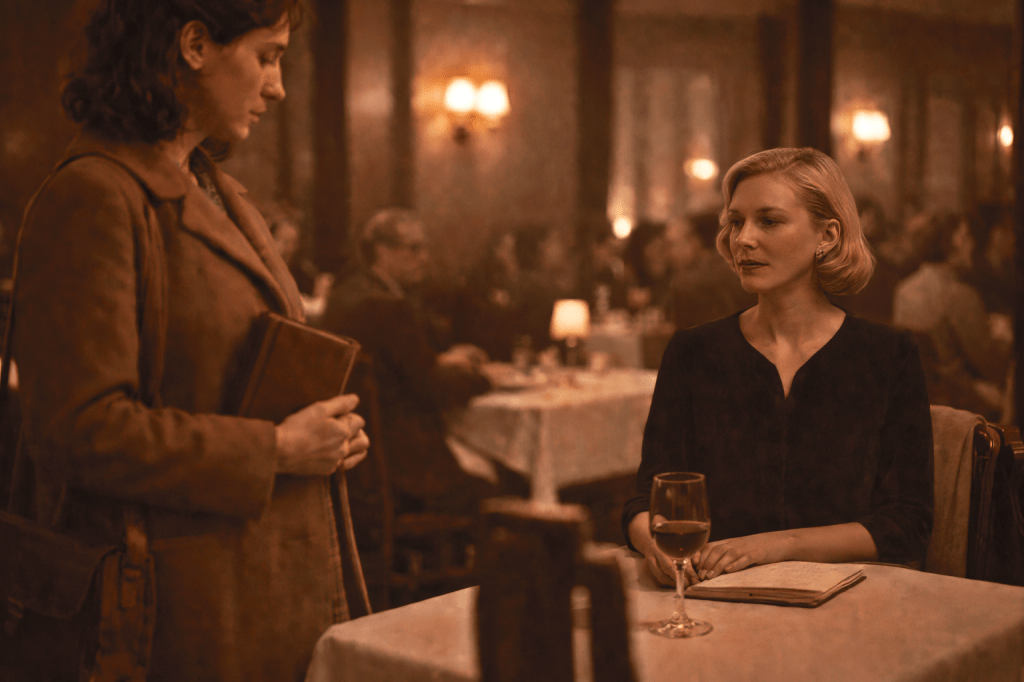
Lumivore is a prompt architecture and image-finishing methodology designed to generate cinematic still imagery grounded in film language, observational realism, and visual continuity.
Rather than optimizing for spectacle or stylization, Lumivore prioritizes images that feel found, not fabricated — frames that could plausibly exist within a finished film.
Its core philosophy is simple:
AI generates the negative.
Human judgment finishes the image.
II. The Problem Lumivore Solves
Most AI-generated imagery fails not because of resolution or detail, but because it ignores cinematic logic.
Common failure modes include:
- impossible camera positions
- conflicting light sources
- synthetic material behavior
- exaggerated emotional signaling
- images that cannot coexist in the same visual world
These failures persist because most prompting systems optimize for visual impact, not cinematic coherence.
Lumivore was built to solve a different problem:
How to enforce film grammar, continuity, and realism across AI-generated images.
III. Core Design Principles
1. Film Language Over Spectacle
Every image must obey the implicit rules of cinema:
- a believable camera
- a legible point of view
- physical presence in space
If a camera position could not be achieved in the real world, it is rejected.
2. Observational Realism
Lumivore favors:
- quiet moments over dramatic peaks
- partial framing over centered compositions
- natural imperfections over polish
The goal is presence, not performance.
3. Motivated Light Only
Light must be:
- traceable to a plausible source
- consistent with time and environment
- restrained in intensity
Artificial glow and stylized shortcuts are avoided.
4. Material Honesty
Textures behave as evidence, not ornament:
- fabric drapes naturally
- skin responds realistically to light
- environments respect physical properties
Anything that reads as procedural undermines credibility.
5. Continuity as a Feature
Lumivore images are designed to coexist:
- shared visual language
- stable character identity
- environmental consistency
Each image must still belong to the same film.
IV. Prompt Architecture
Lumivore prompts are built in structured layers, each with a defined role.
1. Scene Definition
Establishes:
- location
- time of day
- interior/exterior logic
- seasonal context
This functions as production design.
2. Camera Discipline
Defines:
- framing and orientation
- implied lens behavior
- eye-level or motivated elevation
Omniscient viewpoints are avoided.
3. Subject Placement
Positions characters within the frame:
- asymmetry and partial cropping
- spatial relationships
- environmental grounding
Scenes feel occupied, not staged.
4. Light Logic
Specifies:
- direction
- softness/hardness
- source motivation
There is no default “cinematic lighting.”
5. Negative Prompting
Prevents failure modes by explicitly forbidding:
- extra bodies or limbs
- impossible geometry
- conflicting light sources
- over-processing or genre bleed
Negative prompts protect realism.
6. Iteration Control
A core rule:
Stop when the image works.
Over-generation increases drift.
Restraint preserves coherence.
V. Human Finishing
Lumivore does not end at generation.
Images may receive minimal post-processing focused on:
- exposure normalization
- subtle color correction
- contrast discipline
- artifact removal
The goal is plausibility, not stylization.
VI. Applications
Lumivore is suited for:
- film-adjacent visual development
- editorial and essay imagery
- narrative archives
- concept-driven storytelling
It is intentionally unsuited for:
- rapid novelty production
- fantasy spectacle
- decorative illustration
VII. Conclusion
Lumivore reframes AI image generation as cinematic construction, not aesthetic output.
By embedding film grammar, material realism, and human judgment directly into the prompting process, it enables AI to function as a disciplined visual tool.
The result is imagery that feels less made — and more remembered.
 Scott Bryant
You must be logged in to post a comment.