
The Phantom of the Opera — July 28, 2018
Keller Auditorium, Portland, Oregon — 2:00 PM Matinee
Featuring Quentin Oliver Lee (The Phantom),
Eva Tavares (Christine Daaé), and Jordan Craig (Raoul)
There is something quietly surreal about entering a gothic opera in full daylight.
Eight years later, that afternoon still feels suspended in red velvet and summer sun.
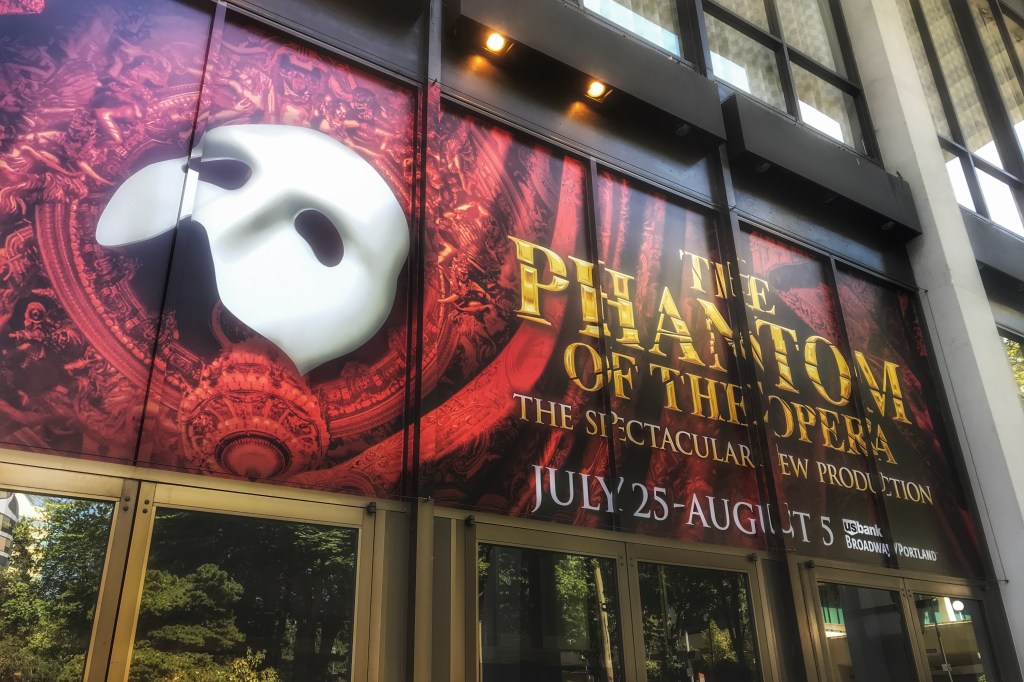
In July 2018, I attended a 2:00 PM matinee of The Phantom of the Opera at Keller Auditorium. Downtown Portland moved normally outside — summer light reflecting off glass towers, trees casting steady shadows along Main Street. Across Keller’s façade, however, the white half-mask stretched wide over molten red and baroque gold, announcing spectacle against the building’s clean geometry.
Midday sun.
White Portland sky.
And a story that belongs to candlelight.
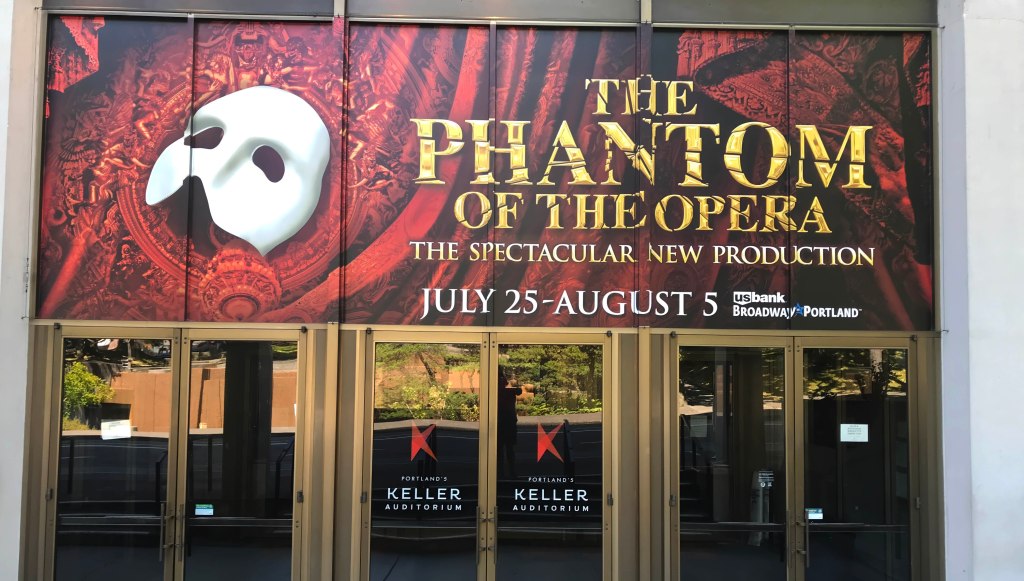
The branding alone carries weight. The mask — stark, minimal, nearly timeless — remains one of the most enduring theatrical identities of the modern era. Even from the sidewalk, it signals scale. Not intimacy. Not minimalism. Scale.
Inside, the atmosphere shifted.
Matinees have their own rhythm — quieter, slightly reflective. Programs unfolded softly. Conversations hummed at a lower register than an evening crowd might carry. The red curtain glowed deeper than expected, absorbing rather than reflecting the ambient light.
This was the Cameron Mackintosh touring production — updated staging while preserving the architecture of Andrew Lloyd Webber’s original score. Phantom has never been subtle. It is operatic excess, unapologetic in its romance and shadow.
When the overture began, daylight ceased to matter.
The descending organ motif remains one of theatre’s great ignition points. The chandelier sequence still thrives on spectacle. Phantom leans into melodrama without irony, embracing atmosphere over restraint.
At some point that afternoon, the house lights rose — whether between acts or during a pause in the performance, I no longer remember precisely.
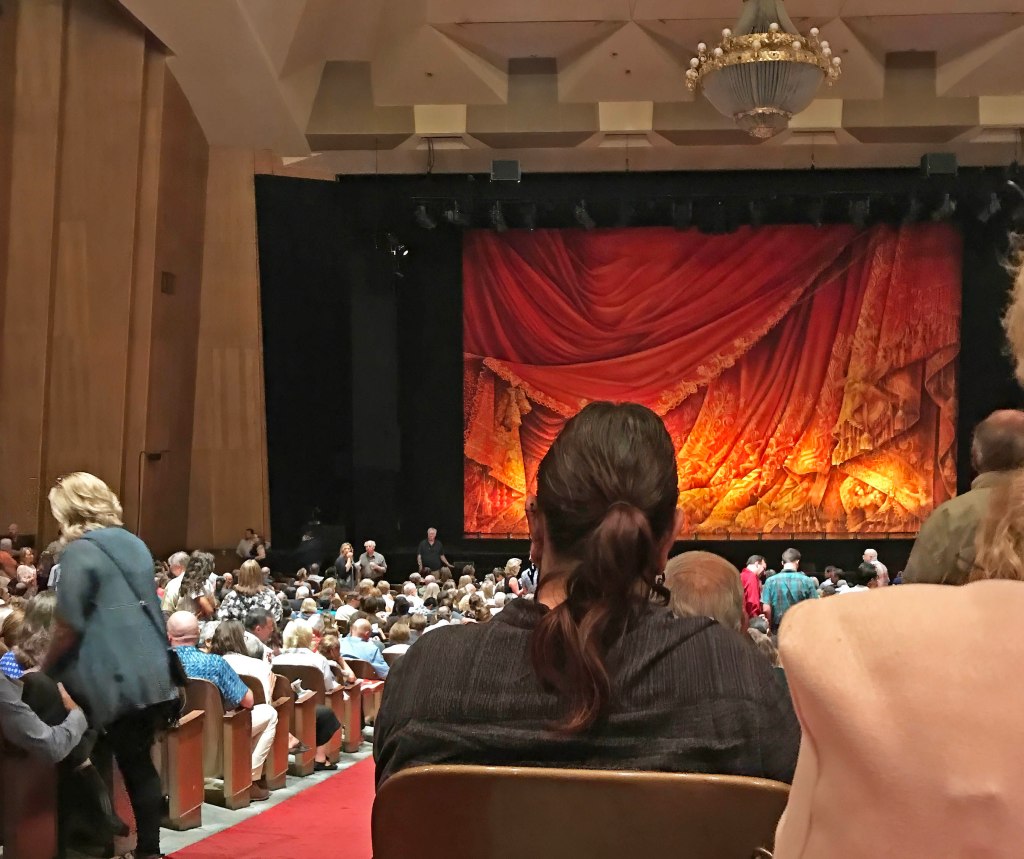
What remains is the feeling: the room re-emerging from shadow, the audience briefly returning to themselves before descending again into velvet and subterranean corridors.
Outside, Portland remained bright and ordinary.
Inside, myth continued.
Looking back now, July 2018 feels transitional. This was before Broadway’s long pause, before the eventual Broadway closing in 2023, before large-scale touring productions felt fragile. At the time, it was simply a summer engagement. In retrospect, it reads as part of a closing era of theatrical maximalism.
What stays with me most is not a single performer or staging choice, but the layering of the experience:
The banner stretching across the façade.
The afternoon light outside the lobby doors.
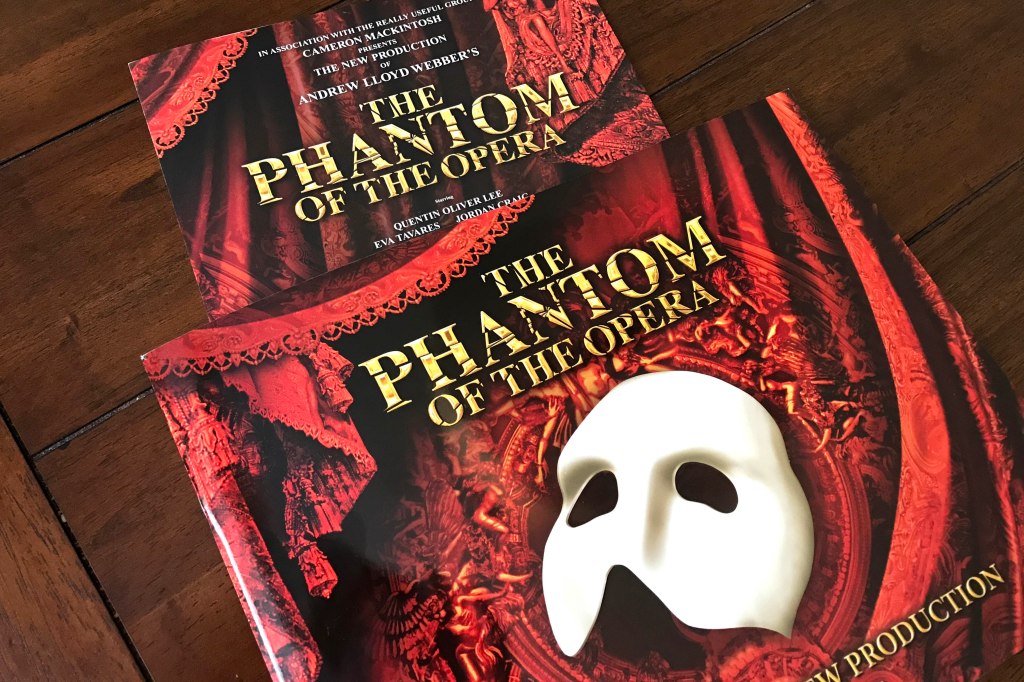
The weight of the program resting on the armrest.
The red curtain absorbing the room into shadow.
For a few hours at two o’clock in the afternoon, Keller Auditorium ceased to be downtown Portland. It became Paris beneath the Opera House — chandeliers suspended in anticipation, music lingering beneath the stage, a mask that has outlived nearly every theatrical trend around it.
Some productions descend at night.
Phantom descended in the afternoon.
For a few hours at two o’clock in the afternoon, Keller Auditorium ceased to be downtown Portland. It became Paris beneath the Opera House — chandeliers suspended in anticipation, music lingering beneath the stage, a mask that has outlived nearly every theatrical trend around it.
Some productions descend at night.
Phantom descended in the afternoon.
 Scott Bryant
You must be logged in to post a comment.