
Almost, Maine
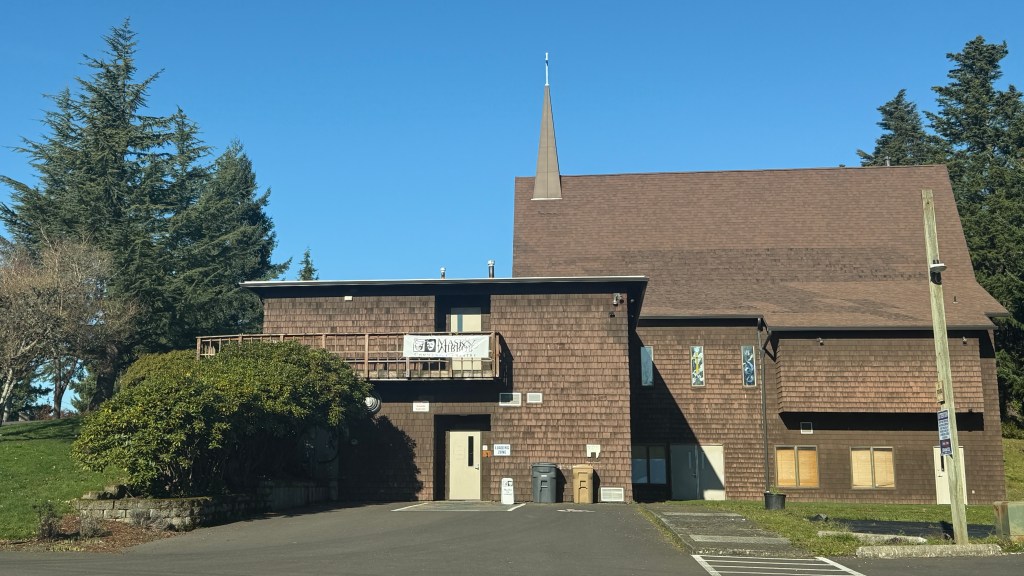
Mask & Mirror Community Theatre – January 24th, 2026
Tualatin United Methodist Church, Tualatin, OR
Directed by Jodi Johnson
By John Cariani
Scene 5 of Almost, Maine is easy to miss.
It arrives without emphasis, framed as comic relief, and spends most of its time circling bad dates and worse evenings. The language is casual and repetitive, deliberately unpolished. On the page, it reads like a pause between more obviously shaped moments. In performance, especially in this production, it revealed itself as something else.
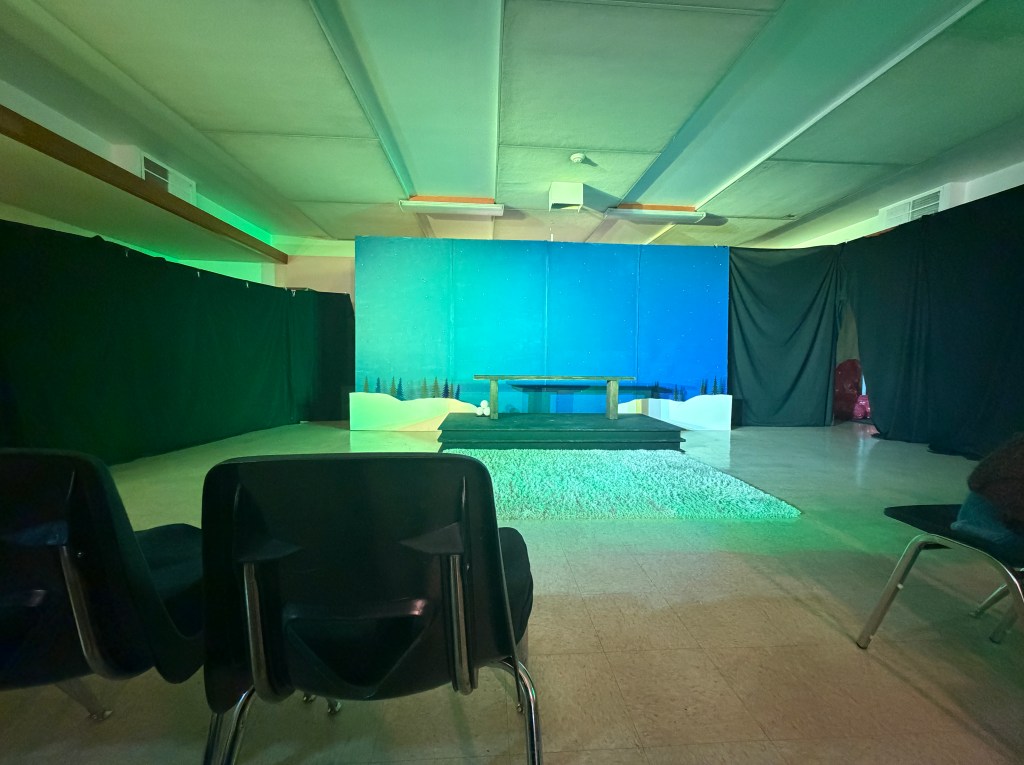
Performed by two women, the scene with Shelley and Deena did not announce its difference. Nothing in the staging called attention to the casting. No line was altered. No gesture was underlined. The scene simply unfolded, and in doing so, it shifted the emotional center of the play.
What begins as comparison—whose night was worse—gradually exposes a deeper pattern: two women narrating their exhaustion with being legible, agreeable, and available. The humor works because it is defensive. Laughter buys time. The stories escalate not to impress, but to delay what both characters already know.
The turning point does not arrive as confession, but as recognition. The line “someone I know I like, like you” lands without preparation and without certainty. There is no release. Instead, the scene fractures.
What follows is not acceptance, but panic.
The refusal that closes the scene is not moral. It is structural. Shelley’s declaration breaks the shape of the relationship as it has existed. Deena’s anger is not rejection of desire, but refusal of instability. Friendship here is not a lesser form of intimacy—it is the ground that makes life workable. To threaten it is to threaten everything.
This is where the women’s casting matters most.
The scene does not ask whether love between women is possible. It assumes intimacy already exists. What it questions is whether naming that intimacy destroys the only stable thing the characters have built. The fear is not queerness; it is loss.
In a full house, on a Saturday matinee, in a church space, the scene landed quietly. There was no reaction to signal what had just occurred. The room did not shift loudly. It simply listened.
That restraint is the scene’s power.
Scene 5 does not resolve. It does not reward honesty. It does not promise that courage leads to clarity. It ends where it began—two women standing on uncertain ground, aware that something has shifted and unwilling to pretend otherwise.
That the scene was allowed to remain unresolved, unframed, and uncorrected is what made it work.
The production was directed by a woman.
The song playing in the space before the lights came up returned during intermission.
Archival Meta Note: I’m not a professional archivist, but I approach these productions with an archivist’s care. These notes are my way of preserving not only what I saw on stage, but why it mattered — as memory, as culture, and as a record of care. In that choice, the archive becomes not just a record of art, but a record of care.
 Scott Bryant
You must be logged in to post a comment.