
The Sleeping Beauty
Oregon Ballet Theatre
February 21, 2026 — 2pm Matinee
Keller Auditorium, Portland, Oregon
Featuring Juliette Ochoa (Princess Aurora),
Leigh Goldberger (Carabosse),
and Ruth Langill (The Lilac Fairy)
❦
Music by Pyotr Ilyich Tchaikovsky
Oregon Ballet Theatre Orchestra
conducted by Enrique Carreón-Robledo
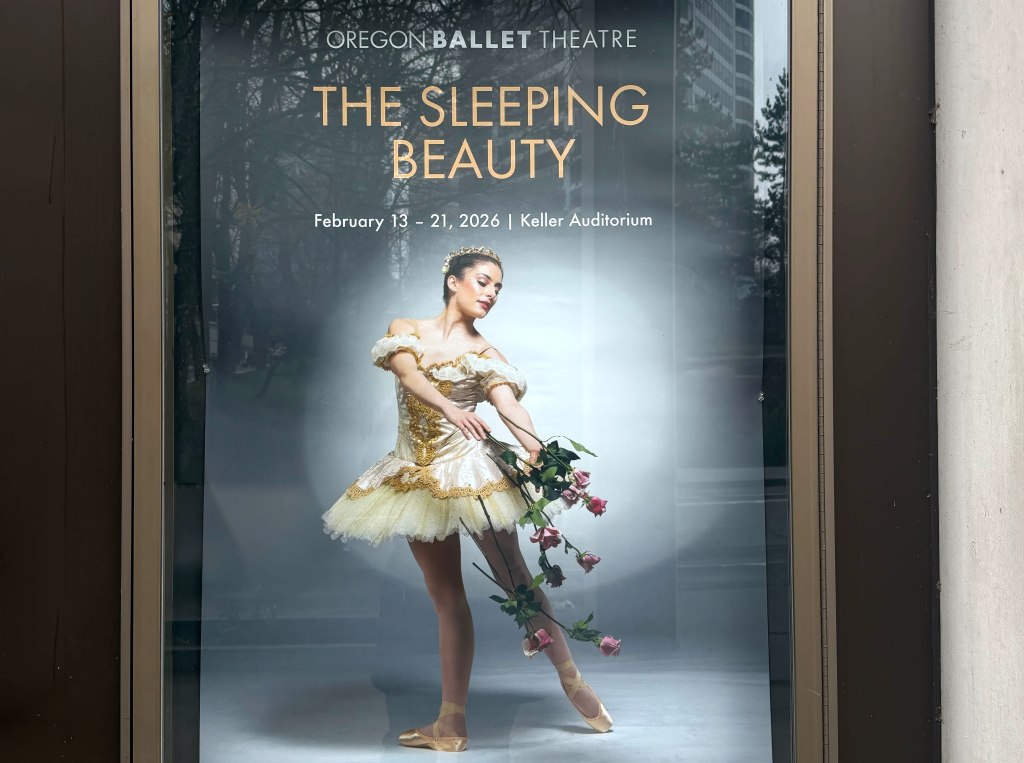
The poster outside Keller Auditorium caught the light in a way that felt almost ceremonial — Aurora poised mid–Rose Adagio, the title in gold, February 13–21, 2026 stamped clearly beneath it. I had known this music for years before I ever stepped inside.
André Previn’s recording of The Sleeping Beauty has lived quietly in my collection — familiar enough that I can anticipate the phrasing of the waltz before it arrives. I know its architecture. Its swell. Its restraint.
So when Oregon Ballet Theatre revived Christopher Stowell’s 2010 staging — itself faithful to Tchaikovsky’s 1890 original — I wasn’t looking for reinvention. I was looking for recognition.
The Performance Perspective beforehand framed the ballet as a narrative layered with embellishment — perhaps twenty minutes of story suspended within two hours of dance. During the Performance Perspective, the historian quoted Arlene Croce, who once called Sleeping Beauty “the apex of ballet as an art form,” arguing that a faithful performance is itself an act of faith.
That afternoon felt less like spectacle and more like immersion — what the historian called, half playfully, “Beauty Bathing.”
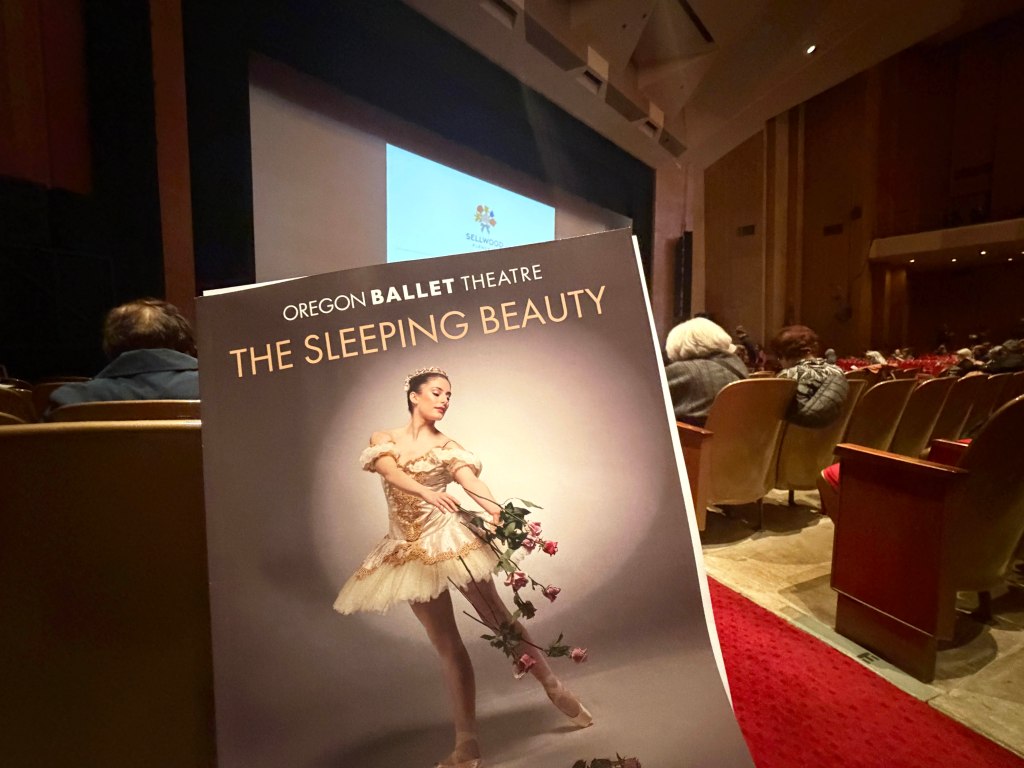
Before the performance began, Oregon Ballet Theatre allowed the audience to witness company class on stage — something the historian noted is rare, as practice in ballet is considered sacred. Artistic Director Dani Rowe led the dancers through their work: barre exercises, controlled extensions, the quiet repetition that undergirds everything we later call “magic.”
Seeing Aurora rehearse before she became Aurora altered the experience in subtle ways. The myth would arrive later. First came discipline.
The Prologue unfolded as ritual — a christening, six fairies offering gifts of charm, wit, courage, beauty, serenity. And then Carabosse, omitted from the guest list, entered in blue-green light, fury contained within elegance. When she pronounced the curse, it did not feel melodramatic. It felt inevitable.
As the historian noted before the performance, the first act — Aurora’s sixteenth birthday (“The Spell”) — carries what many ballerinas consider the most terrifying solo in classical ballet: the Rose Adagio. In it, Aurora balances through a series of sustained promenades, accepting the hands of four suitors while poised en pointe, the entire court watching. Watching Juliette Ochoa balance through those sustained promenades, accepting each suitor’s hand, the room collectively held its breath.
The balance steadied. It landed.
And then the waltz.
I closed my eyes when the first notes began. I knew it would move me. What I did not expect was how closely the live orchestra mirrored the André Previn recording I have carried for years. The phrasing. The tempo. The swell. It was not interpretation layered over memory. It was confirmation.
For a moment, it felt surreal — as though two timelines had aligned.
Later, disguised, Carabosse offered Aurora a bouquet. Hidden within it: the spindle. When Aurora pricked her finger, the lighting shifted again to blue and green. The air did not feel theatrical. It felt like a cooling of the room.
The four suitors lifted her above them, almost like a coffin. Mourning entered the space.
But the Lilac Fairy intervened — not triumphantly, but protectively. The curse softened from death to sleep. The court settled. Time suspended.
By intermission, I realized something simple: I had already received what I came for.
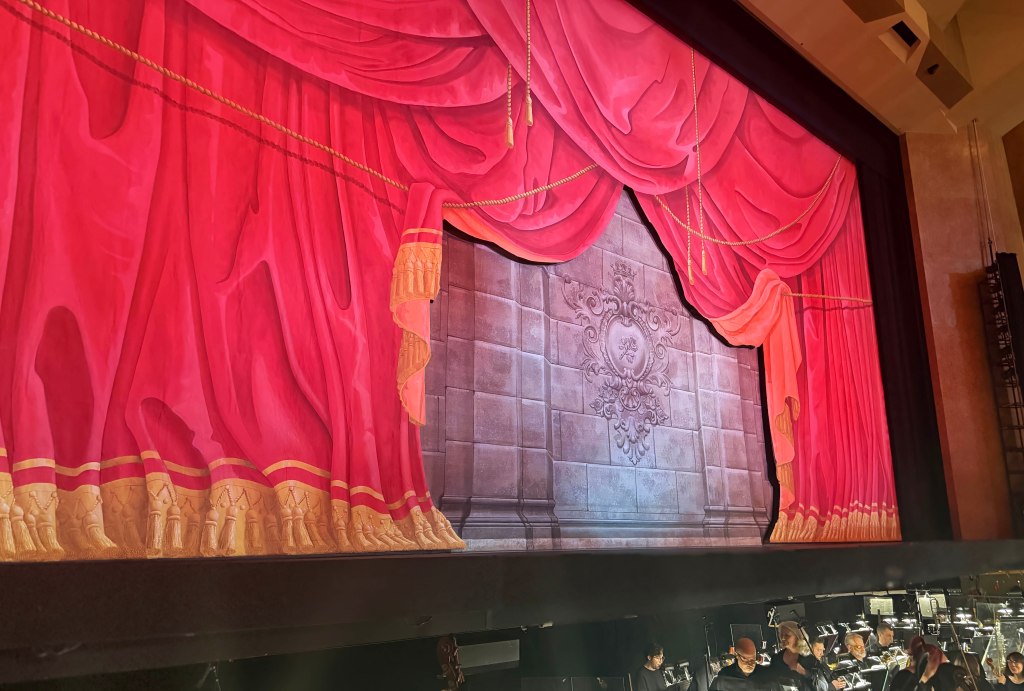
The Waltz had arrived. The Rose Adagio had steadied. The orchestra had echoed the recording I’ve carried for years. Aurora had fallen, and the Lilac Fairy had sealed the kingdom in sleep.
I have never left a performance at intermission before. But that afternoon felt complete. Not hurried. Not impatient. Just complete.
There is a tendency to measure art by duration — to stay because we are meant to see it through. But what I experienced in the first act felt whole. The spell had been cast. The world had slowed. The music had aligned with memory.
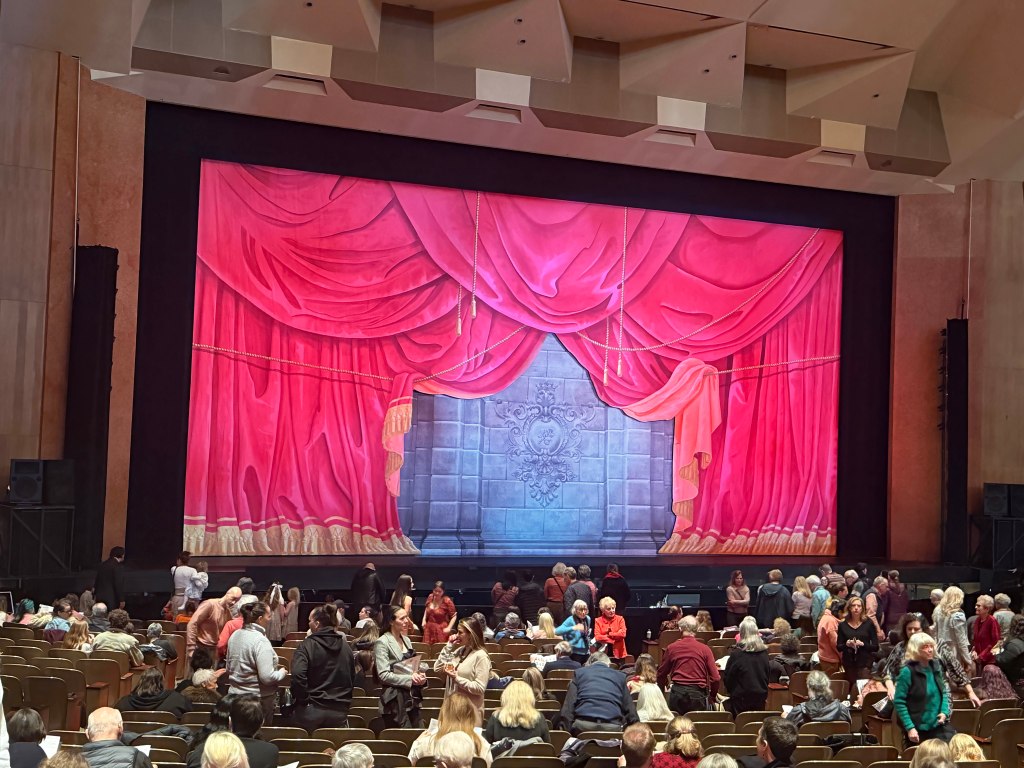
As the red curtain glowed and the orchestra adjusted below, I felt unexpectedly light.
In my mind, Aurora will wake.
That was enough.
Archival Supplement
Oregon Ballet Theatre shared a promotional short featuring Soloist Charlotte Nash in the “pricking” sequence from The Sleeping Beauty. While not from the February 21 matinee performance (which starred Juliette Ochoa), the clip captures the staging and lighting of the moment described above.
 Scott Bryant
You must be logged in to post a comment.