
The Mousetrap
Mask & Mirror Community Theatre — March 1, 2026
2:30 p.m. Matinee — The Stage at Rise Church, Tigard, Oregon
Directed by Matt Russell
By Agatha Christie
Cast:
Mollie Ralston — Erin Bickler
Giles Ralston — Shane Rudolph
Detective Trotter — Adrian Rosales
Mrs. Boyle — Virginia Kinkaid
Miss Casewell — Cassandra Brown
Christopher Wren — Noah Keener
Mr. Paravicini — Marc Berezin
Major Metcalf — Mark Putnam
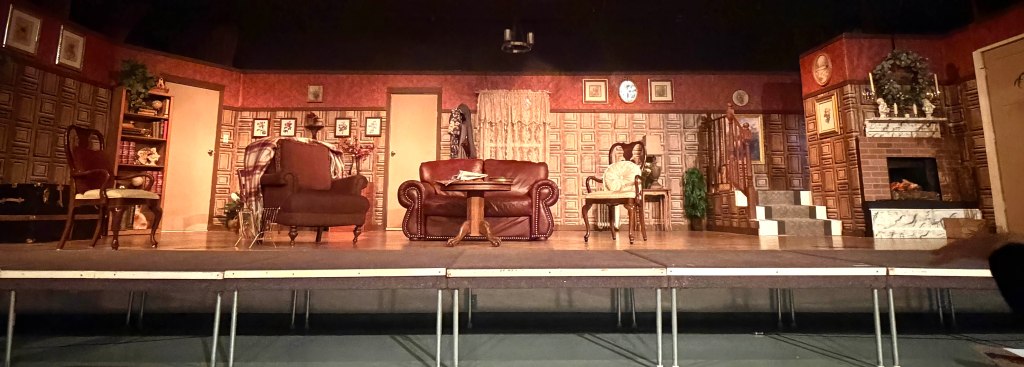
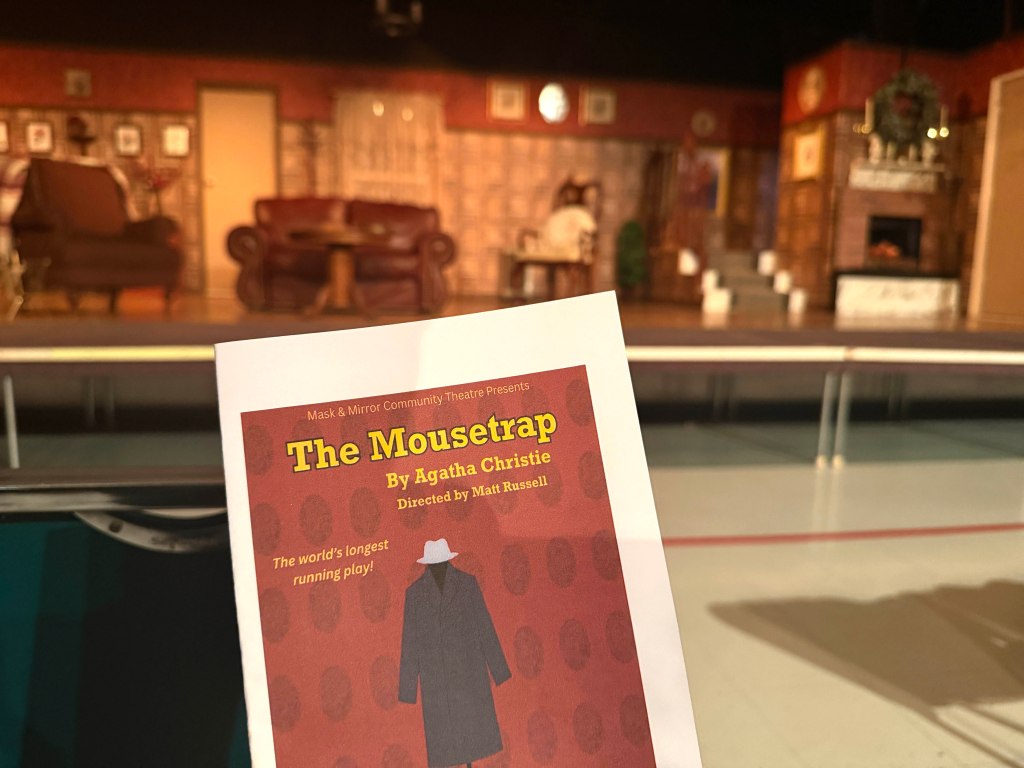
At 2:30 p.m., in full daylight, I took my seat inside a church hall in Tigard for The Mousetrap. Outside, it was an ordinary Saturday afternoon. Inside, snow had already begun to fall over Monkswell Manor.
The set was warm and contained — staircase to the right, two doors framing the room, a fireplace steady at center, and a wooden chair near the entrance that would soon matter. Before the lights dimmed, “Three Blind Mice” played softly.
It felt almost quaint.
Familiar.
An early exchange between Mrs. Boyle and Miss Casewell stuck with me. Mrs. Boyle insisted there should be “a proper staff” and complained that “the lower classes seem to have no idea their responsibilities.” Casewell answered evenly — “Oh, the poor upper classes” — and described herself as “pale pink,” uninterested in political labels. It felt like drawing-room sparring at the time. Only later did it feel like something firmer — like a worldview quietly stated.
By intermission, the room had changed.
Mrs. Boyle had been found slumped in the chair by the door. The lights had gone out. The nursery rhyme returned, no longer quaint. The mechanism was clearly in motion, and I felt certain I was closing in.
Christopher Wren felt possible — too restless, too theatrical. Mr. Paravicini leaned so comfortably into comic relief that it felt almost strategic. But I kept circling back to Giles Ralston. He seemed destabilized but not emotional. His eye shifts felt contained rather than panicked. He was outside often. He and Mollie Ralston had married after only three weeks of dating and had just begun running the guesthouse. The timeline felt slightly off.
At one point, I was convinced: it’s Mr. Ralston.
Mollie’s trembling hands during interrogation scenes made her look as if she were holding something back — almost ready to confess. I briefly considered Major Metcalf; calm can be suspicious. And yet one presence in the room felt steady. Structured. In control of the questioning.
I didn’t question that.
When the truth surfaced, it didn’t feel unfair. Nothing had been hidden. Every question had been placed carefully. Every movement had shaped the room. I realized I had followed the person organizing the investigation without really asking why they were organizing it at all.
Christie doesn’t mislead by hiding information. She misleads by knowing how we assign weight to it. We notice instability. We notice visible tension. We question those who feel slightly off. We rarely question the structure guiding us.
Mrs. Boyle had earlier said the caretakers had “presented as trustworthy.” That line landed differently by the end. Blindness in this play isn’t literal. It’s positional.
Watching this unfold at a mid-afternoon matinee inside a church hall added a quiet layer I didn’t think much about at first. Nothing was overstated. Order was disturbed, exposed, and then steadied again.
The set will be struck. The snow will melt. The banner outside will come down.
For two daylight hours, I moved through a maze I thought I understood.
I left realizing I had trusted the room more than I realized.
 Scott Bryant
You must be logged in to post a comment.