
End of the Oregon Trail Interpretive Center
Oregon City, Oregon
March 14, 2026
Inside the End of the Oregon Trail Interpretive Center, westward migration is presented through familiar forms—wagons, tools, maps, and objects associated with the journey across the continent.
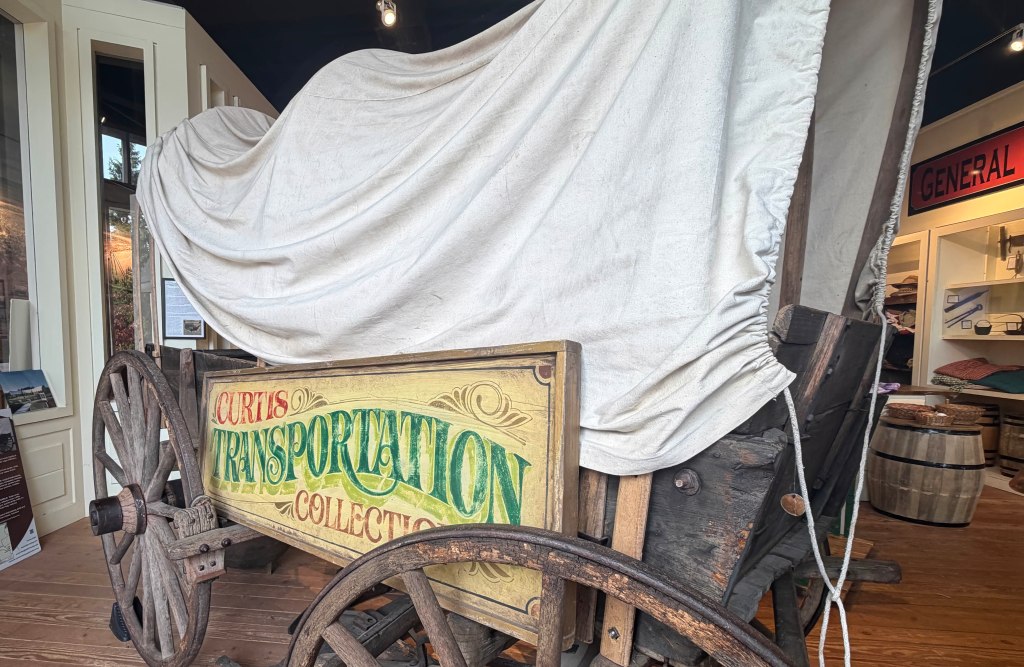
A covered wagon from the Curtis Transportation Collection anchors this narrative, reinforcing the scale and movement typically associated with the trail.
Moving through the exhibits, one object interrupts that pattern.
It is not a wagon.
It is a wooden crate.
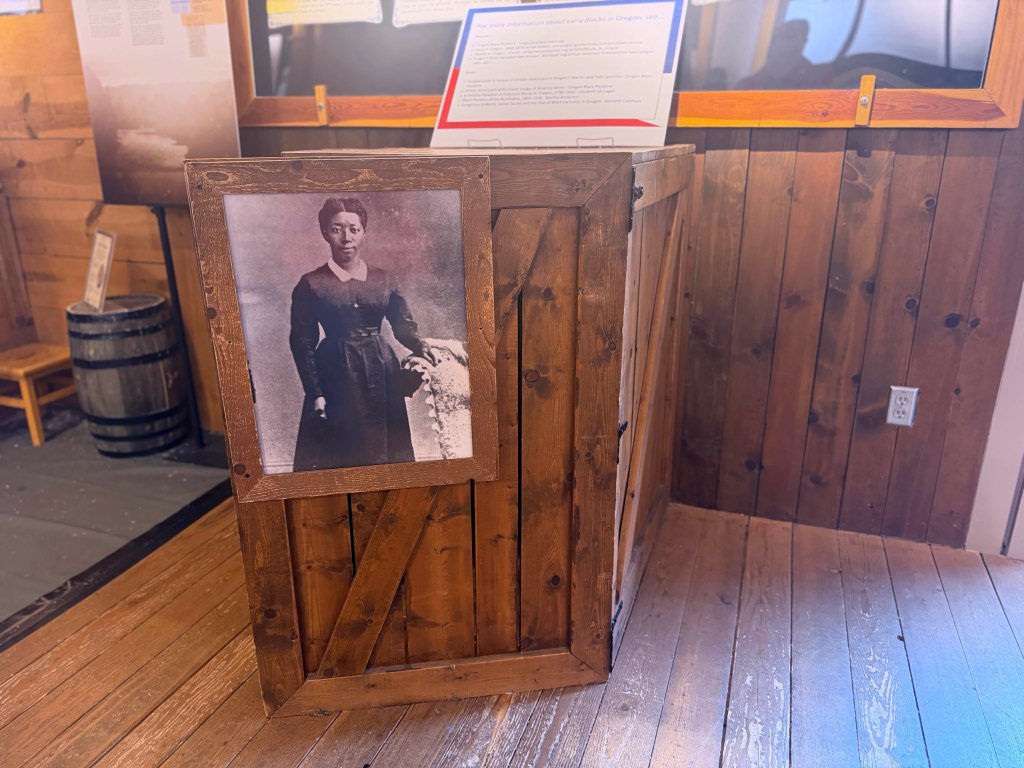
A reconstructed box illustrates how Rose Jackson, an enslaved Black woman, was transported west in 1849. Her portrait is mounted beside it, identifying her within the structure that once concealed her.
Rose Jackson was brought west by Dr. William Allen, a physician who had previously enslaved her. When the wagon train refused to allow Black travelers, Allen constructed a hidden compartment in the bed of his wagon.
For much of the journey, she remained inside that space as the wagon moved across the trail.
At night, she was able to emerge briefly before returning to the compartment for the next day’s travel.
Standing beside the reconstructed crate, its scale becomes immediately legible.
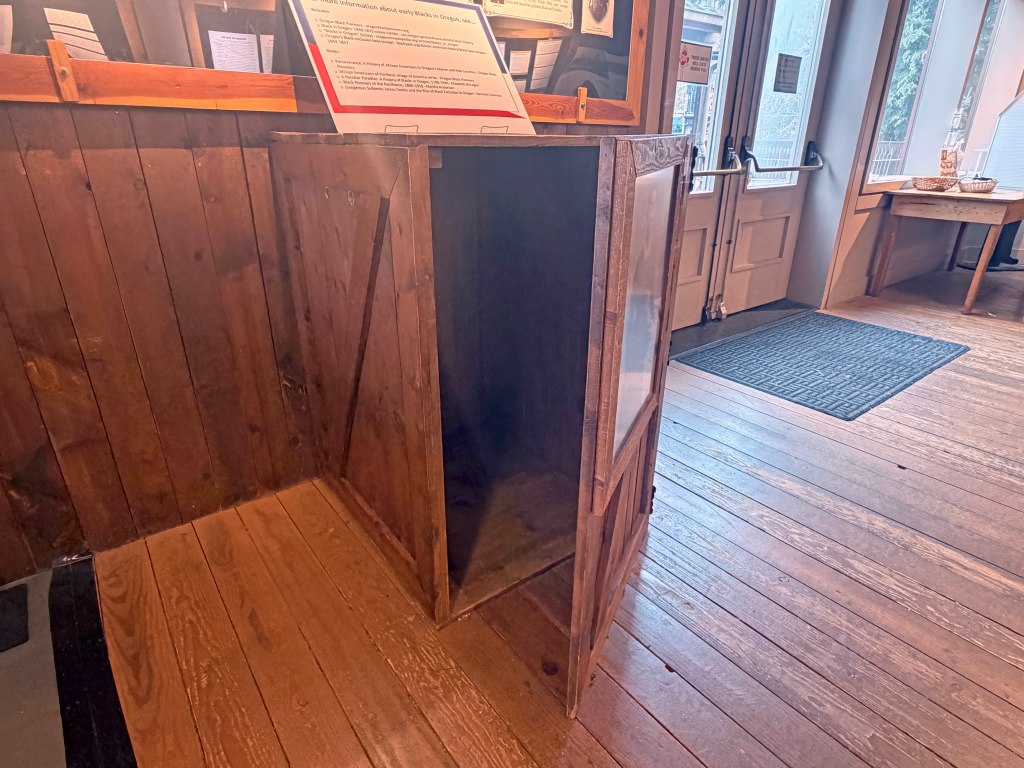
The space allows for little more than a crouched position. Movement is restricted. Duration becomes the defining condition.
The Oregon Trail is often represented through distance and expansion—wagons moving across open land, the horizon extending outward.
This object does not describe that experience.
It describes confinement within it.
Rose Jackson survived the journey. She later married John Jackson and built a life in Oregon.
The crate remains in the museum—a contained structure that reframes the larger narrative, revealing that the movement west carried not one experience, but many, shaped by conditions that were not equally visible.
 Scott Bryant
You must be logged in to post a comment.