
Titanic: The Artifact Exhibition — OMSI
Portland, Oregon
March 21, 2026, 9:30am.
⟡
The first entry of the first day.
The space is quiet in a way that won’t last.
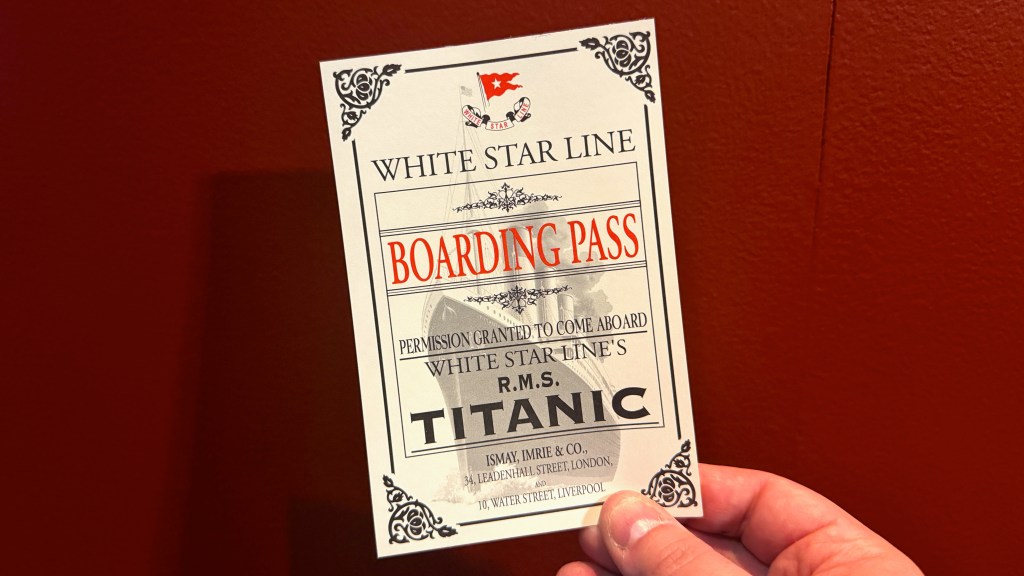
At the entrance, a White Star Line boarding pass is handed over—not a ticket, but a name.
Marie Grice Young, of New York.
First class. Thirty-six.
Sailing from Cherbourg, returning to Washington, D.C.,
where she taught music within the Roosevelt family.
She is accompanied by Mrs. John S. White.
The pass calls her a friend.
A number is printed beneath the name. 17760.
The rooms are already arranged.
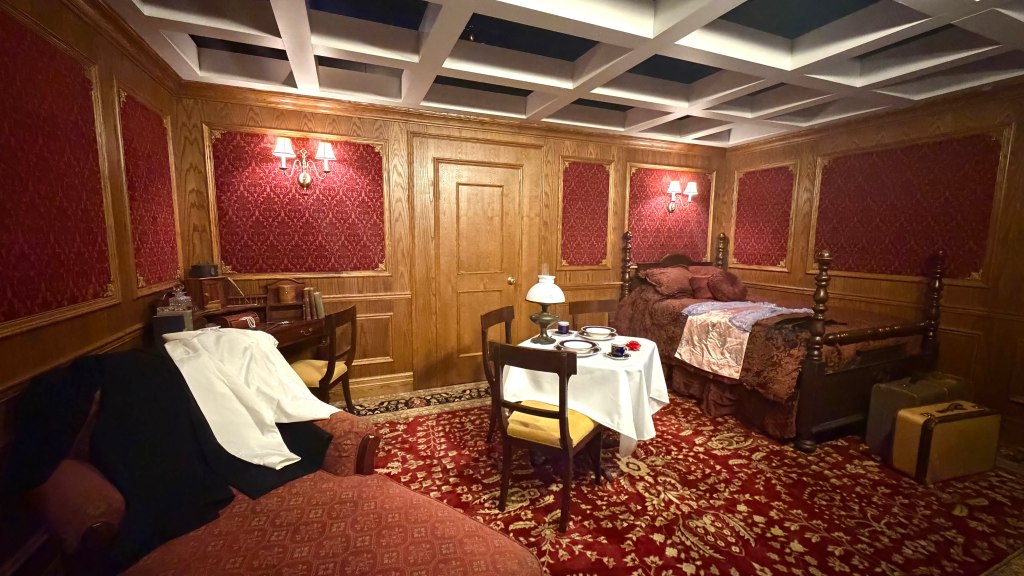
Wood paneling. Patterned carpet. The softness of enclosed space. A bed made with intention. Clothing set aside, not yet put away. A chair holding what will be worn later.
Nothing appears abandoned.
Only paused.
Somewhere within this structure, she moves easily—
between rooms, between decks, between worlds—
a life already in motion across the Atlantic.
Each day, she is escorted below decks to check on the live chickens she has brought aboard.
The detail remains.
⟡
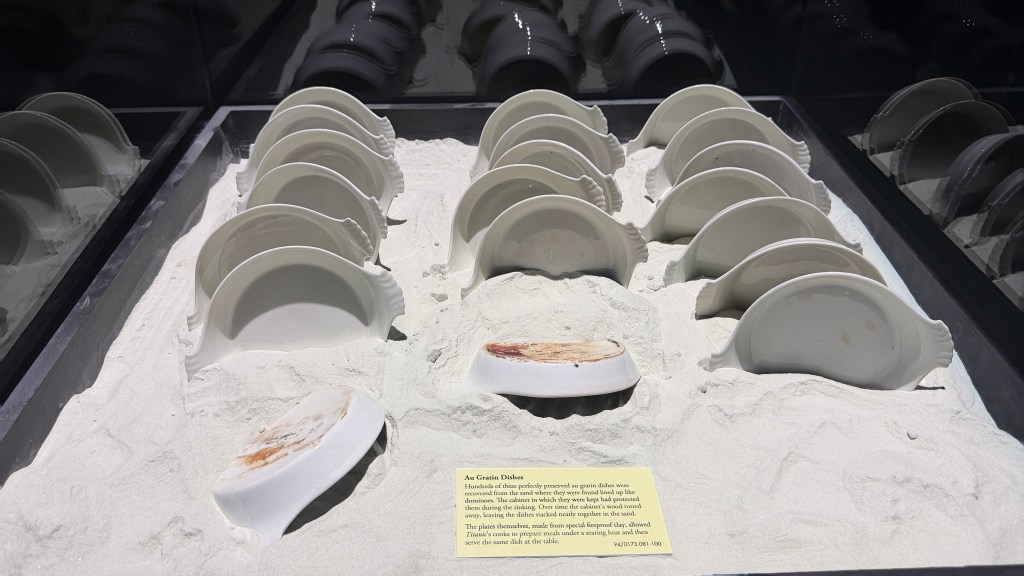
The language is already in place.
Strawberries in April.
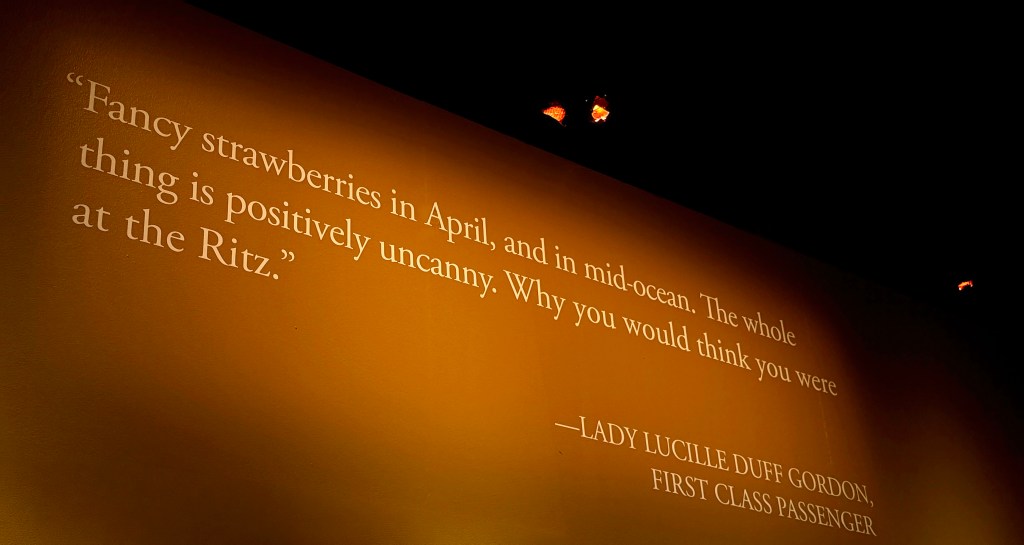
Dining rooms described as though they exist apart from the sea.
Spaces compared not to ships, but to hotels.
You would think you were at the Ritz.
The illusion holds.
⟡
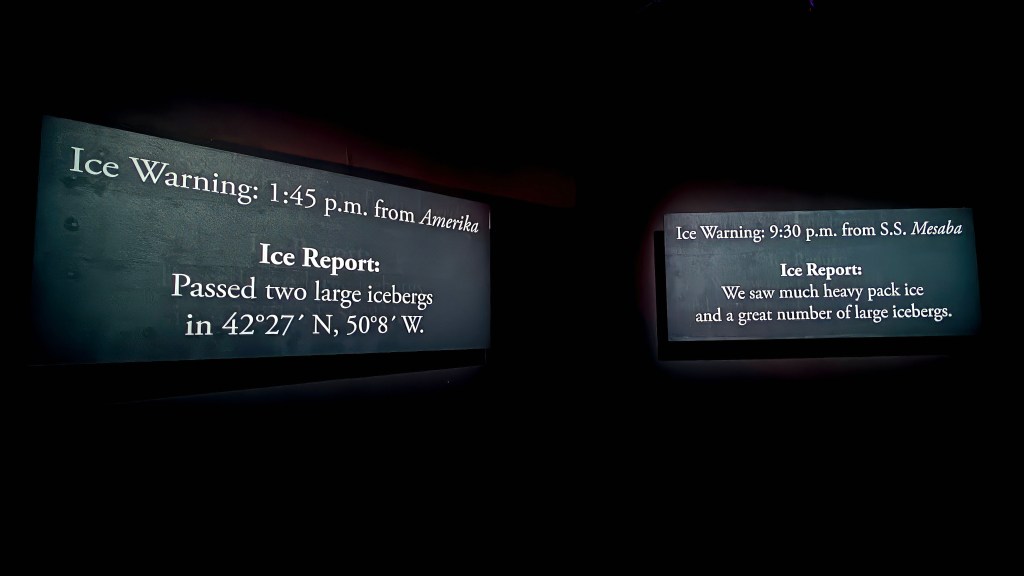
Then the messages begin.
Ice reported.
More ice.
Warnings repeated through the afternoon, into the evening.
The ship continues forward.
April 14, 1912.
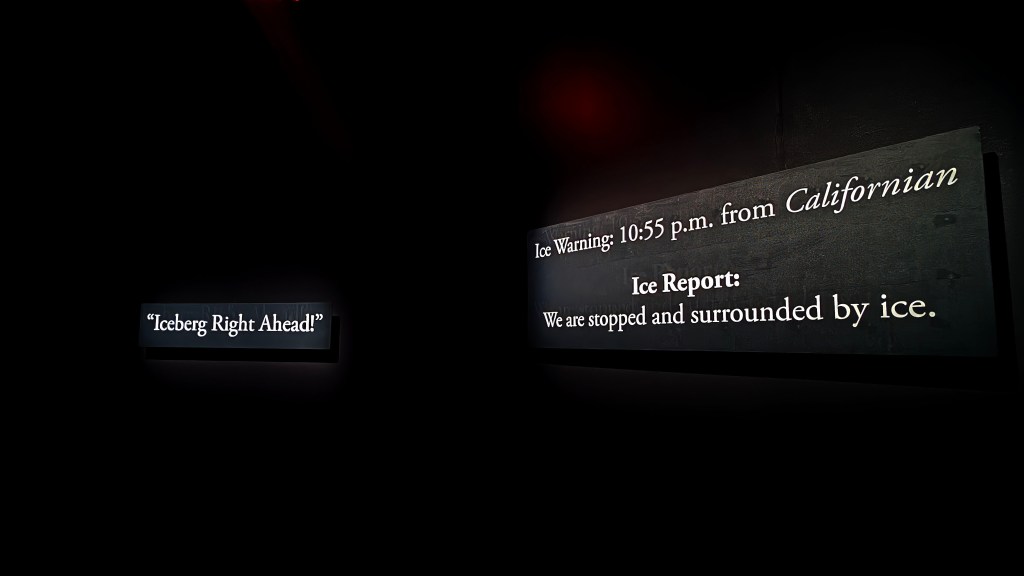
The structure narrows. The light shifts. Movement slows.
What had been open becomes contained.
❄
The exhibit allows contact. Briefly.
There is a moment of pause.
A block of ice stands beneath a field of dim stars. The surface resists warmth—immediate, unyielding.
It is colder than expected.
For a moment, the distance collapses.
She would have known this cold differently—without framing, without permission, without exit.
◦
The objects that remain are still.
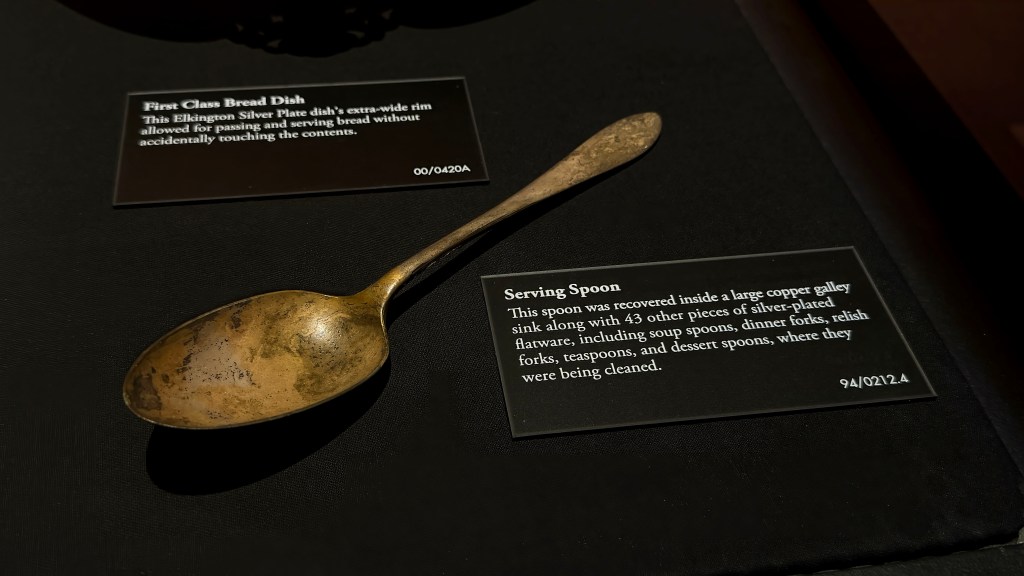
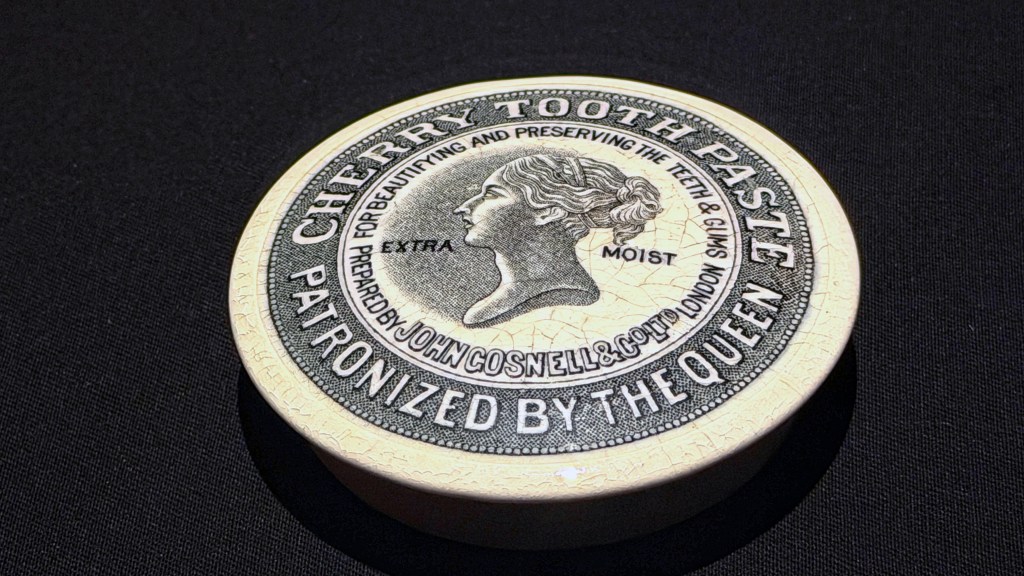
China. Glass. Metal. A chandelier preserved behind reflection.
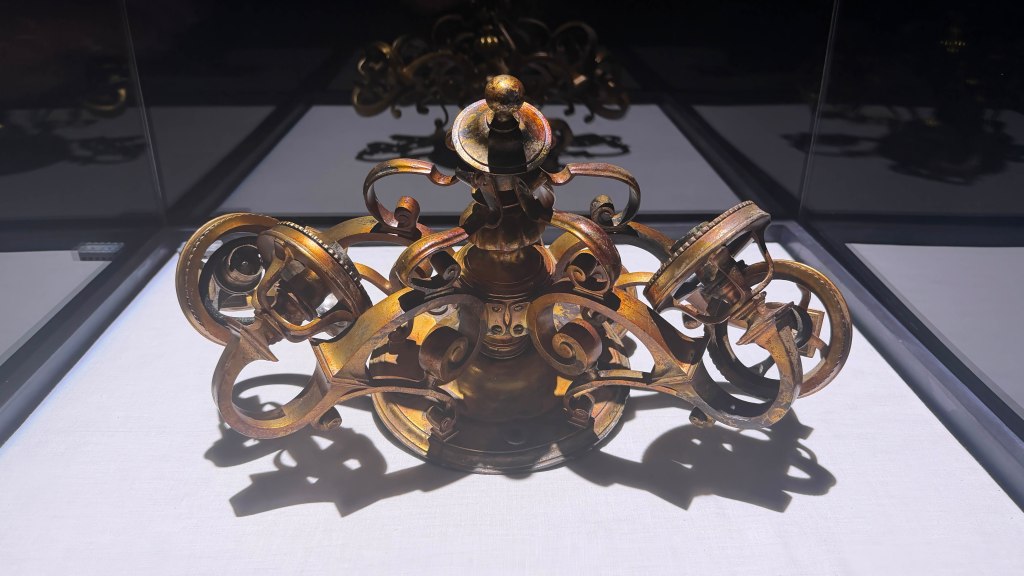
They no longer belong to the ship as it was.
They belong to what was recovered.
The arrangement is gone.
The structure is gone.
The objects persist.
◦
She survives.
Not alone.
The life she returns to resembles the one she left—movement between cities, shared space, continuity carried forward.
But the passage between those two points does not remain.
◦
I was given a passenger I did not recognize.
What I was given was not a single life, but a shared one.
The room remains.
The objects remain.
The movement between them does not.
 Scott Bryant
You must be logged in to post a comment.