
Portland Aerial Tram
Portland, Oregon
Saturday, March 21, 2026 – 10:45am
The experience begins with a directive embedded directly into the structure.
GO BY TRAM.
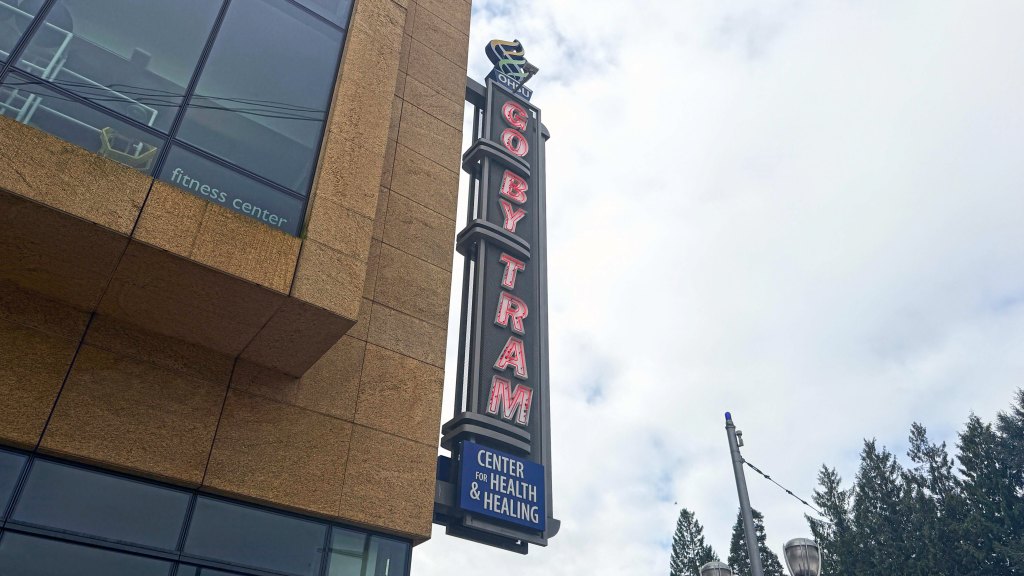
The instruction is vertical, assertive, and integrated into the architecture. It functions less as signage and more as orientation.
Nearby, a red panel marks the threshold: Portland Aerial Tram.
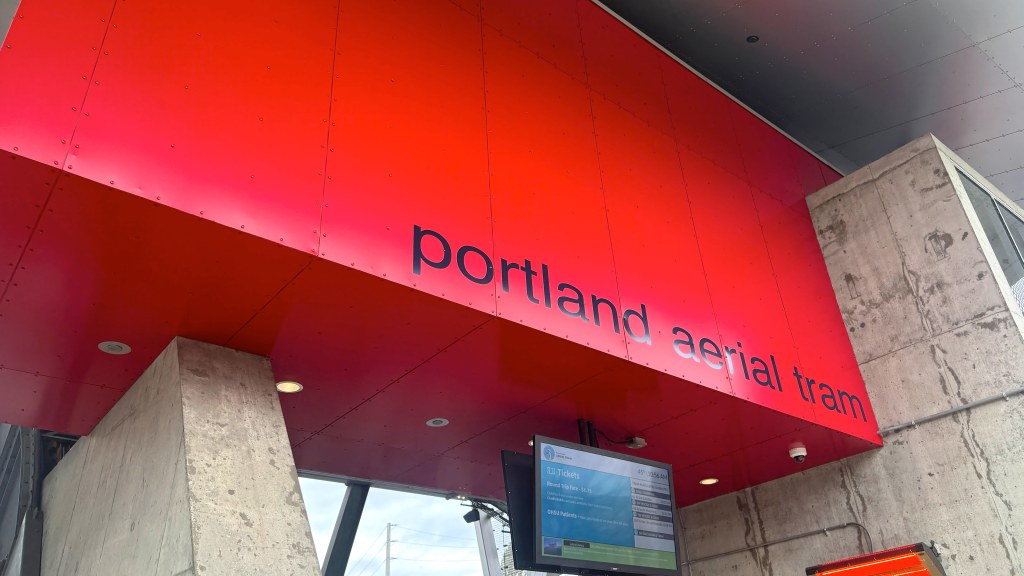
The language is clear and civic in tone. The crossing begins here, before any movement occurs.
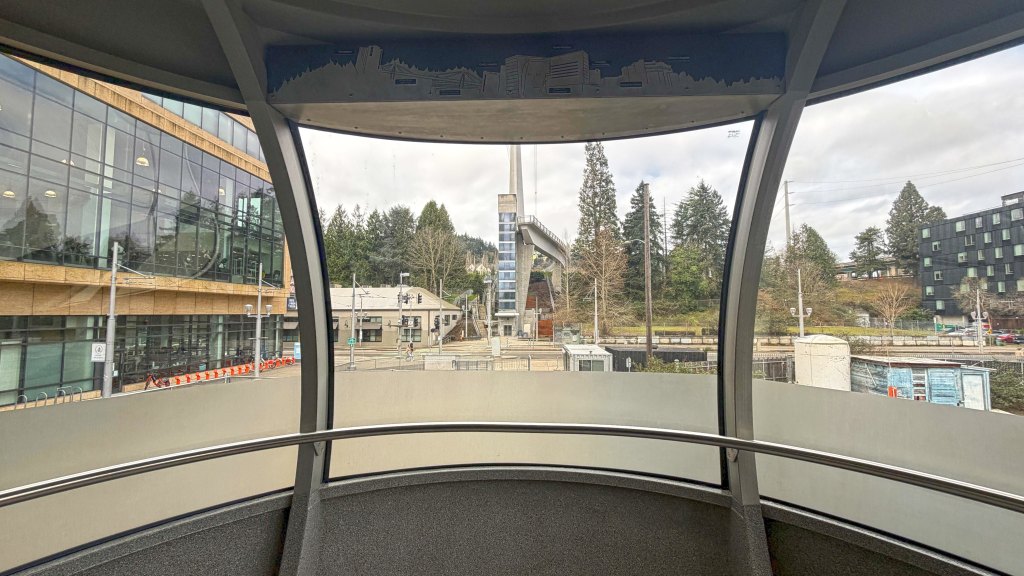
Inside, the system is immediately legible.
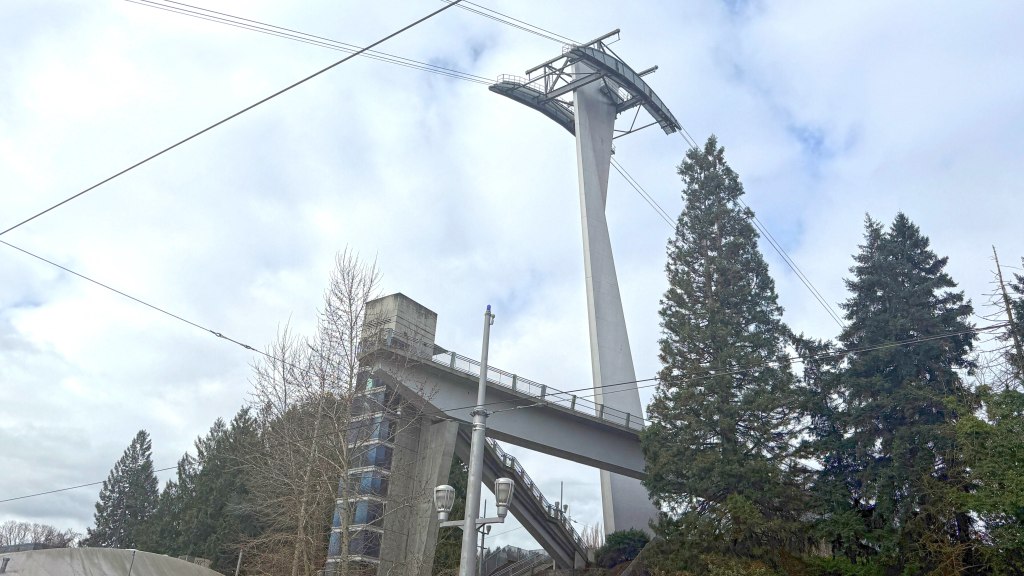
Cables extend overhead under constant tension. Steel frames, beams, and platforms expose the mechanics without concealment. The tram is presented as infrastructure rather than attraction. Its components are visible, functional, and direct. The cabin remains stationary within the system until departure, held in place by the same structure that will carry it upward.
When it begins to move, the transition is gradual.
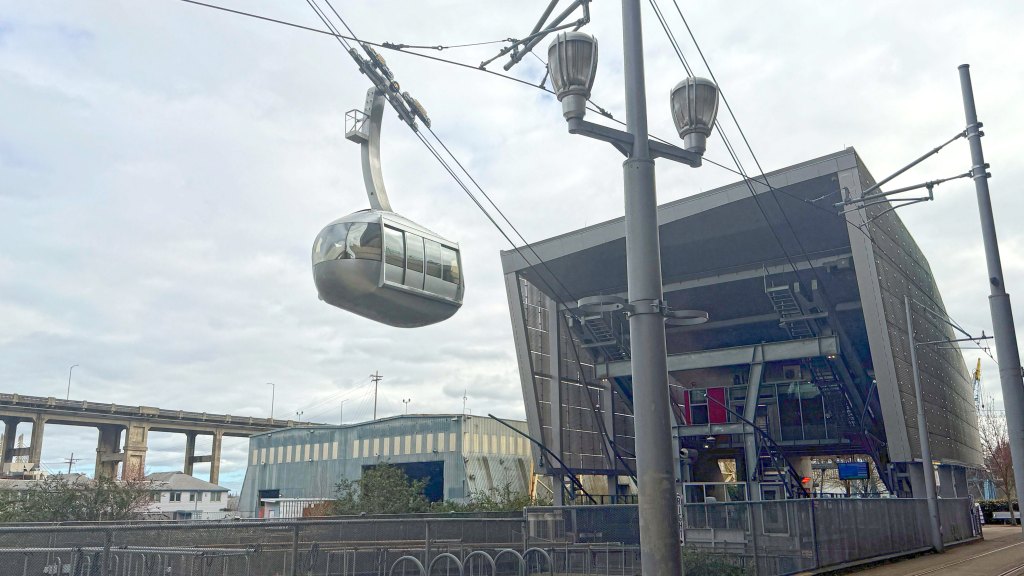
The ascent does not separate abruptly from the ground. Streets extend outward rather than falling away. Buildings shift from individual structures into a broader spatial pattern. Roads become lines. The river emerges as a continuous element moving through the city.
The cables define the path.
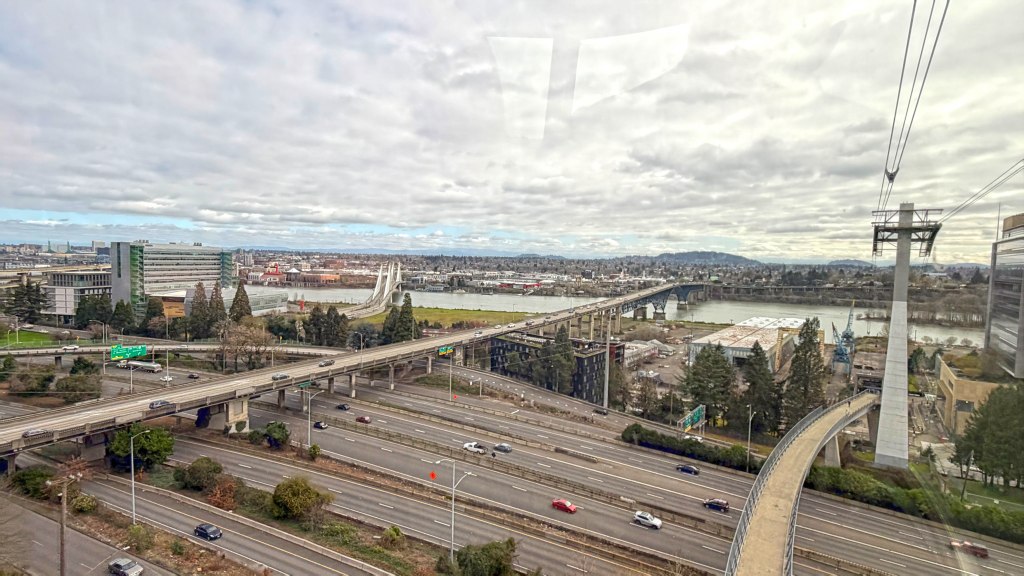
Two lines extend forward, establishing both direction and destination. The movement is neither fully vertical nor horizontal. It operates along an angled axis, connecting two elevations without emphasizing either one. The crossing is defined by this condition—movement between positions rather than arrival at a single point.
From this elevation, the city becomes more legible.
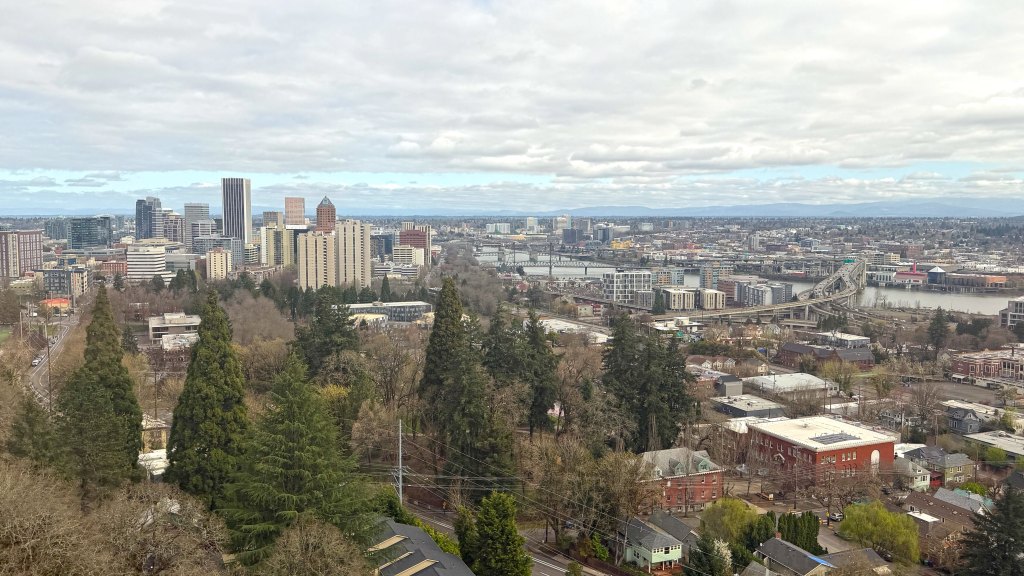
Bridges align across the Willamette at regular intervals. Buildings remain proportionate to the surrounding landscape. The skyline does not dominate; it remains integrated within a wider field of neighborhoods, trees, and distant hills. The view does not isolate landmarks. It reveals relationships between them.
At the upper terminal, the system reasserts itself.
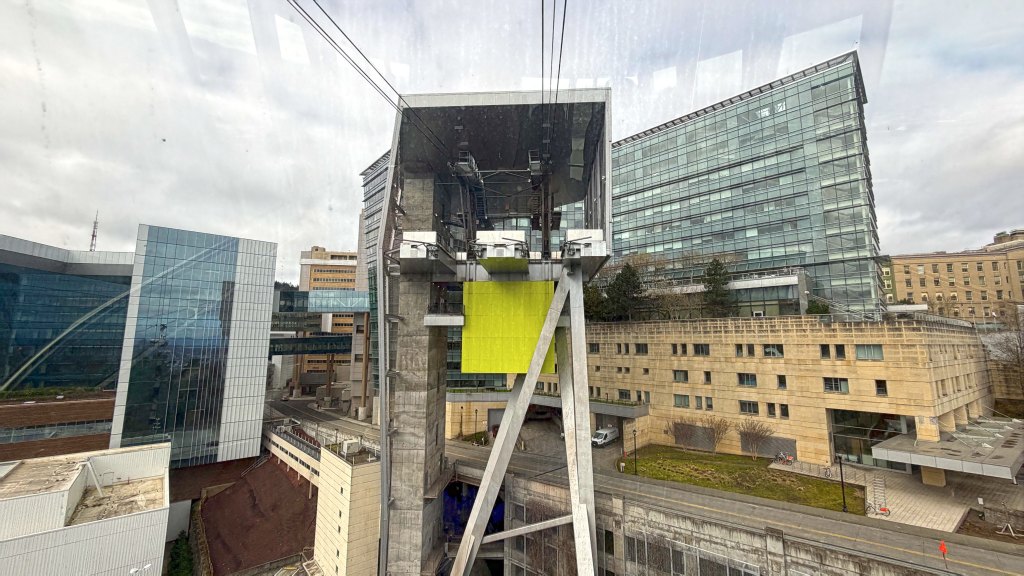
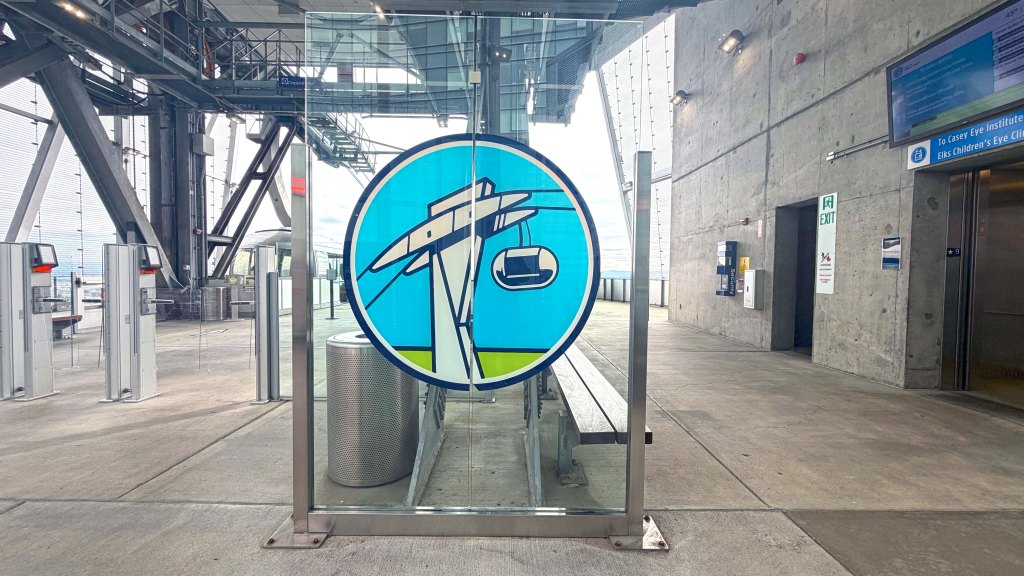
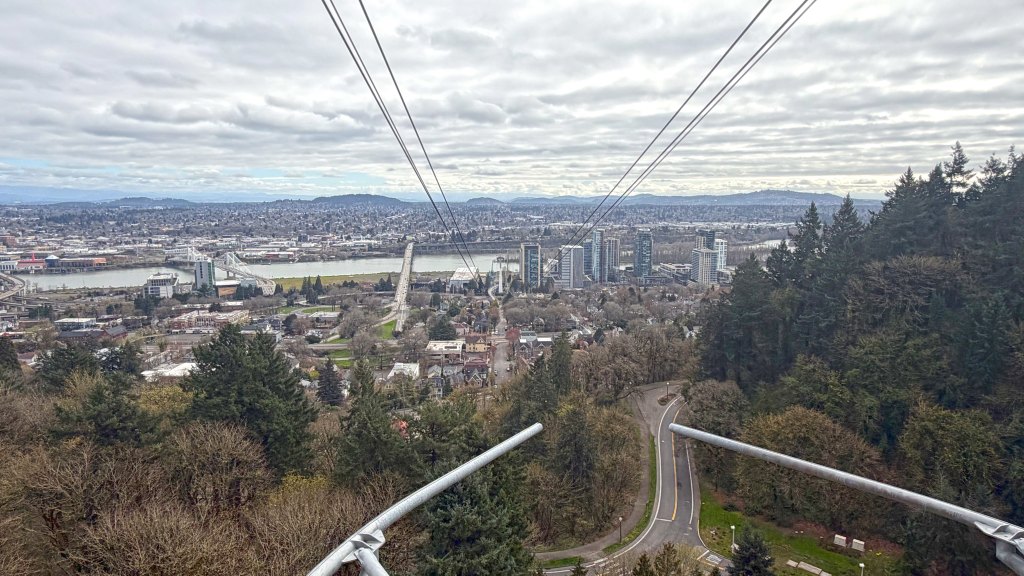
Structural supports, platforms, and the geometry of the hillside complex replace the open view. The tram resolves into function. This is not an overlook or a destination in itself. It is a point of connection between two parts of the city.
The return follows the same sequence in reverse.
From within the cabin, the city regains detail.
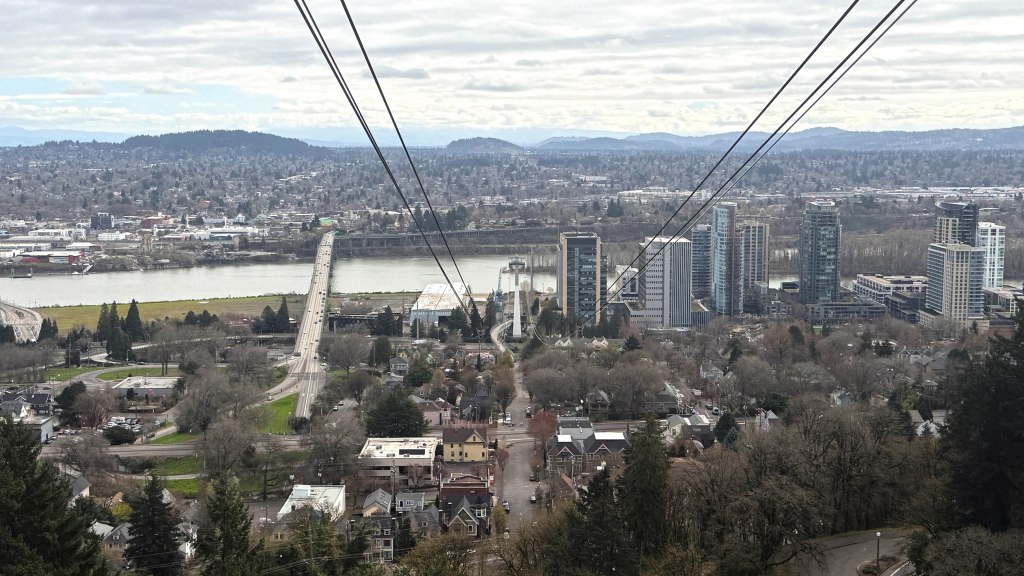
Structures separate from the larger pattern. Streets resume their scale. What was briefly understood as a system returns to individual experience..
The tram does not alter the city.
It reorganizes how it is perceived for the duration of the crossing, placing the viewer between ground and elevation, where movement becomes continuous and the city can be read as a connected structure rather than a series of isolated parts.
 Scott Bryant
You must be logged in to post a comment.