
Titanic: The Artifact Exhibition
Oregon Museum of Science and Industry (OMSI), Portland, Oregon
March 21, 2026
“Crash! Then a low rending, crunching, ripping sound, as Titanic shivered a trifle and her engines gently ceased.”
—Violet Jessop, Stewardess
The ship remains visible, not as it was, but in a form that can still be read.
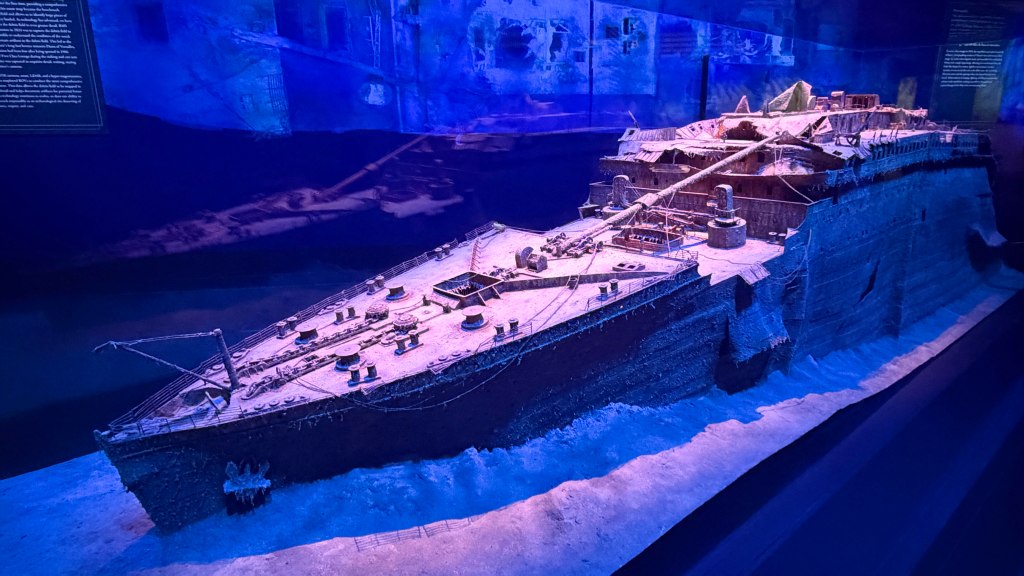
The bow rests forward on the ocean floor, its structure largely intact, preserving enough of its original shape to be recognized.
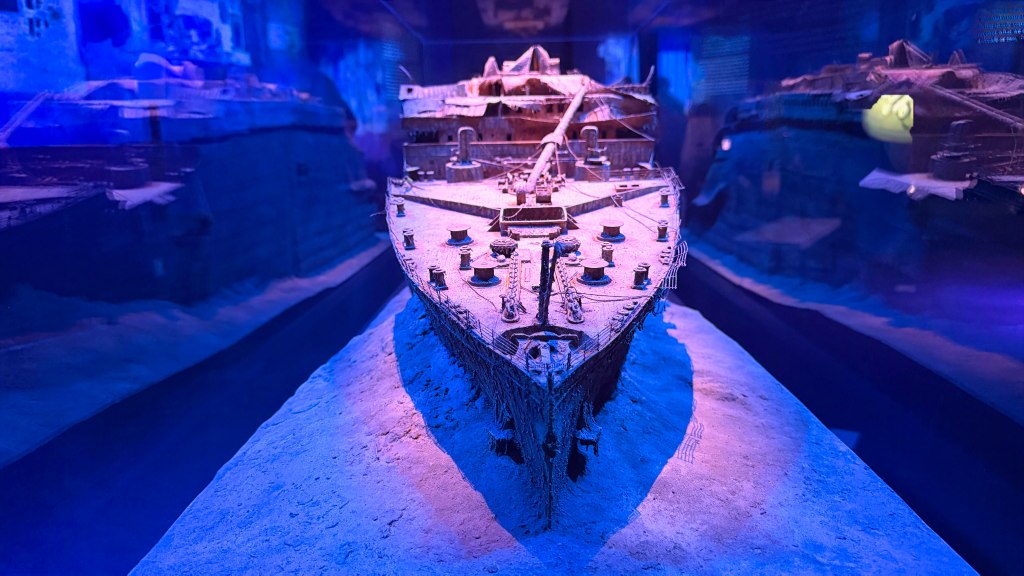
The stern does not; it has collapsed inward, broken apart, and stripped of the form it once held.
Between them is distance—not movement, but separation, fixed and final. What occurred between those two points is no longer visible as action, only as result.
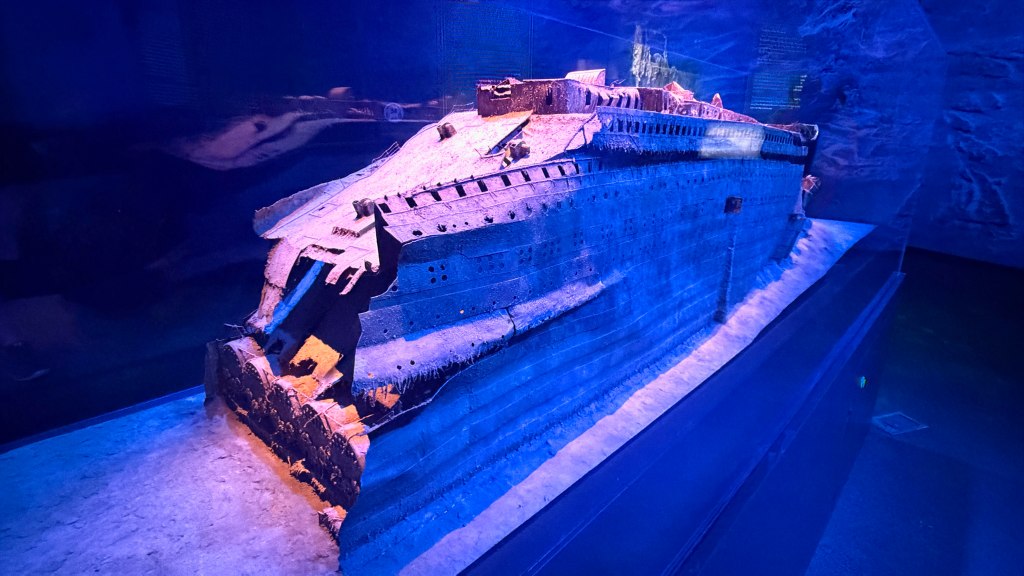
What remains is not debris, but structure altered over time. Decks no longer function as levels; they have shifted, folded, or disappeared. Surfaces no longer align with the spaces they once defined. Edges have softened, and details have worn away, as time becomes embedded within the structure rather than acting upon it.
The ship no longer functions as a vessel. It does not carry or move, and yet it has not disappeared. Its form persists—enough to be read, enough to make the damage legible.
What is seen is not the moment of impact, but its continuation: pressure, depth, and time acting together, not as a single event, but as a sustained condition.
The ship remains, not as it was, but as something that can still be understood through what has been lost.
 Scott Bryant
You must be logged in to post a comment.