
Portland Aerial Tram
Portland, Oregon
Saturday, March 21, 2026 – 10:45am
The instruction appears first, not as suggestion but as design.
GO BY TRAM.
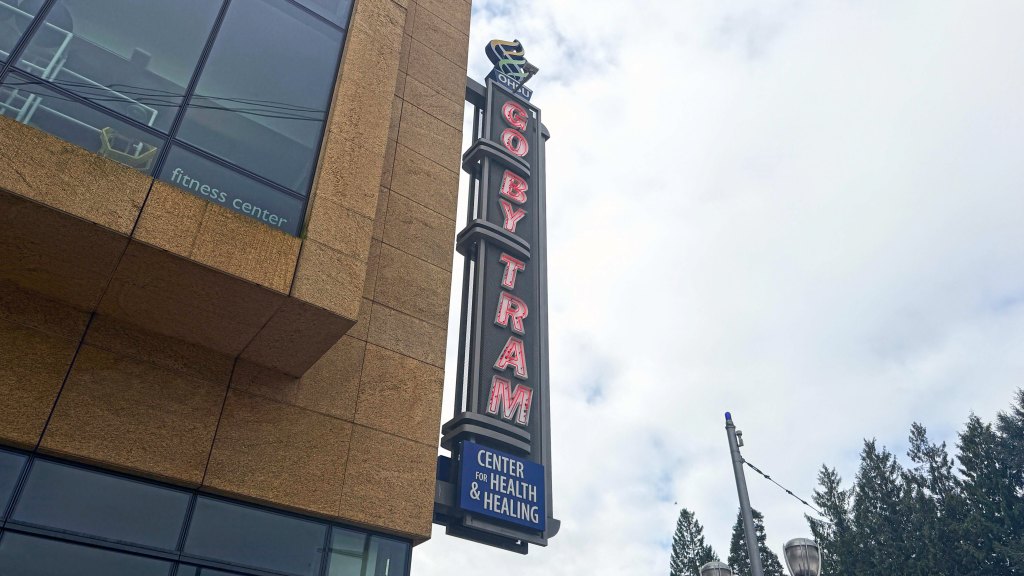
Vertical, assertive, built into the structure itself—it reads less like signage and more like orientation. A directive embedded in the architecture. Nearby, the red panel marks the threshold: portland aerial tram. Bold, unmistakable, almost civic in tone. This is where the crossing begins—not in motion, but in acknowledgment.
Inside, the system reveals itself.
Cables stretch overhead in quiet tension. Steel frames, beams, and platforms expose the mechanics without ceremony. Nothing is hidden. The tram is not presented as novelty, but as infrastructure—functional, precise, and deliberate. The cabin waits, suspended but grounded, held in place until it isn’t.
And then, without spectacle, it moves.
The ascent is smooth enough to feel almost detached from the ground. Streets fall away gradually, not abruptly. The city does not drop beneath you—it reorganizes. Buildings shift from presence to pattern. Roads soften into lines. The river emerges, not as interruption, but as continuity threading through everything.
The cables define the crossing.
Two lines extending forward into space, drawing the eye toward a destination that feels both near and suspended. There is a quiet tension in this movement—neither fully vertical nor horizontal, but something in between. A passage that resists simple direction.
From above, Portland resolves.
Bridges align across the Willamette in measured intervals. Towers rise with restraint, never overwhelming the landscape. The skyline holds its place within a broader field of trees, neighborhoods, and distant hills. It is a city that reveals itself best not from within, but from slight removal.
At the upper terminal, the illusion dissolves.
The machinery returns. Structural supports, platforms, and the clinical geometry of the hillside complex reassert the tram’s purpose. This is not an overlook—it is a connection.
The crossing completes itself in function. The moment of suspension gives way to arrival.
And then, just as quietly, the return begins.
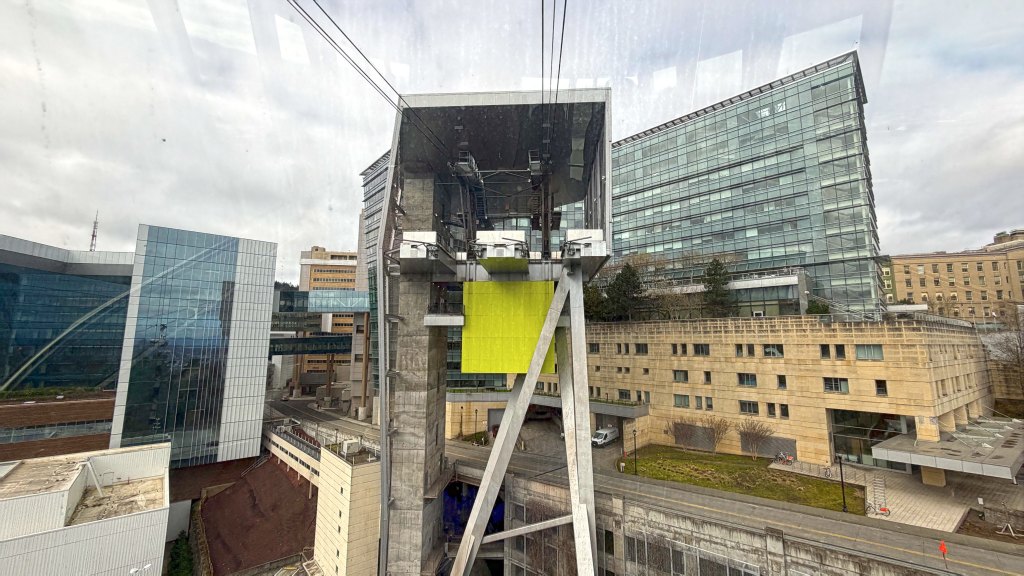
Inside the cabin, framed by glass, the city approaches again. Details sharpen. Streets regain their scale. What was briefly abstract becomes recognizable once more. The distance collapses into familiarity.
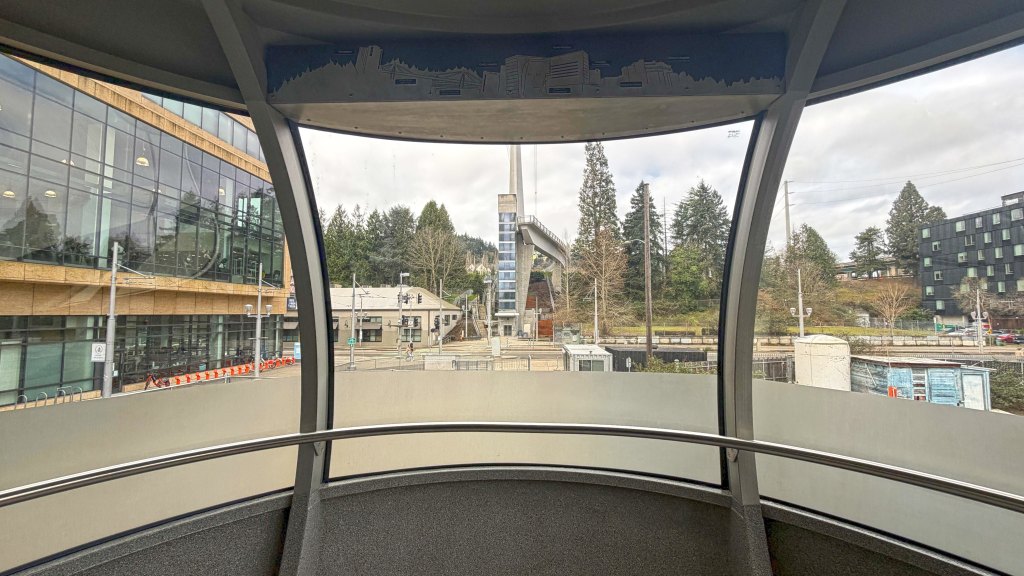
The tram does not transform Portland.
It simply allows you to pass through it differently—held for a moment between ground and sky, where motion slows, and the city reveals itself not as a destination, but as a crossing.
 Scott Bryant
You must be logged in to post a comment.