
Titanic: The Artifact Exhibition
Oregon Museum of Science and Industry – Portland, Oregon
March 21, 2026 | 9:30am
⟡
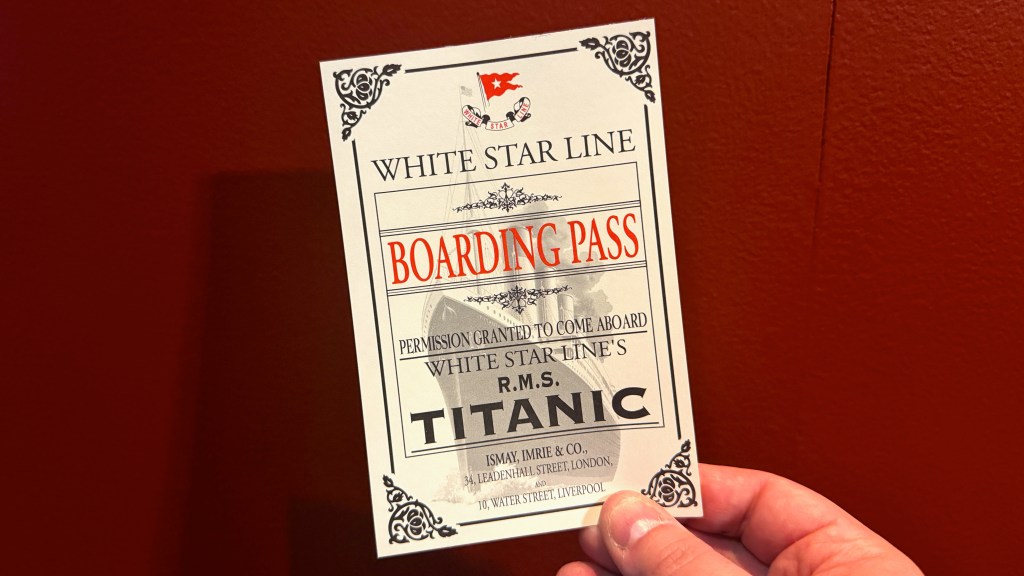
The exhibition begins with assignment.
At the entrance, each visitor is given a White Star Line boarding pass. It functions not as a ticket, but as an identity. A name is provided along with age, class, and point of departure. The information is specific enough to establish a presence, but limited enough to remain incomplete.
The boarding pass I received identified:
Marie Grice Young of New York.
First class. Thirty-six.
Cabin C-32
Sailing from Cherbourg to Washington, D.C., where she taught music within the Roosevelt family.
She is listed as traveling with Mrs. John S. White. The relationship is noted simply as “friend.” A number appears beneath her name: 17760.
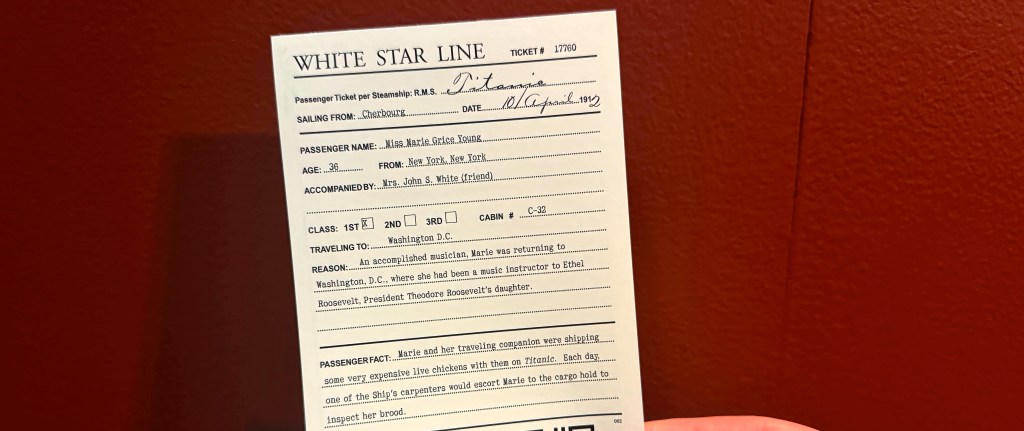
This assignment establishes the framework for the exhibition. The experience is not approached as a general history of the Titanic, but through the position of an individual passenger moving through the ship.
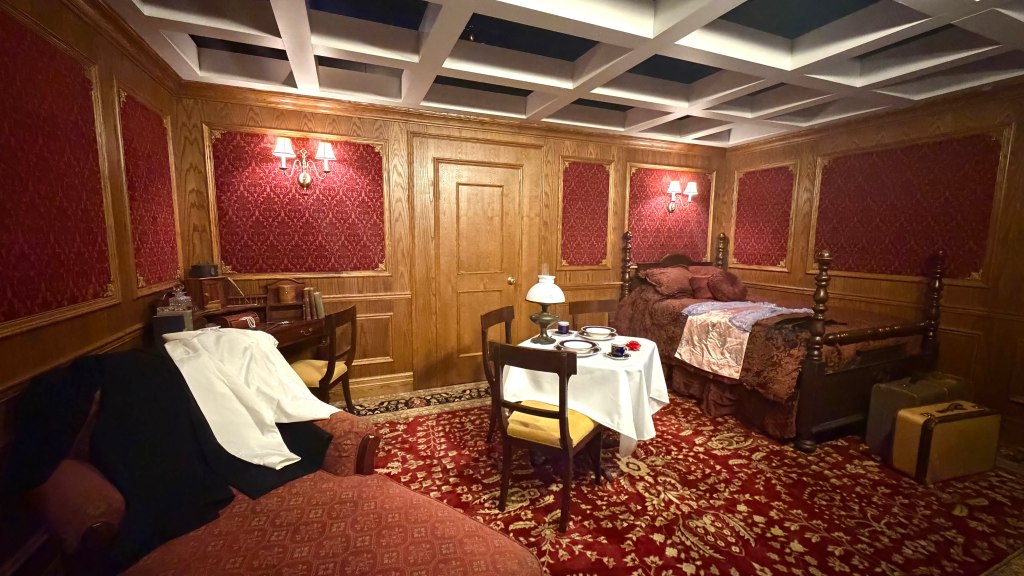
The early galleries reconstruct the environment of the voyage.
Interpretive text within the gallery outlines the structure of first-class accommodation. Cabins are described as unusually large for the period, with materials and craftsmanship intended to match high-end hotels rather than shipboard conditions. Private bathrooms, full bathtubs, and running hot and cold water are presented as standard features rather than exceptions. Some rooms include adjoining parlors or additional private space, extending the cabin beyond a single enclosed unit.
Additional facilities—such as the Turkish bath, gymnasium, and squash court—are available within the larger system of the ship, though not all are included without cost. The environment is framed as complete and self-contained, organized to minimize any sense of separation from land.
Interior spaces are presented through wood paneling, patterned carpet, and furnished rooms arranged to suggest occupancy rather than display. Beds are made. Clothing is placed within reach. Chairs hold garments not yet worn. The spaces are complete, but inactive.
The effect is not one of abandonment, but suspension.
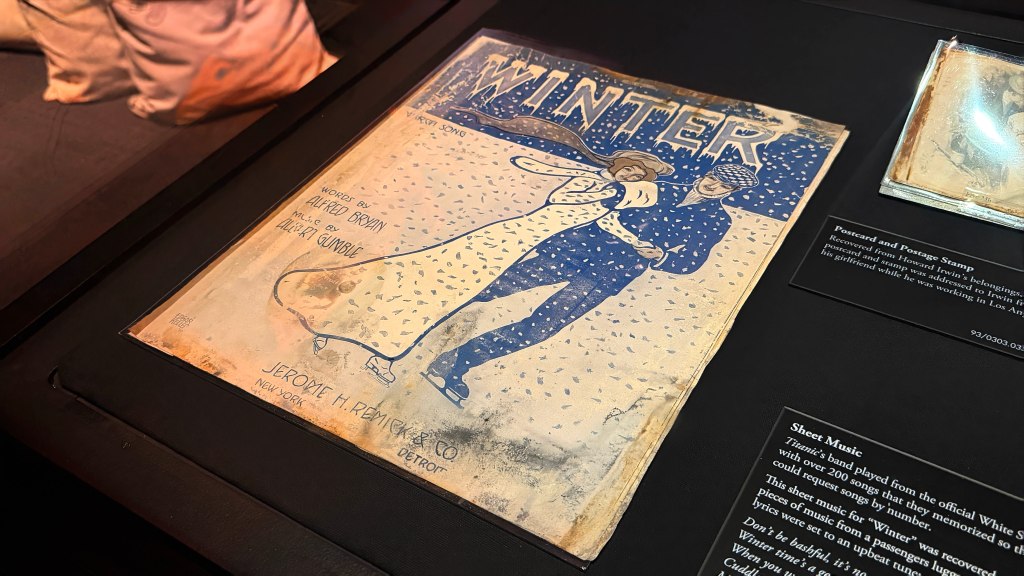
Interpretive text describes the ship in terms that minimize its separation from land. Dining rooms are compared to established hotels.
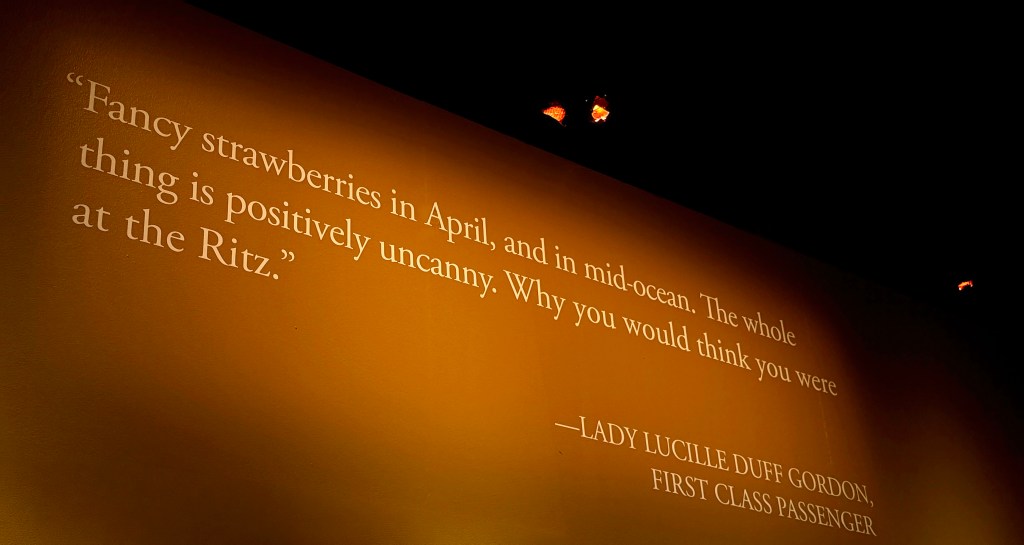
Meals are described in seasonal detail. The ship is presented as a continuation of existing social environments rather than a departure from them.
Additional interpretive material extends this structure into shared spaces. Dining areas are presented not simply as functional rooms, but as environments designed to replicate land-based luxury. Wood paneling, textiles, and lighting are described in terms consistent with high-end interiors rather than maritime conditions. Table settings—china, glass, and silver—are positioned as part of a coordinated system rather than individual objects.
The scale of these spaces is emphasized. The main dining saloon accommodates hundreds of passengers within a single room, organized through repeated table groupings and architectural divisions. Alternative spaces, including cafés and smaller dining rooms, provide variation within the same system. Movement between these environments is structured, but flexible, allowing dining to function as both routine and social activity.
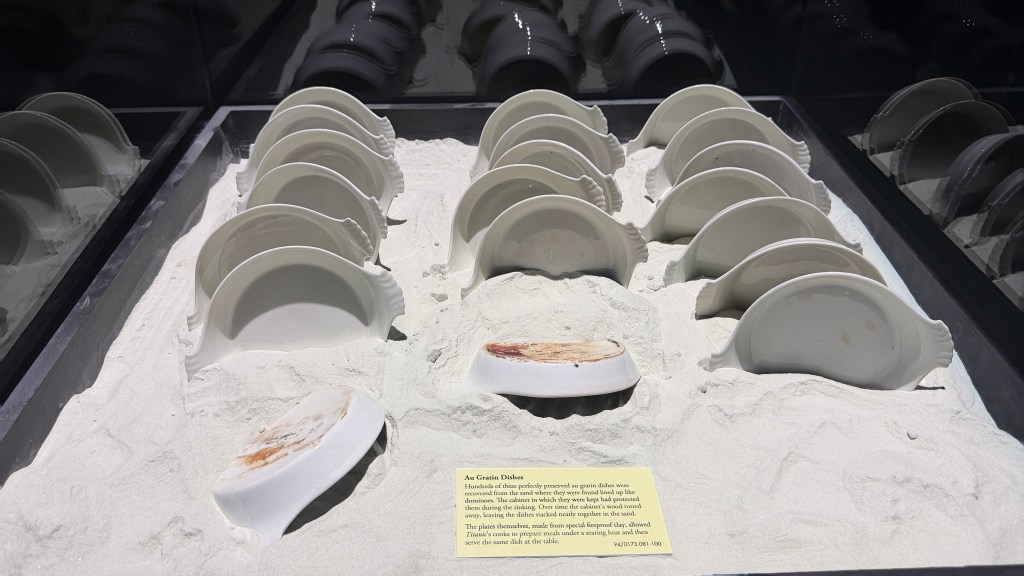
Within this framing, specific details emerge. Marie Grice Young is noted to have brought live chickens aboard, and was escorted below decks daily to check on them. The detail is minor, but it reinforces the structure of routine within the larger system of the ship.
⟡
As the exhibition progresses, the narrative begins to shift.
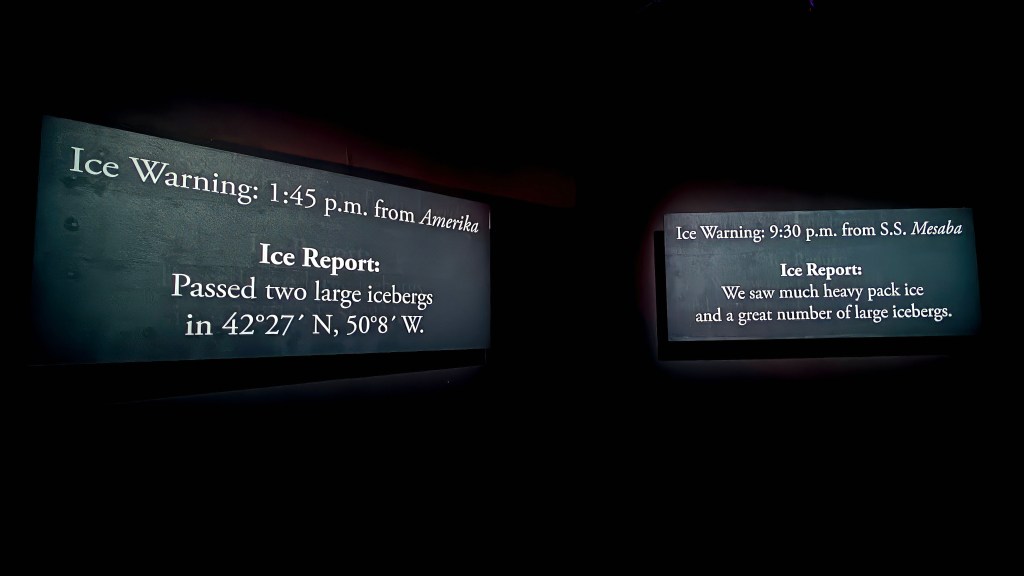
References to ice appear within the timeline. Reports are introduced incrementally, not as a single event but as a sequence of messages received throughout the day. The ship’s course remains unchanged.
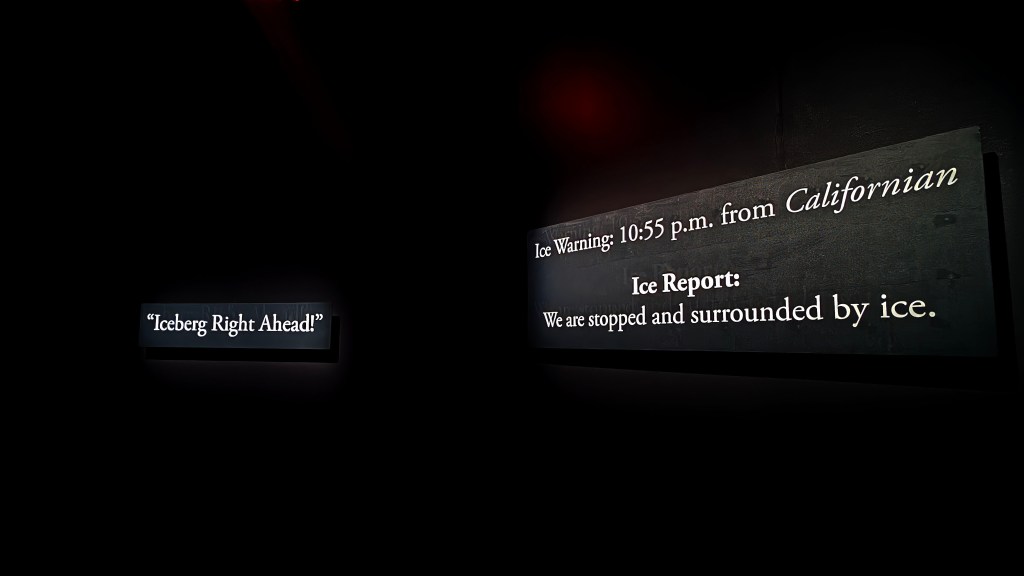
The transition is gradual. Spatial openness gives way to more confined environments. Lighting becomes more controlled. Movement through the exhibit slows.
The change is not announced. It is structured.
❄
At one point, visitors are invited to touch a block of ice.
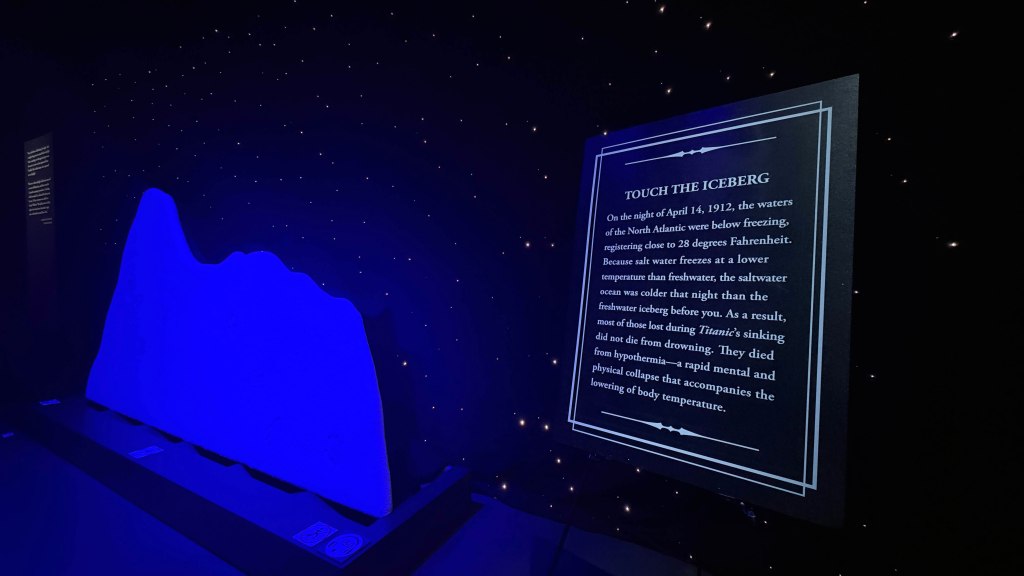
The interaction is brief and direct. The surface is immediately cold and resistant to warmth.
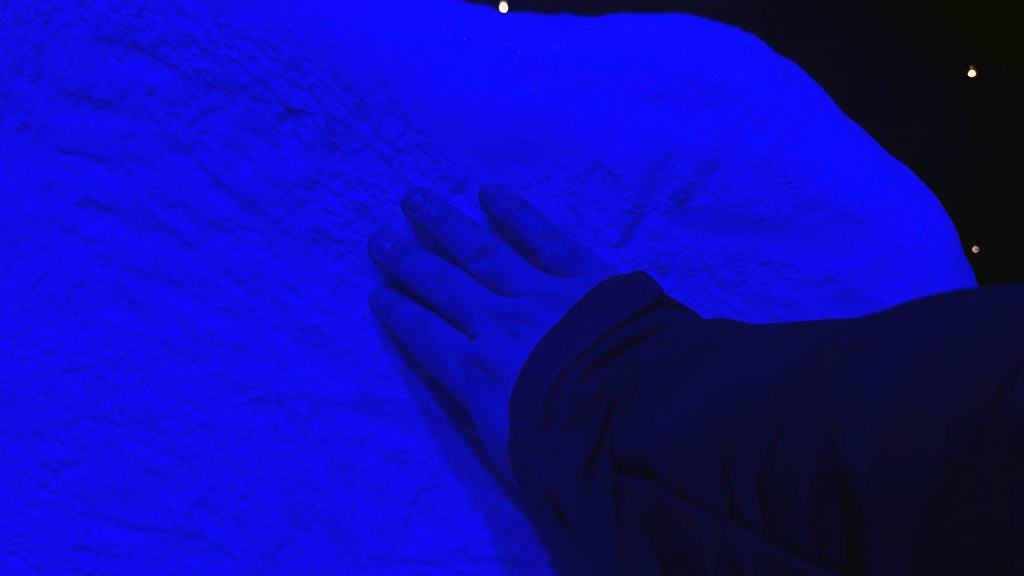
The temperature is not moderated for comfort. It functions as a physical reference point within an otherwise mediated environment.
The distance between past and present narrows, but only momentarily. The exhibit maintains control over duration and context.
◦
Objects recovered from the wreck appear in later galleries.
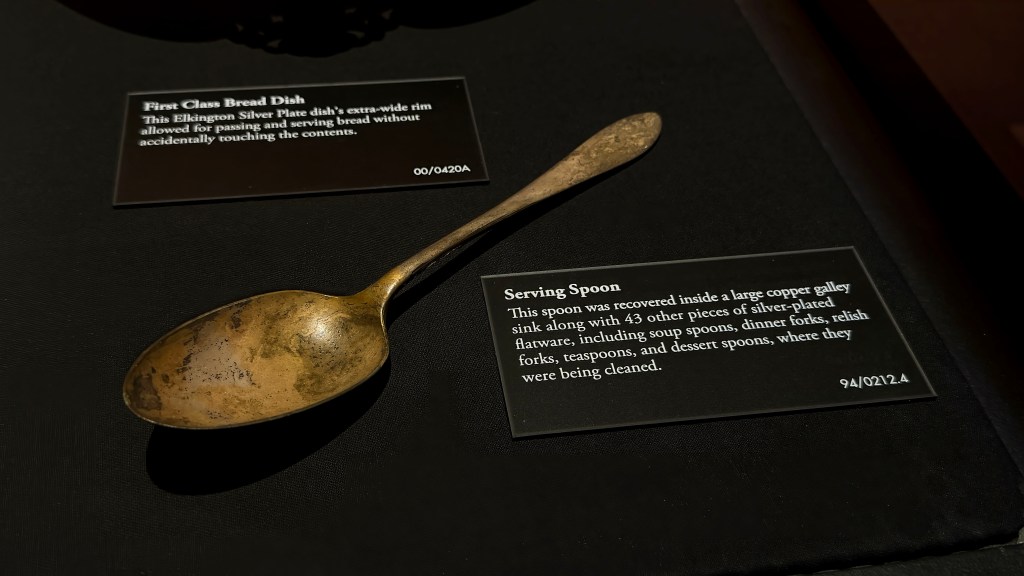
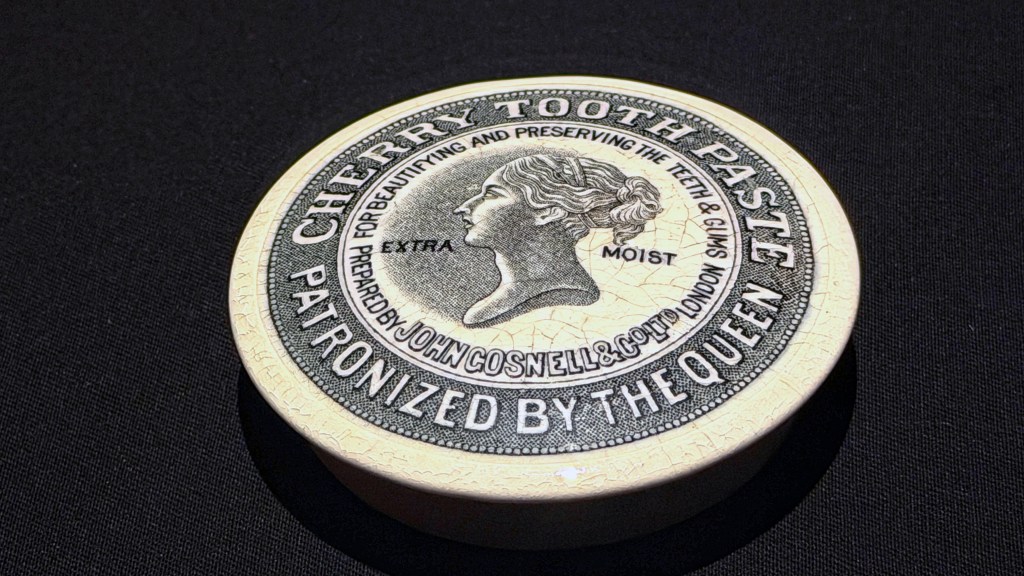
China, glass, metal, and lighting fixtures are displayed individually. Their arrangement reflects their status as recovered artifacts rather than components of a functioning space. The ship itself is no longer present as a structure. What remains are fragments.
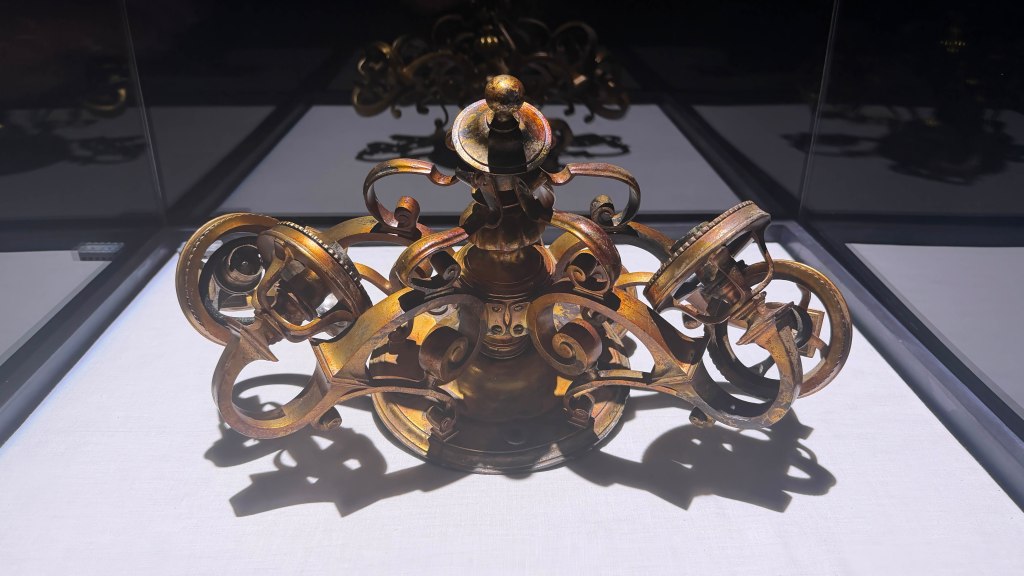
These objects do not reconstruct the environment they came from. They indicate its absence.
◦
At the conclusion of the exhibition, the assigned identities are resolved.
Visitors are directed to a final display that lists the passengers and crew, identifying those who survived and those who did not. The boarding pass returns as a reference point. The name provided at the beginning is now given an outcome.
Marie Grice Young is listed among the survivors.
◦
The exhibition does not follow a single narrative. It organizes experience through assignment, environment, interaction, and resolution.
The boarding pass establishes identity. The reconstructed spaces provide context. The artifacts introduce material evidence. The final list assigns outcome.
What remains consistent is the structure.
The visitor moves through the exhibition as both observer and participant, holding a name that exists within a larger system. The individual experience is defined not by immersion, but by position within that system.
The name is carried through the space.
The passage itself is not.
 Scott Bryant
You must be logged in to post a comment.