
Oregon Zoo — Forest Hall & Elephant Lands
Portland, Oregon
March 25, 2026
9:05am
There are environments where the subject is immediate, and others where it is introduced gradually. Elephant Lands at the Oregon Zoo operates through the latter approach. The experience is structured so that perception develops in stages rather than all at once.
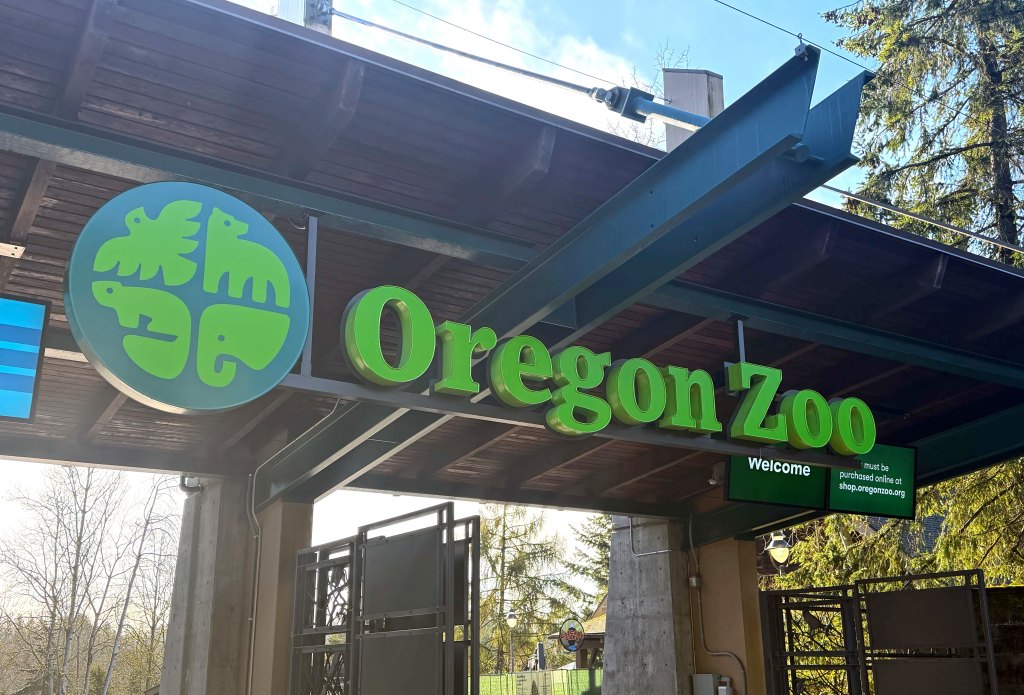
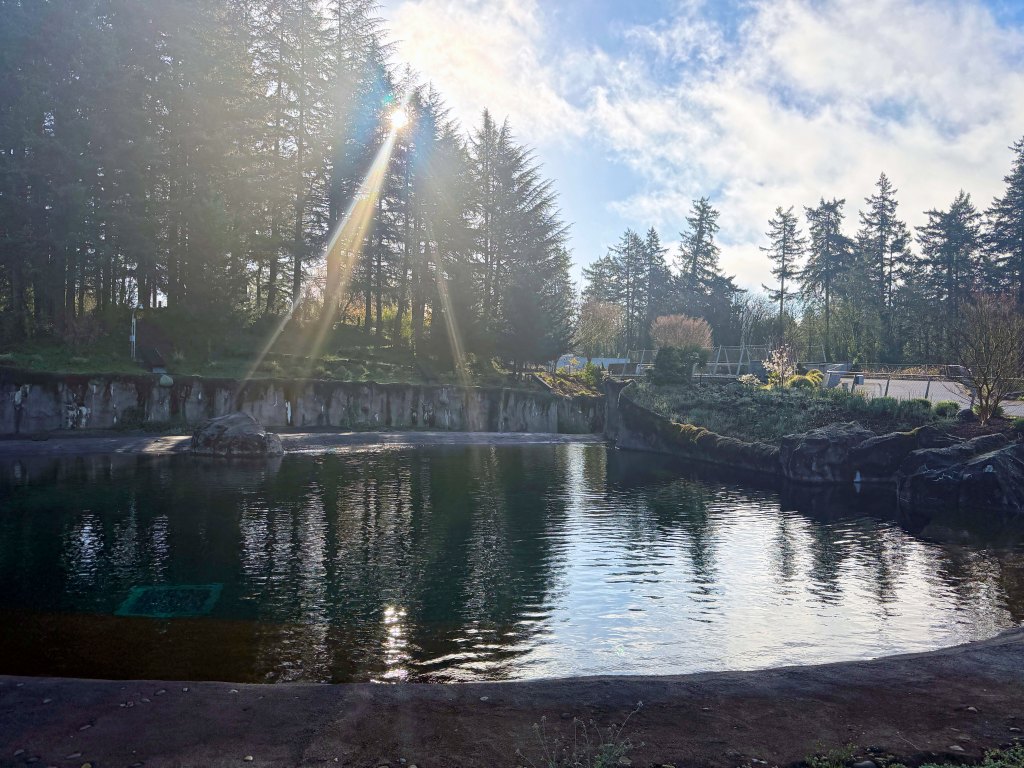
The transition begins before the elephants are visible. At the entrance, the space is clearly organized through signage and direction. It reflects the logic of the city—movement, orientation, and defined paths. Within a short distance, that clarity gives way to a less directive environment. Light filters through trees, and water surfaces hold reflection rather than motion. The design remains intentional, but it becomes less explicit, allowing attention to settle without instruction.
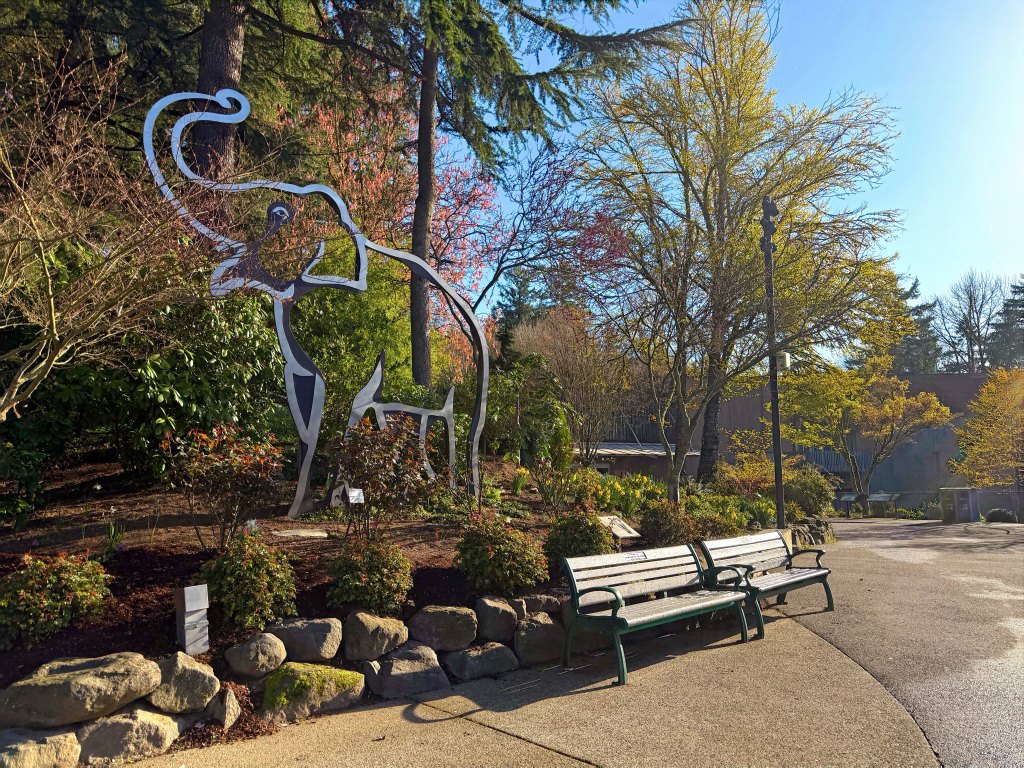
Further along, an elephant appears in reduced form—a sculptural outline defined by line rather than mass. It functions as a visual cue rather than a focal point, preparing the viewer without fully introducing the subject. By the time Forest Hall is reached, the scale of the experience has already been established indirectly.
The Approach
Inside Forest Hall, the enclosure expands in both size and structure. The elephants are present, but they do not immediately dominate the space. Distance, filtered light, and spatial separation define the initial encounter. The environment is perceived first; the subject follows.
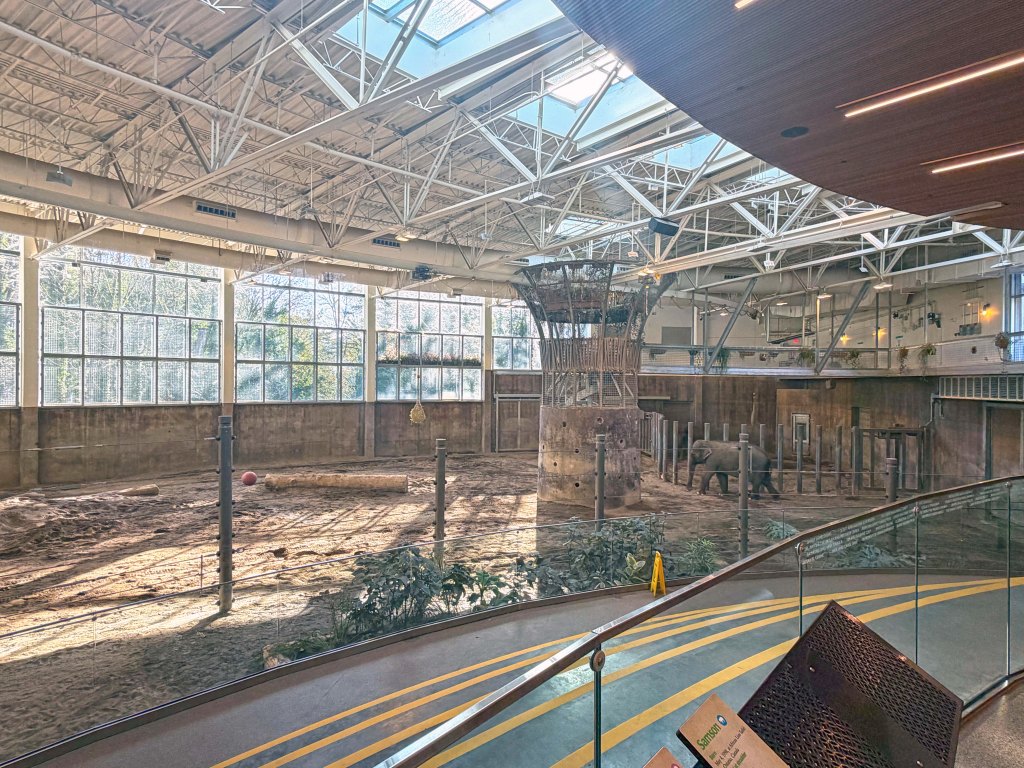
An elephant stands near the edge of the enclosure, neither centered nor framed. It does not engage the viewer, and the experience does not depend on interaction. The viewer’s role shifts from seeking attention to recognizing presence.
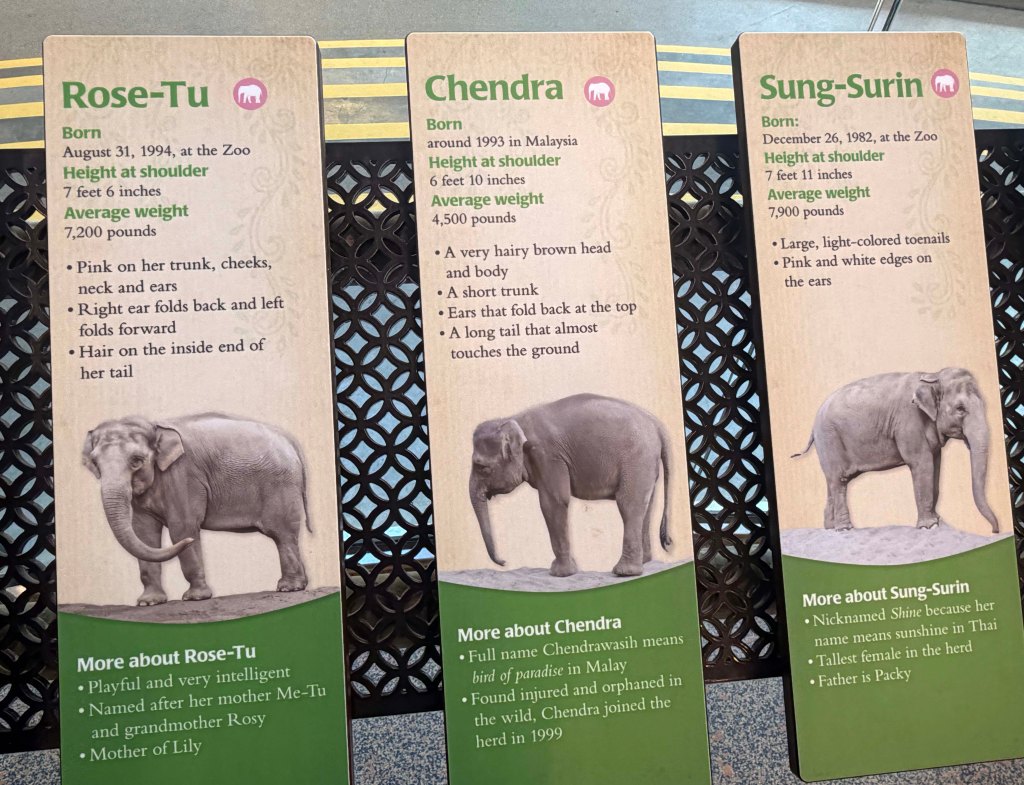
Along the railing, that perception becomes more specific. Names, measurements, origins, and identifying traits are introduced. What initially appeared as distant forms becomes a series of individual lives. The transition is subtle but definitive. The elephants are no longer understood as a single presence, but as distinct identities within a shared environment.
Presence and Identity
Beyond the enclosure, the experience continues within the museum spaces of Forest Hall. Here, the elephant is encountered in a different context—preserved, interpreted, and placed within a broader human framework.
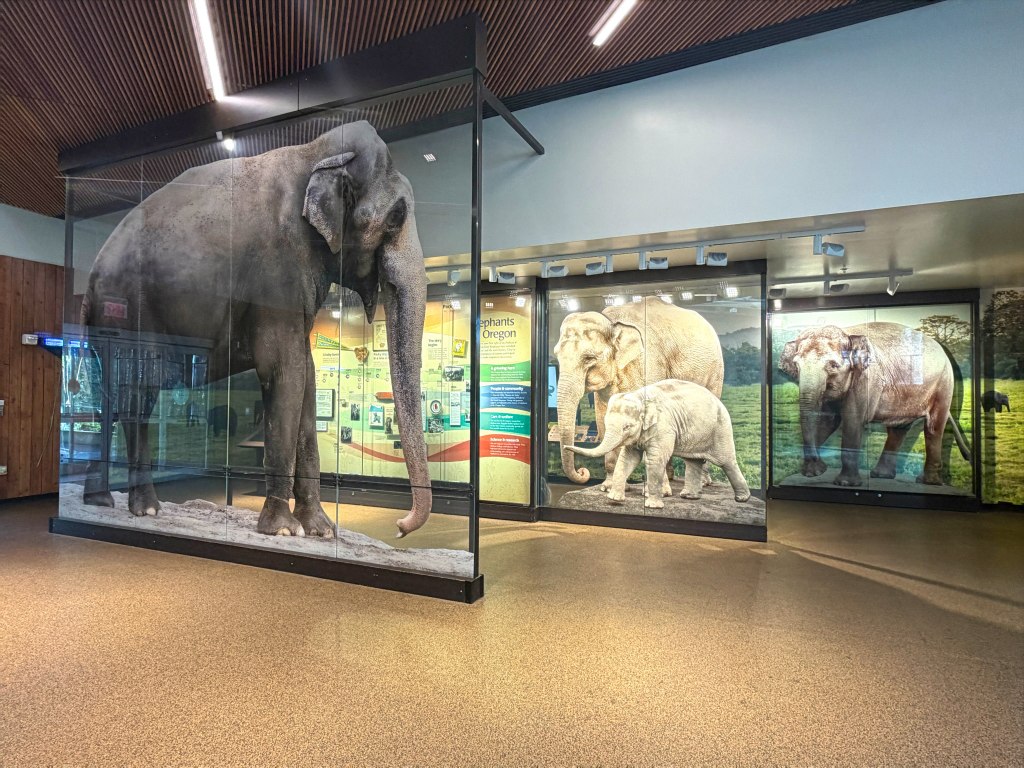
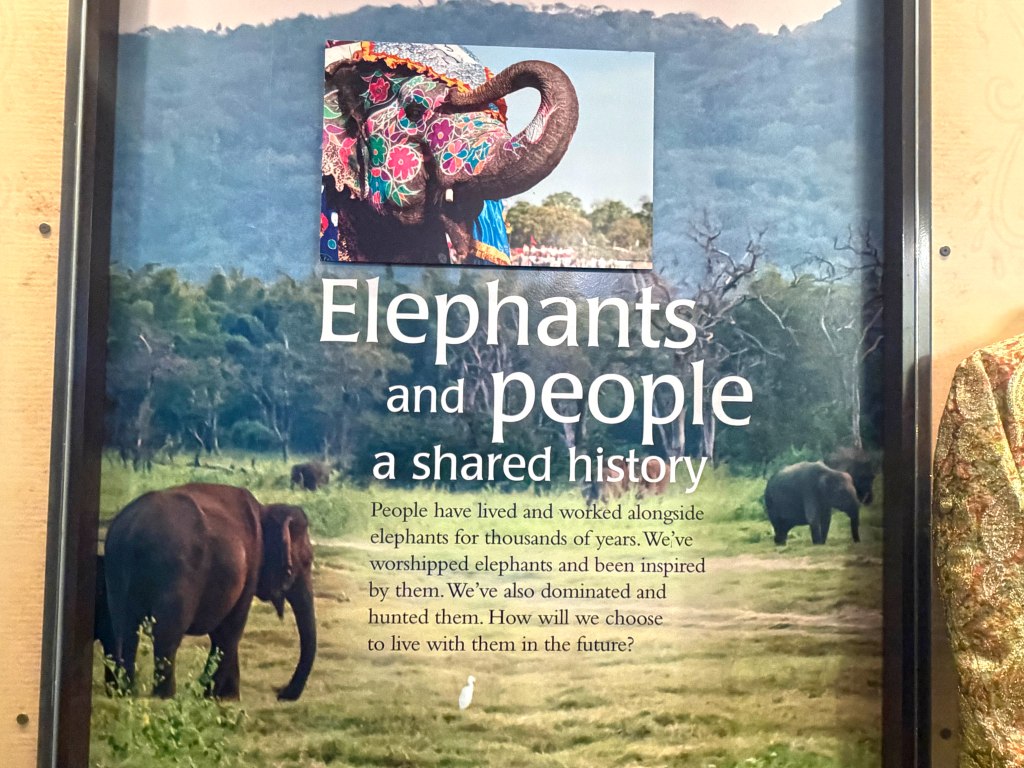
A large-scale image panel presents Packy, the Oregon Zoo’s long-time elephant, within a glass-framed structure. The figure reads as life-sized, but remains clearly photographic. Packy, who died in 2017, is represented here as part of the zoo’s institutional memory rather than as a physical specimen. Around it, the narrative expands through objects that trace the relationship between humans and elephants across time.
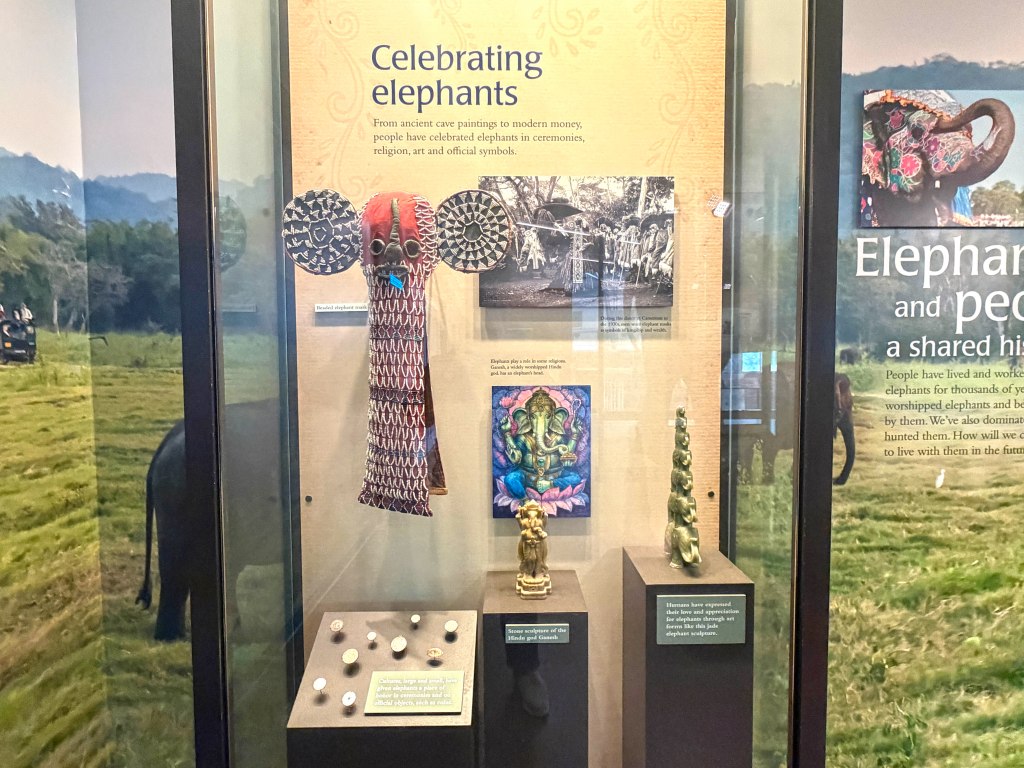
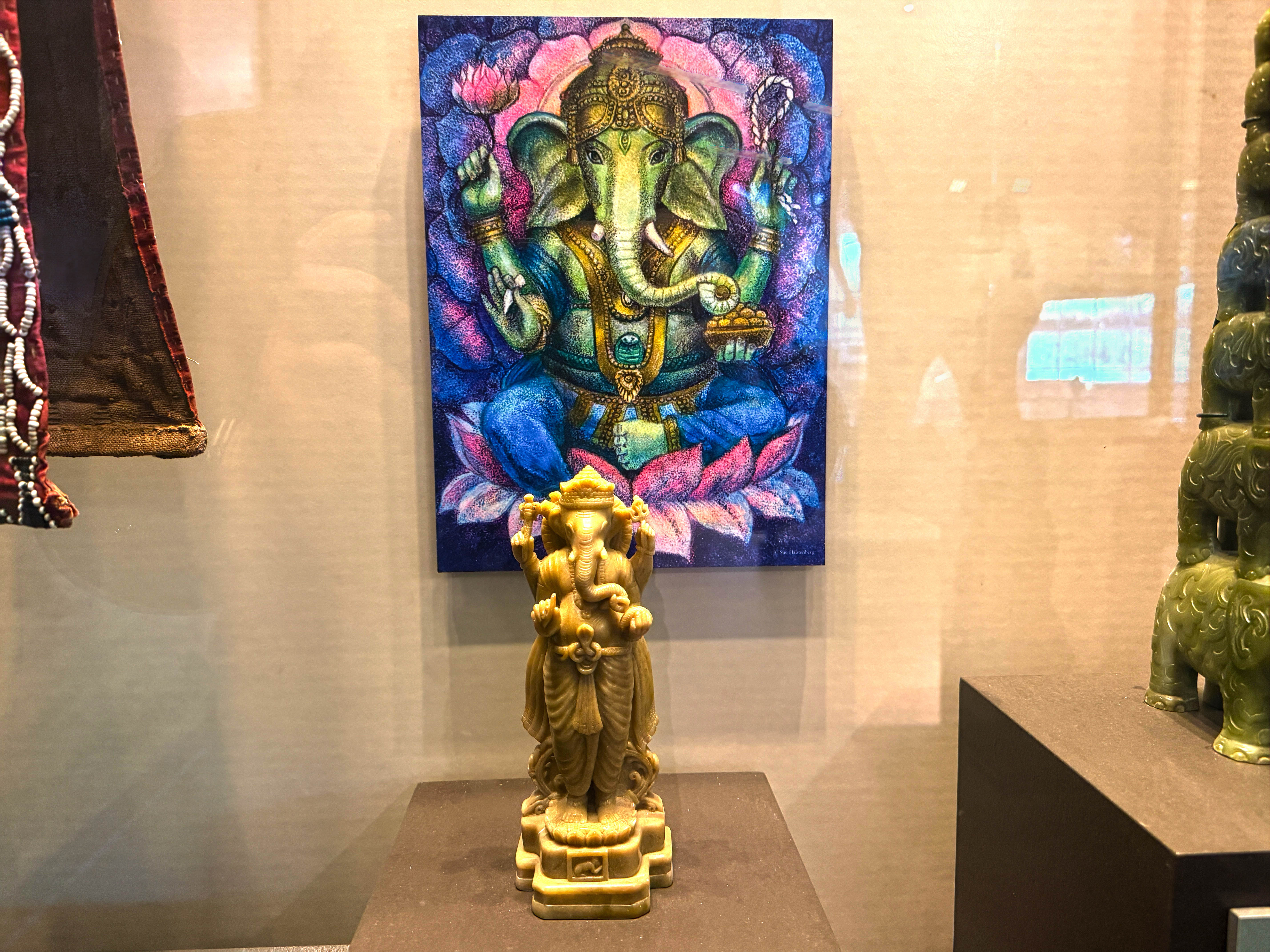
Some objects reflect reverence. Ceremonial items, symbolic representations, and religious figures position the elephant as an embodiment of strength, wisdom, and divinity. These forms emphasize continuity and cultural meaning.
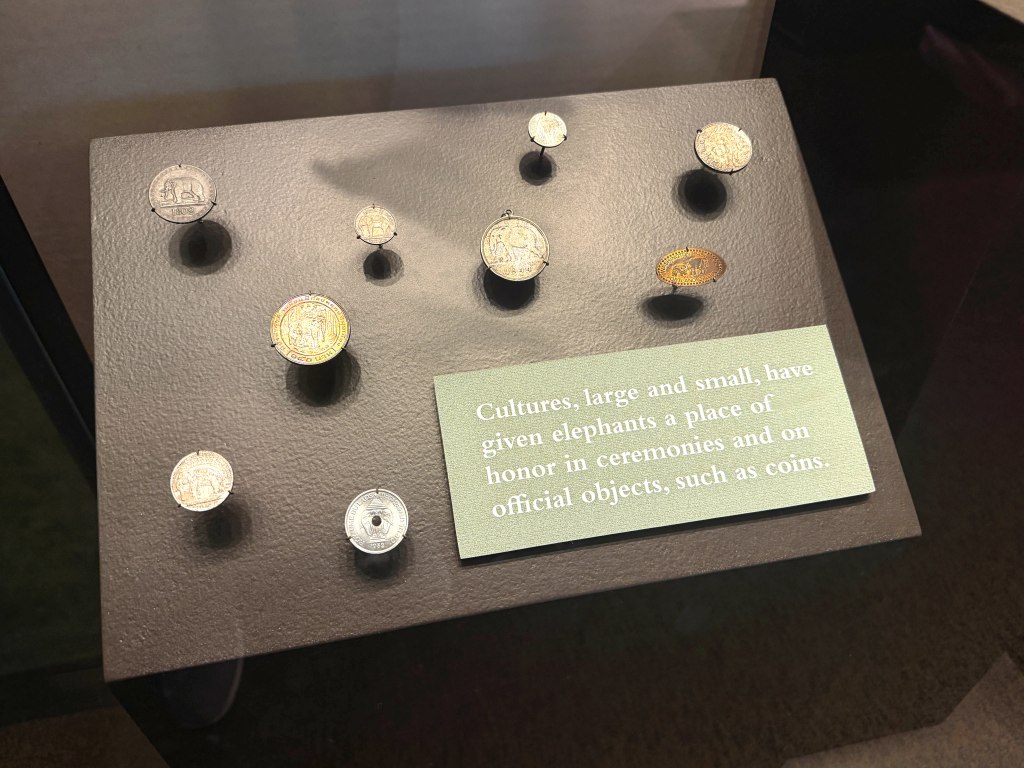
Other objects introduce a different framework. Coins, carvings, and crafted items translate the elephant into symbol and material. They are precise and often visually refined, but they operate within systems of exchange and production.
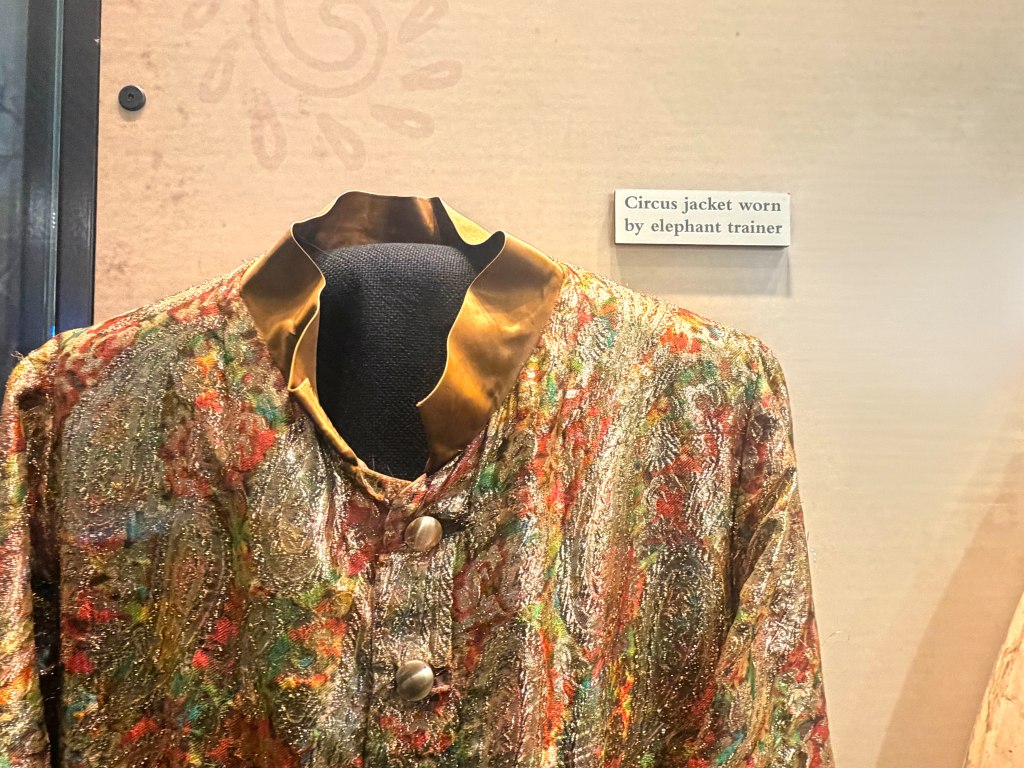
The exhibit also presents labor, performance, and extraction. A circus trainer jacket and an ivory tusk appear within the same space, reframing both objects through proximity. What might otherwise be understood as isolated artifacts becomes part of a shared context.
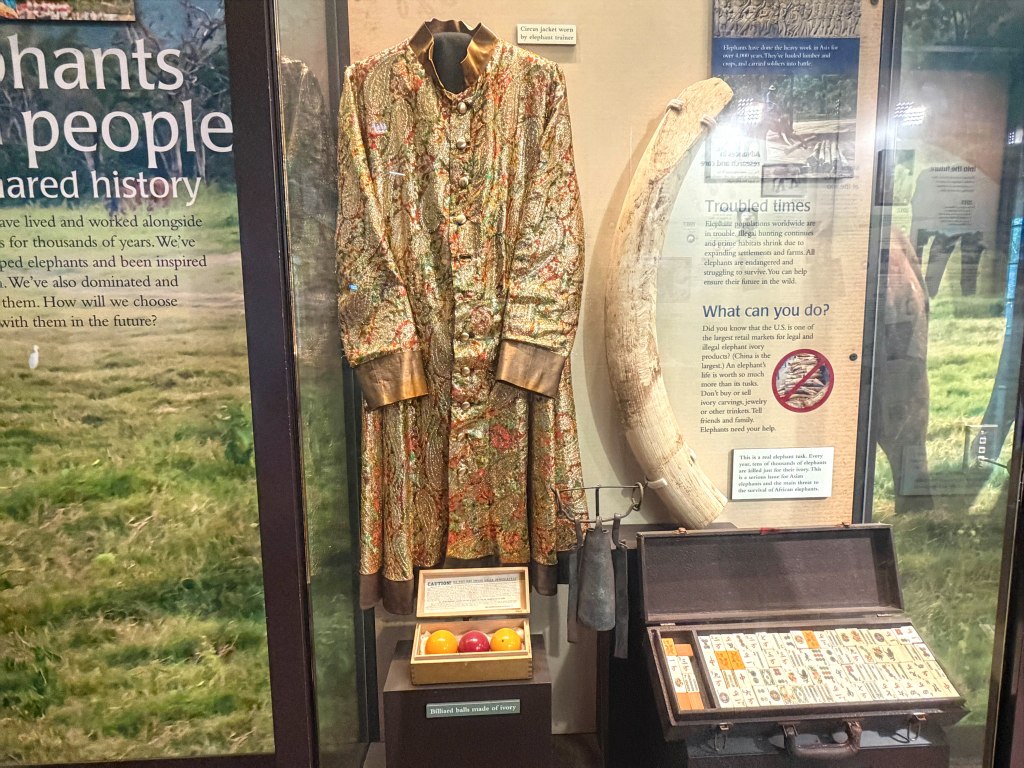
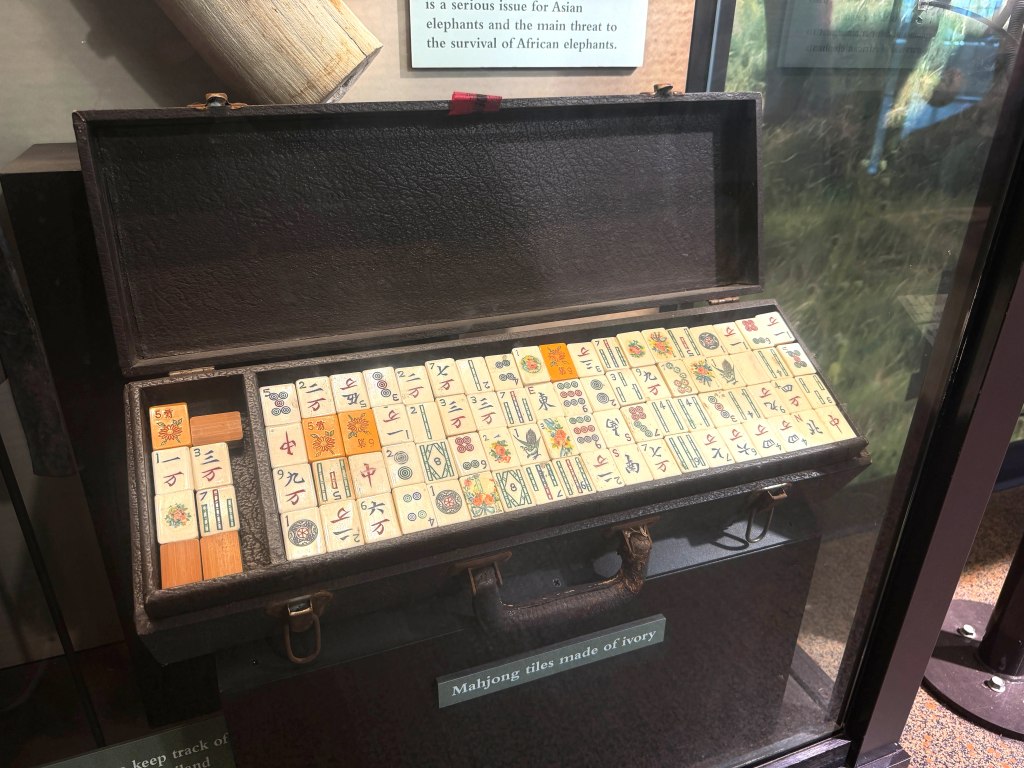
Even smaller objects carry this complexity forward. A mahjong set, carefully constructed and arranged, reflects both craftsmanship and the conditions under which it was produced. Its visual precision cannot be separated from its material history.
Interpretation
The exhibit does not attempt to resolve these relationships. Instead, it presents them in parallel, allowing multiple interpretations to remain visible at the same time.
By the end of the experience, the understanding of the elephant has shifted. It is no longer encountered solely as an animal within an enclosure, nor only as an individual identified by name. It is understood as a subject that exists across biological, cultural, historical, and ethical frameworks.
The sequence—from approach, to observation, to identification, to interpretation—organizes that shift. Each stage builds on the previous one, without replacing it.
The result is not a single definition, but an expanded understanding. The elephant remains present as it is, while the framework through which it is seen continues to develop.
 Scott Bryant
You must be logged in to post a comment.