
Oregon Zoo — Forest Hall & Elephant Lands
Portland, Oregon
March 25, 2026
9:05am
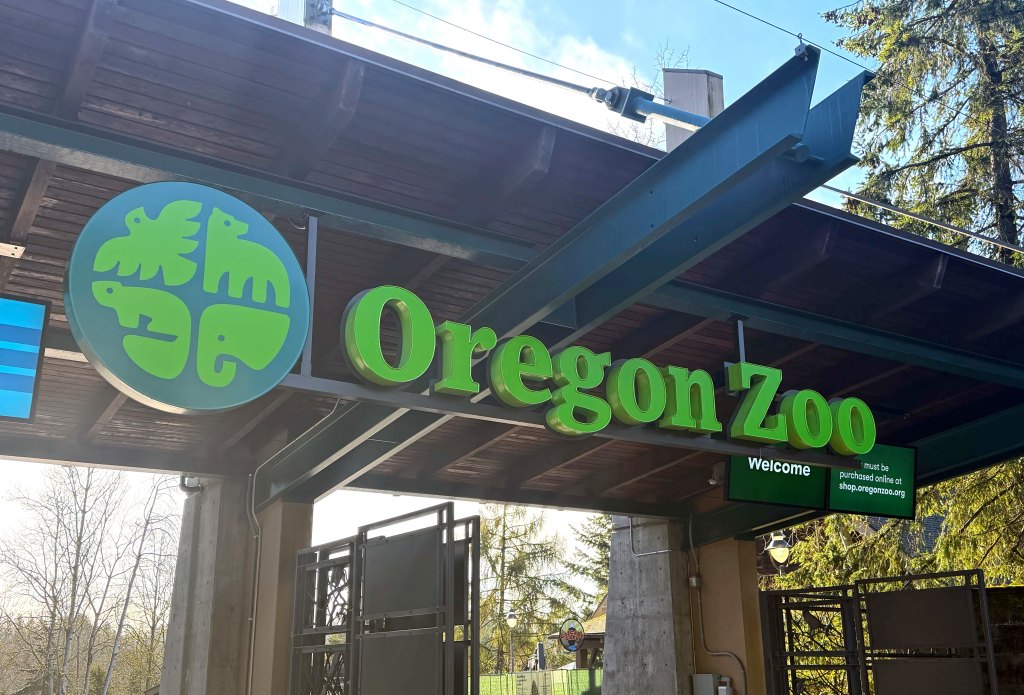
There are places where the experience is immediate, and others where it unfolds more gradually. The elephant lands at the Oregon Zoo belong to the latter, not because they are hidden, but because they are structured in a way that allows perception to change over time rather than all at once.
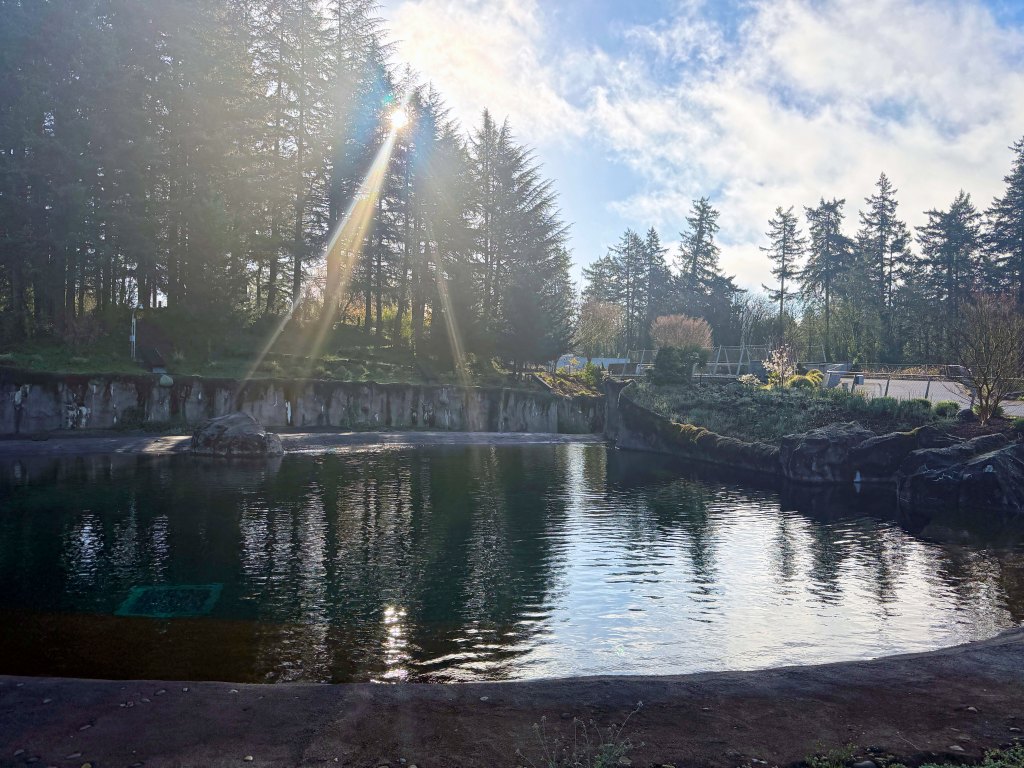
The shift begins before the elephants are ever seen. At the entrance, everything is clear—signage, direction, the language of arrival. It belongs to the city, to orientation, to the idea of moving through a place with purpose. That clarity, however, does not hold for long. Within a short distance, the path softens, and the environment begins to assert itself more quietly. Trees filter the light into angled beams, and water holds reflection rather than movement. The space remains designed, but the design becomes less visible, allowing attention to settle without being directed.
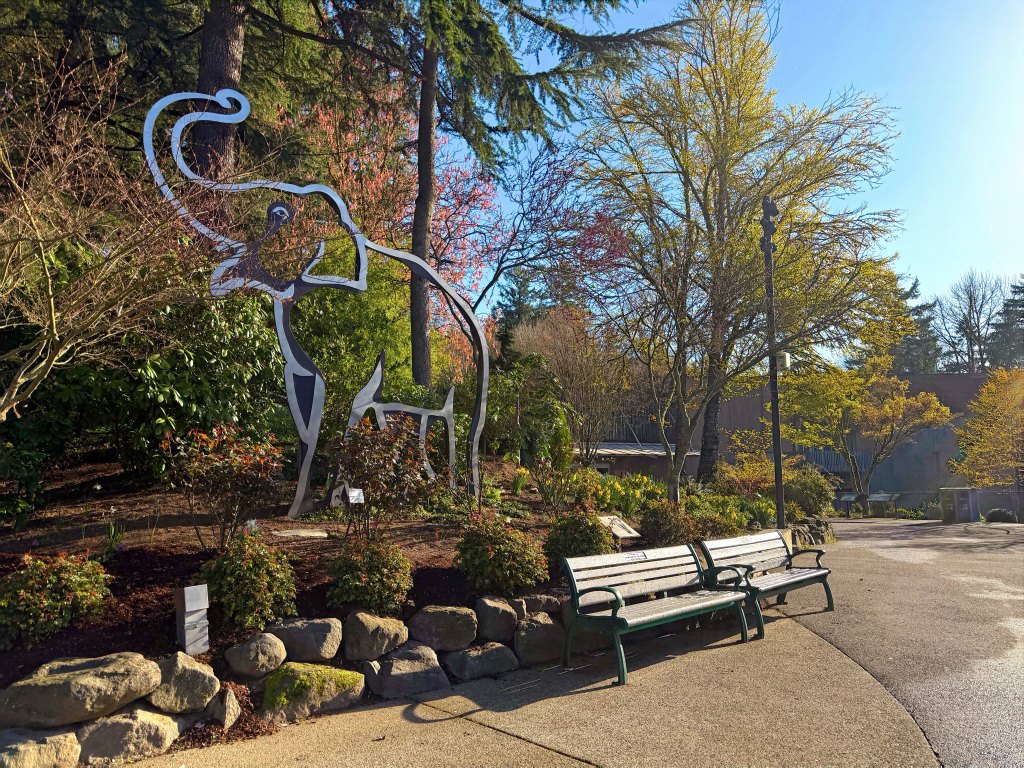
Further along, the suggestion of an elephant appears, not as an animal but as a sculptural outline reduced to line and form. It does not animate the space, but it prepares the viewer for what lies ahead. By the time Forest Hall is reached, the experience has already shifted in tone. The scale of what is to come has been introduced indirectly, not through display, but through restraint.
I. The Approach
Inside Forest Hall, the enclosure expands in both size and structure, but the elephants themselves do not immediately command the space. The environment is defined by distance, filtered light, and a sense of quiet separation. At first, it feels as though one is observing a place rather than a subject.
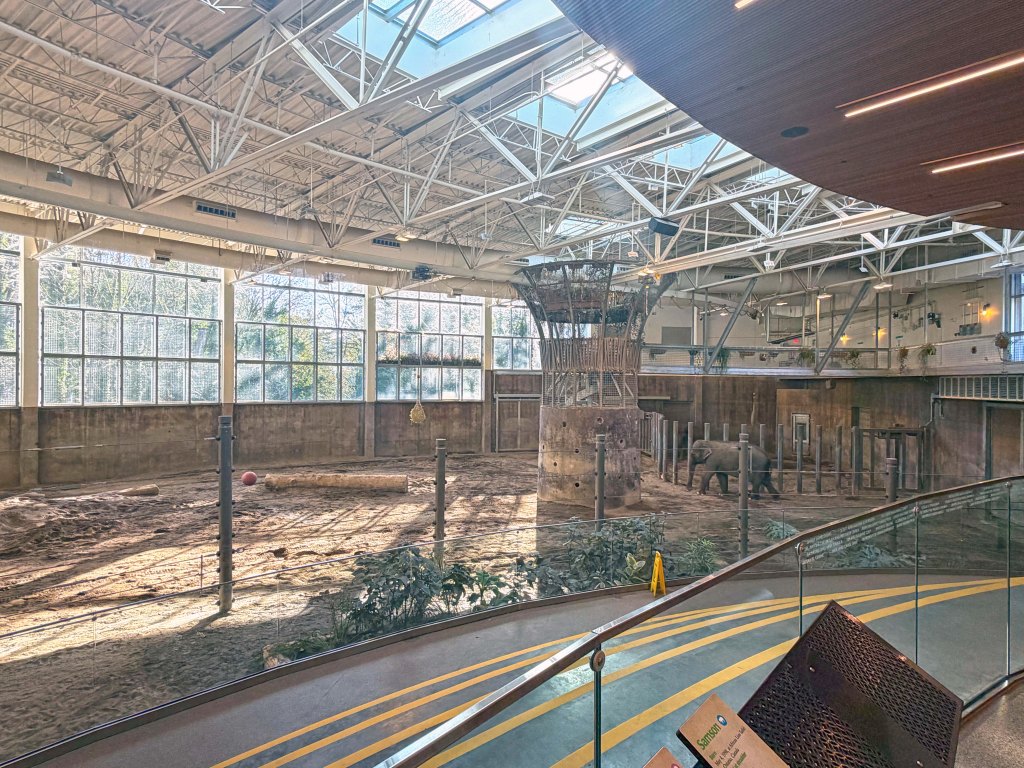
An elephant stands toward the edge of the enclosure, not centered or framed, and not engaged with the viewer. Its presence does not require acknowledgment in order to be felt. The encounter resists the expectation of interaction, and in doing so, it shifts the viewer’s role. Attention becomes less about being seen and more about noticing what is already there.
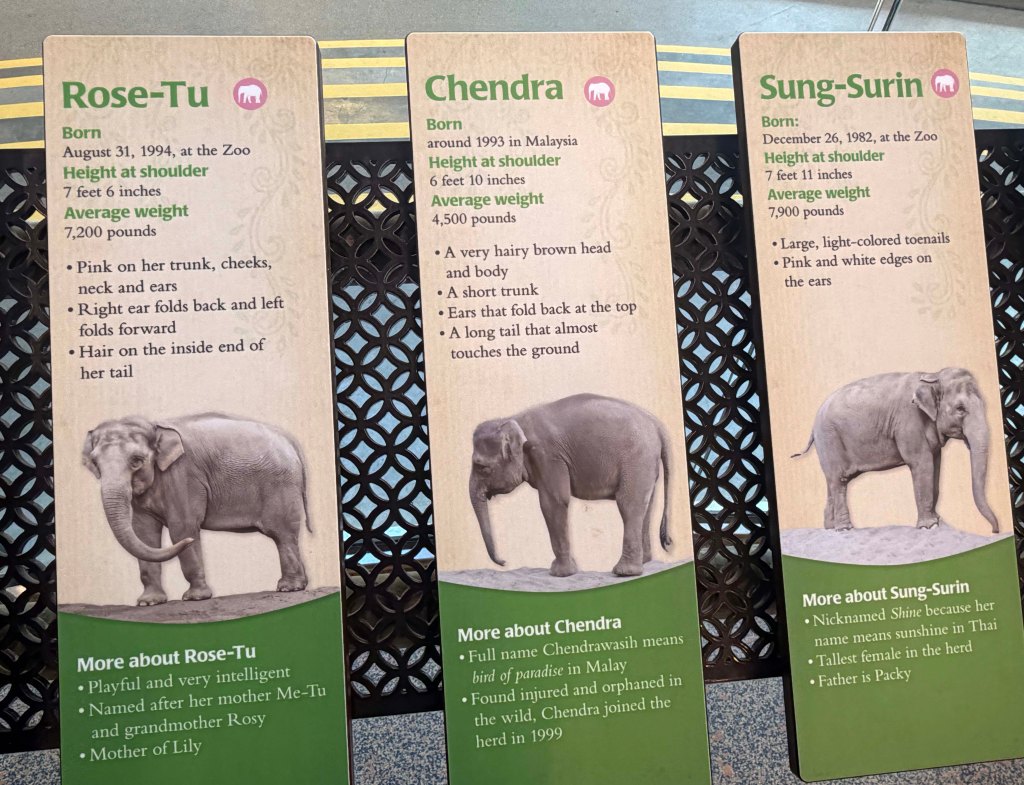
Only afterward, along the railing, does the experience begin to resolve into something more specific. Names appear, accompanied by measurements, origins, and distinguishing traits. What had previously been perceived as distant forms now becomes individual lives. The shift is subtle but decisive, moving from observation into recognition. The elephants are no longer encountered as a single presence, but as a continuity of individuals existing within the same space.
II. Presence and Identity
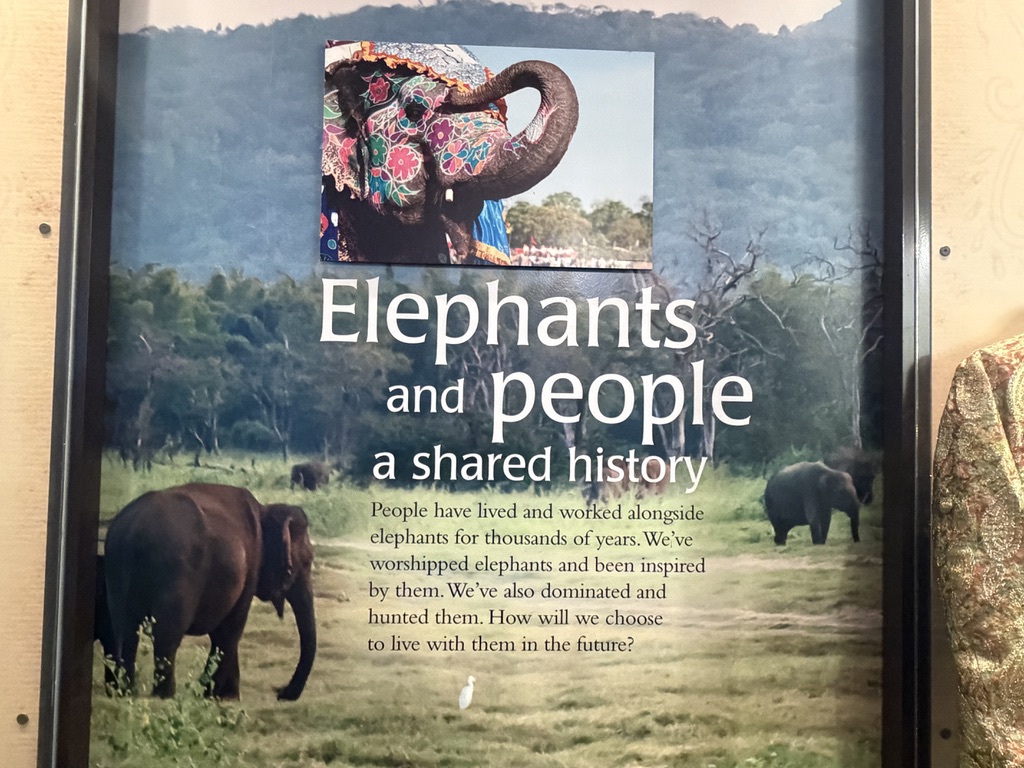
Beyond the enclosure, the experience continues inward through the museum exhibits within Forest Hall. Here, the elephant appears again, but in a different form—preserved, interpreted, and placed within a broader human context. A preserved body stands encased in glass, no longer moving but still commanding attention in a different way.
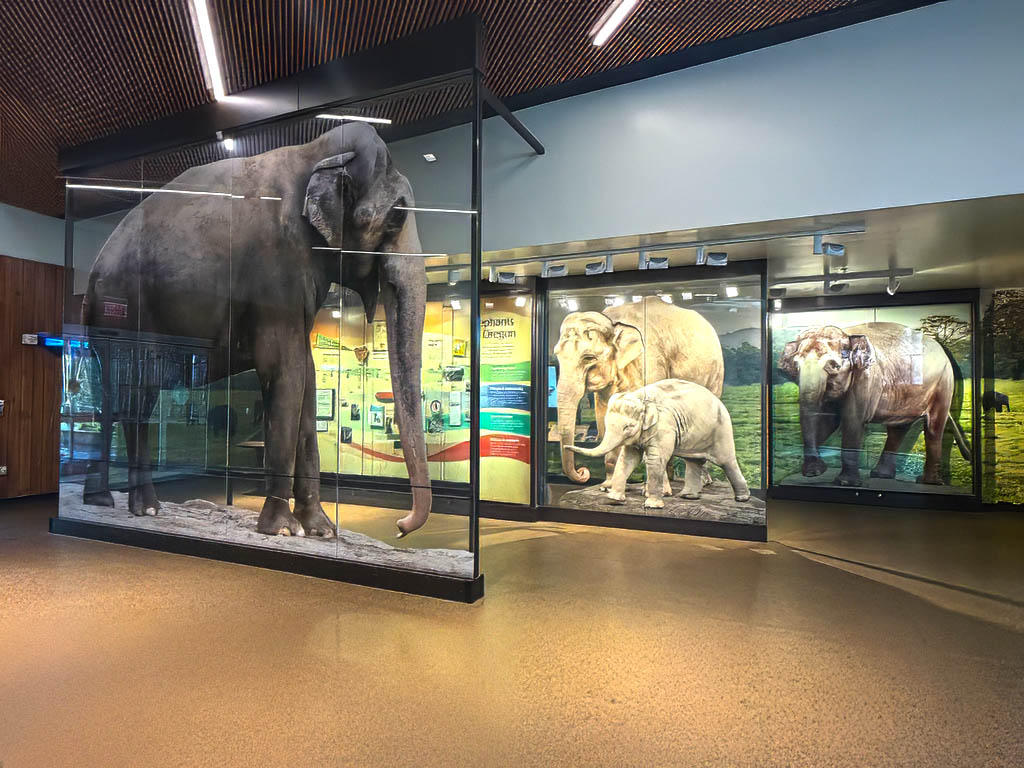
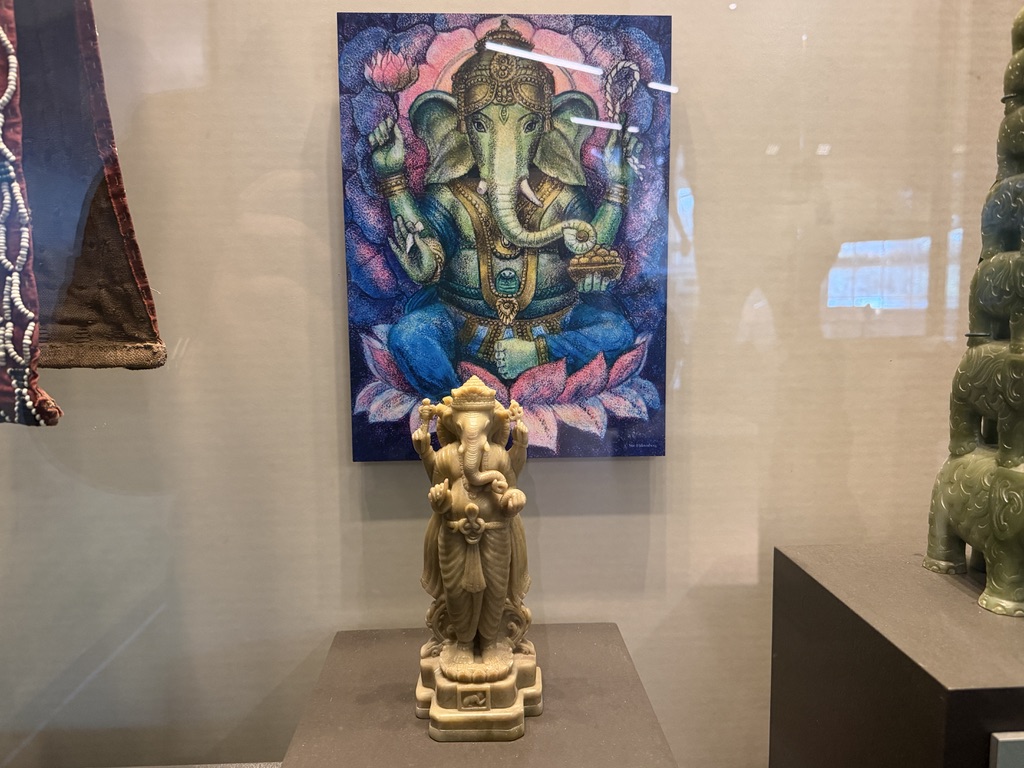
Around it, the narrative expands through objects and displays that trace the long relationship between humans and elephants. This relationship is presented without simplification. There are objects of reverence—ceremonial items, symbolic representations, and religious figures that reflect the ways elephants have been understood as embodiments of strength, wisdom, and divinity.
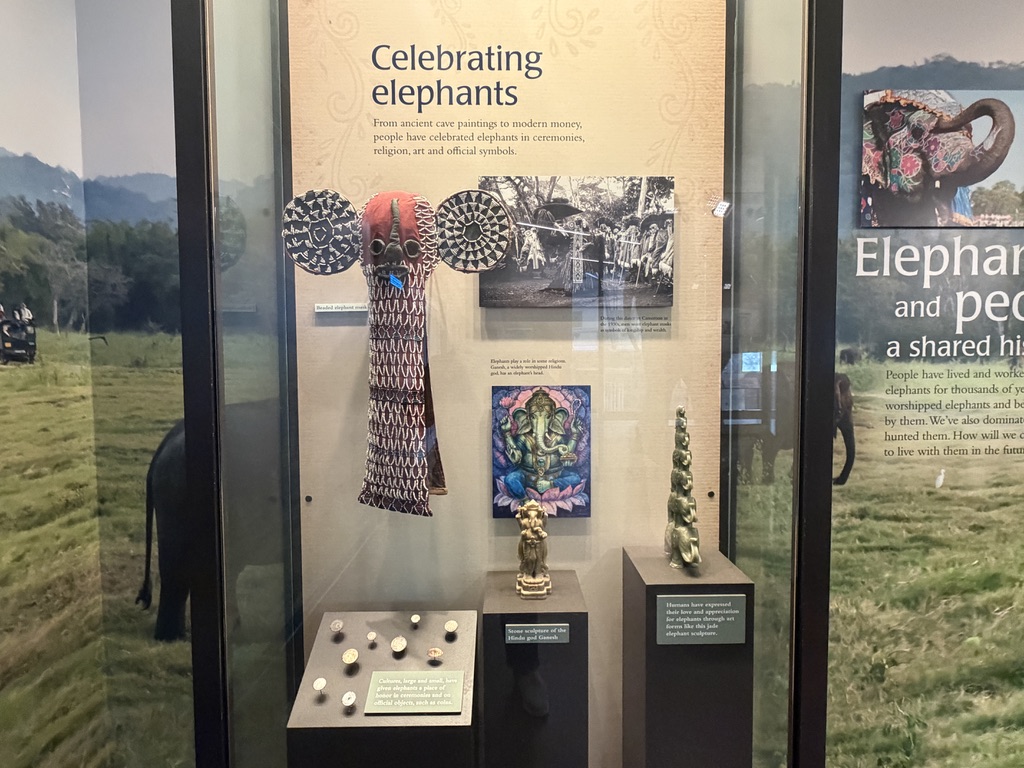
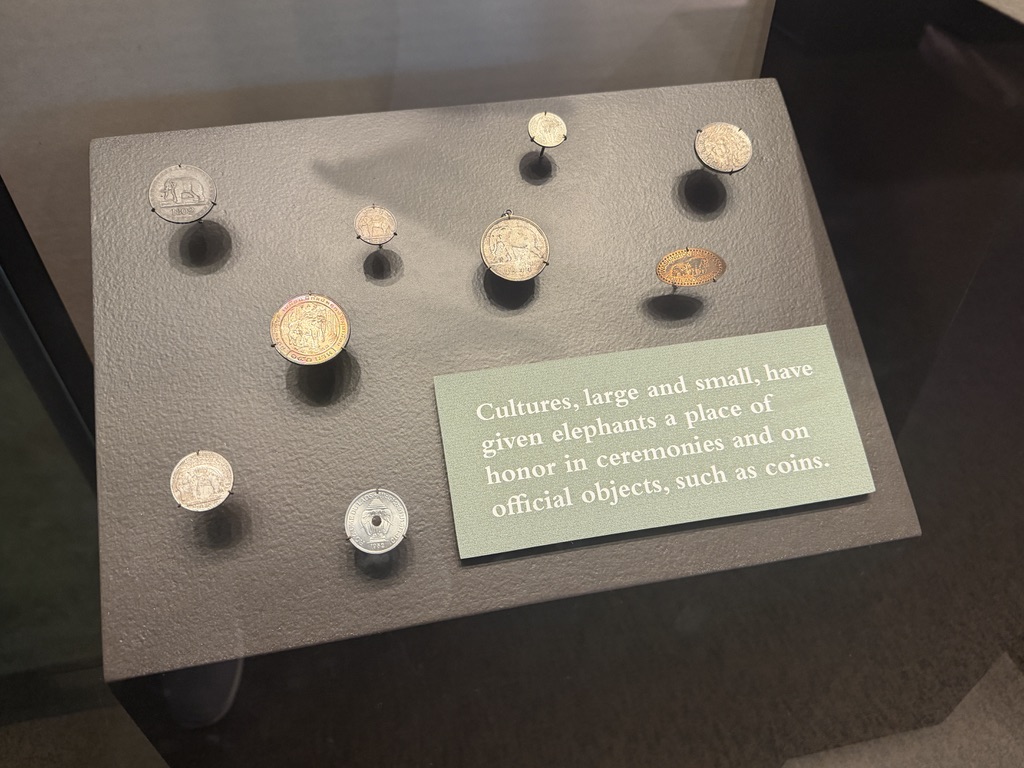
Alongside these are objects that shift the tone. Coins, carvings, and small crafted items translate the elephant into symbol and material. They are precise and often beautiful, but they carry a different kind of weight when considered within the larger context of the exhibit.
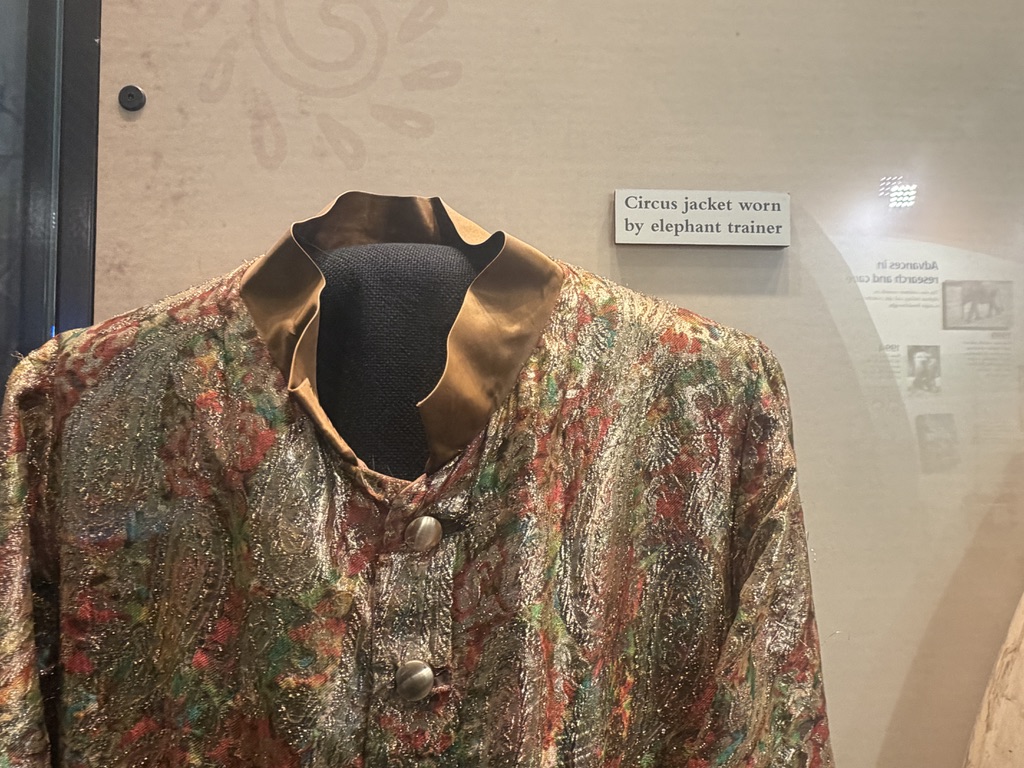
The same space introduces labor, entertainment, and extraction. A circus jacket and an ivory tusk appear side by side, reframing what might otherwise be seen as historical artifacts into something more complex. Objects once associated with performance and prestige now carry a different presence when viewed together.
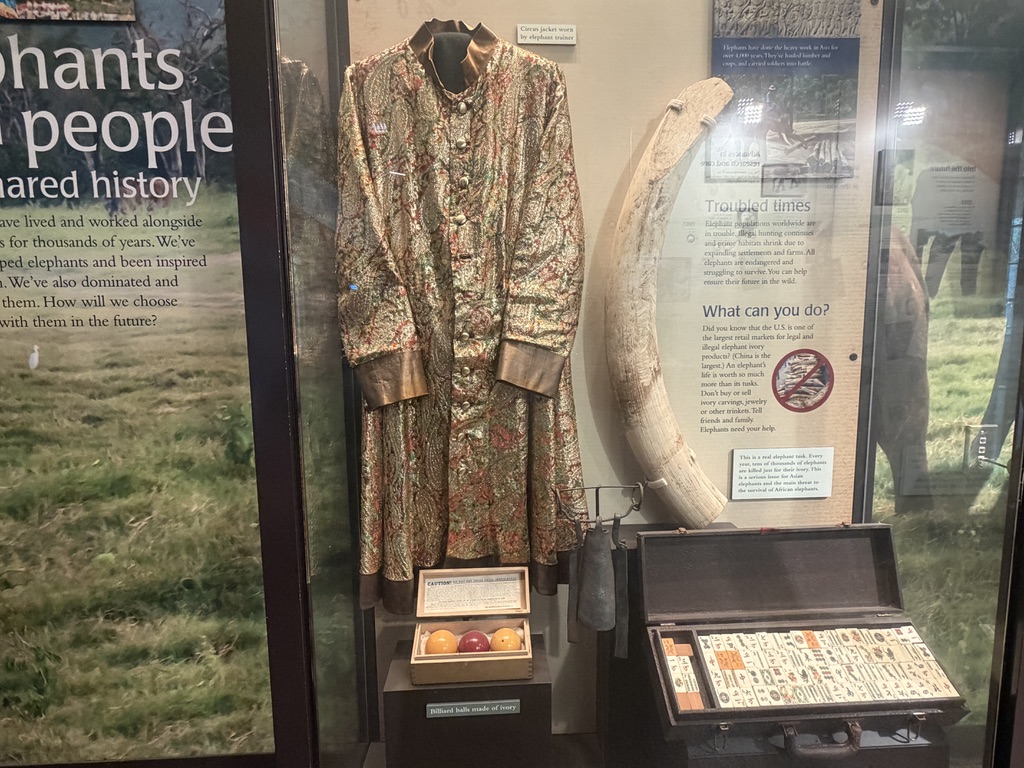
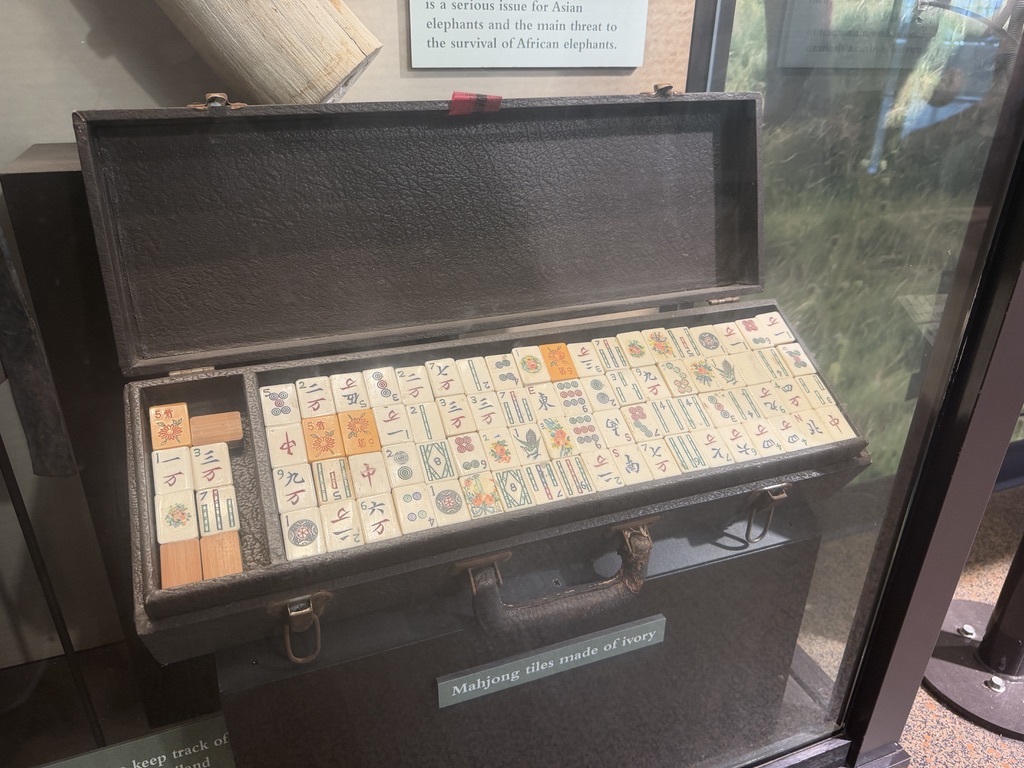
Even the smallest objects carry this tension forward. A mahjong set, carefully crafted and precisely arranged, reflects both artistry and consequence. Its material beauty cannot be separated from the conditions that made it possible.
III. Memory and Meaning
The exhibit does not attempt to resolve these contradictions. Instead, it presents them in parallel, allowing the viewer to hold multiple understandings at once. By the time the space is left, the elephant has shifted again.
It is no longer encountered solely as an animal within an enclosure, nor only as an individual with a name, but as something that exists across multiple layers of meaning. It is biological, cultural, historical, and ethical at once, shaped not only by its own existence but by the ways it has been understood, used, and remembered.
To see the elephants here is not a single act, but a progression that moves from distance to recognition and from presence into meaning. The experience does not center the viewer, nor does it attempt to resolve what it presents. Instead, it allows the elephants to remain as they are, while the understanding of them continues to expand.
 Scott Bryant
You must be logged in to post a comment.