
Cultural Notes — Art Exhibition
Portland Japanese Garden — Pavilion Gallery
Portland, Oregon, March 25, 2026
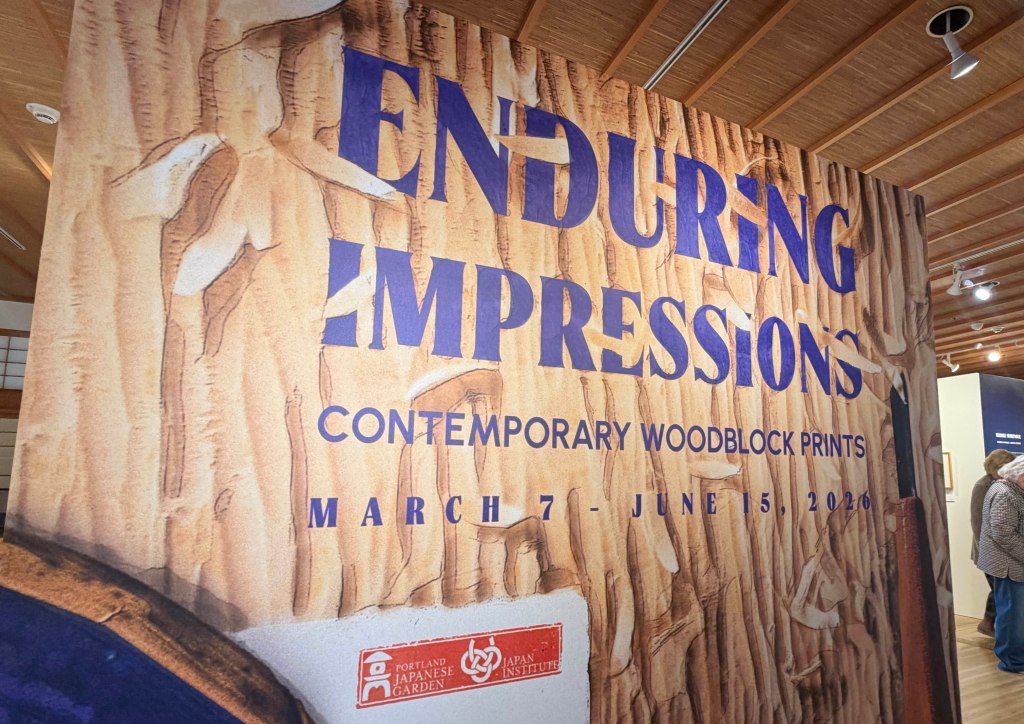
Inside the Pavilion Gallery, the experience of the garden shifts from open landscape to a more contained setting, where wood, paper, and pigment take the place of stone, water, and sky.
The exhibition Enduring Impressions: Contemporary Woodblock Prints centers on mokuhanga, a Japanese method of woodblock printmaking built through hand-carved blocks, water-based pigments, and layered impressions that accumulate gradually through repetition and control. The process has persisted for centuries, yet the works on view demonstrate how it continues to evolve through contemporary artists working both within and beyond Japan.
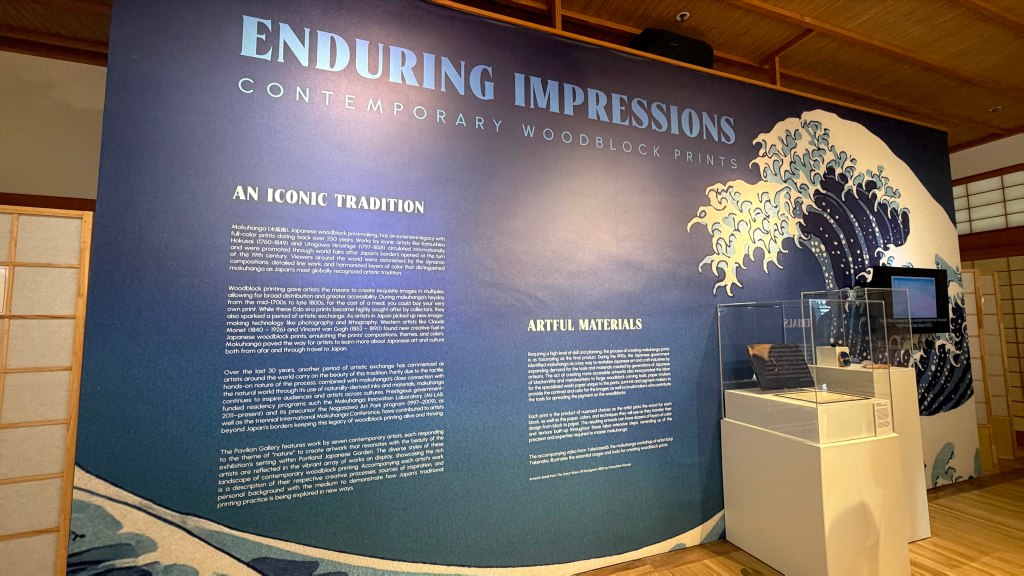
What emerges most clearly is not only the finished image, but the structure behind it. Carved lines, registration marks, and tools point to a method defined by precision and alignment, where each layer must correspond exactly to the last in order to hold together.
The presence of the woodblocks themselves makes the relationship between matrix and print visible, allowing the viewer to move between them without separation. The image is not singular but repeatable, shaped through a process that builds incrementally rather than all at once.
The exhibition also reflects a broader continuity, with artists engaging mokuhanga as an active practice rather than a fixed tradition. Contemporary works draw from both historical reference and present-day environments, including landscapes and interiors that extend beyond Japan while remaining grounded in the discipline of the medium.
Among the artists included, Aya Morton, based in Oregon, situates her work within both the structure of mokuhanga and the landscapes of the Pacific Northwest, where interior spaces and regional scenery are rendered through a visual language shaped by the tradition but grounded in present experience.
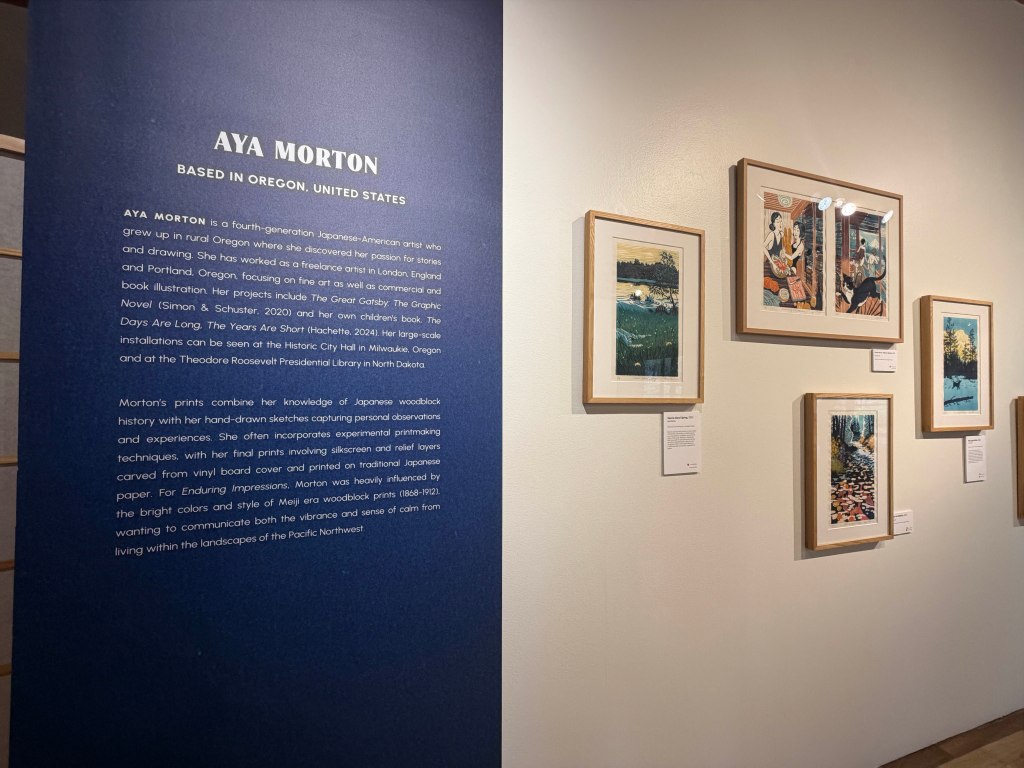
The relationship between process and place becomes especially apparent in works that situate the technique within familiar geography, where regional landscapes are rendered through a visual language shaped elsewhere but adapted through use. The result is not a separation of past and present, but an integration of the two held together through method rather than theme.
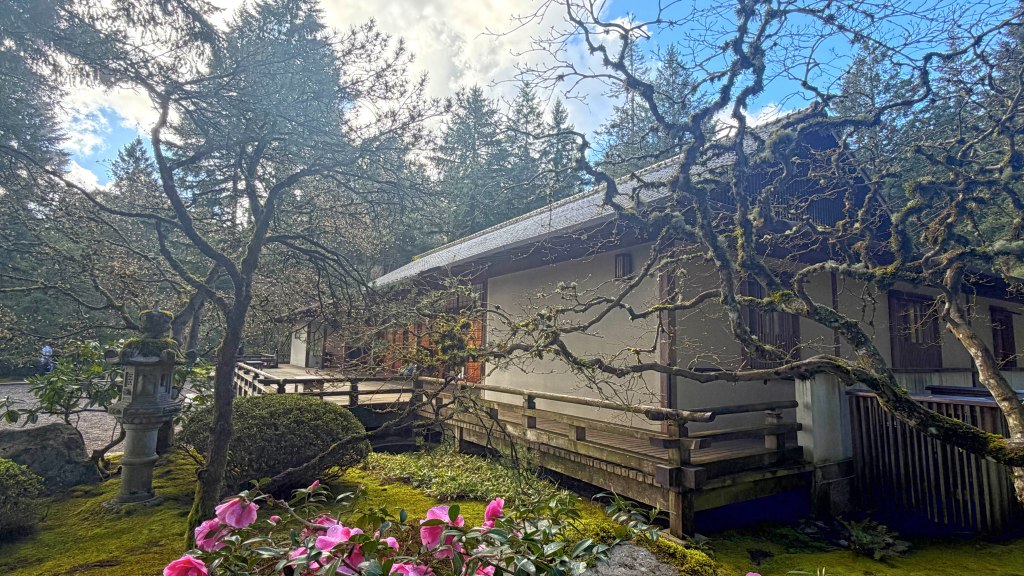
Within the larger experience of the garden, the exhibition does not stand apart from its surroundings, but remains consistent with it in approach. Where the garden is composed through placement and restraint, these works are composed through repetition and accumulation. Both rely on attention and reveal themselves gradually, requiring time rather than offering immediacy.
 Scott Bryant
You must be logged in to post a comment.