
Cultural Notes
Cultural Notes collects my personal observations on culture, art, performance, and the everyday moments that reveal how meaning is made. These pieces are not reviews or summaries, but considered reflections — written from attention, experience, and lived response.
-
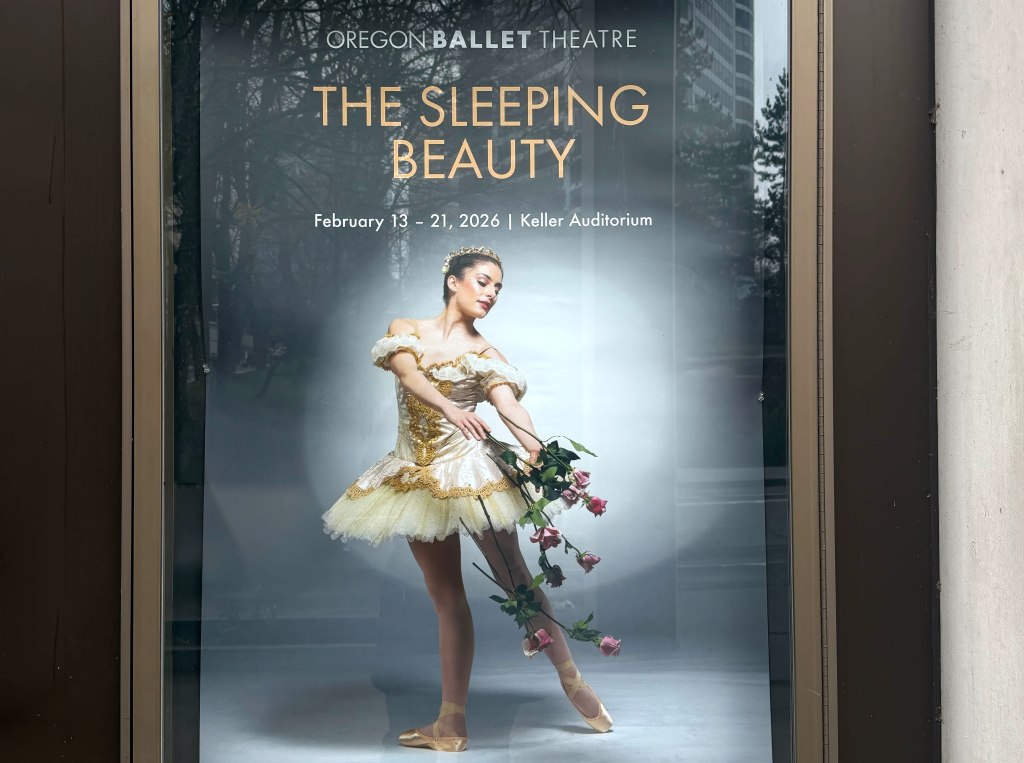
Beauty Bathing: ‘The Sleeping Beauty’ at Oregon Ballet Theatre
—
An afternoon of immersion at Oregon Ballet Theatre’s The Sleeping Beauty — from sacred company class to the Rose Adagio and a waltz long known by heart. A reflection on fidelity, memory, and leaving at intermission when the experience already felt complete.
-

The Midway Still Turns
—
In 2016, I rode a 100-year-old carousel at Oaks Park. It was free. I remember thinking only: “This is cool.” Ten years later, the photos feel steady. The horses still rise and fall. Some institutions endure without spectacle — simply by continuing to turn.
-
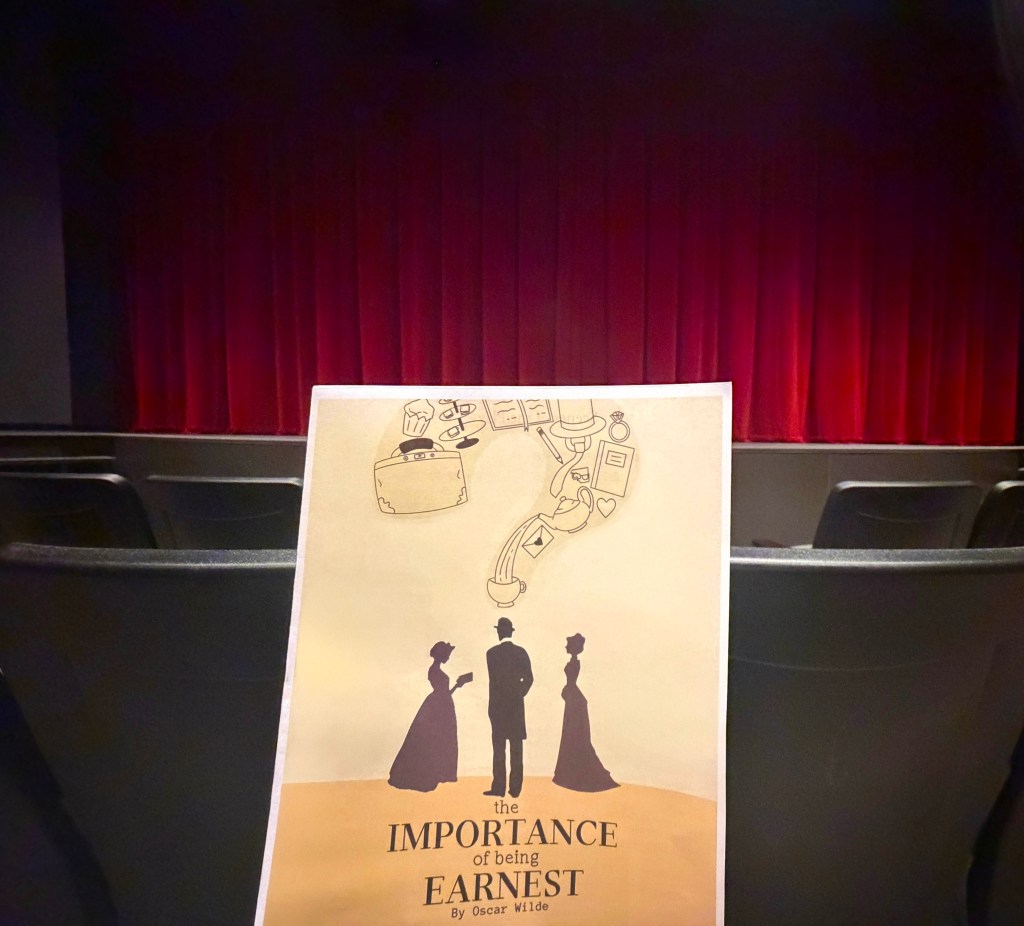
The Music of “Ernest”
—
On Valentine’s Day, a high school auditorium became Wilde’s laboratory of wit. In a world obsessed with names, lineage, and decorum, love turned strategic, identity theatrical, and even a misplaced handbag capable of rearranging society.
-
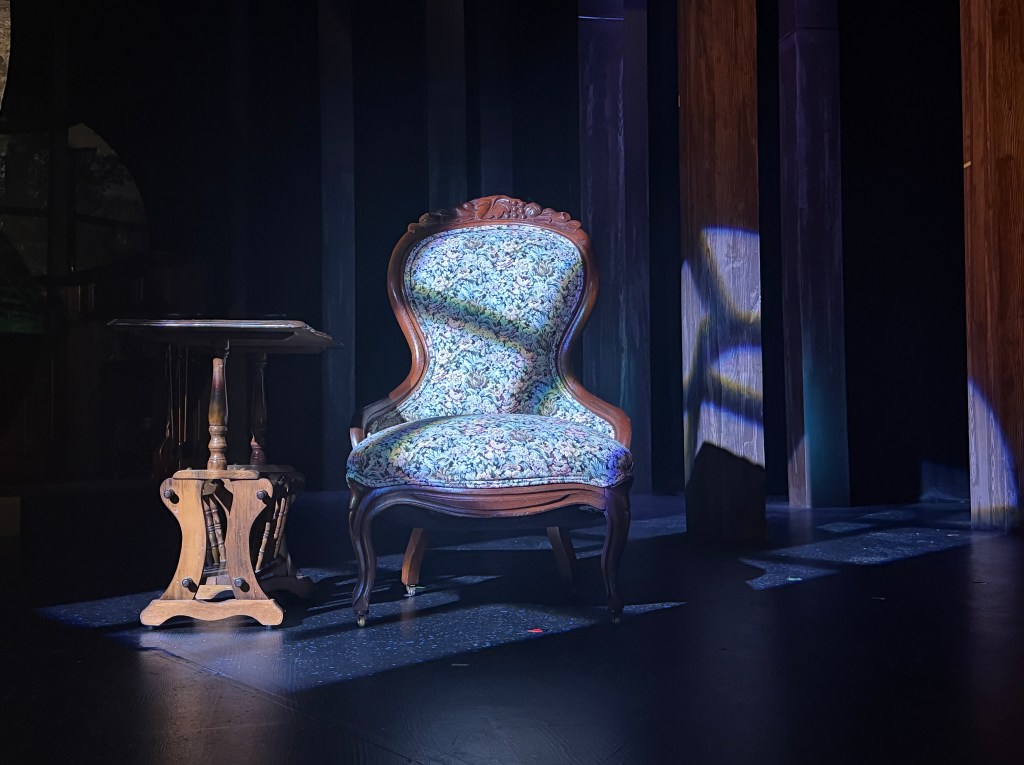
Before the Lights Went Down: ‘The Murder of Roger Ackroyd’ at Lakewood Theatre
—
The play began before the audience realized it. Lakewood Theatre Company’s “The Murder of Roger Ackroyd” uses restraint, misdirection, and quiet authority to examine how trust is constructed—and withdrawn. What unfolds is less a mystery than a meditation on attention, belief, and the consequences of who is allowed to narrate.
-
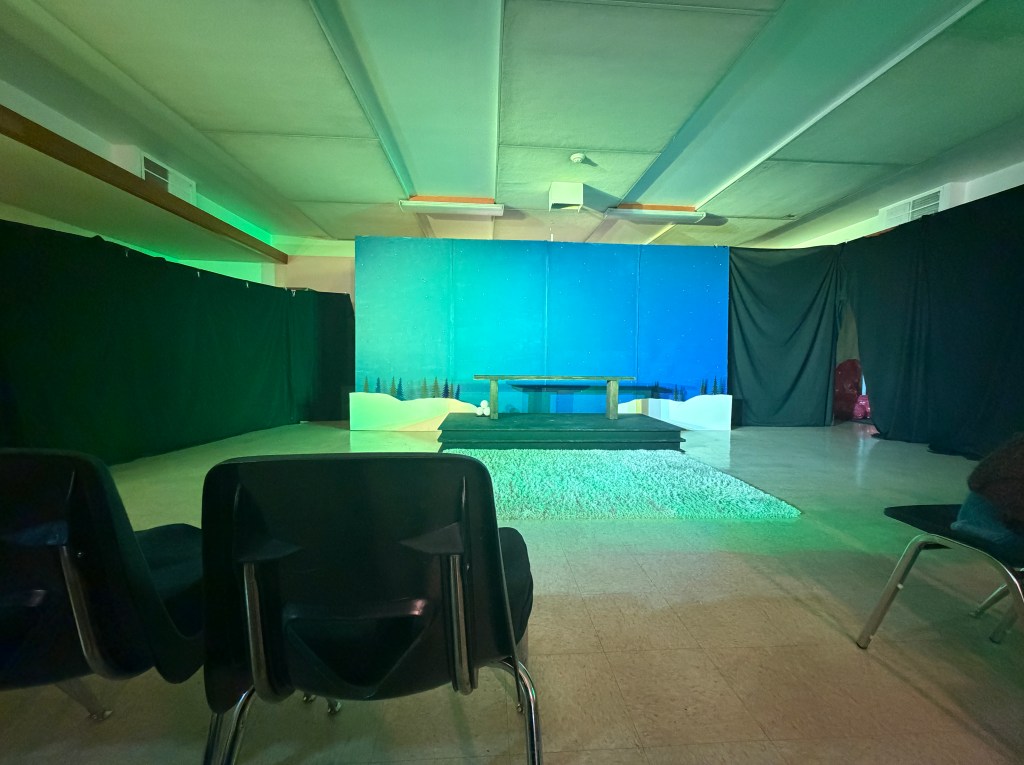
Scene 5, Performed
—
Performed without announcement, Scene 5 of ‘Almost, Maine’ shifted into a study of intimacy, panic, and the risk of naming what already makes sense between two women.
-
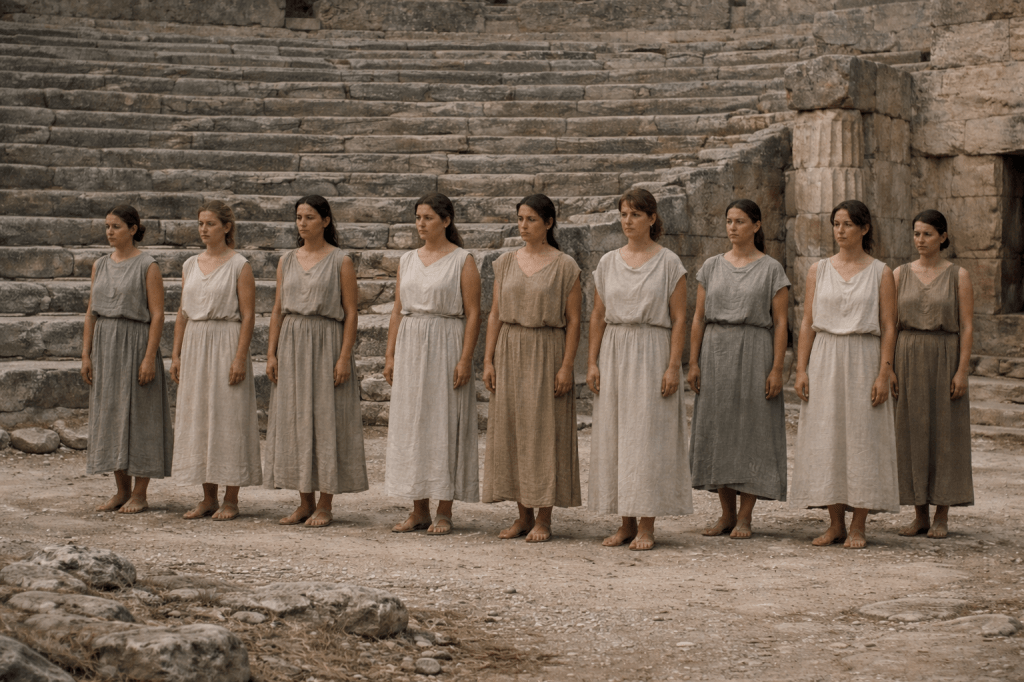
‘Lysistrata’: When Women Stop Participating
—
Aristophanes’ ‘Lysistrata’ is not a joke about sex withheld, but a study of participation withdrawn. When women coordinate absence, the machinery of war stalls. Power appears not through desire, but through collective refusal, patience, and timing, without appeal or apology.
-

Border Light in ‘Little Trouble Girls’
—
“Little Trouble Girls” (2025), directed by Urška Djukić, is observed as a condition rather than a story—an interior adolescence shaped by silence, proximity, and pressure. Refusing urgency or resolution, the film lets attention itself become the central experience.
-
A Gaze That Does Not Blink
—
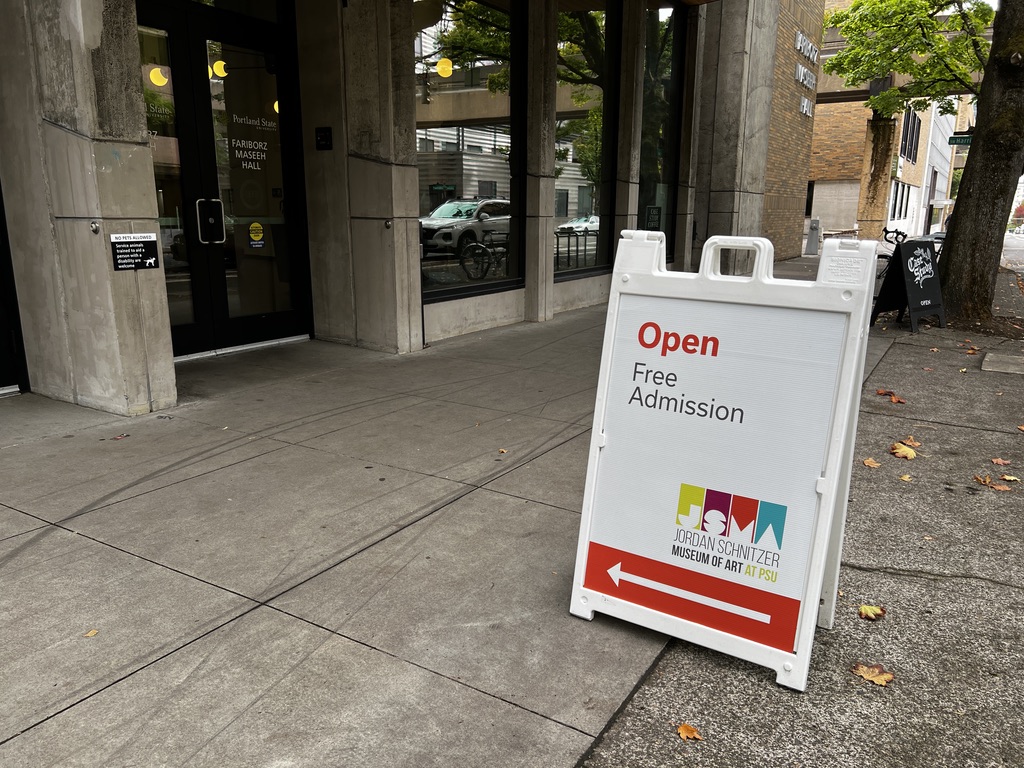
In the lower level of Portland State University’s Jordan Schnitzer Museum of Art, Wendy Red Star’s Apsáalooke Feminist #2 stages Indigenous feminist sovereignty within a contemporary domestic space — direct, composed, and unflinching in Portland’s public art landscape.
-

Repetition Survives Translation
—
A Baroque performance of ABBA’s “Gimme! Gimme! Gimme!” reveals how repetition-driven pop music survives historical translation. Instrumentation changes. Structure holds. What sounds like surprise is recognition arriving late.
-
‘Much Ado About Nothing’: Watching from a Distance
—
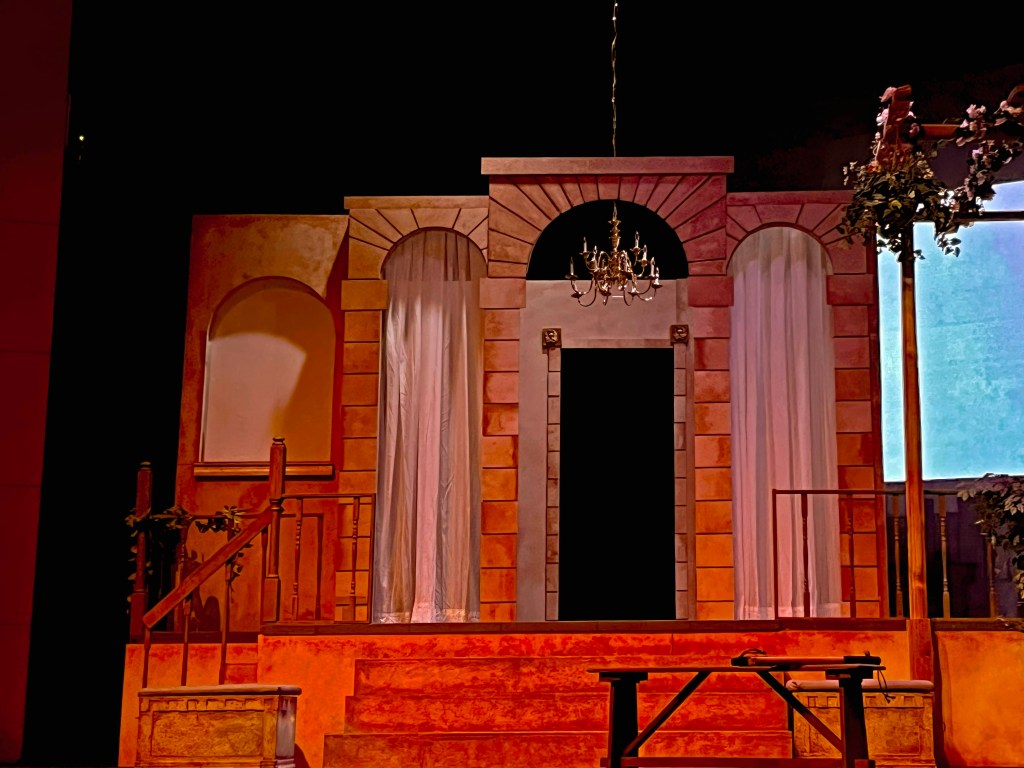
A single gesture, seen from a distance, unravels everything. This production of ‘Much Ado About Nothing’ revealed the play not as a comedy of jealousy, but of misrecognition—where certainty replaces knowledge, spectators mistake observation for understanding, and damage follows long before truth arrives.
-

‘Night on Bald Mountain’: Power That Cannot Endure
—
Night on Bald Mountain is not a battle between good and evil, but an observation of power built on spectacle, intimidation, and attention. Through image and sound, the sequence shows why fear and dominance cannot endure—and why light does not need to conquer in order to prevail.
-

Parallel Intelligences: Women and Power in ‘Trouble in Paradise’
—
Two women, no rivalry—and no punishment. “Trouble in Paradise” offers a rare vision of female intelligence operating in parallel: adaptive and composed, distinct yet equal. A quiet Pre-Code study of power exercised through clarity rather than correction.
-
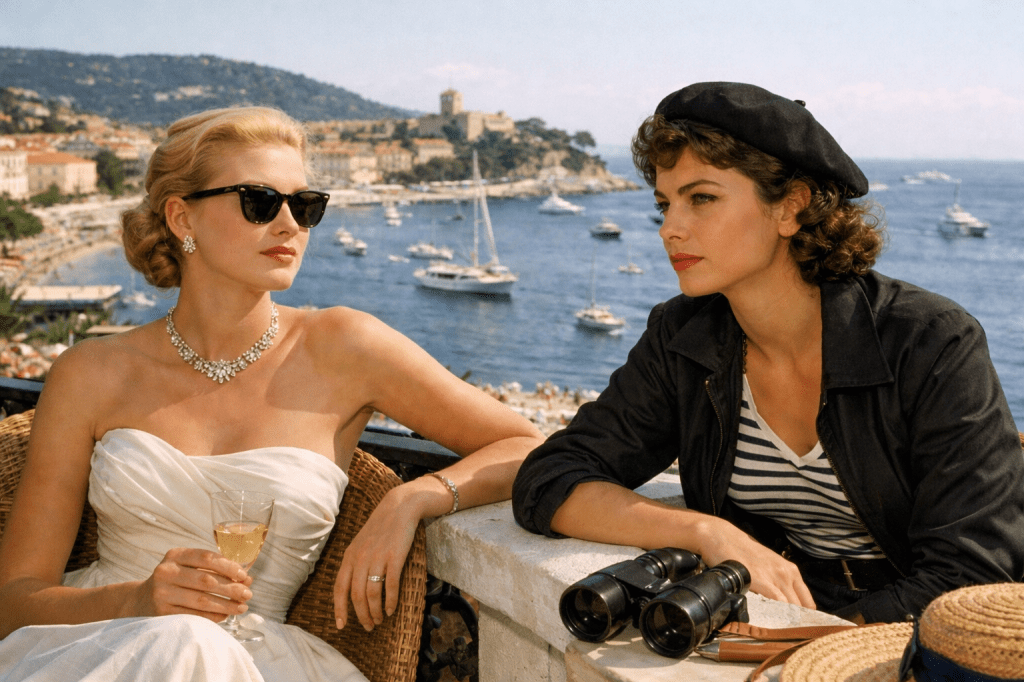
Two Women, One Masquerade in ‘To Catch a Thief’
—
Often remembered as light glamour, To Catch a Thief reveals something sharper when viewed through its women. Frances Stevens and Danielle Foussard navigate spectacle not as decoration, but as strategy—reading, testing, and choosing within a masquerade that rewards perception over performance.
-
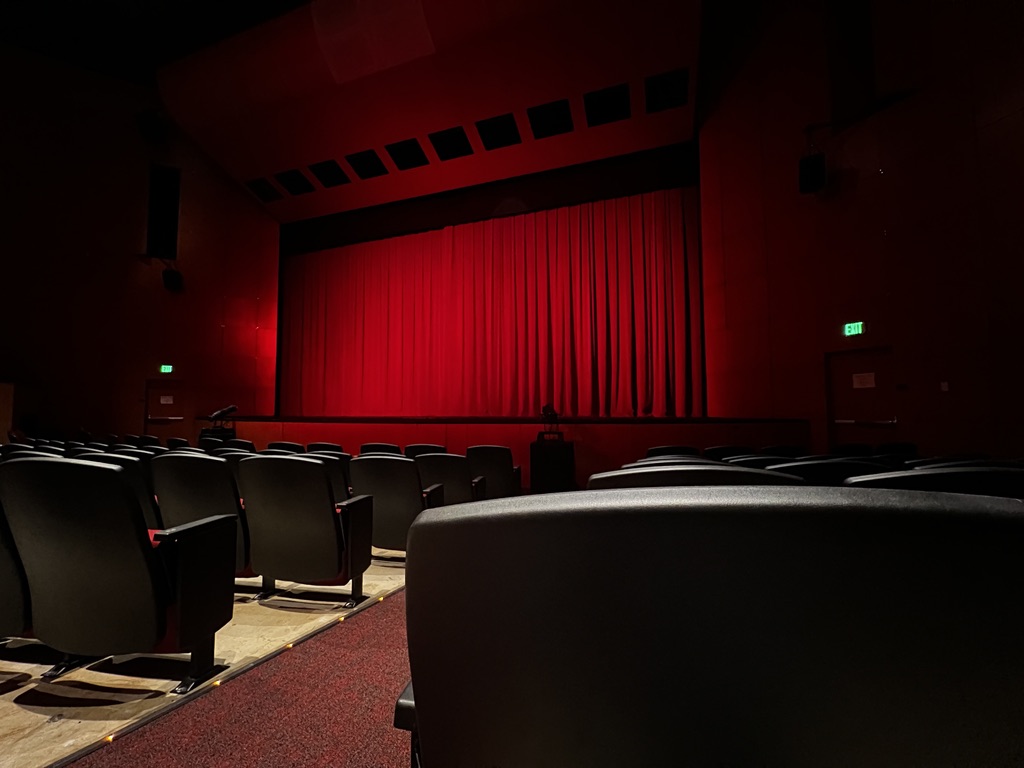
A Careful Telling: Peter & The Wolf
—
A red curtain, a modest stage, and Prokofiev’s Peter & The Wolf carried through recorded narration and careful choreography. Performed by a cast composed primarily of girls, Northwest Dance Theatre’s April 2025 staging felt steady, sincere, and part of a story that continues to travel.
-

‘Gondola’: When Language Is No Longer Required
—
“Gondola” unfolds without dialogue, explanation, or urgency. Meaning emerges through repetition, attention, and shared silence rather than declaration. The film treats intimacy as something sustained quietly—built through presence instead of performance—and suggests that some connections deepen most honestly when they are not asked to explain themselves.
-
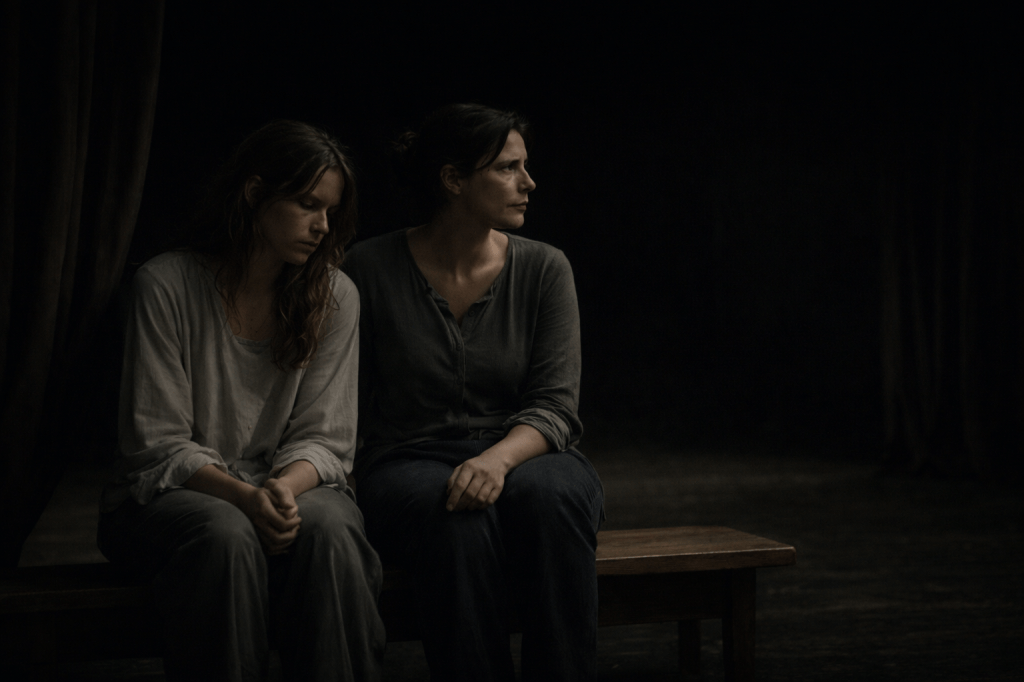
‘Othello’ and the Age of Whispers: Women’s Voices in the Noise of Social Media
—
Shakespeare’s “Othello” shows that ruin is born not of proof but of persuasion, not of silence but of refusal to listen. Online, too, the chorus favors rumor over truth, leaving women’s voices—like Desdemona’s and Emilia’s—resonant yet unheard until the curtain falls.
-

Written in Departure: Vita to Virginia, 1926
—
At a fundraising edition of Letters Live, Marisa Abela gives voice to Vita Sackville-West’s 1926 letter to Virginia Woolf—written in transit, in absence. What emerges is not spectacle, but preservation: a private letter carried forward across a century into the present.
-

When Women Are Allowed to Be Messy
—
Some moments don’t ask to be improved or explained. They simply happen. This Cultural Note reflects on women, physical messiness, and the rare permission to exist uncomposed—without performance, judgment, or narrative repair.
-
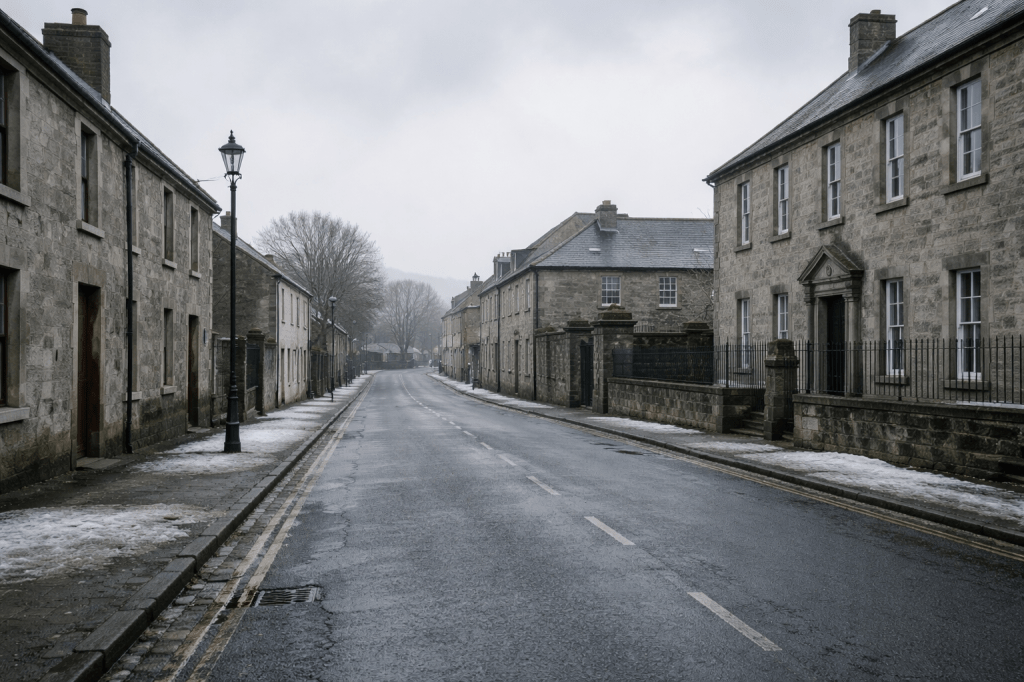
‘Small Things Like These’: Witness Is Not Neutral
—
‘Small Things Like This’ is not about heroism or revelation. It is about what happens once something has been seen—and how silence, routine, and politeness keep harm intact. The film suggests that witness is never neutral, and that attention itself carries responsibility, whether or not we choose to act.
-
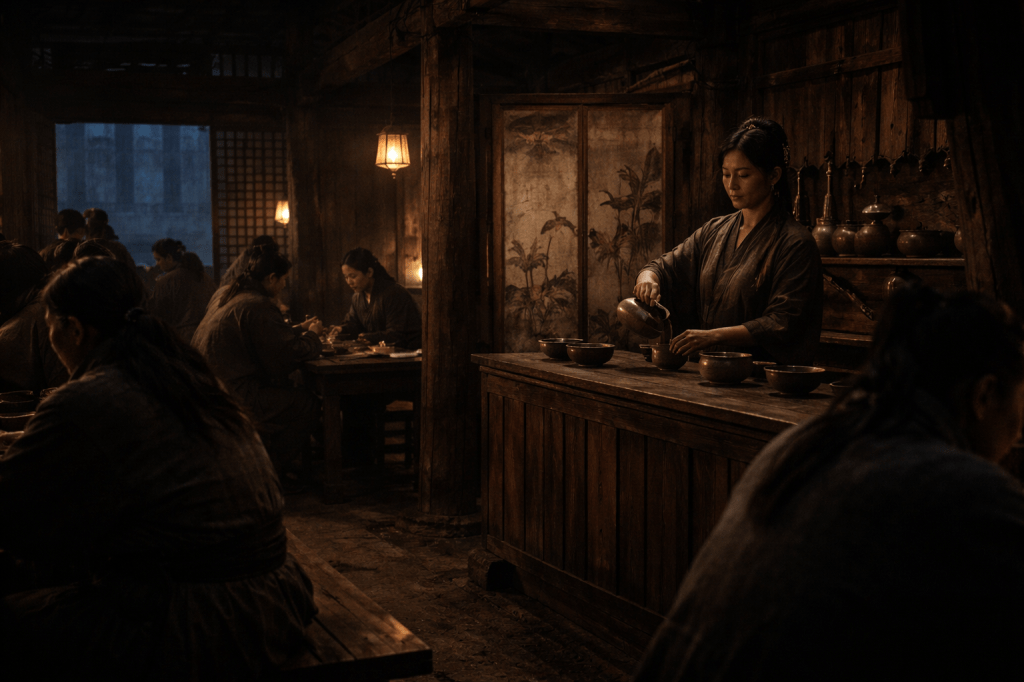
The Inn as a Battleground: Spaces of Suspense in “The Fate of Lee Khan”
—
In “The Fate of Lee Khan”, a remote inn becomes a stage for intrigue, deception, and survival, driven by an extraordinary cast of all-women heroes. Sharp-witted, resilient, and underestimated, they navigate a dangerous web of secrets and power. King Hu’s vision transforms the confined space into a masterclass in suspense and strength.
-
On Withholding, and Letting a Story Remain
—
This reflection is not an explanation of a story, but a record of restraint. It considers what it means to withhold, to listen without claiming, and to let a story remain where it belongs—untouched by urgency, ownership, or instruction.
-
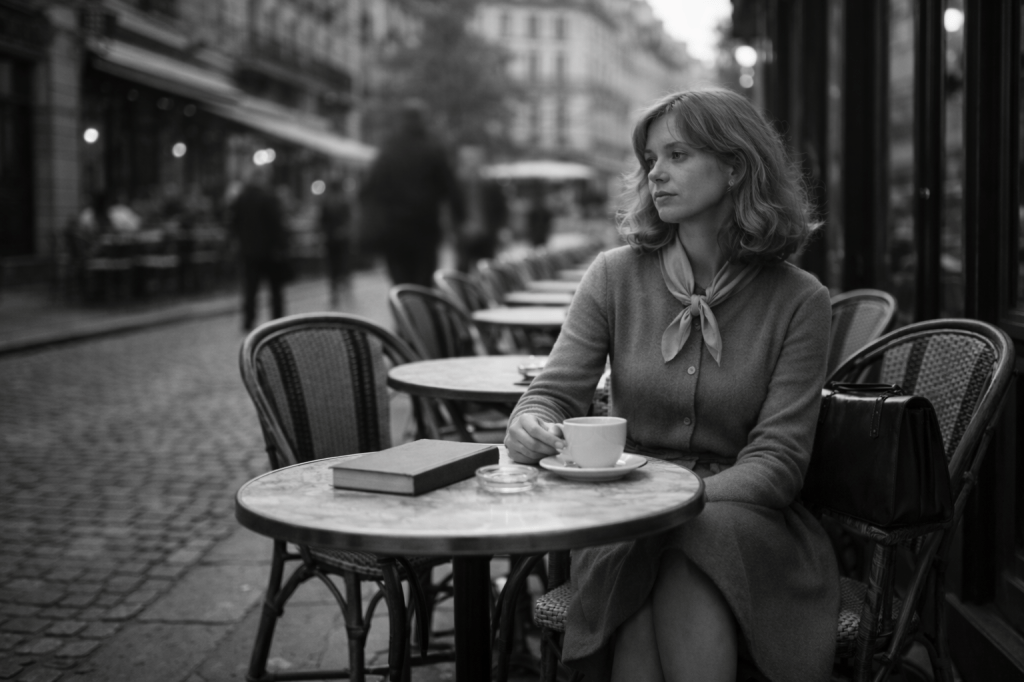
The Timeless Anxiety of Waiting: ‘Cléo’ and the Art of Existential Cinema
—
In Agnès Varda’s “Cléo de 5 à 7” (Cléo de 5 à 7), the common experience of waiting is elevated into a compelling examination of self-identity, death and self-knowledge. With Cléo’s Parisian quest, Varda sculpts a tale so personal and deep it continues to challenge and amaze audiences for generations.
-
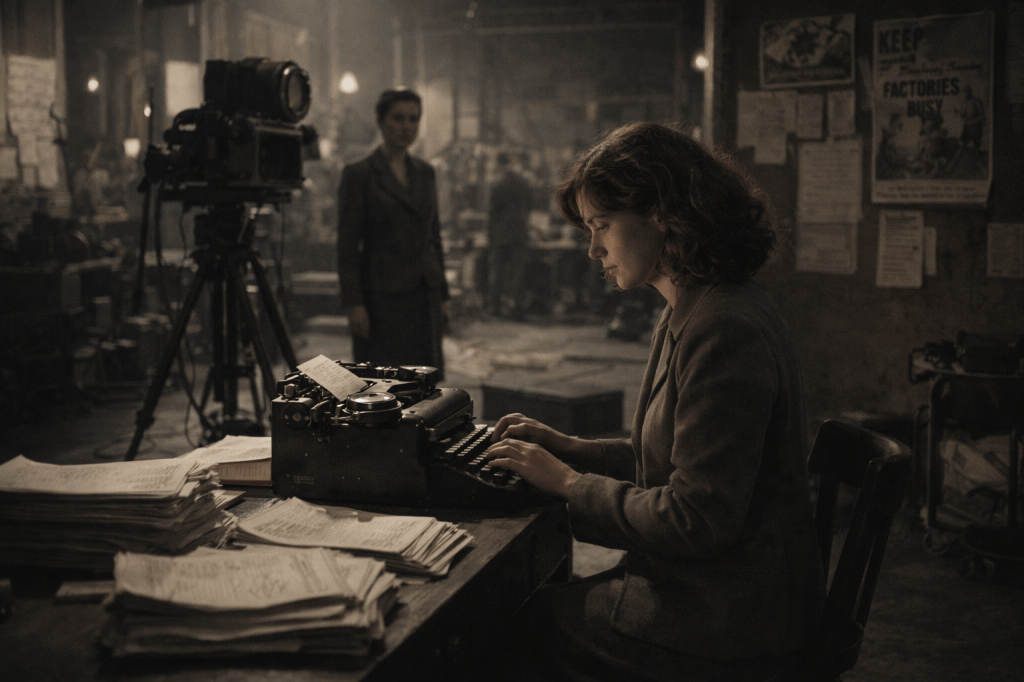
‘Their Finest’: Shedding Light on Wartime Filmmaking and Women
—
Lone Scherfig’s “Their Finest” highlights the struggles and triumphs of women in Britain wartime filmmaking, revealing how they fought for recognition in a male-dominated industry while shaping stories that inspired a nation.
-
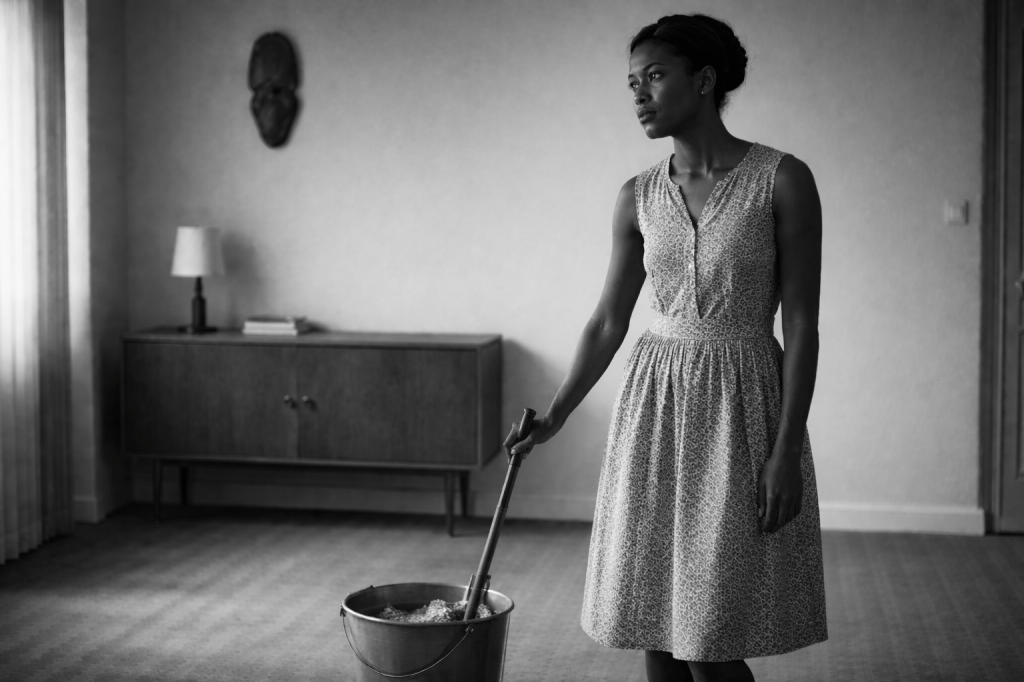
The Weight of a Glance: How ‘Black Girl’ Speaks Through Visuals
—
In Black Girl (1966), Ousmane Sembène crafts a quietly devastating portrait of isolation, resilience, and identity. Through Diouana’s gaze and stark surroundings, the film reveals the weight of cultural displacement and the silent strength of a woman navigating erasure. Explore how silence and imagery tell her story.
-
Lilith: On Leaving Without Return
—
Lilith does not argue her absence. She does not ask to be understood, redeemed, or retrieved. She leaves, and the story invents monsters to explain the silence she refuses to fill. There is no return, commentary, reconciliation, or apology offered here.
-
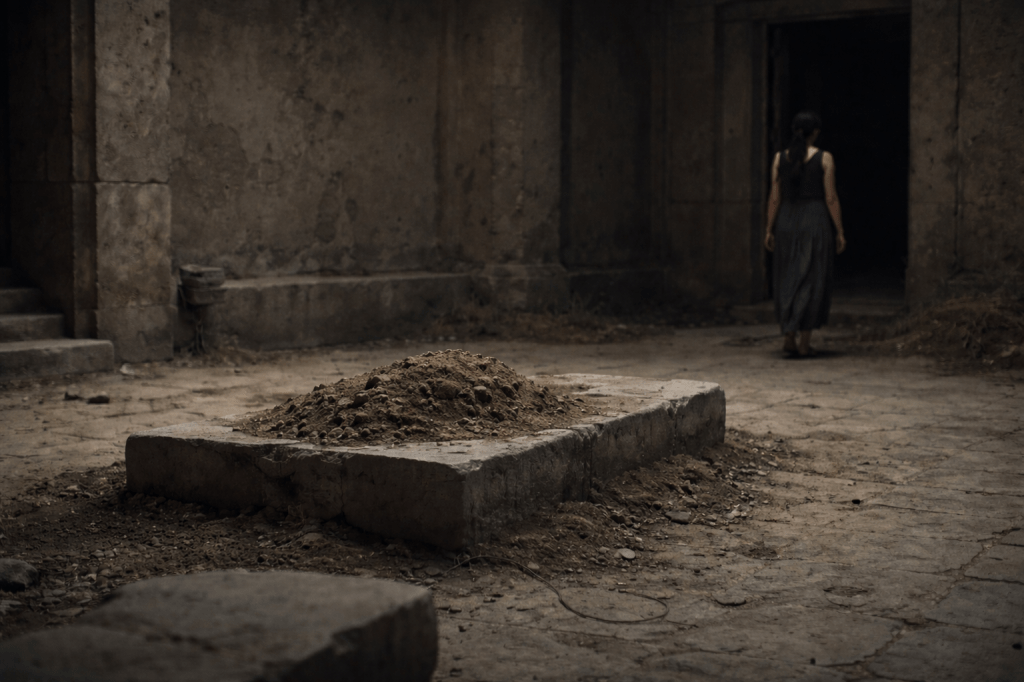
Antigone: Refusal Without Appeal
—
A cultural reading of Antigone as a narrative of ethical refusal rather than tragic defiance. Focused on action taken without appeal, this entry examines why Antigone’s decision requires no recognition to remain valid — and why the state collapses when confronted with a woman who will not negotiate legitimacy.
-
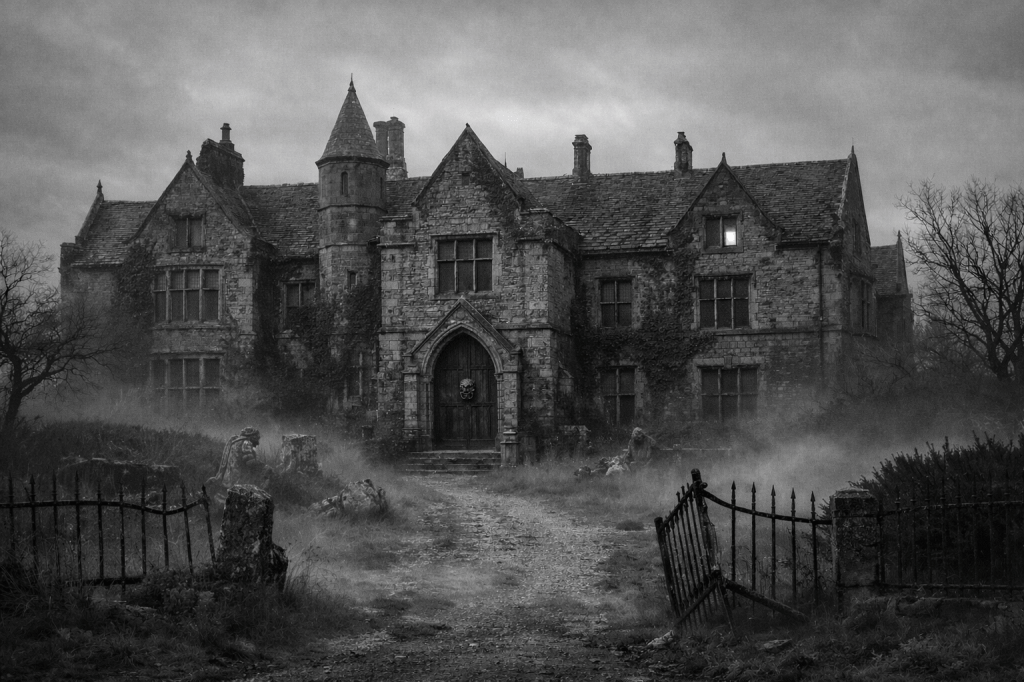
“The Haunting”: Fear, Vulnerability, and the Shadows Within
—
Robert Wise’s “The Haunting” (1963) is a masterclass in psychological horror, blurring the line between supernatural terror and Eleanor Lance’s emotional turmoil. Explore the oppressive force of Hill House, Theodora’s rebellious defiance, and the film’s haunting ambiguity that compels us to confront the shadows within ourselves.
-
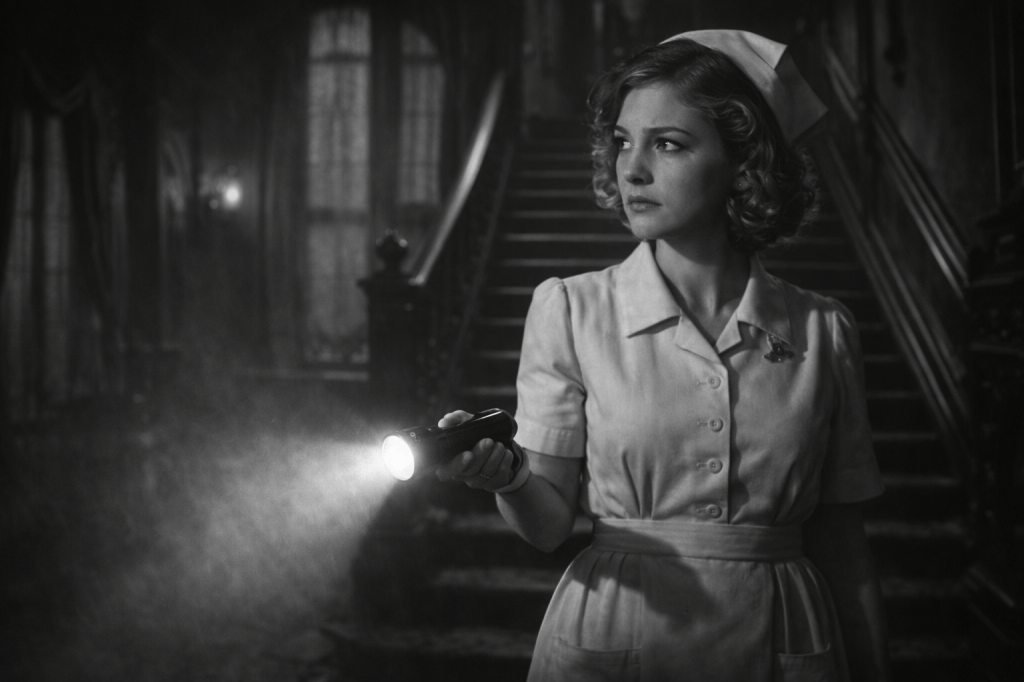
How ‘Miss Pinkerton’ Sneaks Feminist Vibes Into a 1930s Mystery
—
Pre-Code Hollywood let women lead. In “Miss Pinkerton”, Joan Blondell’s savvy Nurse Adams takes charge in a moody mystery that’s more feminist than you’d expect.
-
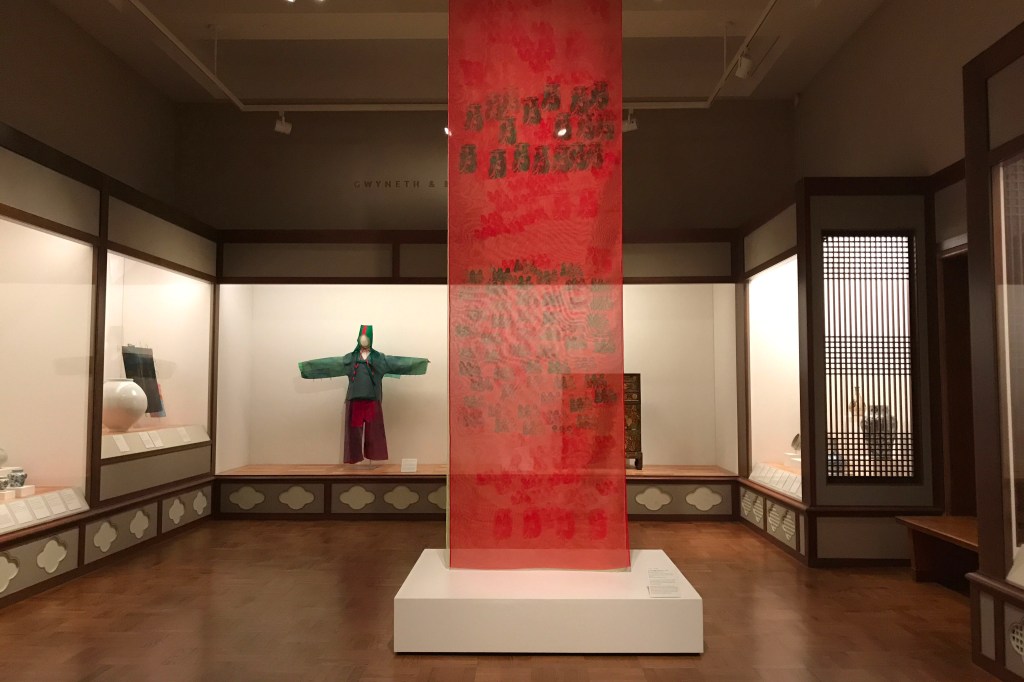
The Heartbeat of the Stage: Kabuki and the Art of Remembrance
—
Recovered from a quiet museum gallery, this reflection traces kabuki’s pulse across centuries—women erased, gestures preserved, performers remembered in paper and pigment—where theater refuses disappearance, carrying its heartbeat forward through drag, spectacle, and the soft endurance of memory itself onward.
-
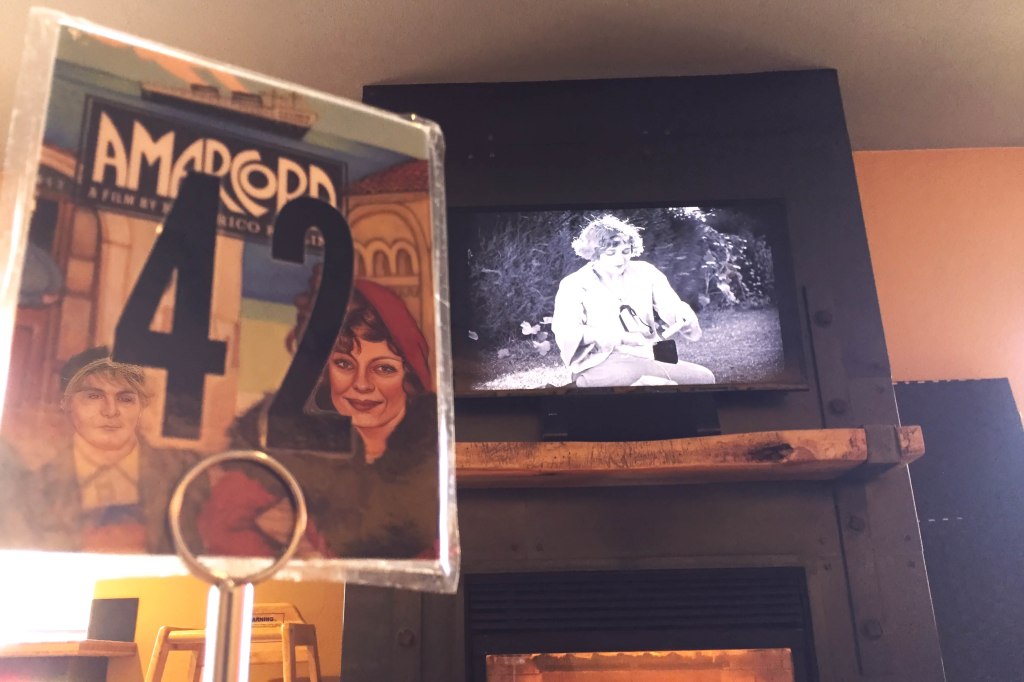
A Room, Holding Cinema
—
A café at midday. A silent film passing on a screen. Nothing is watched closely. The image remains not for what was shown, but for how cinema lingered as atmosphere—present, unannounced, and allowed to persist within an ordinary room.
-

Before the Archive Knew Itself: ‘Murder on the Nile’ (2017)
—
An archival note from February 2017, preserving not narrative but atmosphere: a stage photographed before performance, holding warmth, geometry, and quiet expectancy. The story has receded; what remains is structure, light, and stillness—retained before the archive had a name.
-
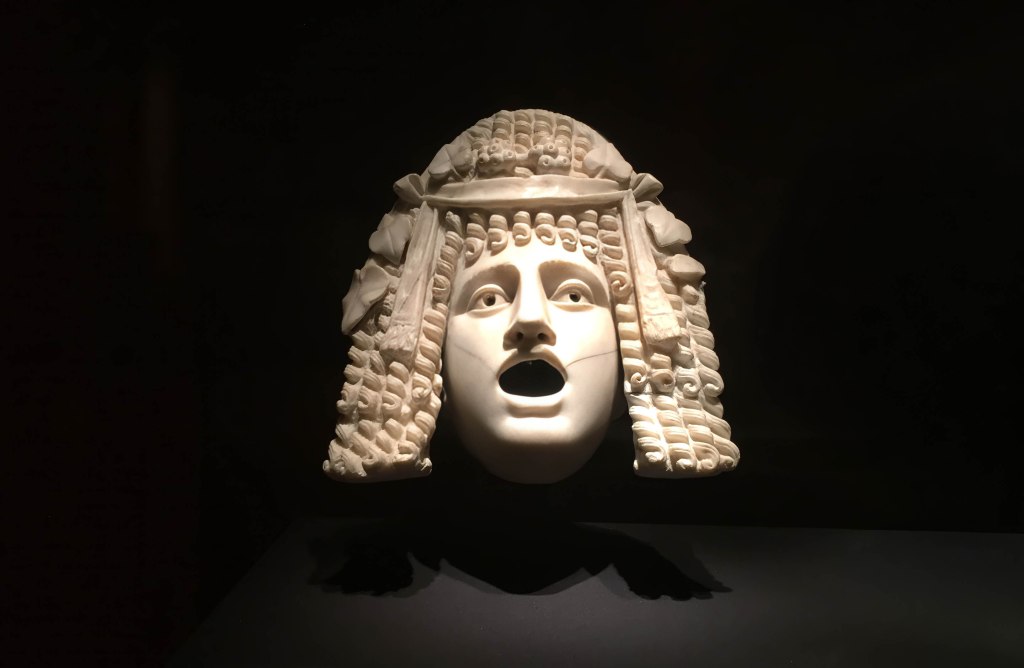
The Mask That Survived the Eruption
—
Pompeii is remembered for what the volcano preserved. Less often for what was already missing. Among the ruins, one marble theater mask endures — a woman’s face carved for performance, her voice carried forward, never allowed to be her own.
 Scott Bryant