
Buena Vista Street — Disney California Adventure
Anaheim, California
October 2018
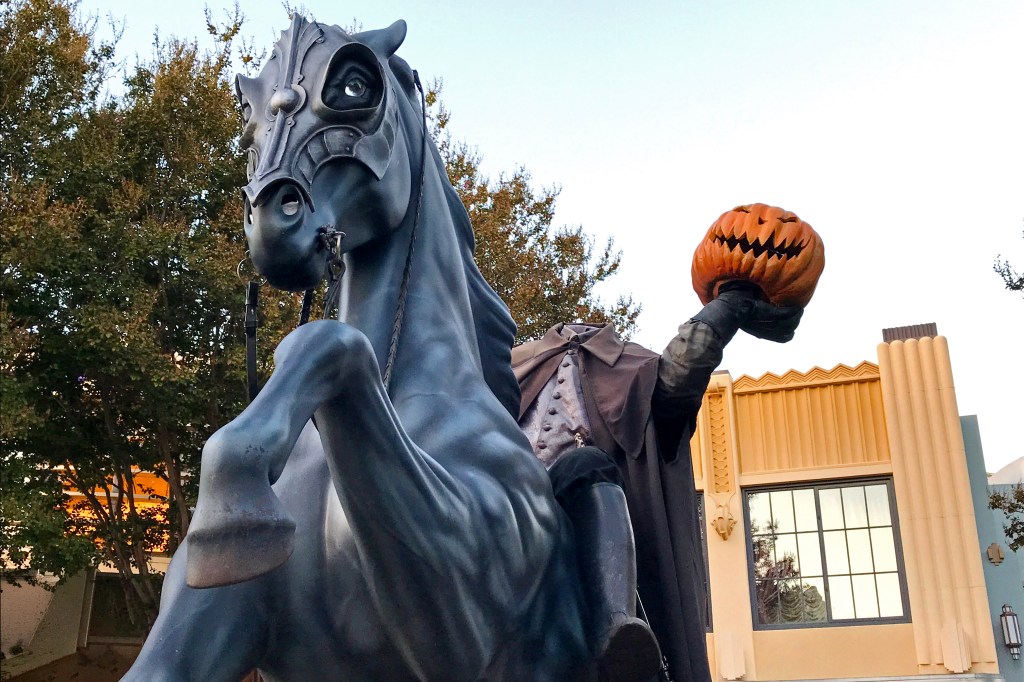
On Buena Vista Street near Carthay Circle, a seasonal installation of the Headless Horseman stands in open view, removed from any narrative setting.
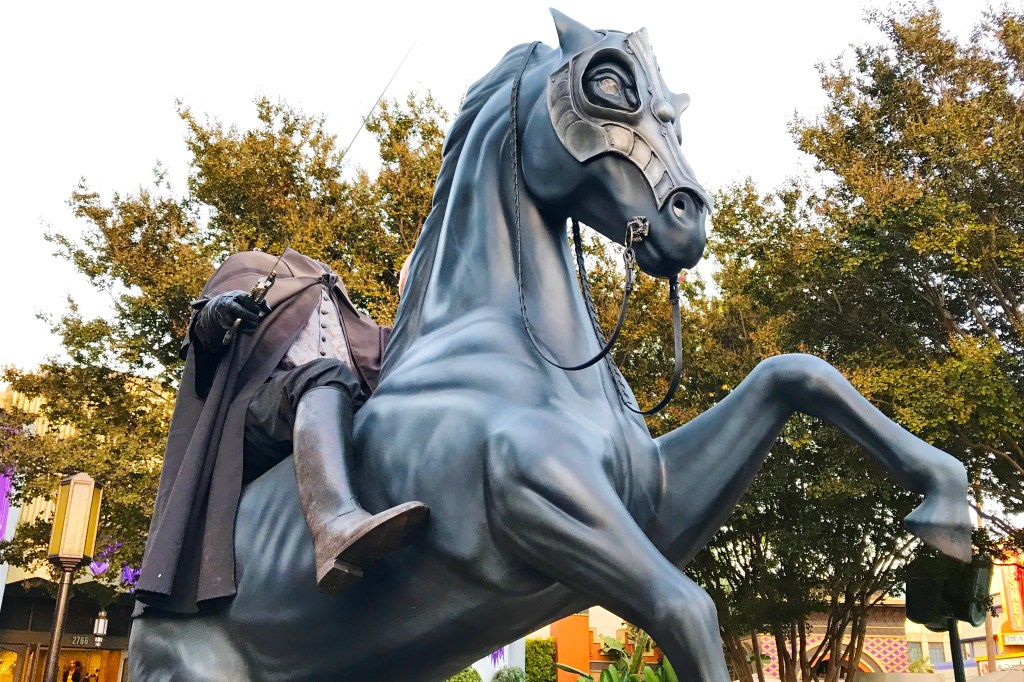
The horse rears above the pavement, its motion fixed. A sword lifts into the air while a jack-o’-lantern burns where a head should be. The figure holds its form even in full daylight.
It is not encountered in darkness. It is not introduced through sequence. Nothing leads into it, and nothing follows. The figure is placed directly into view, without transition or containment.
The character originates in Washington Irving’s The Legend of Sleepy Hollow (1820), and remains widely recognized through Disney’s The Adventures of Ichabod and Mr. Toad (1949). In both, the rider emerges within a defined setting—roads, woods, and distance shaping how the figure is encountered.
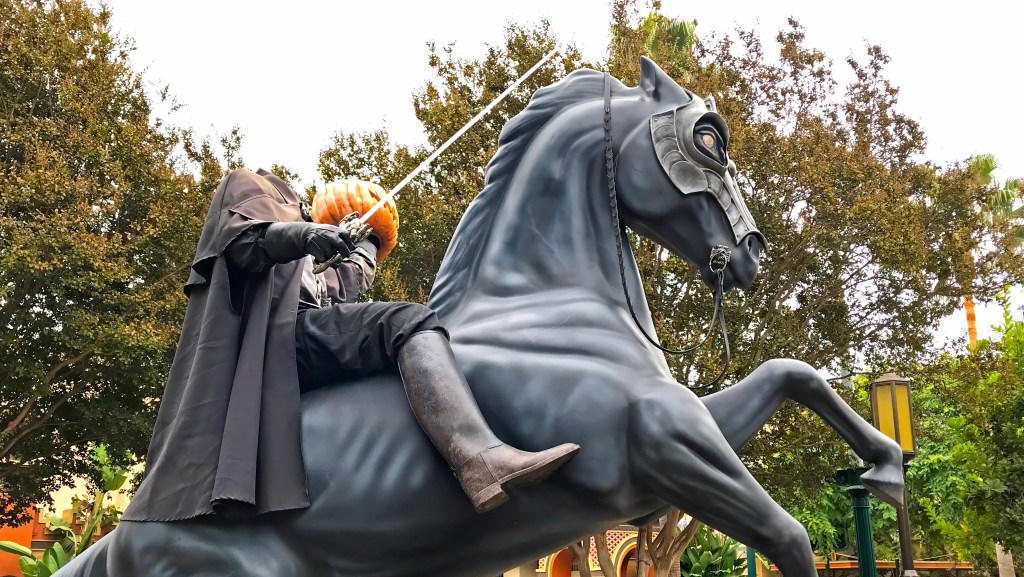
Here, that structure is absent.
The rider is no longer part of a narrative progression. It is held in a fixed position, separated from the conditions that produced it. The environment does not support the image, yet the image remains legible.
Visitors move past without interruption. The plaza continues to function as it would without it. The figure does not alter the space. It occupies it.
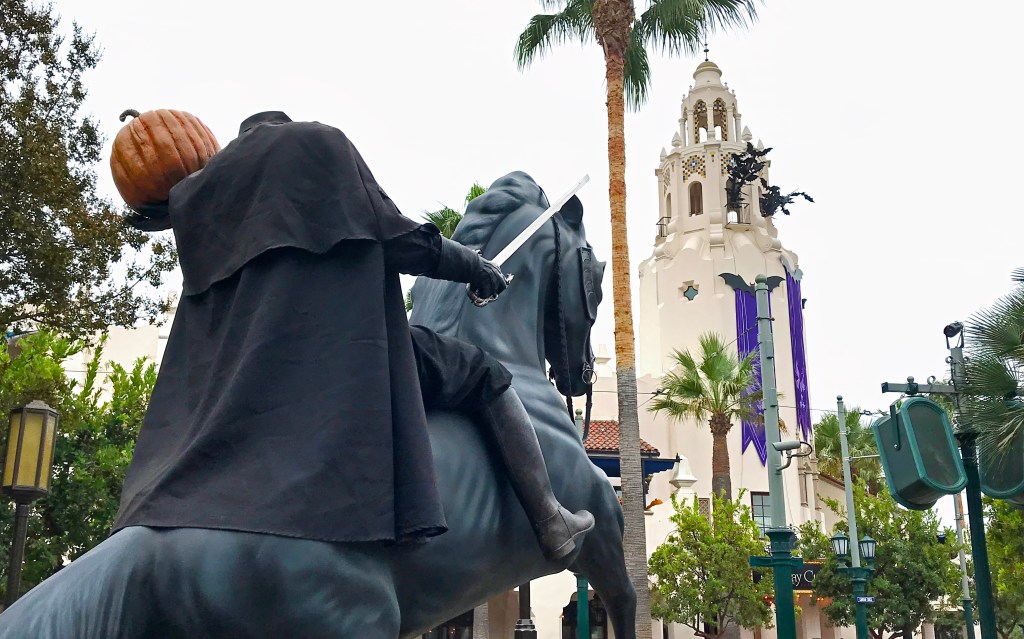
What remains is not the story, but the form.
The posture, the gesture, and the absence where a head should be continue to register without reinforcement. The figure does not require its original setting to hold its meaning.
It stands in open view, complete as it is.

You must be logged in to post a comment.