
The Seer’s Warning
Written & Told by
Mara Whitaker & Ellen Whitaker
Visuals & Imagery by
Mara Whitaker, Emma Stratton,
Audra Ellison, Stella Prescott, & Scott Bryant
With care and reverence, their story is shared by
Scott Bryant at the request of Mara Whitaker and Ellen Whitaker.
Warnings Ignored
I wake with a sharp breath, the remnants of the dream clinging to me like cold air that never quite leaves the lungs.
For a moment, I don’t move. I lie there in the dim gray of early morning, staring at the ceiling, trying to separate what I saw from what is real. The shapes are still there behind my eyes—the mirror, cracked clean through, Ellen standing in it without a reflection, and something else behind her, something I couldn’t quite name.
It lingers, just out of reach, as though it followed me out of the dream and into the room.
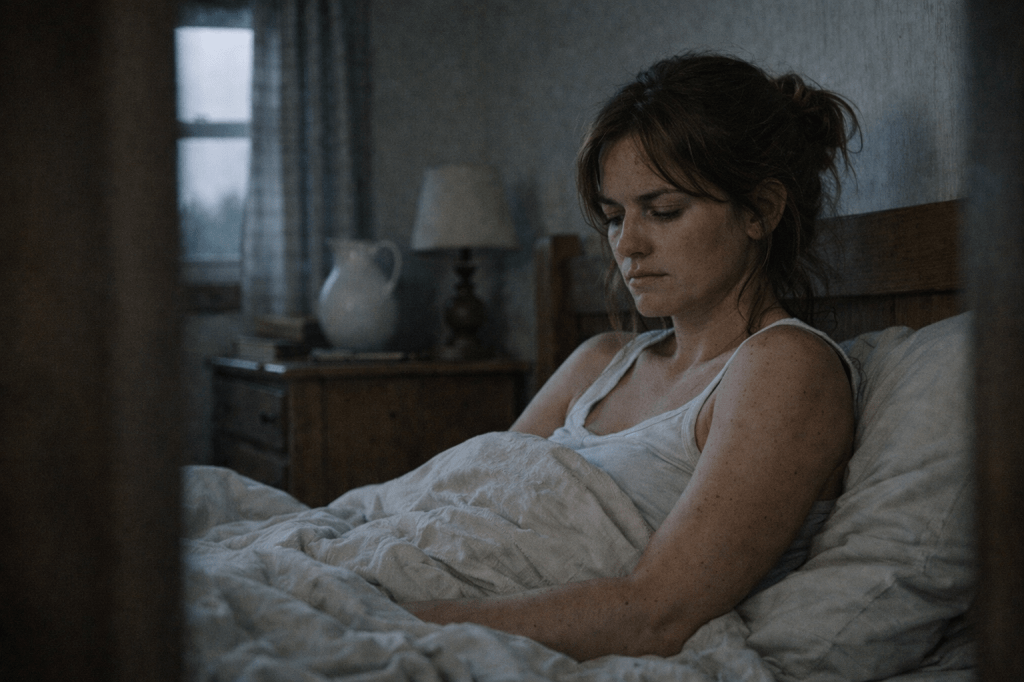
I sit up slowly, pressing my palms against my eyes until the images dull.
“Just a dream,” I tell myself, though the words don’t settle the way they should.
Downstairs, I find Ellen at the stove, her movements steady and automatic, like she’s been awake for hours already. The sound of the spoon scraping the pot is the only thing breaking the quiet.
“Morning,” she says, without turning.
I hesitate in the doorway, the words catching before I can stop them.
“I had another dream.”
The spoon doesn’t pause.
“It wasn’t just the storm this time,” I continue, stepping further into the room. “I saw you. And Agnes. The mirror—”
“Mara.” Ellen turns sharply now, her voice cutting through the air. “Not today.”
The force of it stops me, but the feeling in my chest doesn’t ease.
“It felt different,” I say, quieter now. “Like it was already happening.”
Ellen exhales, running a hand across her face before turning back to the stove.
“We’ve got fences down on the north side,” she says. “And the barn roof isn’t going to hold if that wind picks up the way they said it might.”
“I’m not talking about the weather.”
“I am.”
There’s no anger in her voice this time, just a tired certainty that leaves no space for anything else.
“If I stop to think about every bad feeling that comes through here, nothing gets done,” she says. “And right now, we don’t have that kind of time.”
I watch her for a moment, seeing the way her shoulders hold tension even when she’s standing still.
“I’m not trying to make things worse,” I say. “I just—”
“Then help me keep things from falling apart,” she replies, not unkindly, but without turning.
The words settle between us, firm and final.
I nod, even though she can’t see it.
“Okay.”
The Weight of the Land
Outside, the air feels wrong.
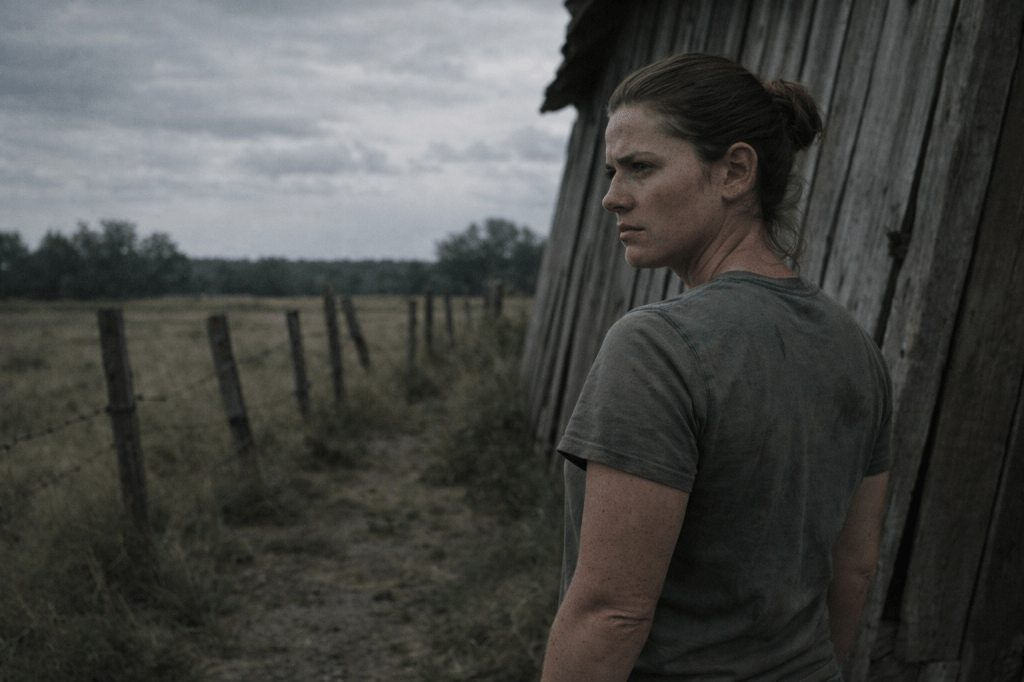
The sky hangs low, a heavy gray pressing down over the fields, and the wind moves in uneven pulses, like it hasn’t decided what it wants yet. The barn leans more than it did last week, the fence line sagging where the posts have started to give.
Agnes sits at the edge of the well, her hands folded loosely in her lap, her gaze fixed somewhere beyond the fields.
She doesn’t look up when I approach.
“You believe me, don’t you?” I ask.
Her eyes narrow slightly, though she doesn’t turn.
“About the storm?”
“About everything.”
The wind stirs the loose dirt at our feet, lifting it just enough to make the ground feel unsettled.
Agnes is quiet for a long moment.
“Dreams don’t always lie,” she says finally. “But they don’t always tell the truth either.”
“This one felt different.”
She tilts her head slightly, as though considering that.
“Maybe it’s not the dream that changed,” she says. “Maybe it’s you.”
I frown, unsettled by the way she says it, like she already knows something I don’t.
“Sometimes they’re warnings,” she adds.
“Warnings of what?”
Agnes doesn’t answer right away. Her gaze drifts further out, toward the distant line where the sky seems darker than the rest.
“You ever wonder why I stayed here so long?” she asks.
I blink, caught off guard.
“I figured you just didn’t have anywhere else to go.”
A faint smile touches her lips, though there’s no humor in it.
“I had places,” she says. “I just didn’t want to go back to them.”
The wind picks up again, sharper this time.
“I thought staying here would keep things quiet,” she continues. “But nothing stays buried the way you want it to.”
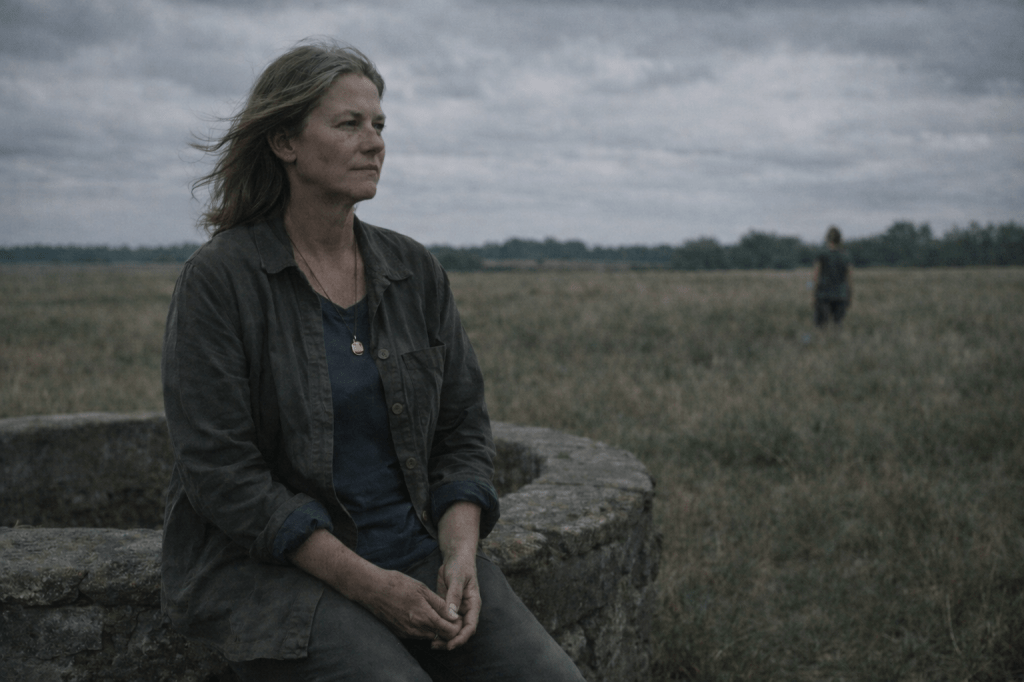
Something in her voice settles into me, heavier than the air.
The Dream Returns
That night, the wind doesn’t ease.
It presses against the house in long, steady waves, rattling the windows just enough to make sleep feel thin.
When it comes, it takes me quickly.
I’m standing in the field again.
The sky is wrong—too dark, the clouds moving faster than they should, folding into themselves like something being pulled tight. The air feels heavy, charged, and I can hear the low roll of thunder somewhere beyond the hills.
And then I see it.
The shape stands ahead of me, shifting at the edges, as though it’s not entirely separate from the storm itself. It moves with the wind, not against it, its outline bending and reforming in ways that don’t hold long enough to name.
For a moment, it looks like a person.
Then it doesn’t.
My breath catches.
“What are you?” I ask, my voice barely carrying in the air.
The wind moves through it, and for an instant, I hear something beneath it—a voice that isn’t quite a voice.
The land remembers.
The words settle into me like something I’ve heard before.
I take a step forward, the pull in my chest stronger now.
The shape shifts again, and in the brief space before it dissolves, I see something I recognize—not clearly, not fully, but enough to feel it.
Something familiar.
Then the wind surges, the sky collapses into motion, and I wake with my heart racing, the sound of it still echoing in my ears.
The Storm Arrives
By evening, the sky has darkened to the point where it feels like night has come too early.
The wind no longer pulses—it moves with purpose now, steady and insistent, bending the trees along the ridge and pulling at anything not fixed firmly in place.
“We need to get to the cellar,” I say, standing by the window.
Ellen doesn’t turn.
“It’s too late for that.”
I stare at her. “Too late for what?”
“For pretending we can outrun this,” she says, her voice quiet but steady.
Something in the way she says it makes the room feel smaller.
“I’ve been holding this place together for years,” she continues, her hands tightening slightly against the table. “And it’s still slipping.”
“Then we don’t stay here,” I say. “We go downstairs. We wait it out.”
She lets out a breath, long and uneven.
“You think this is just about the storm?” she asks.
Before I can answer, the door behind me creaks open.
Agnes
“The storm’s about to hit,” Agnes says. “Are you coming, or not?”
She stands in the doorway, the wind pulling at her coat, her expression unreadable.
“You knew,” I say. “About everything.”
“Of course I did,” she replies.
“Why didn’t you tell me?”
“What would it have changed?”
Ellen turns. “You’re leaving.”
“After this passes,” Agnes says. “Yes.”
“You shouldn’t stay either.”
“We’re in this together,” I say.
Agnes looks at me, her gaze steady.
“No,” she says quietly. “We never were.”
The wind surges.
“I thought staying here would help me forget,” she continues. “But some things follow you.”
“Forget what?”
“Eliza.”
The name settles heavily.
“The storm took her,” Agnes says. “I couldn’t stop it.”
A pause.
“After that, I started seeing things.”
She glances at me. “Same as you.”
The room feels smaller.
“I stayed here thinking I could outlast it,” she says. “I can’t.”
“Then come with us,” I say. “We can still get to the cellar.”
She shakes her head.
“You don’t outrun something like this.”
The wind pushes through the doorway, cold and insistent.
“I’ve been standing in it for years,” she says. “I just didn’t realize it.”
She steps back.
“Agnes—”
“Go,” she says.
Her hand rests briefly against the locket at her throat.
“Take care of her.”
A beat.
“And don’t run.”
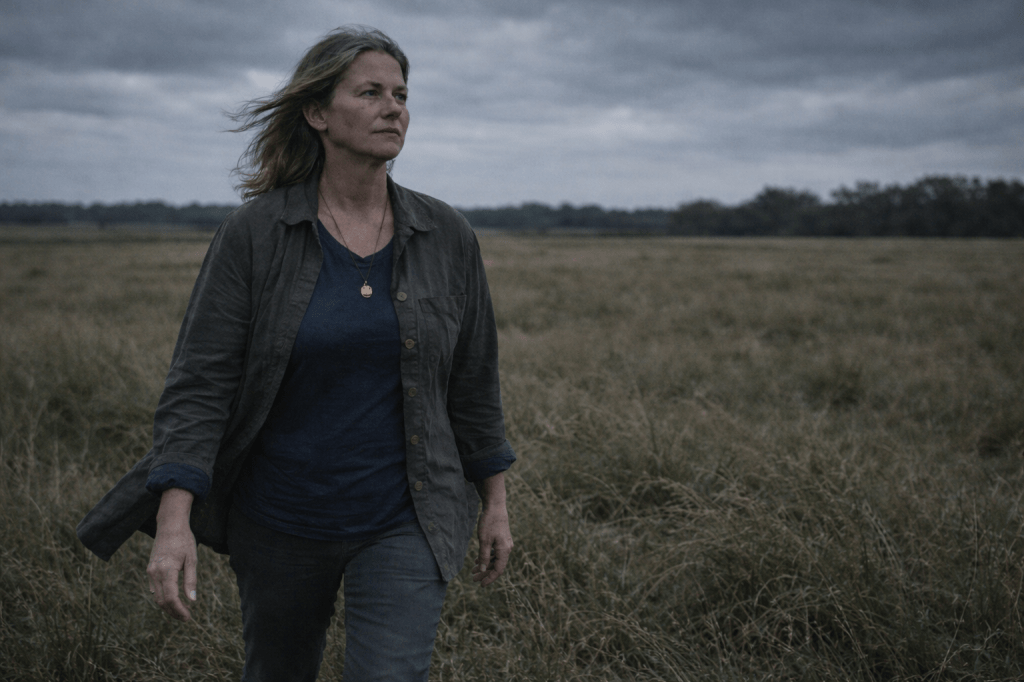
She turns toward the storm, moving into it as though it has been waiting for her all along.
For a moment, I see it again—that shifting shape in the wind—but this time it doesn’t feel separate from her.
Then the storm takes her.
The Cellar
Ellen pulls me back, and this time I don’t resist.
We run.
The wind tears at us, the barn groaning behind us as something breaks loose and vanishes into the dark.
The cellar door gives after a hard pull, and we fall inside as the storm crashes fully against the house.
For a while, neither of us speaks.
“We left her,” I say finally.
Ellen presses her hands against her face.
“She made her choice.”
Silence settles, heavy but not empty.
Outside, the storm rages.
Inside, something shifts.
Aftermath
Morning comes quietly.
The air smells of damp earth and something unsettled, like the land itself has been turned over and hasn’t quite settled back into place.
The barn is gone. The fence line is broken. The oak by the creek lies uprooted.
Ellen stands still for a long moment.
“It’s gone,” she says.
I step beside her.
“Not everything.”
She looks at me, something different in her expression now—not lighter, but clearer.
“We start again,” she says.
I nod.
The wind moves softly through the fields, no longer violent, just present.
“We plant tomorrow,” she says.
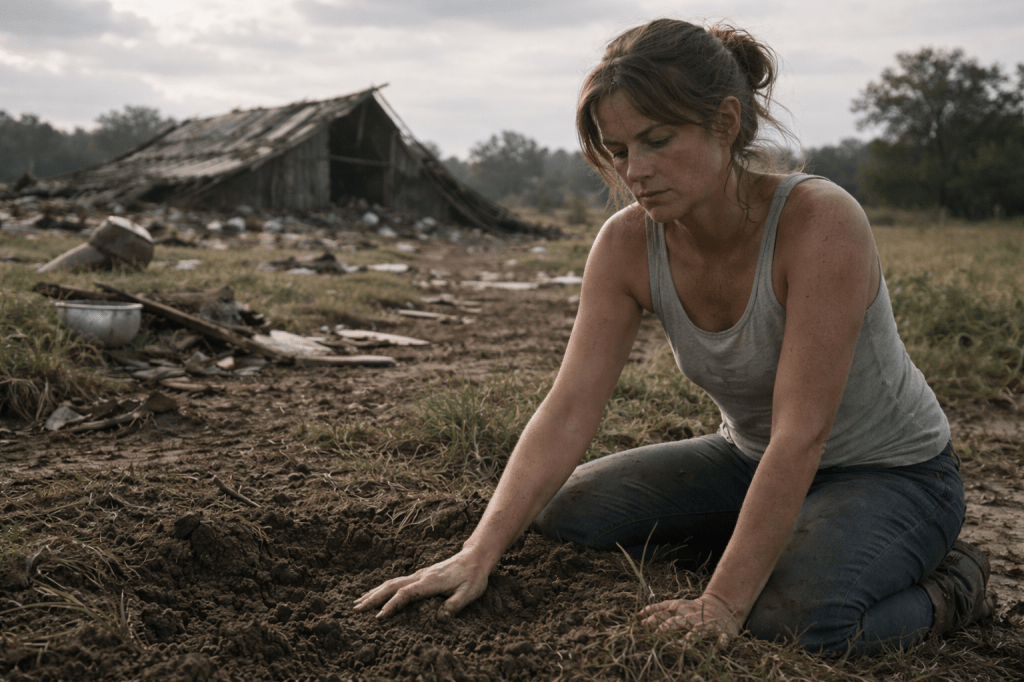
I kneel, pressing my hand against the soil. It’s still warm beneath the surface.
Only ask whether you’ll run, or stay and face what’s already begun.
The land remembers.
It always does.
And this time, we stay.
Dedicated in Loving Memory of Agnes Winters

You must be logged in to post a comment.