
The Weight of Quiet
Story Written & Told By
Mae Hollister
Discovered and Brought to Life by
Clara Jennings, Ivy Caldwell,
Lena Marshall, & Evelyn Brooks
Visuals and Imagery Created by
Clara Jennings, Ivy Caldwell,
Lena Marshall, Evelyn Brooks,
& Scott Bryant
With care and reverence, their story is shared by
Scott Bryant at the request of Clara Jennings, Ivy Caldwell,
Lena Marshall, & Evelyn Brooks
A Note from Clara Jennings, Ivy Caldwell, Lena Marshall, and Evelyn Brooks:
We are not traditional historians, nor do we claim to be. We are seekers of lost voices, forgotten narratives, and the truths buried in time. Over the years, we have uncovered stories from archives, journals, and records that might otherwise have been overlooked.
This is how we came across Mae Hollister.
Her story was found in a file, preserved but largely untouched. The pages carried a voice that had remained quiet for years—direct, unadorned, and difficult to ignore.
What follows is her account.
We have chosen to present it with as little interference as possible.
Clara Jennings – Story Curator & Writer
Ivy Caldwell – Researcher & Editor
Lena Marshall – Historical Archivist & Chronicler of Lost Voices
Evelyn Brooks – Visual Director & Storyteller of Forgotten Narratives
The world felt quieter than usual here in New England.
I had once loved silence—barefoot summers in Vermont, the hum of bees, the slow folding of daylight. Silence had meant safety then, a refuge I could breathe in.
But now, the quiet pressed closer. It wasn’t peace anymore. It felt like something was listening.. A hush that didn’t comfort—it watched. The kind that made you lower your voice, even when you were alone.
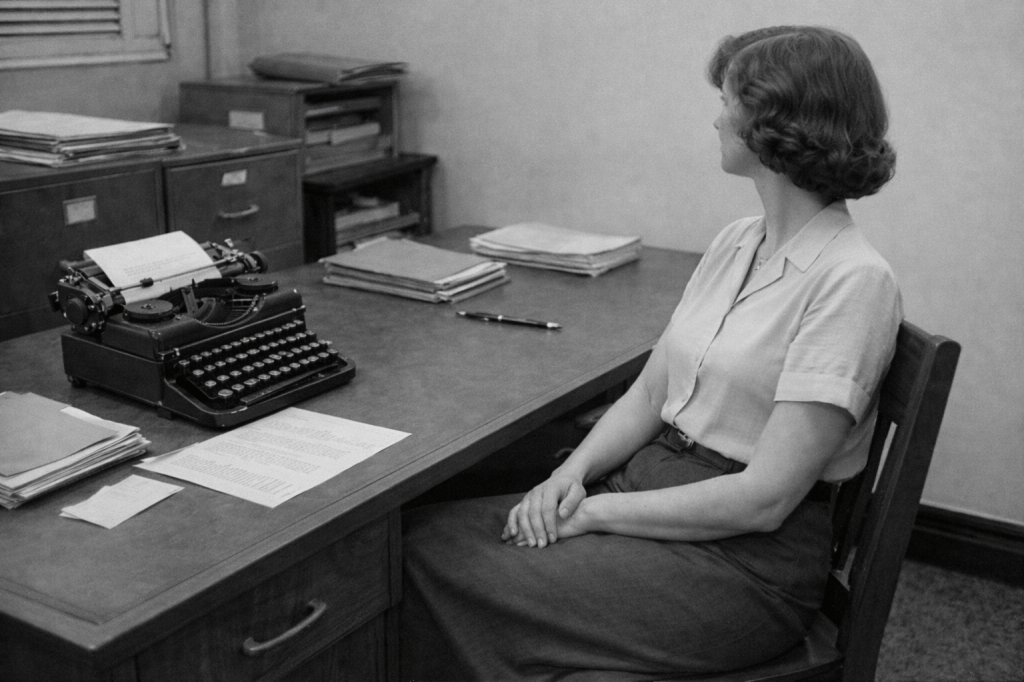
I, Mae Hollister, sat at my desk in the small administrative office, the rhythmic hum of the typewriter the only sound filling the air. The office was nearly empty—everyone off for lunch or running errands.
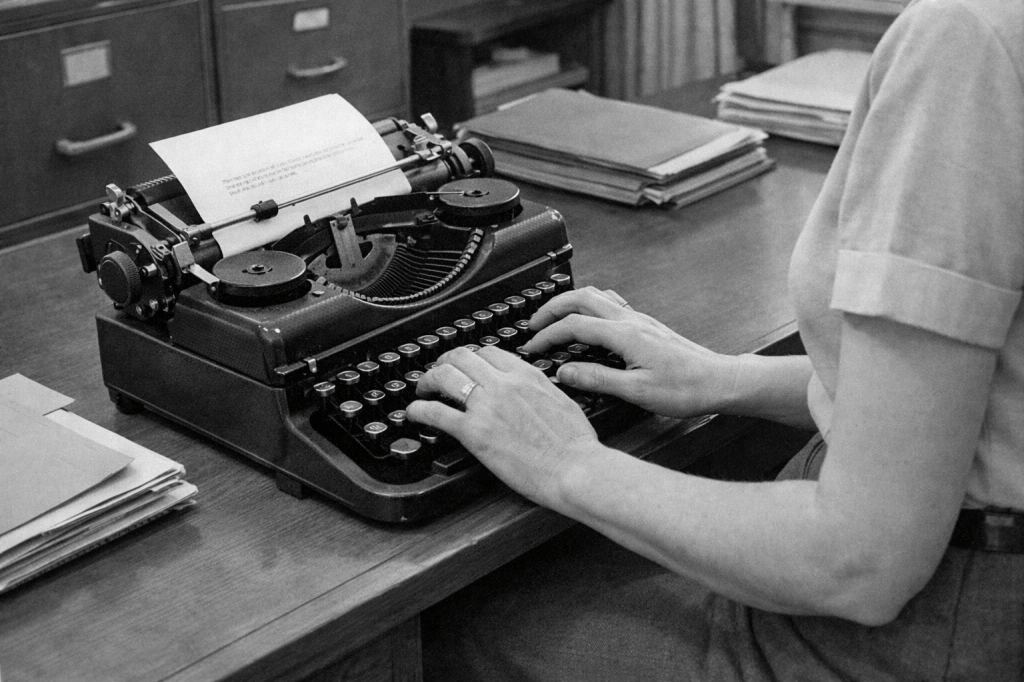
I’d spent the morning organizing old files, like I always did, stacking the papers into neat piles, each one more disorganized than the last. It was the kind of work I could lose myself in—the kind that didn’t ask questions or demand much of anyone. There was a comfort in it, a comfort in the routine. At least it was predictable. And it paid decently.
But today, I couldn’t shake the feeling that something was off. The kind of feeling that crawls up your spine and makes you check the locks on your door, even if you’re alone.
The Letter
That’s when I saw it—a letter.
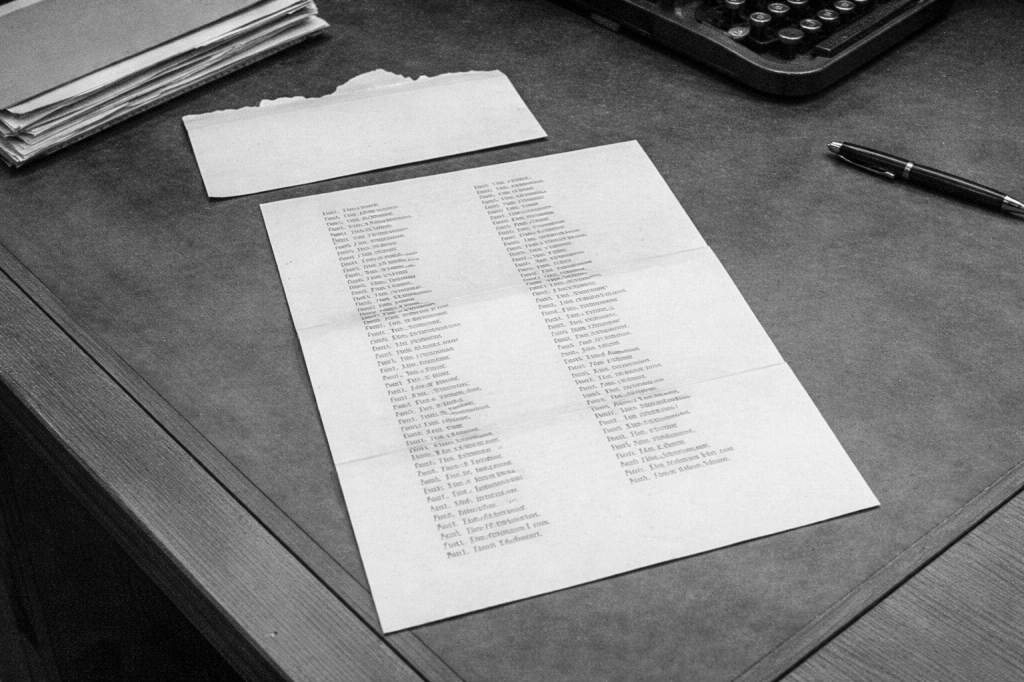
Thick. Folded. Waiting.
No return address. The handwriting slanted, almost trembling. Even the stamp sat crooked, as if afraid to be seen.
My name was written on the front. Not just “Mae Hollister” but my full name, middle initial included.
I hadn’t seen that kind of envelope since the fall of 1950.
Since the picnic. Since the book.
I remembered it suddenly, vividly. A book passed from hand to hand, quickly, too quietly. We were foolish then. Or maybe just fearless. But someone must have remembered.
The air in the room seemed to shift.
Whoever had sent this knew exactly who I was.
A cold weight settled in my stomach. I had worked in this office for years, sorting documents, filing away reports. Some of them mundane, some of them tied to quiet whispers of suspicion. I had always kept my head down, done my job, stayed out of trouble.
But was that enough? Had I ignored something—someone—who’d decided I wasn’t neutral after all? Everyone knew what names could do to a life now.
The whole country was on edge now. No one felt safe—not really.
My stomach turned, the same way it did when I saw someone walking a little too close, or heard someone talking just a little too loud in hushed tones. You’d think I’d be used to it by now—the way the world has become this giant web of suspicion, but it never got easier. It only got heavier.
I opened it slowly, my fingers not quite trembling but not as steady as I’d like. The names were what caught my eye first—names of people I knew.
Names of people I worked with, lived near. Ordinary people, just trying to make it through a day like anyone else.
I stared at the words, trying to make sense of them.
My stomach twisted. A list of names, marked for scrutiny. The kind of scrutiny I had tried to avoid for so long. Was this a trap—or the moment I’d already been pulled in?
I leaned back in my chair, feeling the walls closing in. It was as though the air had thickened. Was I being paranoid—or had my own past, those small and forgotten associations, already marked me? Had a few letters, a few conversations, been enough?
The list didn’t feel accidental. It felt decided.
Something had been building long before this letter arrived. I had ignored it then. I couldn’t ignore it now.
And yet, it felt like there was something about this letter that wasn’t right. Something about the way it arrived. Too easy. Too… calculated.
What’s the real game here?
I placed the letter back on the desk, my hands pressing it flat against the wood, as though the weight of it could somehow make the decision clearer. My loyalty to the country I grew up in—what was left of it—was something I’d held on to tightly. But this? This felt different.
Anne & Mary
What good was loyalty when the country you loved asked you to betray the people who made you love it?
I stood up, the letter still burning in my thoughts. As I moved papers mindlessly, I remembered a Sunday afternoon, years ago.
“Don’t let anyone see that book,” Mary had whispered once at a picnic, half-laughing, half-serious. “Just some old scribbles, but you never know these days.”
Back then, I had laughed too. But I didn’t laugh now.
My thoughts returned to the names. Mary, with her shy smile and restless eyes. Anne, who joked about everything but never politics. What if they had been more careful than me? What if they were innocent?
The letter lay flat on my desk like a trap I’d already triggered.
Mary, who always wore a smile that never quite reached her eyes.
Anne, who always knew just what to say to make you laugh, but never when the conversation got too serious.
Ordinary people—just like me.
But what if the list was real? What if these people truly were enemies of the state, in ways I couldn’t understand? What would that make me—someone who hesitated, unsure where her loyalties lay?
What does it mean to be loyal?
If I gave them what they wanted, I knew I would never be free again.
I couldn’t trust the system—how could I, when it demanded that I tear apart the very fabric of the community I had come to know?
But what was the alternative? To stand by and do nothing? To let people who might be a threat go free? My chest tightened, my breath catching in the back of my throat. Was I willing to gamble with the lives of people who might be dangerous? How could I even know? How could I trust my own judgment anymore?
That Night
I glanced at the phone.
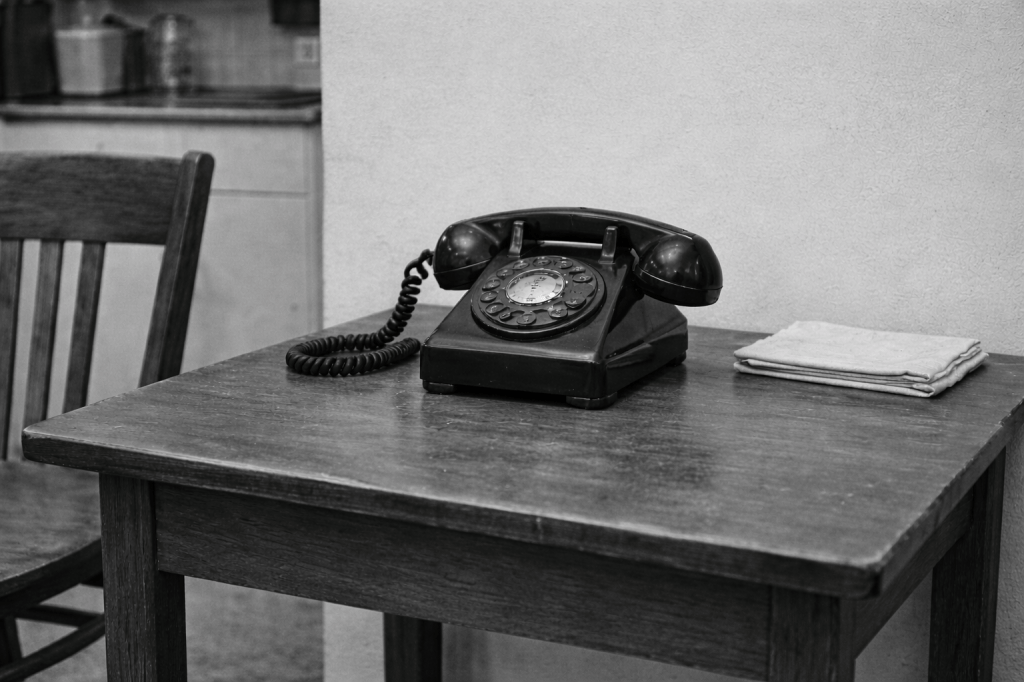
It sat there on the table, ordinary. But tonight, it felt like a portal to a world I didn’t understand. A call, a decision, an action that could change everything. One phone call, and the weight of this whole situation would be lifted, but at what cost?
And then, there was the other side of it—the list, the fear, the knowledge that if I didn’t act now, I might be putting my own future in jeopardy—and possibly a blacklisting by McCarthy or the HUAC. I could already see the headlines, the conversations people pretended not to have:
Mae Hollister, un-American sympathizer.
I could hear their voices, the accusations echoing in my mind, building and hard to ignore, drowning out everything else.
How easy it would be to turn the names in, to ease the burden from my shoulders, and let someone else decide their fate.
But could I live with it? Could I stand by knowing I might help destroy lives I barely understood?
I told myself I had chosen survival. But I couldn’t escape the thought that it might not have been the right thing.
The Decision
The phone sat there. I wanted to ignore it, to pretend none of this was happening. But that would not have changed anything.
I had made my decision.
My hand moved before my conscience could stop it.
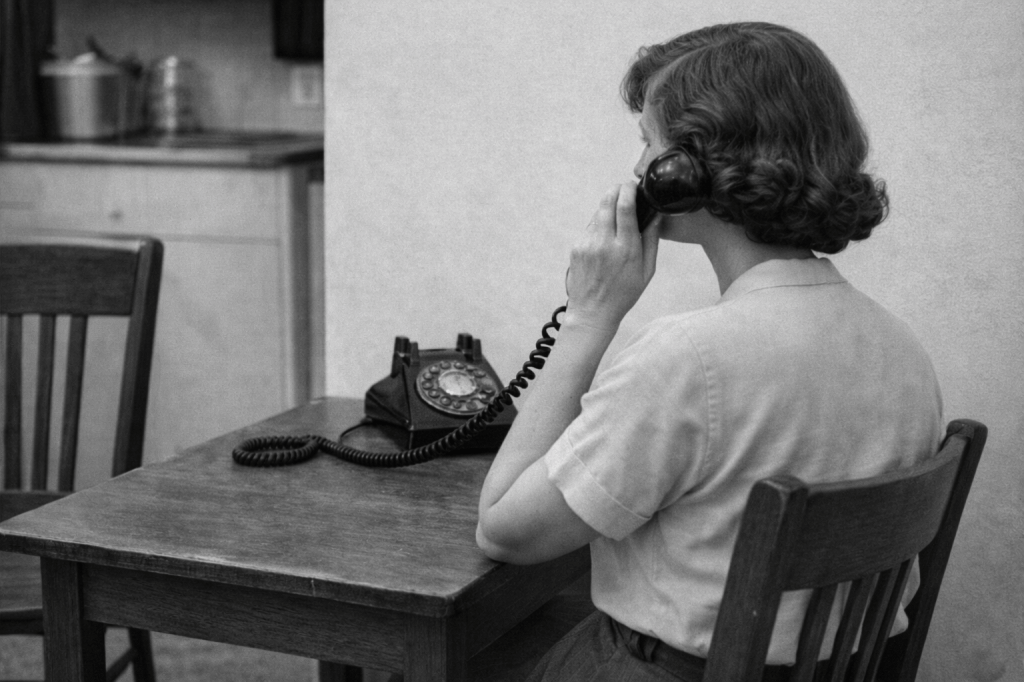
The receiver was cold, heavier than I remembered. I dialed—one number, then another. The sound of the clicks stayed in the room longer than they should have.
The phone rang. I waited. Somewhere, beyond the static, a man’s voice waited to make it official.
Each ring stayed with me longer than it should have, and I couldn’t shake the feeling that I was stepping off the edge of something, about to fall into an unknown that I couldn’t control.
“FBI,” the voice on the other end answered curtly, like it had answered a thousand calls just like mine.
“I—uh—I have information,” I said, my voice trembling, my throat dry. The words felt foreign, but they were out now. And there was no going back.
“I—there’s a list. Of people. In my town. Communist sympathizers. I—” I had to stop myself. Breathe. “I think you need to know.”
There was a pause on the other end—long enough to feel. My stomach churned, but I forced myself to stay calm, stay steady.
The voice had asked for details, for confirmation—what names, who I had seen with whom, who seemed suspicious, who might have been involved. I had answered as best as I could from the letter, offering fragments, barely piecing together the truth, because what truth could I offer?
“Thank you for your cooperation,” the voice said, and that was it.
No more questions. No more explanation. It was done. I had made my choice, and I could already feel the consequences of it, even though they hadn’t fully settled yet.
I hung up the phone, my hand still gripping the receiver long after the line had gone silent.
My breath came out in a rush, and I couldn’t help the tears that started to fill my eyes. I’d done what was expected of me. I had followed the law.
I had chosen to protect myself.
But the guilt was immediate, and it was overwhelming.
I had crossed a line, one I couldn’t erase. The list, the names, the people I’d known—all of them—had been turned in.
And I was the one who had done it.
I thought of Anne, of Mary. The way they looked at me, the way we shared small, almost intimate moments that now felt so meaningless.
What did I really know about them? What did I really know about anyone anymore?
I stood there in the middle of the room, the weight of the choice pressing down on my chest, and I knew, deep down, that I would never be the same.
I’d done what I thought I had to do. I’d chosen survival.
But I couldn’t escape the thought that maybe, just maybe, I hadn’t chosen the right thing.
The Next Few Days
The next few days passed in a blur. I kept my head down, kept my distance, trying to blend in as best as I could. The phone calls, the knocks on doors, the quiet surveillance—everything was happening around me, but I couldn’t bring myself to watch. I couldn’t let myself look, because I knew I would see it. The faces. The lives I’d irrevocably changed.
Then, one morning, Mary’s desk sat empty.
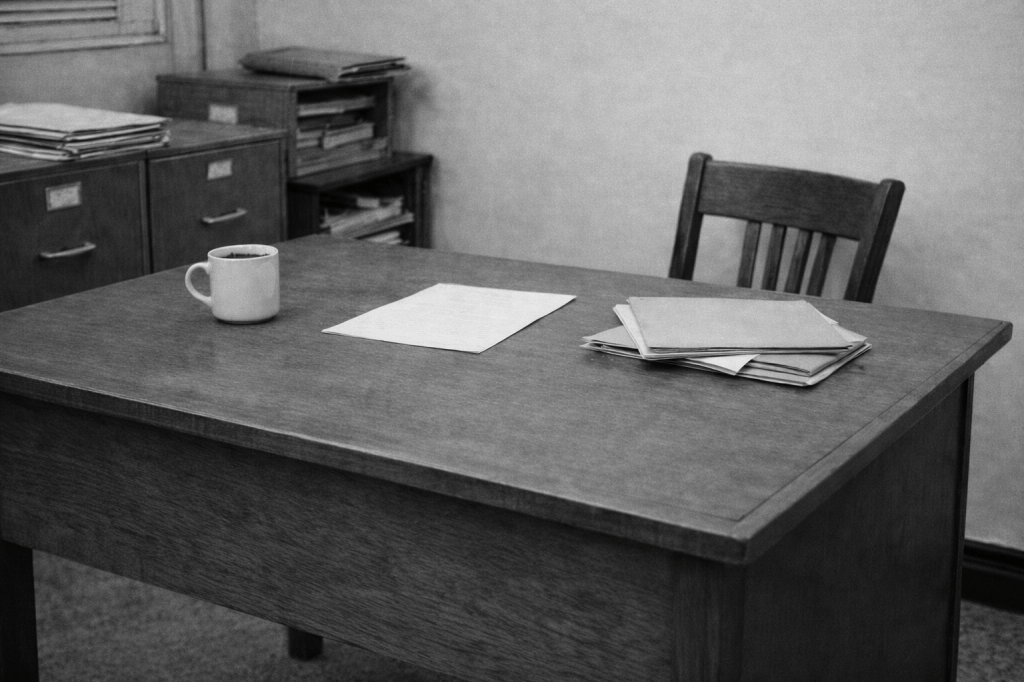
By afternoon, her nameplate was gone. Her coffee cup still waited beside the blotter.
Anne’s jokes vanished with her; the air seemed to hold the echo where laughter had been.
No one asked questions. The new hires came quietly, as if they’d always been there.
The office learned how to erase itself.
The streets felt foreign now. Even the air smelled different. People looked at me as if they knew, even if they didn’t. As if I had become something else entirely. A part of this machine that I thought I could avoid. A part of a system I thought I could resist.
Maybe there was no such thing as neutrality. Maybe once a choice was made, there was no going back.
I had told myself I was doing what was right—that following the law would keep me safe. But at what cost?
But I knew one thing for sure: I couldn’t unmake this decision. I couldn’t go back. And that knowledge settled deep inside me, cold and unyielding.
The world felt quieter than usual again. But the quiet no longer wrapped me—it pressed. It pressed on my chest, on my tongue, on the space where a name used to be.
It was the sound of what I’d done. It never left.
The End
In the margins of Mae’s final page, smudged beneath the date, there was one unfinished line:
“They said it was for the good of the country. I only wanted to belong.”
The ink had bled, as if someone had tried to wipe it away. But it stayed.
We kept it that way.

You must be logged in to post a comment.