
Ikke til cirkulation
Copenhagen — Internal Record
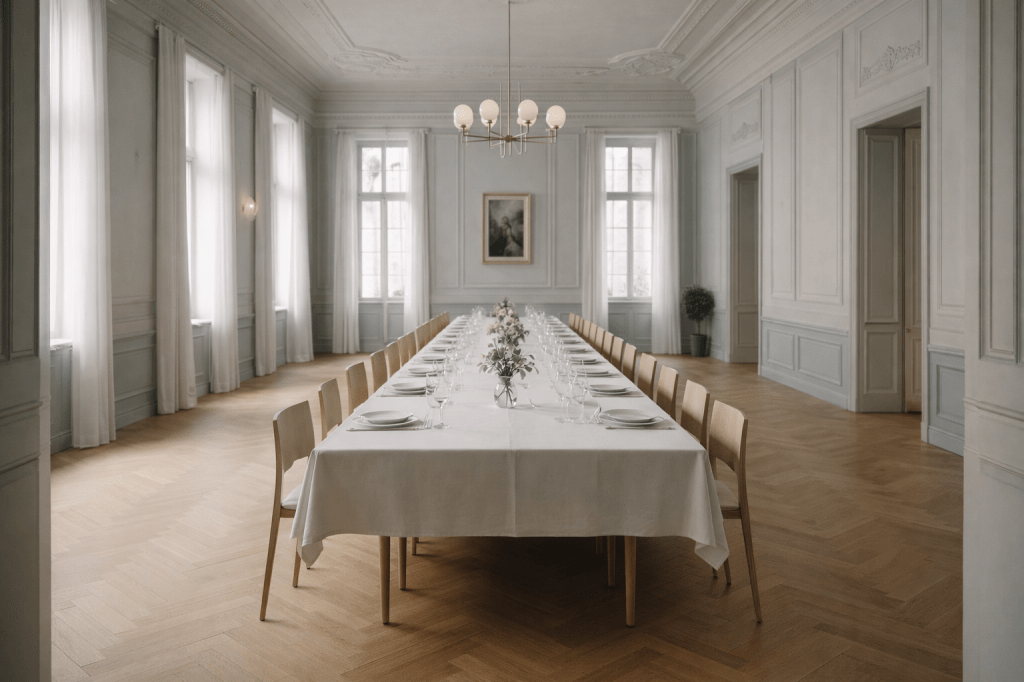
It is not my role to decide where Princess Leonora is required to be. Those decisions are made in consultation with the Queen’s office and the council, reviewed in advance, and confirmed before the day begins. My responsibility, as her private secretary, Klara Jensen, is to ensure that what has been arranged proceeds as intended, without interruption or visible deviation.
It had been arranged well.
When she said she would prefer not to be seen that day, I did not immediately consider it unusual. She had, on occasion, questioned the necessity of certain appearances—never in a way that disrupted them, but enough to suggest an awareness of repetition. It became unusual when she did not qualify the request.
“You are scheduled to be seen,” I replied, expecting the matter to resolve itself within the existing structure.
“Yes,” she said, as though the point were already understood.
When I explained that absence would be noted, she accepted this in the way she often did—not immediately, but with a measured pause that suggested she was considering the implications rather than resisting them.
“Everyone?” she asked after a moment.
“Yes.”
She adjusted her glass without drinking from it, her attention remaining on the table rather than the room.
“I would prefer,” she said, “to be seen by no one.”
There were, in theory, ways to manage reduced visibility, depending on timing and context. It was only when I asked about the Queen, as a matter of necessary clarification, that the request took on a different shape.
“Not even the Queen,” she said.
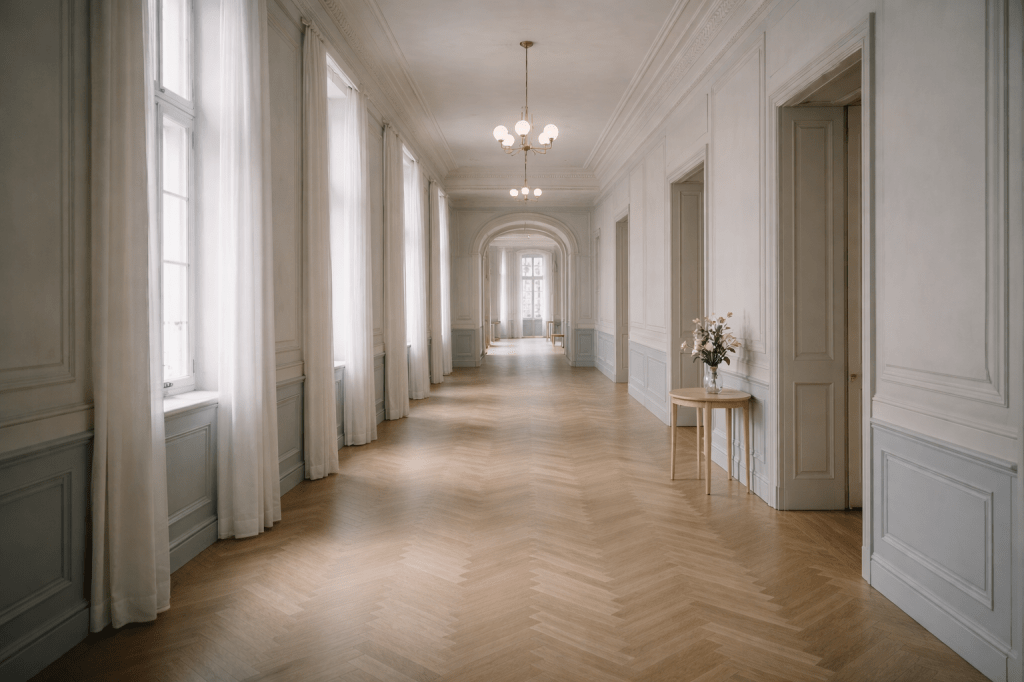
There was no established protocol for such a request.
❦
The remainder of the afternoon proceeded as scheduled, though not without commentary.
“You have the Trade Council at 14:00,” I reminded her.
“Yes,” she replied, with a familiarity that suggested she no longer required the detail.
“They were here last week.”
“They are here again.”
She did not argue the point so much as observe it, as though repetition itself were the issue rather than the engagement.
“You’re very consistent,” she said after a moment.
“It is expected.”
She glanced toward the far end of the room, where the day’s sequence had already begun to take shape.
“You do seem to prefer me in rooms where I am required to perform.”
“It has been arranged accordingly,” I said.
“Of course it has.”
A brief pause followed, then, with no change in tone, she added, “You’ve never scheduled me for myself.”
“That is not a recognized category.”
“It should be.”
“It has not been requested.”
She considered this briefly, then met my answer with a composure that was entirely in keeping with the rest of the exchange.
“I’m requesting it now.”
I told her it would require definition, and she seemed satisfied with that, as though the difficulty of defining it were part of the point.
❦
The correspondence arrived without notation, which was unusual in itself. It had not been routed through the usual channels, nor marked for circulation.

You will say that I see you every day. This is accurate. You will say that I am not without access. This is also accurate. You will say that this is sufficient. It is sufficient for what is required. It is not sufficient for anything else.
There was nothing in it that could not be defended, and yet it did not align with any category I was accustomed to working within. It was not a question of whether the request could be granted, but where it could be contained. There were always margins. The difficulty lay in ensuring they remained unobserved.
It required reconsideration, not of the schedule itself, but of the space within it.
❦
The dinner that evening proceeded as expected. It always did.
The intervals between courses had been confirmed in advance, allowing for movement, conversation, and transition without interruption. The room held its usual balance of attention and restraint, with nothing out of place and nothing unaccounted for.
The herring was served first, followed by the soup, which she appeared to prefer to the rest. She remained through the initial course, as required, and participated as expected in the conversation that followed.
“This is better,” she said quietly.
I did not respond, as there was no need to.
The transition to the main room allowed for a margin that had originally been intended for logistical movement. Adjusting it required only a minor recalculation of timing and placement. The delegation, if seated correctly, would not immediately note a delay, and the progression of the evening would remain intact.
It required coordination, and it required that nothing appear to have been coordinated.
“You’re very precise,” she said when I returned.
“It is my role.”
“And if I preferred otherwise?”
“That would not alter the expectation.”
She paused, considering this in the same way she had considered the rest.
“And if I insisted?”
“You would be late.”
She allowed herself a faint smile.
“That seems manageable.”
She was returned before it could be remarked upon. The evening continued without deviation, and nothing in the record required amendment.
It was not noted.
❦
Archival Attribution
Subjects: Princess Leonora, Klara Jensen (Private Secretary)
Context: Royal Correspondence
Status: Not for circulation
Visual reconstruction by:
Freja Mikkelsen
Sofie Lindholm
Amalie Nygaard
Clara Vestergaard
Ida Rosenkilde
Preserved by Scott Bryant at the request of Princess Leonora and Klara Jensen

You must be logged in to post a comment.