
Hydria – Grave Scene, Woman Offering Fillets to the Deceased
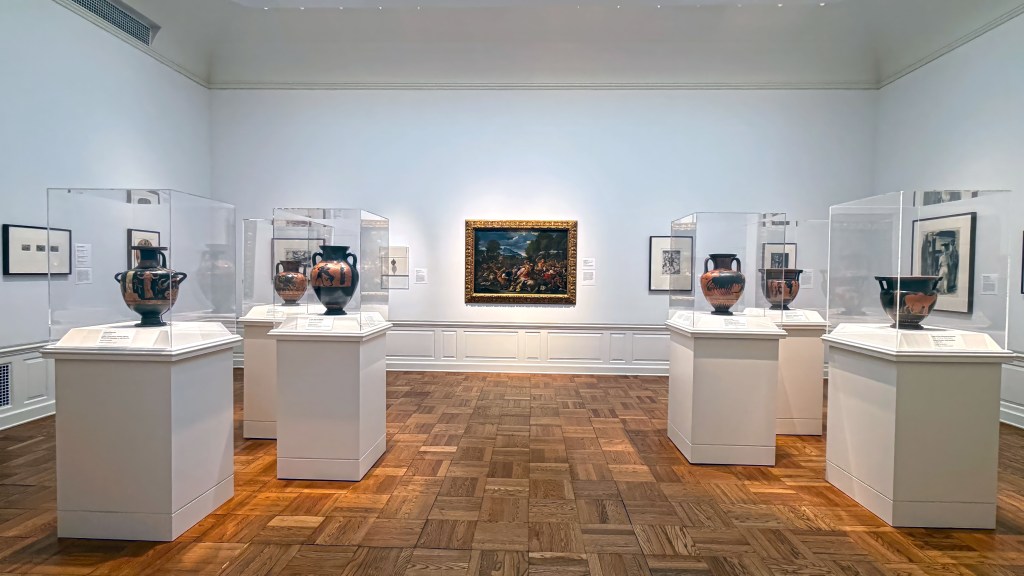
Myth and Memory: Mediterranean Antiquity and its Revivals
Portland Art Museum — Portland, Oregon
April 25, 2026 | 10:30am
Most of what survives from ancient Greece does not come from murals or paintings, but from objects—ceramic vessels recovered from graves and refuse, often reconstructed from fragments.
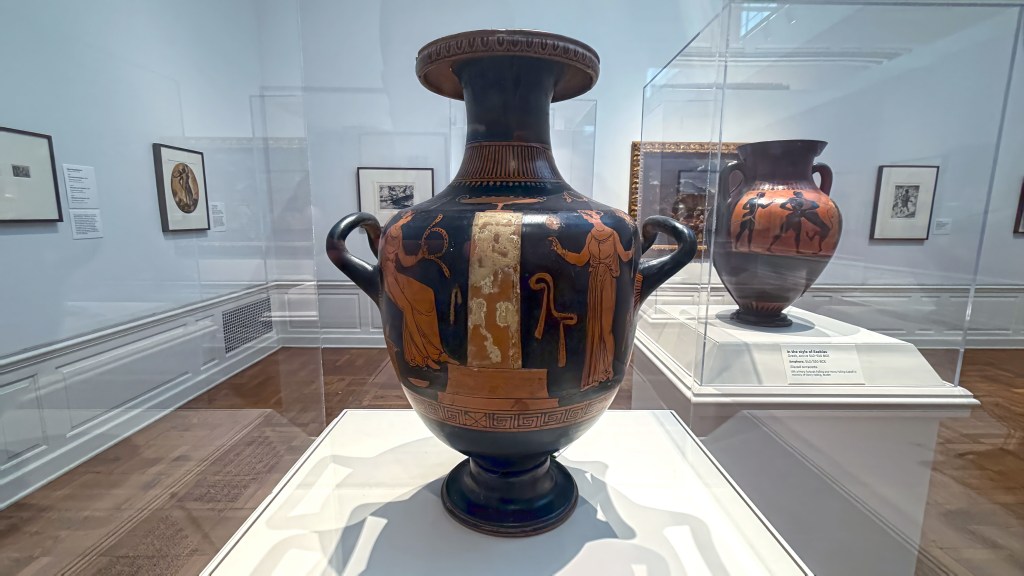
This hydria, attributed to an Apulian Greek artist and dated to roughly 450–300 BCE, presents a grave scene. At its center stands a stele, worn and partially erased; on either side, two women remain.
One lifts a fillet—a ribbon used in ritual—toward the grave, an act the museum identifies directly as an offering to the deceased.
The gesture is small, but deliberate. It suggests not a single act of mourning, but a repeated one. A return.
The deceased is not shown. He exists only through the marker and the action directed toward it. The image does not preserve his story—it preserves theirs.
The surface has not fully endured. A vertical section has faded, leaving an absence where detail once lived. Like the object itself—recovered and reconstructed—the image holds together through what remains.
This is not mythology or spectacle. It is continuation.
The vessel survives. The moment does not.
But the gesture, quietly, does.

You must be logged in to post a comment.