
Mother Mary
Bridgeport Stadium 18 & IMAX — Tigard, Oregon
Auditorium 4, Seat H7
Sunday, May 3, 2026 | 10:10am
Starring Anne Hathaway (Mother Mary) and Michaela Coel
(Sam Anselm)
Directed by David Lowery
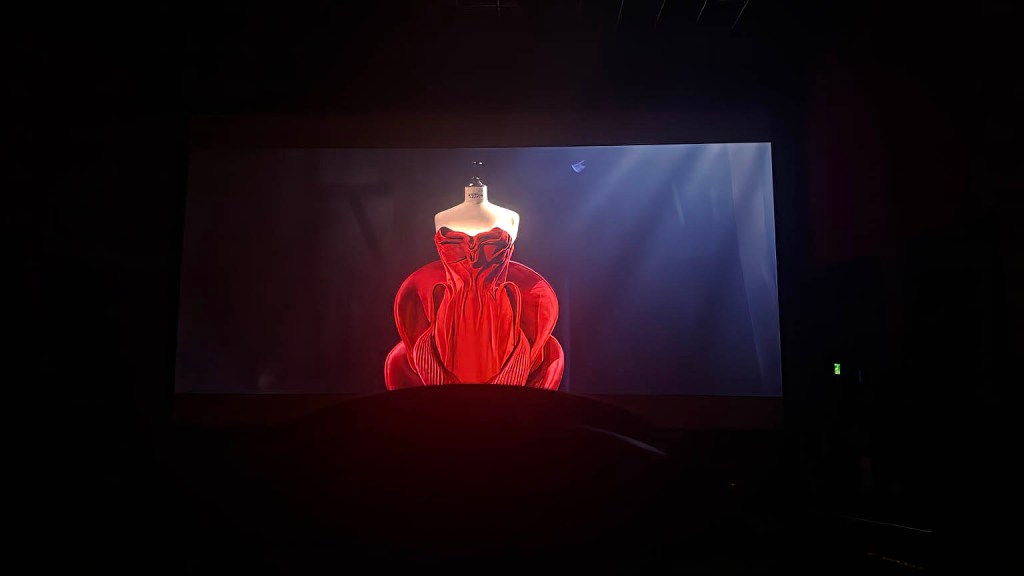
I was alone in the theater when I saw Mother Mary, which somehow felt appropriate for a film so preoccupied with image, ritual, and private vulnerability beneath public spectacle.

A week and a half later, I still find myself thinking about the barn.
Not the concert scenes first. Not the crowds, the choreography, or the towering stage entrances. What stayed with me was the quieter space hidden behind all of it: rough wood beams, unfinished fabric draped across Anne Hathaway’s shoulders, and the feeling that Mother Mary only became human once the performance had been stripped away.
There is a moment where Michaela Coel’s Sam wraps white fabric around Mary’s body inside the barn workshop. The fabric is elegant and flowing, but the setting itself is ordinary — worn wood floors, shelves, work tables, open space. The contrast lingered with me long after the film ended. The barn feels organic in a way the concert scenes never do. It feels like the place where identity is actually formed rather than performed.
The stage scenes are polished almost to the point of sterility. Every movement is choreographed. Every light is intentional. Even the way Mary ascends the staircase before performances feels ritualistic, like watching someone transform into a public figure in real time. Backstage, she is exhausted, bare-faced, uncertain. Onstage, she becomes Mother Mary — a persona so complete that it almost overtakes the woman beneath it.
I kept returning to the halos throughout the film. Sometimes radiant gold, sometimes fragmented or damaged, never entirely whole. It immediately recalls religious iconography. The halos feel less like symbols of holiness and more like symbols of constructed divinity — a public image people project belief onto.
That tension runs through nearly every scene. “Mother Mary” is not even her real name. We never learn that. The name itself already belongs to the public imagination before it belongs to her. It carries expectation, performance, mythology. Watching the film, I kept thinking about how women — especially women in public life — are often shaped into identities that reflect what others want to see rather than what actually fits them.
The Joan of Arc references stayed with me too. Sam tells Mary she wanted her to look like Joan of Arc, and the comparison feels important beyond costume design. Joan of Arc represents sacrifice, symbolism, martyrdom, transformation into an image larger than oneself. Mother Mary gradually begins to feel less like a woman and more like a figure constructed through expectation, devotion, and performance.
The film’s concert scenes quietly reinforce that idea. The arenas often feel closer to churches than traditional performances. Fans gather almost like followers. The staging, the lighting, the stillness, the movement — it all carries the feeling of ritual.
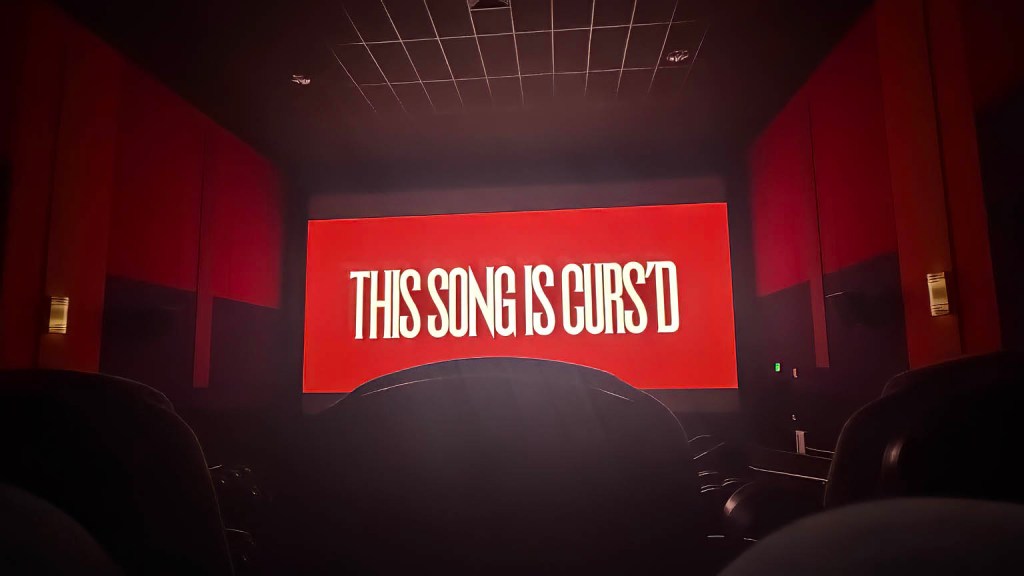
The more I sat with the film afterward, the less it felt like a film about celebrity and more like a film about what happens when a person slowly becomes mythologized.
It also struck me that the film avoids over-explaining itself. Much of it is carried through imagery, texture, silence, fabric, posture, and gaze. Some viewers will probably find that frustrating. I found myself drawn deeper into it over time instead.
A week and a half later, scenes still return to me unexpectedly: the staircase ascent, the unfinished dresses, the fragmented halos, Mary standing bare-faced in the barn.
Oddly enough, when I left the theater and walked back out into Bridgeport Village, Hall & Oates’ “Maneater” was playing over the outdoor speakers.

It felt strangely fitting after a film so preoccupied with image, projection, and performance — the way culture can turn women into symbols while slowly erasing the person underneath.
What stayed with me most, though, was the sense that the film was never really about fame at all. Beneath the concert spectacle and religious imagery is something quieter: two women trying to reconcile who someone once was with the image she eventually became.

You must be logged in to post a comment.