
May 30, 2026
Portland Art Museum, Portland, Oregon
SW Madison St
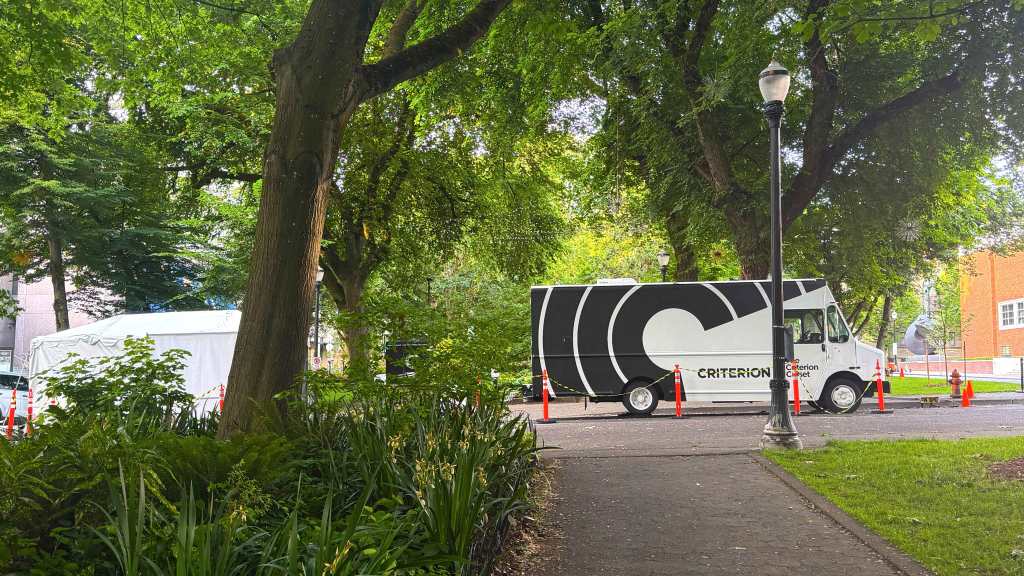
For years, I had watched videos of filmmakers, actors, critics, and cinephiles stepping inside the famous Criterion Closet. What began as a storage room at Criterion’s New York City headquarters gradually became a recognizable piece of contemporary film culture, a place where people shared the films that shaped their artistic lives.
When the Criterion Mobile Closet arrived in Portland on a three-day stop, I found myself wrestling with a simple question: was it worth spending a Saturday morning waiting in line for a truck filled with movies I could largely purchase online?
The visit also arrived during Criterion’s fortieth anniversary year, a reminder of how a home-video company founded in 1984 had grown into one of the most influential names in film preservation, restoration, and home media.
After much deliberation, I decided to find out for myself. Part of the appeal was simply being somewhere different—away from home, away from screens, and away from routine.
First Sight of the Truck
Seeing the truck in person was oddly satisfying. For years, the Closet had existed for me primarily through Criterion Collection videos and social media posts. Suddenly it was parked beneath the trees across from the Portland Art Museum.
The truck itself was surprisingly modest. Yet it carried an outsized cultural reputation built upon years of Criterion Closet videos and the enthusiasm surrounding physical media, film preservation, and the ritual of sharing favorite films.
For the first time, the Closet existed as a physical place rather than an image on a screen.
The Wait
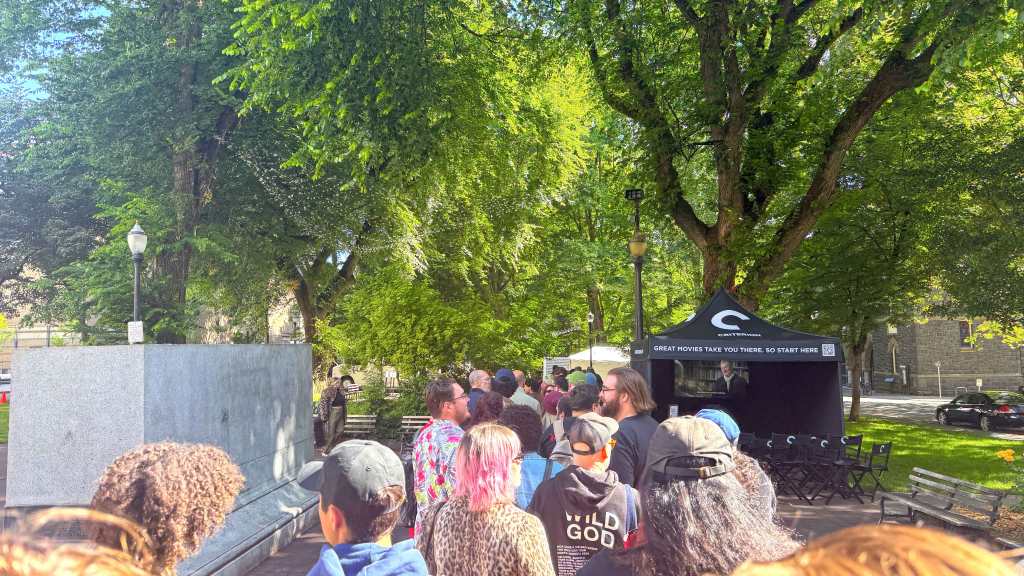
I joined the line at approximately 9:37 a.m. The event began processing attendees around 10:45 a.m.
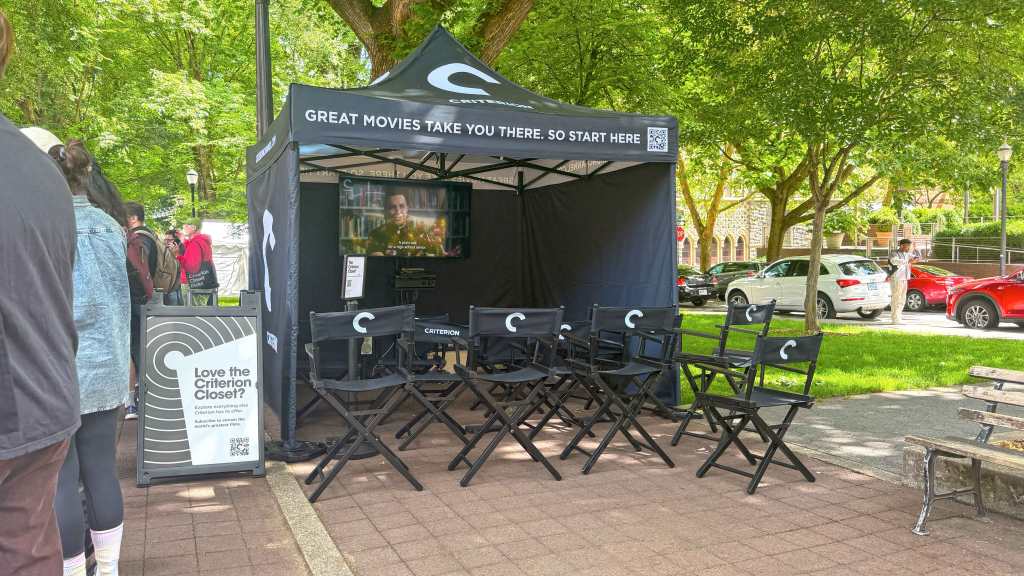
The wait itself became part of the experience. Around me were conversations that could only have occurred in a line for a Criterion event: debates over whether a $250 Federico Fellini box set was worth the price, discussions of film restorations and original camera negatives, recommendations for John Waters newcomers, stories of eBay bidding wars over DVDs, conversations about queer cinema, and discussions of favorite Criterion Closet Picks videos.
For several hours, the line functioned as a temporary gathering place for a remarkably eclectic cross-section of film enthusiasts. Whatever else might be said about the experience, it was never boring.
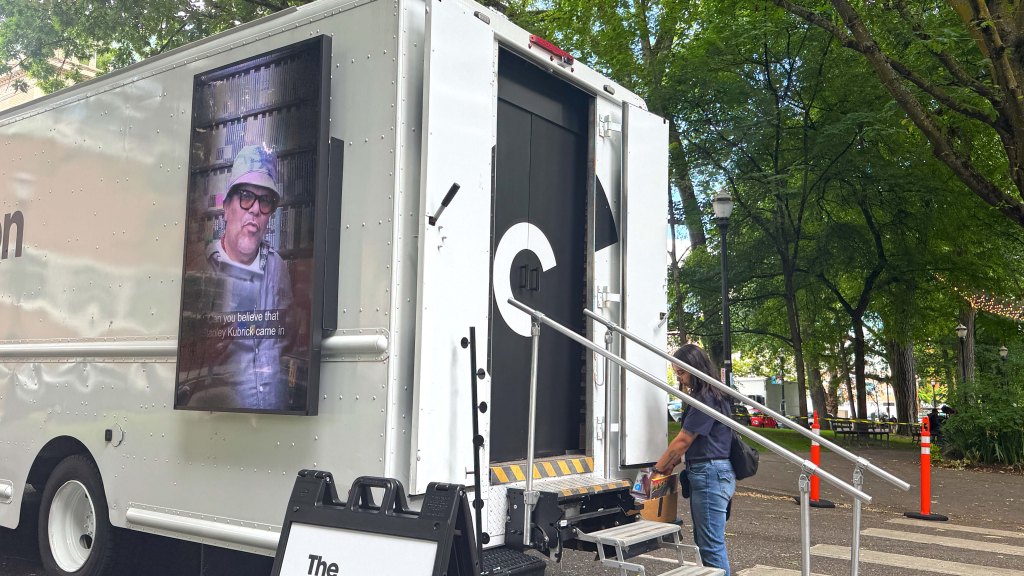
I finally stepped inside the Closet shortly before 2:00 p.m. In total, the experience involved more than four hours of waiting.
Had someone told me the previous day that I would willingly spend more than four hours in line for a three-minute visit inside a movie truck, I would have laughed. Under ordinary circumstances, I would never wait that long for almost anything. In fact, I have long maintained a personal rule against spending excessive amounts of time in lines.
Yet this was not an ordinary Saturday.
The Criterion Mobile Closet was a one-time event, and curiosity ultimately won out over practicality.
Inside the Mobile Closet
The interior felt larger than it appears in videos, with shelves packed floor-to-ceiling with Criterion releases.
After years of seeing the Closet through screens, I finally found myself standing inside it.
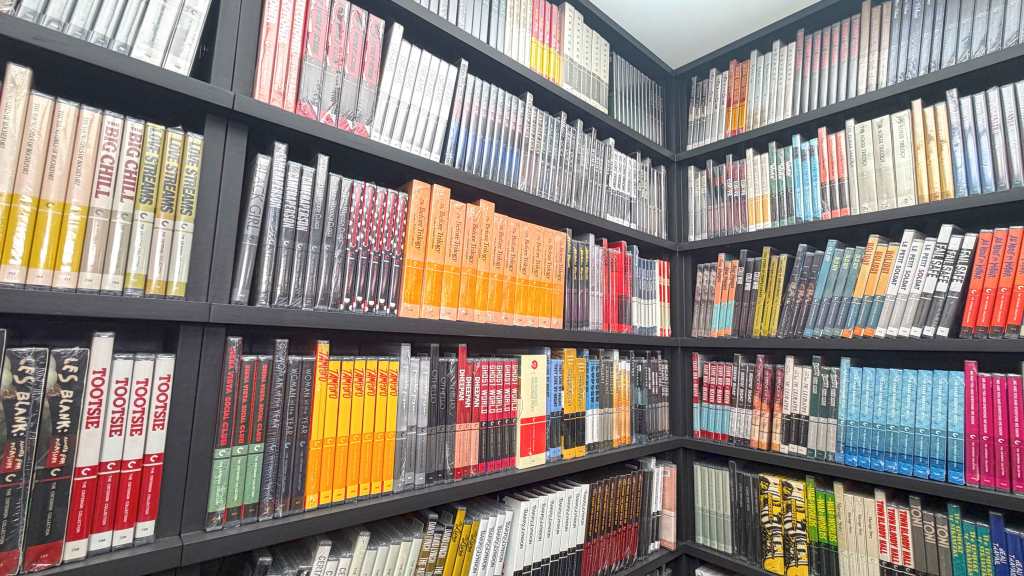
Attendees were limited to three minutes inside the Closet and three film selections. After waiting more than four hours, the experience itself passed remarkably quickly. I found myself moving between shelves of familiar titles while remaining focused on the films I had already planned to select.
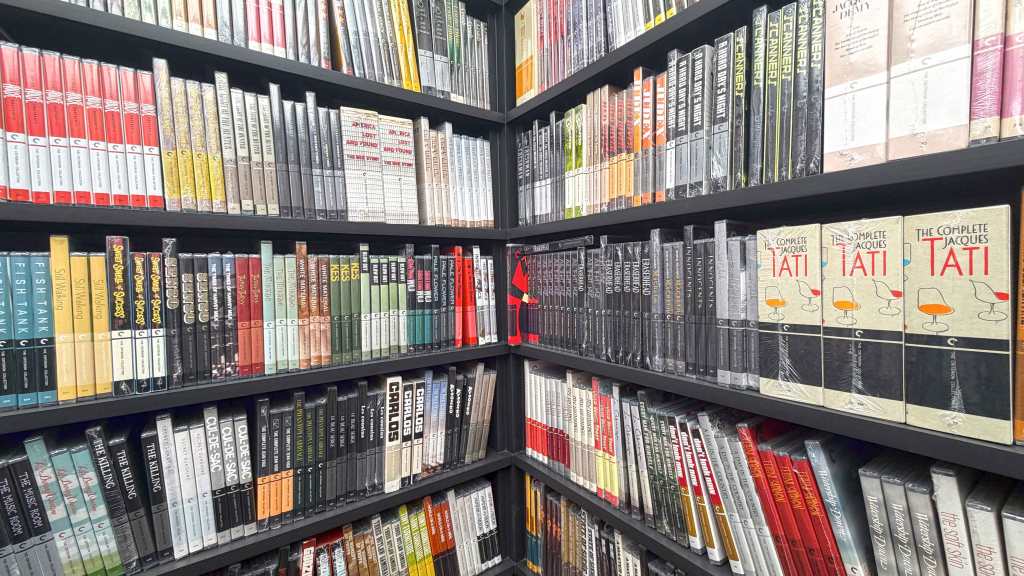
The experience itself lasted only a few minutes, but those few minutes carried the weight of years of familiarity with Criterion’s films, directors, and home video releases.
For a brief moment, the Closet ceased being an internet phenomenon and became a real place.
My Three Criterion Picks
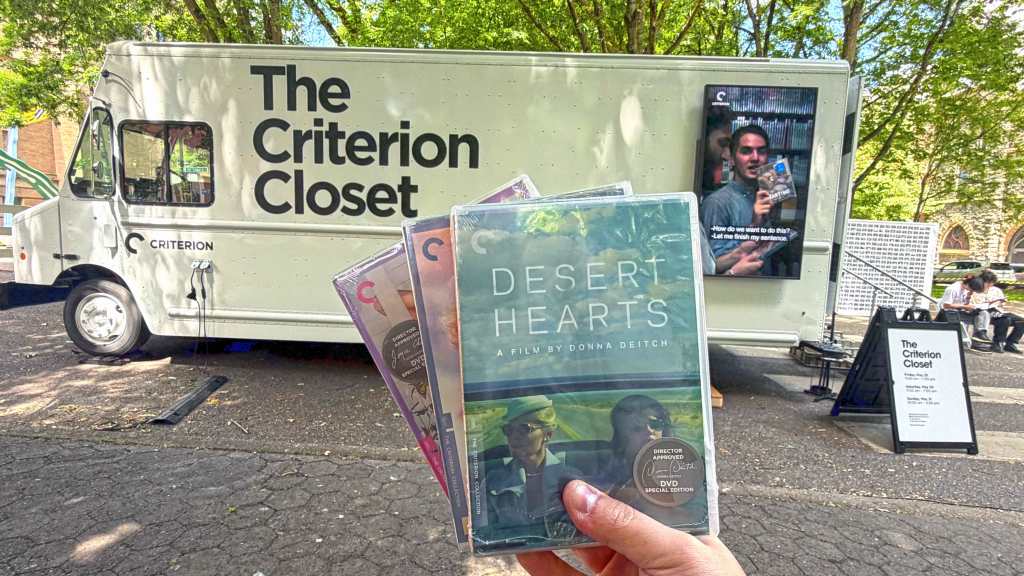
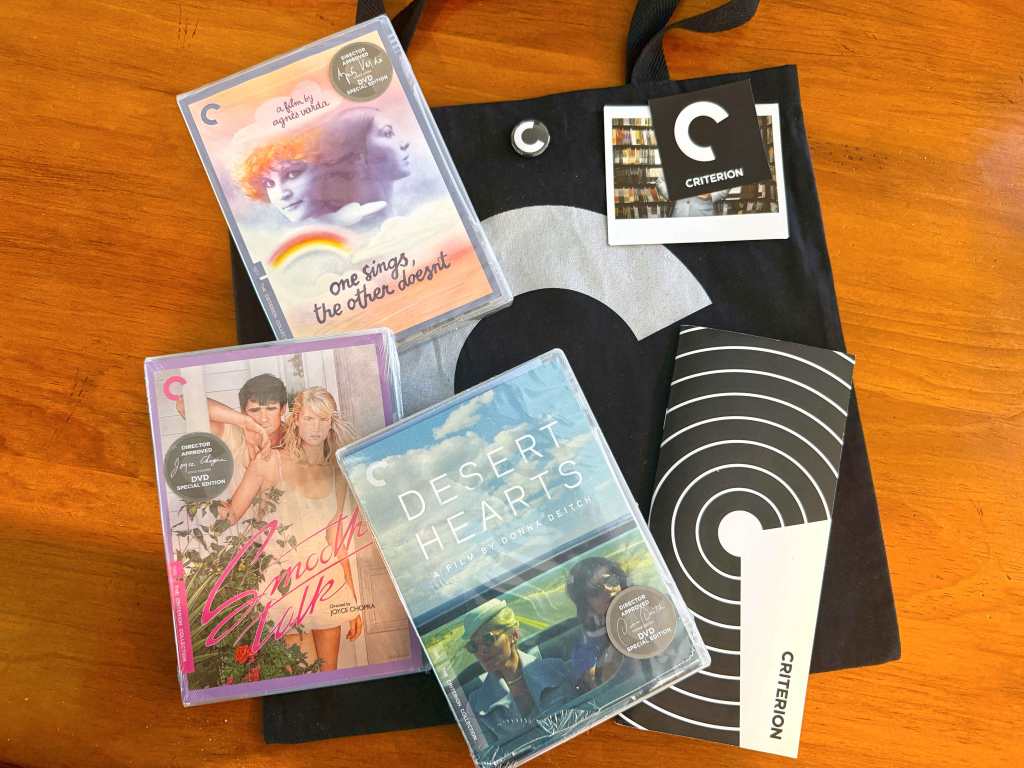
Desert Hearts (1985)
Donna Deitch’s landmark work of queer cinema had already been part of my digital collection for some time. The Criterion edition offered an opportunity to add a physical release of a film I already admired.
Smooth Talk (1985)
Joyce Chopra’s adaptation of Joyce Carol Oates’ short story remains one of the most acclaimed coming-of-age films of the 1980s. Like Desert Hearts, it was already a film I owned digitally and valued highly enough to welcome into my physical collection.
One Sings, the Other Doesn’t (1977)
Agnès Varda’s warm, politically engaged portrait of friendship, feminism, and women’s lives was perhaps the most inevitable purchase of the day.
Unlike Desert Hearts and Smooth Talk, this was a film I had not yet added to my digital collection. Given my longstanding appreciation for Varda’s work—particularly Cléo from 5 to 7 and Documenteur—it was the title I was most determined to bring home from the Closet.
Of all the films available, this felt like the most obvious choice for my collection.
Beyond the Closet
What surprised me most was that the day was never really about acquiring movies at all.
Long before the Criterion Mobile Closet arrived in Portland, Criterion had already become part of my film life. Over the years, I had assembled a personal collection across both digital and physical formats, built not around completionism but around films that genuinely resonated with me.
Some of those films hold particular significance.
Cheryl Dunye’s The Watermelon Woman and Chantal Akerman’s Jeanne Dielman, 23 quai du Commerce, 1080 Bruxelles both trace back to my years at Portland State University, where I first encountered them as a graphic design student. Each expanded my understanding of what cinema could be, introducing voices, perspectives, and formal approaches that differed dramatically from mainstream filmmaking. Akerman’s work would remain a continuing presence in my viewing life, eventually leading me to films such as Je Tu Il Elle, whose intimacy and formal rigor further deepened my appreciation for her cinema.
Kelly Reichardt’s Montana-set Certain Women entered my life later, when I saw the film at the Lake Theater & Cafe in Lake Oswego in November 2016. Before the screening, the theater had shown half of the Barbara Stanwyck film Cattle Queen of Montana (1954), an unusual pairing that now remains permanently linked in my memory. The quiet rhythms, understated performances, and attention to lives often overlooked in Certain Women exemplify the kind of cinema I increasingly found myself drawn toward.
Céline Sciamma’s Portrait of a Lady on Fire occupies a particularly special place in my collection, having seen it theatrically a week before the COVID-19 pandemic transformed daily life around the world. Few films are tied so strongly to a specific moment in my life. Watching it today inevitably brings back memories of a world on the verge of enormous change.
Agnès Varda’s Cléo from 5 to 7 and Documenteur remain enduring favorites, films that continue to reveal new details and emotional depths with each viewing.
Because of that history, I arrived at the Criterion Mobile Closet with a different perspective than many attendees. I was not beginning a Criterion Collection. In many ways, I already had one. The films that mattered most to me were already part of my life, accumulated over years of viewing, studying, collecting, and revisiting.
The films I purchased inside the Closet were welcome additions, but the event itself was less about ownership and more about participation. I wanted to see the truck, experience the Closet for myself, and briefly step inside a piece of film culture that I had followed from afar for years.
The films themselves were not the reason I stood in line.
The experience was.
Closing Thoughts
I would not normally spend four hours waiting for anything. Nor do I imagine I would repeat such an experience frequently.
Yet for one Saturday in Portland, the Criterion Mobile Closet offered something different from my usual cultural outings. I was not there for the crowd, networking, or a shared social experience. As an introvert, I was perfectly content keeping to myself.
Instead, I was there because I was curious.
I wanted to see the truck. I wanted to experience the Closet for myself. I wanted to bring home a few films that genuinely interested me.
More than anything, it provided a welcome break from routine. It got me out of the house, away from screens, and back into a part of Portland I had not experienced in quite the same way since my university years.
Was it worth waiting more than four hours for a visit that lasted only a few minutes?
From a purely practical perspective, probably not.
From a cultural perspective, however, the answer is more complicated.
The Criterion Mobile Closet was never really about efficiency. It was about curiosity, participation, and the peculiar joy of engaging with film culture in a physical space rather than through a screen.
For one day, it provided a welcome change of pace, a memorable Portland experience, and three films that I am genuinely excited to watch. That it occurred during Criterion’s fortieth anniversary year made the experience feel particularly fitting.
For now, that is enough.
Field Notes from the Line
One overheard exchange during the wait was too perfectly timed not to preserve.
A person in line mentioned they were heading to the Criterion Mobile Closet. Whether recounting a conversation with friends or repeating a joke made moments earlier, they shared one of the day’s most memorable exchanges:
“You’re already out of the closet. Why are you going back into one?”
The response came just as quickly:
“Well, duh. It’s THE Criterion Collection.”
Before the conversation could end, another voice nearby added:
“Pride’s next month!”
The exchange occurred two days before Pride Month while hundreds of film enthusiasts waited beneath the trees in downtown Portland.
No writer could have improved the timing.

You must be logged in to post a comment.